
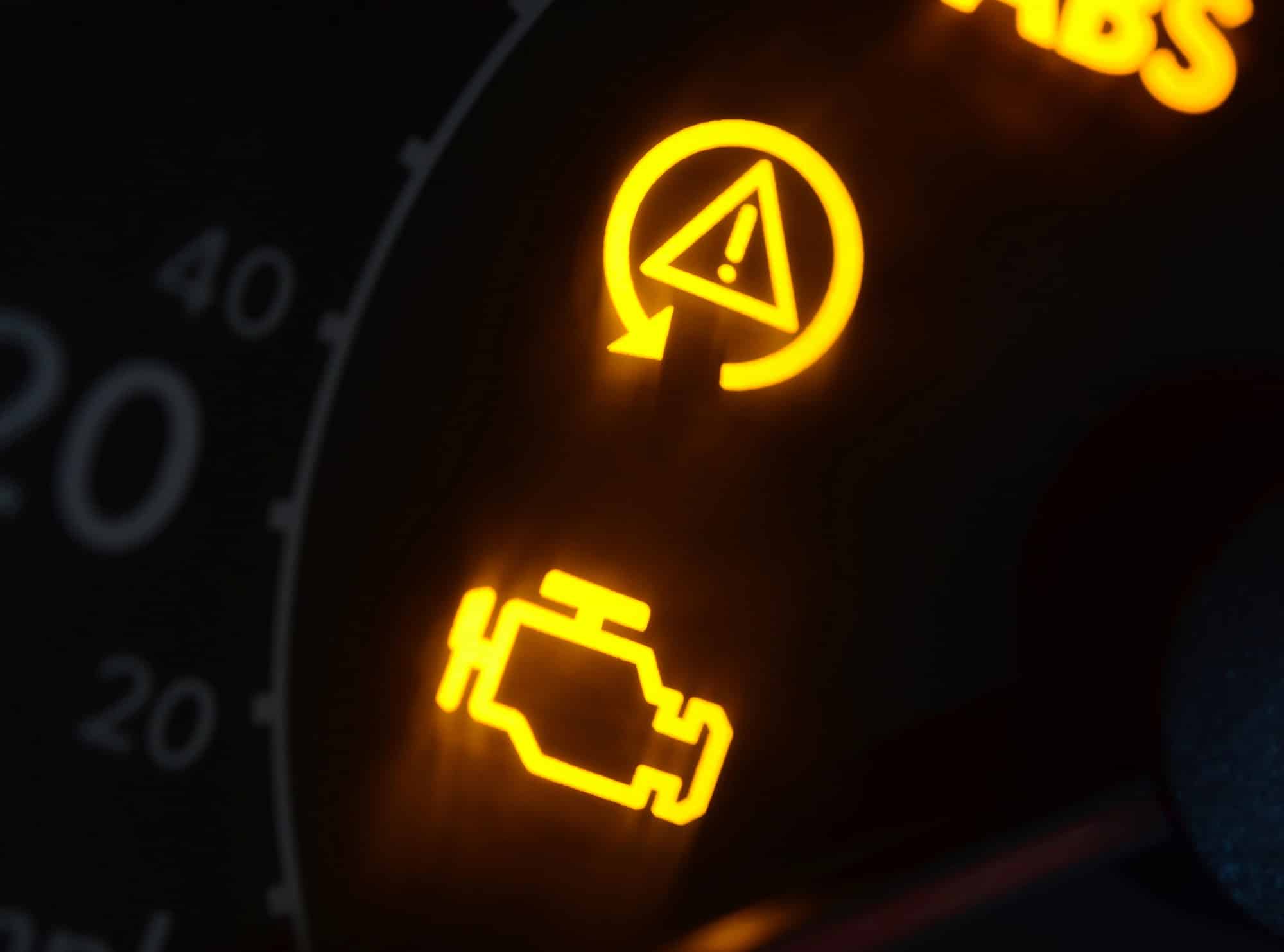
Fiat Check Engine Light Diagnostics at DART Auto
Your Fiat's check engine light just came on, and you're wondering whether it's safe to drive or if you're facing a major repair. That glowing amber icon doesn't tell you much on its own – it could signal anything from a loose gas cap to a misfiring cylinder or a failing turbocharger actuator. Fiat vehicles, especially the MultiAir-equipped 500, 500L, and 124 Spider models built from 2012 onward, rely heavily on electronic throttle control and variable valve timing that generate dozens of potential fault codes. A generic code reader from the parts store will pull a P-code, but it won't access the Fiat-specific modules that control the MultiAir electrohydraulic valve system or the Bosch Motronic ECU parameters. That's where DART Auto's factory-level diagnostics make the difference.
We use the same dealer-grade scan tools and Fiat Technical Information System procedures that Chrysler/Stellantis technicians rely on, allowing us to read live data streams, perform bi-directional tests on actuators, and distinguish between a root cause and a secondary symptom. For example, a P0300 random misfire code on a 2014 Fiat 500 Abarth might stem from carbon buildup on the MultiAir intake valves, a failing ignition coil, or even a vacuum leak in the turbo bypass system – and only a complete diagnostic workup reveals which component is actually at fault. Our salaried master technicians have over a decade of experience with Italian and European platforms, so they know the common failure points and won't chase phantom codes.
What you can expect from our Fiat check engine light diagnostic service:
- Complete fault-code retrieval from all modules, including powertrain, ABS, airbag, and body control
- Live data analysis and component testing to isolate the root cause, not just clear codes
- Written diagnostic report with photos, explanations of what failed, and transparent repair options
- Honest guidance on urgency – we'll tell you if it's safe to drive or if you need immediate attention
Common Check Engine Light Diagnostics Issues on Fiat Vehicles
Fiat owners often face distinct check engine light triggers tied to the brand's platform-specific quirks and powertrain designs. Understanding these patterns helps you recognize what's happening under the hood before a small fault becomes a larger repair.
- MultiAir solenoid failure on 2012–2019 500 and 500L (1.4L turbocharged engines): The electro-hydraulic variable valve actuation system develops internal solenoid wear or oil contamination, triggering P0016 camshaft correlation codes and P0030 oxygen sensor heater codes. The MultiAir design eliminates traditional camshaft lobes, making oil quality and change intervals critical – neglected maintenance accelerates solenoid degradation.
- Throttle body carbon buildup on 2014–2020 500X and Renegade (2.4L Tigershark engines): Shared with certain Jeep platforms, the Tigershark engine accumulates carbon deposits on the throttle plate, causing rough idle, stalling, and P2176 throttle actuator codes. The issue compounds in stop-and-go Denver traffic where short trips prevent full heat cycling.
- Evaporative emissions system leaks on 2012–2016 500 models: Plastic purge valve and vent valve assemblies crack from heat cycling and altitude pressure changes, setting P0455 large EVAP leak codes. Colorado's temperature swings and UV exposure accelerate plastic embrittlement on these emissions components.
- Oxygen sensor failures on 2012–2019 500 Abarth (1.4L turbo): Higher exhaust gas temperatures from the performance tune shorten upstream O2 sensor life, typically triggering P0131 and P0134 codes between 50,000–70,000 miles. The turbo placement increases sensor thermal stress compared to naturally aspirated variants.
- Turbocharger wastegate actuator faults on 2014–2018 500L (1.4L MultiAir Turbo): Electronic wastegate actuators stick or fail, causing overboost or underboost conditions and P0234 or P0299 codes. The actuator's plastic gears wear from heat exposure, a known weakness in this generation of Fiat's small-displacement turbo engines.
Why Choose DART Auto for Fiat Check Engine Light Diagnostics
Your Fiat's check engine light doesn't just need a code reader – it needs someone who understands how MultiAir valve actuators fail on 1.4T engines, why 500 Abarth models throw false misfire codes after carbon buildup, and when a P0171 lean condition points to a cracked intake manifold on 500L platforms. DART Auto has invested in factory-level scan tools that access Fiat-specific modules and live data streams the parts-store code reader can't touch.
We've been diagnosing European vehicles since 2000, and our master technicians bring dealer training and at least 10 years of hands-on experience to every Fiat that rolls in. Because our techs are salaried rather than flat-rate, they have zero incentive to stop at the first code – they trace the root cause, whether that's a failing turbo wastegate actuator on a 500 Abarth or a known software glitch covered by a Fiat TSB. We follow OEM diagnostic procedures, verify repairs with road tests and post-scan confirmation, and back the work with a 3-year/36,000-mile warranty on parts and labor.
- Platform-specific knowledge: familiarity with MultiAir system faults, 1.4T turbo actuator failures, and 500X powertrain quirks
- Factory-grade tooling: bi-directional control, module programming, and live data analysis beyond generic OBD-II
- Complete ownership: diagnosis, repair, post-repair verification, and follow-up if the light returns
Symptoms – How to Know You Need This Service
You're driving your Fiat and something feels off. Here are the telltale signs that it's time for a professional check engine light diagnostic:
- Solid amber check engine light on the instrument cluster, sometimes accompanied by a reduced power warning or wrench icon
- Flashing check engine light while driving – this indicates active misfires and means you should pull over safely and arrange a tow; continued driving risks catalytic converter damage
- Rough idle or stumbling acceleration, especially noticeable on MultiAir 1.4L engines when the throttle response feels inconsistent
- Loss of boost pressure on turbocharged models like the 500 Abarth or 124 Spider, where the car suddenly feels sluggish under load
- Unusual exhaust smell – a strong sulfur or rotten-egg odor suggests the catalytic converter is overheating due to misfires or rich fuel mixture
- Increased fuel consumption or black smoke from the tailpipe, pointing to fuel trim issues or oxygen sensor faults
- Hesitation or stalling when coming to a stop, common with throttle body carbon buildup or idle air control valve problems
- Transmission shifting abnormally on automatic models – the ECU may put the gearbox into limp mode if it detects powertrain faults
If the light is flashing, stop driving immediately and call for a tow. A solid light means schedule an appointment soon – ignoring it can turn a minor sensor issue into expensive secondary damage.
Which Fiat Models We See for Check Engine Light Diagnostics
DART Auto regularly diagnoses and repairs check engine light issues across the Fiat lineup sold in North America. Our technicians have extensive experience with the MultiAir engine family and the Mazda-based platforms that underpin the 124 Spider. Here's what we commonly service:
- Fiat 500 (2012–2019) – all variants including Pop, Lounge, Sport, and Turbo models with the 1.4L MultiAir engine
- Fiat 500 Abarth (2012–2019) – turbocharged 1.4L T-Jet with common issues including wastegate actuator faults, boost leaks, and ignition coil failures
- Fiat 500L (2014–2020) – the larger MPV variant, prone to throttle body carbon deposits and PCV valve issues on higher-mileage examples
- Fiat 500X (2016–2019) – crossover model sharing the Small Wide platform with Jeep Renegade; we handle both the 1.4L MultiAir and 2.4L Tigershark engines
- Fiat 124 Spider (2017–2020) – Mazda MX-5 ND chassis with Fiat's 1.4L MultiAir turbo; we diagnose both the Fiat powertrain and Mazda platform electronics
- Fiat 500e (2013–2019) – electric variant with battery management and motor controller diagnostics requiring specialized EV scan tools
We focus on North American–market Fiats from 2012 forward. If you own a European-market Punto, Tipo, or Panda not officially sold here, call us to discuss parts availability and diagnostic capability before scheduling.
Causes & Risks – What Happens if Ignored
Check engine lights on Fiat vehicles stem from a combination of aggressive European emissions tuning, platform-specific electronic controls, and the realities of Colorado driving. Short urban trips prevent full engine warm-up cycles, accelerating carbon buildup on MultiAir solenoids and throttle bodies. Altitude changes stress evaporative emissions systems designed for sea-level European markets. Age and heat cycling degrade plastic actuators and sensors faster than metal equivalents.
When you ignore that amber light, the escalation path is predictable and expensive:
- MultiAir solenoid codes left unaddressed for 5,000–10,000 miles: Initial solenoid contamination spreads to the entire valve train, requiring cylinder head removal and complete MultiAir system replacement instead of a simple solenoid swap.
- Throttle body carbon buildup causing intermittent stalling: Continued driving with a restricted throttle forces the engine control module into limp mode during critical moments like highway merges, creating dangerous loss-of-power situations. Eventually the throttle actuator motor burns out from overwork.
- EVAP system leaks running unchecked: Failed emissions tests prevent registration renewal, and raw fuel vapors entering the cabin create health hazards. Prolonged exposure to fuel vapors can damage the charcoal canister, turning a $150 valve replacement into a $600+ canister and valve job.
- Ignoring turbo wastegate codes: Overboosting damages piston rings and head gaskets; underboosting leaves you merging into Denver traffic with half the expected power. Either condition accelerates engine wear and risks catastrophic turbo failure that sends metal debris through the intake system.
Safety Impact – Why Check Engine Light Diagnostics Matters
A check engine light on your Fiat often signals more than an emissions compliance issue – it can indicate faults that directly compromise vehicle control and occupant safety. Throttle body failures cause sudden power loss during acceleration, leaving you vulnerable in highway traffic or steep mountain grades. Turbocharger wastegate malfunctions create unpredictable boost delivery, making the car lurch or hesitate exactly when you need consistent power. MultiAir solenoid degradation leads to misfires that damage catalytic converters, and a disintegrating catalyst can block exhaust flow entirely, stranding you in unsafe locations.
Immediate versus deferred action:
- Stop driving now: Flashing check engine light (active misfire damaging the catalyst), sudden loss of power with P0234 overboost codes, strong fuel smell in the cabin from EVAP failures, or any code combined with unusual noises from the engine bay.
- Schedule within the week: Solid amber light with no driveability symptoms, single oxygen sensor codes on otherwise smooth-running engines, or EVAP codes without fuel odor.
- Address before your next long trip: Intermittent throttle response issues, MultiAir solenoid codes causing rough cold starts, or any turbo-related code even if power feels normal – mountain driving will expose marginal components quickly.
Insurance and liability considerations come into play if a known check engine condition contributes to an accident. Documented awareness of a fault – like a failed throttle body causing stalling – and choosing to continue driving shifts responsibility in collision claims.
How Fiat Check Engine Light Diagnostics Actually Works
Modern Fiat vehicles use a sophisticated engine control module (ECM) that continuously monitors dozens of sensors and actuators, comparing real-time data against expected performance maps. When the ECM detects a deviation – a sensor reading outside normal range, a component not responding to commands, or emissions exceeding thresholds – it stores a diagnostic trouble code (DTC) and illuminates the check engine light. Fiat's implementation differs from domestic brands in several important ways that affect how diagnostics must be performed.
Fiat-specific diagnostic requirements:
- MultiAir system monitoring: The electro-hydraulic valve control system requires specialized scan tools that can command individual solenoid tests and read real-time oil pressure data within the MultiAir circuit – generic OBD-II readers see the symptom codes but miss the root hydraulic faults.
- Bi-directional control testing: Fiat ECMs allow technicians to command specific actuators (wastegate position, throttle plate angle, purge valve duty cycle) to verify mechanical response matches electronic commands, isolating electrical versus mechanical failures.
- Manufacturer-specific code definitions: Fiat uses proprietary DTC extensions beyond standard OBD-II P-codes, requiring factory-level scan tools to access complete fault descriptions and freeze-frame data showing exact operating conditions when the code set.
- Software version dependencies: ECM calibration updates from Fiat address known check engine light triggers on specific model years – proper diagnostics include checking installed software versions against current releases and performing updates before replacing hardware.
This is why comprehensive Fiat diagnostics require more than pulling codes at a parts store. Accurate diagnosis means accessing manufacturer data streams, performing active tests, and interpreting results within the context of known platform issues and available software fixes.
How We Diagnose Check Engine Light Diagnostics Issues on Fiat
When your Fiat's check engine light illuminates, you're experiencing the first sign that something in the emissions or powertrain system has stepped outside normal operating parameters. Rather than guessing or clearing the code and hoping for the best, we follow a methodical process that reveals exactly what's happening under the hood.
- Initial scan and code retrieval. We connect our Fiat-compatible scan tool – not a basic code reader – to pull stored and pending diagnostic trouble codes (DTCs) from the engine control module, transmission control unit, and other relevant modules. Fiat's MultiAir engines, particularly the 1.4L turbocharged variants in the 500 Abarth and 500X, store codes for intake valve actuator faults, boost pressure deviations, and turbocharger wastegate issues that require module-level interrogation to see freeze-frame data.
- Live data analysis. We monitor sensor outputs in real time – oxygen sensors, mass airflow, throttle position, cam and crank correlation – while the engine runs. On MultiAir engines, we watch for timing discrepancies between commanded and actual valve lift, a common culprit for P0016 and P0017 codes on 2012–2016 500 models.
- Visual and physical inspection. Codes point us in a direction, but we verify with hands-on checks: intake manifold leaks, oil consumption evidence, exhaust system integrity, wiring harness chafing near the firewall (a known issue on early 500L models), and fluid condition.
- Component testing. Suspected sensors, solenoids, or actuators are tested against factory specifications. We measure resistance, voltage, and response time to confirm whether a part has failed or if the root cause lies elsewhere – such as carbon buildup choking the intake valves or a vacuum leak tricking the MAF sensor.
- Road test verification. We replicate the conditions under which the light triggered, watching live data during acceleration, deceleration, and steady cruise to confirm the diagnosis before presenting you with a clear repair plan and transparent estimate.
Check Engine Light Diagnostics on Fiat: Repair vs. Replacement
Not every check engine light means you need a new part. The right course of action depends on what failed, how it failed, and whether a targeted fix will restore reliable operation.
When Repair Makes Sense
- Carbon buildup on MultiAir intake valves. The 1.4L turbocharged engine lacks port injection to keep valves clean, leading to P0300-series misfires. Walnut-blasting the intake valves restores compression and idle quality without replacing anything.
- Vacuum leaks at intake manifold gaskets. Resealing the manifold with OEM gaskets corrects lean codes (P0171/P0174) and rough idle on 500 and 500L models.
- Evaporative system leaks. Often a cracked purge valve line or loose gas cap – inexpensive fixes that clear P0442 or P0456 codes immediately.
When Replacement Is the Right Call
- Failed oxygen sensors. On high-mileage Fiats (beyond 80,000 miles), downstream O2 sensors degrade and throw P0420 catalyst efficiency codes. Replacement restores accurate feedback and may prevent unnecessary catalytic converter replacement down the road.
- Turbocharger wastegate actuator failure. Common on 500 Abarth models, the electronic wastegate sticks or loses calibration, triggering overboost or underboost codes. The actuator assembly must be replaced to restore proper boost control.
- Mass airflow sensor contamination. Cleaning rarely restores accuracy; a new MAF sensor eliminates fuel trim and performance issues on 1.4L and 2.4L engines.
We walk you through what we found, explain why repair or replacement is the best path forward, and provide options when more than one approach exists. You make the final call with all the information in hand.
How to Make Your Fiat Check Engine Light Diagnostics Last Longer
Once we've resolved the issue that triggered your check engine light, a few deliberate habits will help keep that light off and your Fiat running smoothly between service visits.
Driving Habits That Protect Your Powertrain
- Allow proper warm-up on MultiAir engines. The hydraulic valve actuation system needs oil at operating temperature to function correctly. Avoid hard acceleration or high RPM until the coolant gauge shows normal.
- Use high-quality fuel. The 1.4L turbo and naturally aspirated engines respond well to Top Tier detergent gasoline, which reduces intake valve deposits and keeps injectors clean.
- Avoid short trips in cold weather. Repeated cold starts without reaching full operating temperature increase oil dilution and carbon accumulation, both of which stress emissions components.
Maintenance You Can Monitor Yourself
- Check your oil level every few weeks. MultiAir engines can consume oil between changes, especially under spirited driving. Low oil stresses the hydraulic valve system and can trigger check engine codes.
- Listen for changes. New ticking, hesitation, or rough idle often precedes a check engine light. Catching symptoms early means simpler repairs.
- Tighten your gas cap until it clicks. A loose cap is the most common cause of evaporative system codes and the easiest to prevent.
Professional Service That Matters
- Follow Fiat's service intervals. Oil changes, air filter replacement, and spark plug service at factory-specified mileage prevent the majority of check engine light issues.
- Use OEM or premium filters and fluids. MultiAir engines require low-viscosity synthetic oil meeting FCA MS-12991 specification. Aftermarket shortcuts lead to valve train wear and codes.
- Address small issues before they cascade. A misfiring cylinder left unattended can damage the catalytic converter, turning a simple coil or plug replacement into a four-figure repair.
Leave safety-critical diagnostics and emission system repairs to the shop. DIY code clearing without addressing the root cause only masks the problem and can lead to failed emissions testing or component damage. We're here to keep your Fiat healthy with honest advice and expert-level service.
What to Expect When You Bring Your Fiat In
When you schedule your check engine light appointment, we'll ask about symptoms you've noticed – hesitation, rough idle, reduced power – so our techs can prioritize testing. Drop your Fiat off at your scheduled time or use our shuttle service if you need a ride. We'll perform a complete visual inspection before plugging in the scan tool, because a loose gas cap or cracked vacuum line can trigger codes without deeper failure.
- Initial scan and data capture: We pull stored and pending codes, record freeze-frame data, and check for open TSBs or software updates tied to your symptoms.
- Root-cause diagnosis: Our techs use live data, component tests, and OEM repair procedures to isolate the actual failure – not just the symptom the code describes.
- Written estimate and explanation: You'll receive a detailed estimate with plain-language explanations of what failed, why it matters, and what happens if you delay the repair.
- Repair and verification: Once you approve, we install OEM or premium aftermarket parts, clear the codes, and road-test the vehicle to confirm the light stays off under real driving conditions.
- Pickup walkthrough: At pickup, we'll show you the failed parts if applicable, explain what we fixed, and answer any questions about the repair or the warranty.
If the check engine light returns within the warranty period, bring your Fiat back – we'll re-diagnose at no charge and make it right. We also offer after-hours key drop if your schedule doesn't align with our service hours, and we'll keep any personal items secure while your vehicle is in the shop.
Our Fiat Services
- Air Conditioning AC Repair
- Battery Repair Replacement
- Brake Repair & Brake Fluid Change
- Clutch Repair & Replacement
- Coolant Leak Repair
- Cooling System Repair
- Drive Shaft Repair
- Engine Repair
- Exhaust & Catalytic Converter Repair
- Head Gasket Repair & Replacement
- Oil Change
- Oil Leak Repair
- Scheduled Service Maintenance
- Steering Repair
- Suspension Repair
- Cambelt Timing Belt Replacement
- Transmission Repair
- Tune Up
- Wheel Alignment