
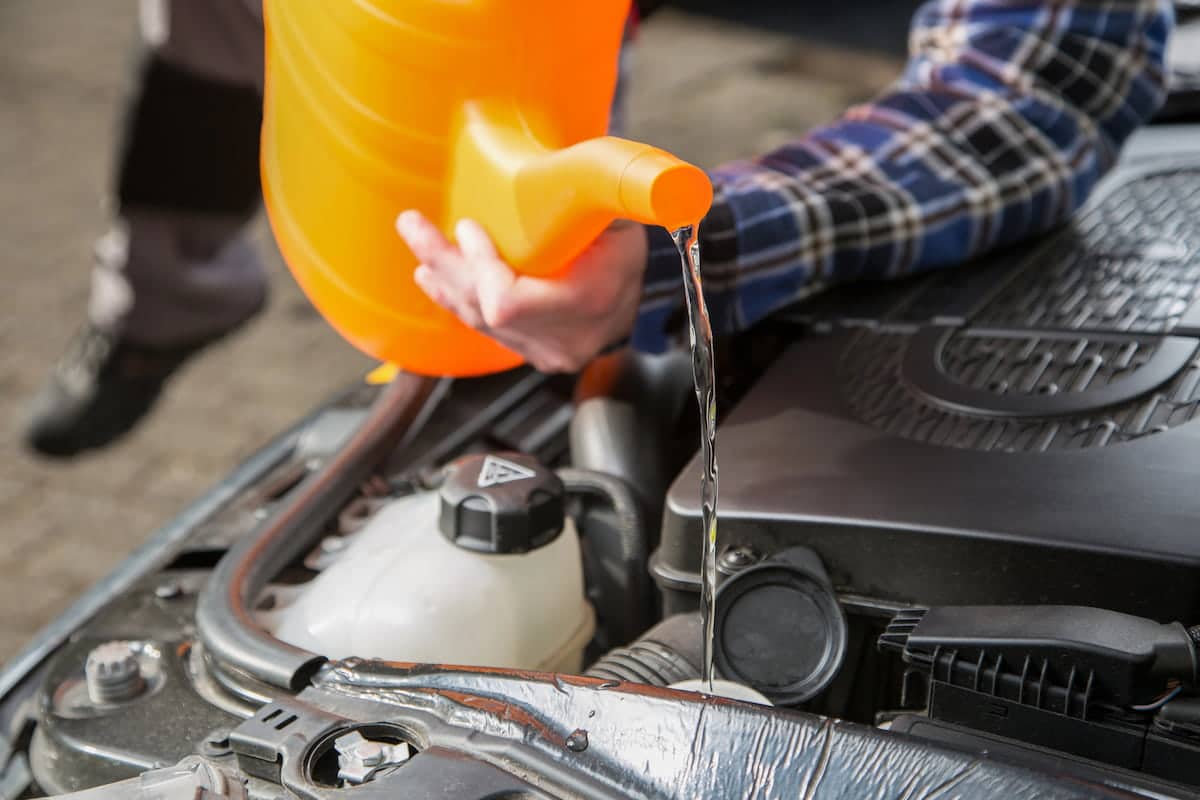
BMW Cooling System Repair at DART Auto
BMW cooling systems operate under tighter tolerances and higher pressures than most domestic platforms, making precision diagnostics and OEM-correct repairs non-negotiable. The electric water pumps on N20, N55, and B-series engines, for example, run on PWM signals controlled by the DME – a generic shop replacing one without access to ISTA/D or ISTA/P cannot verify proper pump operation or bleed the system correctly. Similarly, the expansion tanks on E90 and F30 platforms are known failure points, often cracking at the seams under heat cycling, while the all-plastic thermostat housings on N52 engines develop leaks at the o-ring interfaces. These aren't simple bolt-on fixes; they require platform-specific knowledge of bleed procedures, torque specs, and coolant formulation.
At DART Auto, we've been diagnosing and repairing European cooling systems since 2000. Our technicians use factory repair information, OEM tooling, and the same diagnostic software found at BMW dealerships – but without the dealer markup. We source genuine BMW coolant and OEM-equivalent parts from trusted suppliers, and our salaried compensation structure means your technician has zero incentive to rush the bleed procedure or skip the post-repair pressure test.
What you can expect from our BMW cooling system repair:
- Complete pressure testing and thermal imaging to identify all leak sources – not just the obvious ones
- OEM-correct coolant bleed procedures using factory tooling and software verification
- Thorough inspection of auxiliary components: hoses, clamps, reservoir cap, heater core lines
- 3-year/36,000-mile warranty on parts and labor, backed by over two decades of European-only service
Common Cooling System Repair Issues on BMW Vehicles
BMW cooling systems are engineered for precise thermal management across a wide range of operating conditions, but this complexity introduces specific failure patterns that owners encounter repeatedly. The electric water pumps introduced on N52, N54, and N55 engines from 2006 onward fail frequently between 60,000 and 100,000 miles, often without warning – the impeller housing cracks or the motor burns out, leaving you with rapid overheating and potential head gasket damage. E90 and F30 platforms are particularly vulnerable to expansion tank failures where the plastic sidewalls crack near the sensor mounting points, releasing pressurized coolant onto the engine bay and creating dramatic steam clouds that look catastrophic but are repairable if caught early.
- Electric water pump failure on N52/N54/N55/N20 engines (2006–2016): The plastic impeller housing develops stress cracks, or the brushless motor fails outright. These pumps run continuously on newer BMWs even when the engine is off, accelerating wear. Replacement requires coding the new pump to the DME using factory-level diagnostics.
- Expansion tank cracking on E90/E92/F30 chassis (2006–2018): The OEM plastic becomes brittle with heat cycling, cracking at mounting tabs or sensor bosses. Pressurized coolant sprays onto the alternator and accessory belt, risking electrical damage and belt slip that can strand you.
- Thermostat housing leaks on N20/N26 engines (2012–2016): The plastic thermostat housing warps where it mates to the cylinder head, seeping coolant into the valley and down onto the starter. This often coincides with thermostat valve failures that prevent the engine from reaching operating temperature, triggering limp mode.
- Radiator end-tank separation on E46/E39/E60 platforms (1999–2010): The crimped aluminum-to-plastic joint at the radiator end tanks fails as the plastic ages, causing sudden coolant loss. The upper tank is most prone to separation during pressure spikes from a failing cap or clogged system.
- Coolant transfer pipe corrosion on N54/N55 engines (2007–2015): The aluminum coolant pipes running along the valve cover corrode internally from dissimilar-metal galvanic reaction, creating pinhole leaks that drip onto the turbos and exhaust manifolds, producing acrid smoke and burning odors.
- Auxiliary electric fan failure on all platforms (2000–present): The fan control modules mounted behind the radiator fail from heat exposure, leaving you without supplemental cooling in traffic. On turbocharged models, this leads to heat soak that triggers overboost protection and severe power loss.
Why Choose DART Auto for BMW Cooling System Repair
BMW cooling systems demand more than generic radiator work. From the electric water pumps on N52 and N55 engines to the plastic-aluminum expansion tanks prone to cracking on E46 and E90 platforms, these vehicles require technicians who understand platform-specific failure modes. DART Auto has invested in the factory diagnostic tooling and BMW ISTA software access that allows us to read live coolant temperature data, bleed the system electronically, and verify thermostat operation on drive-by-wire cooling systems found in F-series and newer chassis.
Our master technicians bring dealer-level training without the dealer markup. We follow BMW TIS procedures for bleeding and pressure-testing, use OEM or premium aftermarket components from suppliers like Rein and Mahle, and verify repairs with road tests that include OBDII monitoring for temperature deviations. Because our techs are salaried rather than flat-rate, there's no incentive to skip the post-repair verification or recommend unnecessary work. Every cooling system repair is backed by our 3-year/36,000-mile warranty, and we've been serving Denver's BMW community since 2000.
- Platform expertise: We know which E90 water pumps fail at 60k miles and which F30 thermostats stick closed.
- Complete diagnostics: Pressure tests, dye tracing, and scan-tool monitoring before we quote the repair.
- OEM-level tooling: Factory bleed procedures and live data logging to confirm the fix.
Symptoms – How to Know You Need This Service
BMW cooling system failures often give advance warning, though some components fail suddenly. You may notice coolant pooling under the car after it's been parked overnight – common with expansion tank cracks or water pump seal leaks. A sweet smell inside the cabin points to heater core seepage, while steam from under the hood during or after driving indicates a pressurized leak that needs immediate attention.
Watch for these symptoms:
- Temperature gauge climbing past center or fluctuating erratically – often the first sign of thermostat failure or air in the system
- Coolant warning light or "Coolant Level Low" message on iDrive – expansion tank cracks are the usual culprit on E90, F30, and G20 platforms
- Reduced heat output from cabin vents – air pockets from a slow leak or failing water pump prevent proper circulation
- White residue or crusty buildup around hose connections – dried coolant from weeping o-rings or clamp failures
- Whining or grinding noise from the engine bay – electric water pump bearing failure, common on N20 and N55 engines after 80k miles
- Steam or coolant spray visible under the hood – stop driving immediately; a ruptured hose or blown expansion tank can overheat the engine in minutes
- Oil cap or dipstick showing milky residue – head gasket breach or oil cooler failure allowing coolant into the lubrication system
If you see steam, lose cabin heat entirely, or the temperature gauge enters the red zone, pull over safely and shut off the engine. Continued driving risks warping the cylinder head or damaging the head gasket.
Which BMW Models We See for Cooling System Repair
We service the full range of BMW platforms from the E46 generation forward, with the majority of cooling system work concentrated on models from 2006 onward. The switch to electric water pumps and all-plastic auxiliary components beginning with the E90 3-series introduced new failure modes that require platform-specific diagnostic capability. Older E46 and E39 platforms still see thermostat housing leaks and radiator end-tank failures, but the repairs are more straightforward.
Common platforms and variants we repair:
- E90/E91/E92/E93 3-series (2006–2013) – expansion tank cracks, thermostat housing leaks (N52), electric water pump failures (N54, N55)
- F30/F31/F34 3-series and 4-series (2012–2019) – expansion tank seam splits, coolant hose quick-connector failures, water pump seal leaks on B-series engines
- G20/G21 3-series (2019–present) – early water pump failures on B48 and B58 engines, coolant pipe o-ring leaks
- E60/E61 5-series (2004–2010) – radiator end-tank failures, thermostat housing leaks (N52), water pump issues (N54, N62 V8)
- F10/F11 5-series (2011–2017) – expansion tank failures, electric water pump replacements on N20, N55, and N63 engines
- E46 3-series (1999–2006) – expansion tank and radiator neck cracks, thermostat housing leaks on M54 engines
- X3, X5, X1 (E83, E70, F48, G01) – similar failure modes to corresponding 3/5-series platforms; xDrive models require careful air bleed procedures
- M-variants (E46 M3, E90 M3, F80 M3, F10 M5) – S-series engines have unique water pump designs and higher coolant pressures; we handle these with OEM tooling and procedures
We occasionally see E39 5-series and E38 7-series, though parts availability for pre-2000 models can extend lead times. If your platform isn't listed, call us – we'll let you know honestly whether we're the right shop for your car.
Causes & Risks – What Happens if Ignored
BMW cooling system failures stem from the brand's reliance on lightweight plastic components subjected to extreme thermal cycling – expansion tanks, thermostat housings, and radiator end tanks see temperature swings from ambient to 230°F dozens of times per drive cycle, accelerating material fatigue. The electric water pumps run under constant load even during engine-off periods to support turbo cooling and cabin heating, accumulating operational hours far beyond what traditional belt-driven pumps experience. Denver's altitude compounds these stresses because the lower boiling point at 5,280 feet reduces the margin before localized boiling occurs in hot spots around the cylinder head.
Ignoring early symptoms – a slow coolant level drop, occasional temperature gauge creep, or a faint sweet smell from the vents – allows small leaks to become catastrophic failures. Here's the typical escalation path:
- Week one to two: A hairline crack in the expansion tank or a weeping thermostat housing gasket drops coolant level by a cup per week. You top it off and keep driving.
- Week three to four: The crack widens under pressure. Coolant now sprays onto hot exhaust components, creating visible steam and a persistent burning smell. The low-coolant warning illuminates intermittently.
- Month two: Sustained low coolant level allows air pockets to form in the system. The temperature sensor reads normal because it's surrounded by steam, not liquid, while the cylinder head climbs past safe limits. Head gasket failure begins.
- Month three: Head gasket breach allows combustion gases into the cooling system, over-pressurizing it and blowing out the weakened expansion tank completely. Coolant dumps onto the road in seconds. The engine overheats to 260°F before you can pull over, warping the aluminum head and requiring a $4,000–$7,000 repair instead of a $600 expansion tank replacement.
- Turbo and DME damage: On forced-induction models, overheating degrades the turbocharger's oil supply, scoring the bearings and center section. The DME records over-temperature events that can void powertrain warranty coverage and reduce resale value.
Safety Impact – Why Cooling System Repair Matters
A compromised cooling system on a BMW creates immediate safety risks that extend beyond engine damage. When the engine overheats, the ECU enters limp mode, cutting power to 30 percent and disabling throttle response – this happens without warning on highways, forcing you into traffic at drastically reduced speed. Coolant leaking onto the serpentine belt causes slip that kills power steering assist on hydraulic-assist models and disables the alternator, leaving you with failing brakes (vacuum-assist requires engine vacuum) and no electrical reserves. On turbocharged BMWs, overheating triggers overboost protection that shuts down boost entirely, leaving you with naturally aspirated power levels insufficient for safe merging or passing.
Specific symptoms and their urgency:
- Stop driving immediately: Temperature gauge in the red zone, steam from the hood, loss of power steering, coolant pooling under the car, or a burning smell with visible smoke.
- Schedule within 48 hours: Coolant warning light steady-on, temperature gauge climbing above normal (past the 12 o'clock position), sweet smell from vents, or visible coolant stains on engine components during cold inspection.
- Schedule within two weeks: Slow coolant loss requiring top-offs more than once per month, radiator fans running constantly at idle, or fluctuating temperature readings during highway driving.
Insurance and liability considerations matter here – if a known cooling system defect causes an accident (engine seizure leading to loss of control, or steam obscuring vision), and maintenance records show you ignored warning lights or declined recommended repairs, liability coverage may be contested. Colorado's mandatory vehicle inspection doesn't catch cooling system issues, so responsibility falls entirely on the owner.
How BMW Cooling System Repair Actually Works
BMW's cooling architecture uses electronically controlled electric water pumps, variable-speed auxiliary fans, and map-controlled thermostats managed by the DME to maintain precise coolant temperatures across operating conditions. Unlike traditional belt-driven systems, the electric pump runs independently of engine speed and continues circulating coolant after shutdown to cool the turbochargers and prevent heat soak in the intake manifold. The thermostat isn't a simple wax-pellet valve – it's an electrically heated unit that the DME opens and closes based on load, ambient temperature, and emissions targets, allowing the engine to run cooler under hard acceleration and warmer during light-load cruising for efficiency.
This electronic integration means cooling system repairs require more than swapping parts. When we replace an electric water pump, the new unit must be coded to the DME using BMW's ISTA diagnostic platform so the control module recognizes the new pump's flow characteristics and adjusts duty cycle accordingly. Failing to code the pump results in over-speed operation that burns out the motor prematurely or under-speed operation that allows localized overheating. Thermostat replacement requires a relearn procedure where the DME cycles the valve through its full range to establish position calibration. Expansion tank replacement demands a complete system pressure test at 29 psi – higher than most domestic vehicles – to verify that no secondary leaks exist at hose connections or the radiator crimps.
BMW-specific design elements that affect repair procedures:
- Closed cooling system with minimal air bleed points: Requires a vacuum-fill procedure using specialized equipment to evacuate air pockets that cause overheating and pump cavitation.
- Lifetime coolant specification: BMW's blue or orange coolant formulations use specific corrosion inhibitors for aluminum engines. Mixing coolant types or using generic "universal" antifreeze breaks down those inhibitors and lets corrosion attack the aluminum. We refill with the coolant BMW specifies for your engine, nothing else.
How We Diagnose Cooling System Repair Issues on BMW
BMW cooling systems are engineered with precision – and they fail with predictable patterns. N54 and N55 twin-turbo engines commonly develop water pump failure between 60,000 and 80,000 miles, while E90-generation expansion tanks crack at the seams under heat cycling. F-series models equipped with electric water pumps introduce control module variables that require factory-level scan tools to interpret. Our diagnostic process accounts for these platform-specific failure modes from the first moment your BMW arrives.
- Initial scan with BMW-specific ISTA/D or equivalent factory tooling to pull active and stored fault codes, read live coolant temperature data from multiple sensors, and check electric water pump duty cycles and thermostat position on electronically controlled systems.
- Visual inspection under the hood and beneath the vehicle for coolant staining, hose swelling, expansion tank cracks (especially the junction between tank body and mounting ears on E-chassis cars), radiator end-tank seepage, and oil cooler weeping common on N20/N26 engines.
- Pressure test the cooling system to 18–20 psi and monitor for pressure drop, then isolate whether the leak is internal (head gasket, oil cooler) or external (hoses, pump seal, radiator).
- Thermostat function test by monitoring live coolant temps during warm-up; stuck-open thermostats on N52 and N55 engines cause extended warm-up times and reduced heater output, while stuck-closed units trigger overheating within minutes.
- Inspect the water pump for shaft play, bearing noise, and impeller condition – plastic impeller separation is common on older mechanical pumps, and electric pump failures often present as intermittent overheating with no obvious external leaks.
Once testing is complete, we translate the findings into a prioritized repair plan with transparent cost breakdowns, so you understand what needs attention now versus what can wait until the next service interval.
Cooling System Repair on BMW: Repair vs. Replacement
The decision between repairing and replacing cooling system components on a BMW hinges on the part's design, failure mode, and how the rest of the system has aged. Modern BMW cooling systems use plastic extensively – expansion tanks, thermostat housings, radiator end tanks – and these components become brittle with heat cycling. A cracked expansion tank cannot be patched; replacement is the only safe option. Similarly, a radiator with a pinhole leak in a plastic end tank will develop additional cracks shortly after any attempted repair.
When repair makes sense:
- Replacing a single failed hose or clamp while the rest of the system remains sound and the vehicle is under 80,000 miles.
- Cleaning corrosion from coolant temperature sensor connectors or replacing a single sensor when the wiring harness and other sensors test within specification.
- Updating water pump control software on electric-pump-equipped models when a fault code appears but the pump hardware tests normally.
When full replacement is the right call:
- Water pump failure on high-mileage engines – if the pump is out, replace the thermostat and hoses at the same time; labor overlap saves money and prevents a second failure within 20,000 miles.
- Radiator leaks on vehicles over 100,000 miles or ten years old – plastic degradation affects the entire cooling system simultaneously, and piecemeal repairs lead to repeated breakdowns.
- Head gasket leaks or oil cooler failures – these require extensive disassembly, making it cost-effective to replace every cooling system wear item while the engine is apart.
We walk you through the cost-benefit analysis for your specific BMW, explaining what happens if you choose the minimum fix versus addressing the entire system, so you can make an informed decision rather than feeling pressured into the most expensive option.
How to Make Your BMW Cooling System Repair Last Longer
BMW cooling systems respond well to conscientious operation and proactive maintenance. The biggest enemy is heat cycling – repeated expansion and contraction of plastic components – so driving habits that minimize thermal stress extend component life significantly.
Driving habits that protect the cooling system:
- Allow the engine to reach operating temperature before sustained high-load driving; cold-start full-throttle acceleration stresses the thermostat and water pump.
- Avoid shutting down immediately after spirited driving or long highway runs – let the engine idle for 30–60 seconds to stabilize coolant temps and prevent heat soak in the turbochargers on forced-induction models.
- Monitor the coolant temperature gauge; if it climbs above the center mark, reduce load immediately and investigate – sustained high temps accelerate plastic degradation exponentially.
Owner-level maintenance you can perform safely:
- Check coolant level monthly when the engine is cold; BMW specifies checking at the expansion tank, and the level should sit between the min and max marks.
- Inspect hoses and the expansion tank for cracks, bulges, or staining during every oil change – early detection prevents roadside failures.
- Use only BMW-approved coolant (blue or orange depending on model year) mixed to the correct concentration; generic green coolant causes corrosion in aluminum components.
Leave to the professionals:
- Coolant flushes and bleeds – BMW cooling systems require specific bleeding procedures to purge air pockets, and improper bleeding causes overheating and water pump cavitation.
- Thermostat and water pump replacement – these require precise torque specs and timing alignment on some engines; mistakes lead to leaks or mechanical interference.
- Pressure testing and leak diagnosis – misdiagnosing an internal leak as external (or vice versa) wastes money on the wrong repair.
Following BMW's service intervals and addressing small issues before they cascade into major failures keeps your cooling system functioning reliably for 150,000 miles and beyond.
What to Expect When You Bring Your BMW In
We start every cooling system repair with a thorough inspection, not a parts swap. When you schedule your appointment, we'll ask about symptoms – overheating, coolant loss, steam from the hood, or dashboard warnings – so our technicians can prepare the right diagnostic plan. Drop-off is flexible; we offer early drop-off and after-hours key drop if your schedule requires it. Personal items should be removed from the cabin, but we'll keep your vehicle secure throughout the visit.
- Initial inspection and diagnosis: Pressure test the system, inspect hoses and connections, scan for fault codes, and check coolant condition. We document findings with photos when helpful.
- Written estimate and approval: You'll receive a detailed estimate explaining which components have failed, why they failed, and what happens if the repair is delayed. We'll answer questions by phone or email before starting work.
- Repair and verification: We replace failed parts using OEM or premium aftermarket components, bleed the system per BMW TIS procedures, and road-test the vehicle while monitoring live coolant temps with our scan tool.
- Pickup walkthrough: At pickup, we'll show you the old parts, explain what we replaced, and walk through the invoice line by line. If a loaner or shuttle was needed, we coordinate that at drop-off.
After the repair, we monitor the system one more time before you leave. If you notice any temperature fluctuations or coolant odors in the days following the repair, call us immediately – we'll recheck the work at no charge. Our goal is to fix your BMW right the first time, so you're back on the road with confidence and a three-year warranty backing the repair.
Our BMW Services
- Air Conditioning AC Repair
- Battery Repair Replacement
- Brake Repair & Brake Fluid Change
- Check Engine Light Diagnostics
- Clutch Repair & Replacement
- Coolant Leak Repair
- Drive Shaft Repair
- Engine Repair
- Exhaust & Catalytic Converter Repair
- Head Gasket Repair & Replacement
- Oil Change
- Oil Leak Repair
- Scheduled Service Maintenance
- Steering Repair
- Suspension Repair
- Cambelt Timing Belt Replacement
- Transmission Repair
- Tune Up
- Wheel Alignment


