
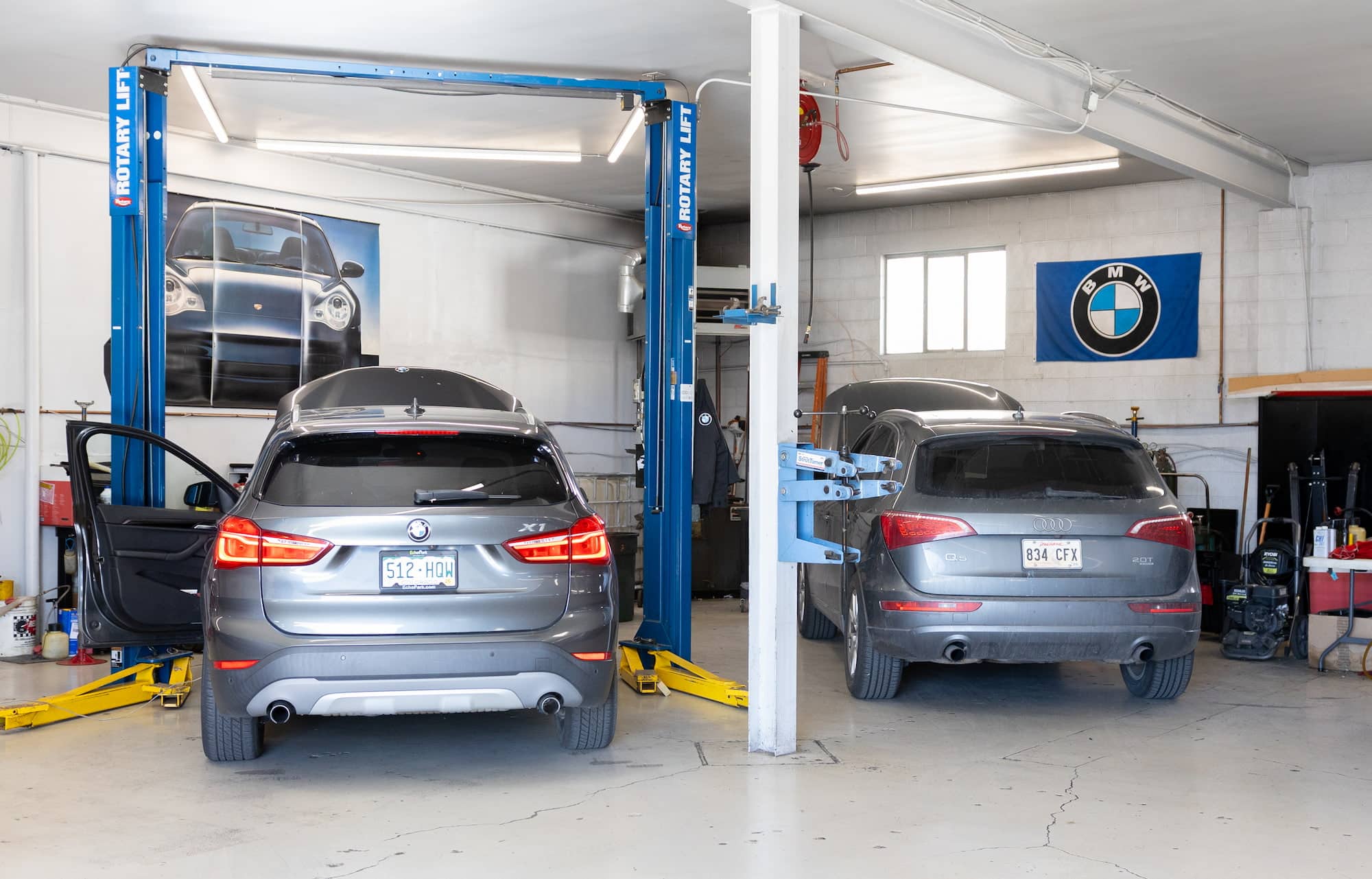
Lamborghini Wheel Alignment at DART Auto
Lamborghini's mid-engine and all-wheel-drive platforms demand precision geometry that most shops simply cannot deliver. The Huracán's magnetorheological suspension system and the Aventador's pushrod suspension architecture require alignment specs measured in hundredths of a degree – tolerances that separate predictable high-speed stability from unpredictable oversteer. Since 2000, DART Auto has specialized in the diagnostic equipment and OEM procedures that Lamborghini alignment work demands. We use laser alignment systems calibrated to Sant'Agata Bolognese specifications, not generic four-wheel templates.
Lamborghini alignment isn't just toe and camber adjustment. The factory procedure includes verifying ride height sensors, recalibrating the electronic damping control modules on Huracán EVO and Aventador S models, and confirming that the ADAS cameras remain within spec after suspension work. Many platforms – particularly 2014-onward Huracáns with Lamborghini Dinamica Veicolo Integrata (LDVI) – require post-alignment software validation through factory diagnostic tools. We own the genuine Lamborghini diagnostic interface and maintain current subscriptions to Sant'Agata's technical service bulletins.
When you bring your Lamborghini to DART Auto for wheel alignment, expect:
- Pre-alignment suspension inspection identifying worn ball joints, tie rod ends, or control arm bushings that would compromise results
- Laser four-wheel alignment using Lamborghini OEM specifications for your exact model year and suspension variant
- Electronic damping system recalibration and ride height sensor verification where applicable
- Post-alignment test drive with data logging to confirm steering response and stability at speed
Common Wheel Alignment Issues on Lamborghini Vehicles
Lamborghini's ultra-low ride height and aggressive suspension geometry create alignment challenges that typical shops often misdiagnose. The Murciélago's double-wishbone front suspension, for instance, uses spherical bearings that wear asymmetrically under hard cornering loads, throwing camber and caster out of spec long before visible play appears. Most alignment racks lack the low-profile adapters needed to properly mount these cars without damaging the undercarriage.
- Gallardo (2003–2013) front control arm bushing deflection: The aluminum front lower control arms use rubber-isolated bushings that compress under the car's weight, causing dynamic toe changes that don't show up on static alignment readings. Early LP560 models are particularly prone to this, manifesting as darting under braking and uneven inner-edge tire wear on the front Pirelli P Zero Corsa tires.
- Aventador (2011–present) rear thrust angle drift: The carbon-fiber monocoque's rear subframe mounting points can shift slightly after repeated launch-control events or track use, creating a rear thrust angle that pulls the car subtly left or right. This requires laser-based four-wheel alignment with OEM thrust-angle correction procedures, not just front-axle toe adjustments.
- Huracán (2014–present) magnetorheological damper calibration dependency: The Huracán's adaptive dampers alter ride height dynamically, so alignment must be performed with the suspension system in its calibrated neutral state using factory scan tools. Generic alignment specs without damper initialization produce readings that shift as soon as the driver selects Corsa mode.
- Urus (2018–present) air suspension settling: The Lamborghini Urus shares its MLB Evo platform with Audi, but its air springs settle differently after the first 5,000 miles. Alignment performed before this settling period will be out of spec once the springs compress to their long-term height, causing premature tire wear on the 285/40R22 front tires.
- Countach and Diablo rear toe-link corrosion: Classic Lamborghinis suffer from corroded rear toe-adjustment eccentric bolts that seize in place, making alignment impossible without disassembly and replacement. The original zinc-plated hardware corrodes quickly in humid climates, and shops without proper extraction tools often snap the bolts during adjustment attempts.
Why Choose DART Auto for Lamborghini Wheel Alignment
Lamborghini alignment demands factory-level precision. The Gallardo and Huracán platforms share Audi underpinnings, but suspension geometry tolerances are tighter than their VW Group cousins. Early Aventador models (LP700-4, 2011–2016) are notorious for front suspension bushings that shift under hard braking, throwing camber out of spec within months of a perfect alignment. Generic shops guess at ride height and settle for "green" on a laser rack. We reference Lamborghini's published suspension geometry data, measure corner weights, and verify ride height against factory spec before we touch a single adjustment bolt.
Our diagnostic tooling mirrors what you'd find at an authorized service center. We own the Hunter HawkEye Elite alignment system calibrated for low-slung supercars, plus the Snap-on ZEUS with Lamborghini-specific coding to read active damper faults and steering angle sensor drift. When a Murciélago comes in pulling left, we don't assume it's toe – we scan for ABS wheel-speed discrepancies, check for bent lower control arms from curb strikes, and inspect the rear subframe mounts that crack on track-driven cars. Our master technicians average over a decade of European marque experience, and they're salaried – never flat-rate – so there's zero incentive to skip the pre-alignment inspection or rush the setup.
- Platform fluency: We distinguish between the LP560 and LP570 front-suspension revisions and adjust accordingly.
- OEM procedures: Factory torque specs for eccentric bolts, mandated steering-wheel re-centering sequences, and post-alignment ADAS recalibration.
- End-to-end ownership: Pre-alignment inspection, written estimate for any worn components, alignment execution, road-test verification, and a printed spec sheet you can compare against Lamborghini's published tolerances.
Symptoms – How to Know You Need This Service
Lamborghini drivers typically notice alignment issues through steering feel and tire behavior before visual cues appear. Watch for these signs:
- Steering wheel off-center during straight-line driving – the wheel sits cocked 10-30 degrees left or right on level highway stretches, indicating unequal toe settings
- Directional pull or drift – the car consistently wanders toward one side without steering input, particularly noticeable above 60 mph where aerodynamic forces amplify misalignment
- Uneven or accelerated tire wear – inner or outer edge feathering on the Pirelli P Zero Corsa or Bridgestone Potenza tires, especially on the rear axle where camber settings are aggressive from the factory
- Steering response delay or vagueness – increased play at center or a numb on-center feel that wasn't present before, often caused by excessive toe-out
- Vibration through the steering wheel – particularly between 50-70 mph, which can indicate both alignment and balance issues working together
- Squealing from front tires during parking maneuvers – excessive toe-in creates scrubbing that produces noise at full lock
- Dashboard ADAS warnings – lane-keeping assist or adaptive cruise errors on 2017+ Huracán EVO models after suspension work or impacts
If you experience sudden pull after hitting a pothole or curb, schedule alignment verification within the week. Continued driving on misaligned suspension accelerates tire wear and can mask developing ball joint or tie rod damage.
Which Lamborghini Models We See for Wheel Alignment
DART Auto performs wheel alignment on the full range of modern Lamborghini platforms, with particular depth of experience on the models Denver owners drive daily:
- Huracán (2014-present) – LP 580-2, LP 610-4, Performante, EVO, EVO RWD, STO, and Tecnica variants; all require magnetorheological damper recalibration after alignment
- Aventador (2011-2022) – LP 700-4, LP 750-4 SV, S, SVJ, and Ultimae; pushrod suspension demands ride height sensor verification as part of alignment protocol
- Urus (2018-present) – shares MLB Evo platform with Audi Q8 but uses unique spring rates and damper tuning; alignment includes air suspension calibration on models so equipped
- Gallardo (2003-2013) – LP 550-2, LP 560-4, Superleggera, and Balboni editions; simpler hydraulic damping but equally tight alignment tolerances
- Murciélago (2001-2010) – LP 640 and LP 670-4 SV; we maintain the specialty tooling for the older pushrod geometry and can source OEM specifications for these increasingly collectible platforms
We align both rear-wheel-drive and all-wheel-drive configurations, manual e-gear and LDF dual-clutch transmissions, and stock or aftermarket suspension setups. For heavily modified track cars running adjustable coilovers or non-OEM geometry, we work from your specified corner weights and alignment targets. Our laser system accommodates the wide track and low ride height that challenge lift-based aligners at generic shops.
Causes & Risks – What Happens if Ignored
Lamborghini alignment issues stem from three primary sources: the cars' extreme performance envelope, Denver's freeze-thaw pothole cycles, and the inherent limitations of their low-volume exotic-car engineering. Unlike mass-market vehicles with forgiving suspension tolerances, Lamborghinis use race-derived geometry where a single degree of camber change affects tire contact patch and handling balance. Hitting a pothole at speed can bend a front lower control arm enough to shift camber by two degrees without cracking the aluminum – invisible damage that creates handling asymmetry and chews through a $1,800 set of tires in 3,000 miles.
Delaying alignment after noticing uneven tire wear or steering pull creates a cascade of expensive failures:
- Tire replacement escalation: What starts as minor inner-edge feathering on one front tire becomes full-depth cord exposure within 1,500 miles on a misaligned Aventador running 255/30R20 fronts. At that point, you're replacing all four tires due to tread-depth regulations, not just the damaged pair.
- Suspension bearing destruction: Misalignment forces suspension components to operate at angles they weren't designed for, accelerating wear in spherical bearings and ball joints. A Gallardo's front upper ball joint, stressed by uncorrected negative camber, can develop play in 8,000 miles instead of the typical 40,000-mile service life, requiring a $2,400 control arm assembly.
- Steering rack side-loading: Chronic toe misalignment on a Huracán creates constant side-load on the electric power steering rack, wearing the internal bushings and causing the rack to develop on-center slop. Rack replacement involves subframe removal and four-wheel alignment afterward – a $6,500 repair that proper alignment would have prevented.
- Brake rotor taper wear: When alignment pulls the car consistently to one side, drivers unconsciously apply more brake pressure to the opposite side to compensate. This creates uneven rotor wear, and carbon-ceramic brake rotors on an Aventador S cost $8,000 per axle – they cannot be resurfaced like iron rotors.
- ABS and stability control confusion: Modern Lamborghinis use wheel-speed sensors to modulate stability control and ABS. Misalignment causes one tire to scrub and rotate at a different speed than its opposite, confusing the stability system and triggering limp-mode faults that require dealer-level diagnostics to clear.
Safety Impact – Why Wheel Alignment Matters
Wheel alignment directly affects every electronic safety system on a modern Lamborghini. The Huracán's ANIMA driving mode selector relies on accurate wheel-speed data to apportion torque through the all-wheel-drive system – misalignment creates false speed differentials that cause the system to misallocate power mid-corner, potentially inducing snap oversteer. The Aventador's pushrod suspension and rear-wheel steering amplify alignment errors, so a rear toe issue that would be merely annoying on a sedan becomes a genuine stability hazard at 80 mph when the rear axle steers opposite to driver input.
When to stop driving immediately versus schedule service soon:
- Stop driving now: Steering wheel off-center by more than 45 degrees while driving straight, violent shaking above 50 mph, car pulling so hard it requires constant steering correction, or any metal-on-metal grinding noise from the wheel area during turns.
- Schedule within the week: Steering wheel off-center by 10–30 degrees, mild vibration at highway speeds, slight pull to one side that's easily corrected, or visible uneven tire wear on the inner or outer tread edges.
- Schedule within the month: Steering wheel slightly off-center (less than 10 degrees), no pull but the car doesn't track perfectly straight, or you've recently hit a significant pothole or curb at speed.
Insurance liability becomes relevant if you're aware of alignment issues and continue driving. If misalignment contributes to loss of control and you've documented the problem through prior service visits but delayed repair, insurers can argue negligence. For Lamborghinis often driven in spirited fashion, maintaining proper alignment isn't just mechanical maintenance – it's legal due diligence.
How Lamborghini Wheel Alignment Actually Works
Lamborghini alignment requires measuring and adjusting four angles per wheel: camber (vertical tilt), caster (steering-axis tilt), toe (wheel convergence), and on AWD models, thrust angle (rear-axle centerline relative to the chassis). Unlike conventional vehicles where these adjustments use slotted bolts and shims, Lamborghinis employ eccentric cam bolts, threaded tie-rod ends with jam nuts, and in some cases, non-adjustable fixed-geometry components that must be replaced if bent. The Aventador's rear-wheel steering adds a fifth variable – the electronic actuator must be centered using the factory ODIS diagnostic system before mechanical alignment begins, or the rear wheels will steer off-center during the alignment process itself.
What makes Lamborghini alignment different from typical vehicles:
- Ground clearance constraints: Most alignment racks use drive-on ramps that position the vehicle 8–12 inches above ground. Lamborghinis with 4-inch ground clearance require ultra-low-profile turntable plates and specialized ramps, plus careful positioning to avoid scraping the front splitter or rear diffuser.
- Ride-height-dependent geometry: Lamborghini suspension geometry changes dramatically through its travel range. Alignment must be performed at the factory-specified ride height with fuel load and driver weight simulated, not at full droop on a lift. This requires loading the suspension with ballast and using laser ride-height measurement tools referenced to OEM specifications.
- Electronic system initialization: After alignment, the steering angle sensor must be recalibrated using the factory scan tool so the stability control system knows where center is. Skipping this step leaves the ESC and ABS systems operating with incorrect steering-input data, causing intrusive stability interventions during normal driving.
-
Lamborghini's suspension geometry is engineered for maximum grip and precision at speed, and even a minor misalignment can degrade handling, accelerate tire wear, and compromise the driving experience. The Gallardo, Huracán, and Aventador platforms all use race-derived double-wishbone setups with tight tolerances and limited adjustment range. A pothole, curb strike, or worn suspension bushing can push camber or toe out of spec, and the result is often felt immediately in the steering or through uneven tire wear patterns. Addressing alignment issues on these cars requires specialized equipment, platform-specific knowledge, and an understanding of how each model's suspension geometry interacts with its all-wheel-drive system and electronic stability control.
How We Diagnose Wheel Alignment Issues on Lamborghini
Proper diagnosis starts before the car reaches the alignment rack. We combine hands-on inspection with precision measurement to understand what's out of spec and why.
- Pre-alignment inspection: We perform a thorough visual and physical inspection of all suspension components – control arms, bushings, ball joints, tie rods, and subframe mounts. On Gallardo and Huracán models, we pay close attention to the aluminum lower control arm bushings, which are known to deflect under hard cornering and can mask alignment issues if worn. We also check tire condition and tread depth across all four corners to identify wear patterns that suggest camber, toe, or caster problems.
- Road test: Before placing the car on the rack, we drive it to assess steering feel, pull, and any vibration or wandering. Lamborghini's electromechanical power steering systems (used on Huracán and Aventador) can sometimes compensate for minor toe issues, so we test with and without driver input to isolate mechanical misalignment from electronic correction.
- Precision alignment measurement: We use a professional four-wheel laser alignment system with Lamborghini-specific specifications loaded for each chassis. The system measures camber, caster, toe, and thrust angle at each wheel, comparing the results against factory tolerances. Lamborghini's spec ranges are often narrow – toe settings may be specified within ±0.05 degrees – so precision equipment is non-negotiable.
- Suspension load and ride height check: We verify that the car is sitting at the correct ride height before measuring alignment. Worn springs, leaking dampers, or aftermarket lowering modifications can all change suspension geometry and invalidate alignment readings. On Aventador models with the hydraulic front lift system, we ensure the system is in its normal position during measurement, because a raised nose changes the camber and toe readings.
- Documentation and repair plan: We document all measurements, photograph any worn or damaged components, and provide a detailed explanation of what's out of spec and what's needed to correct it. You'll receive a clear quote that breaks down adjustment labor, any parts required, and the expected outcome.
Wheel Alignment on Lamborghini: Repair vs. Replacement
Wheel alignment itself is an adjustment, not a repair – but the underlying condition often dictates whether adjustment alone will suffice or whether components need replacement first.
When Adjustment Alone Is Sufficient
- Factory adjustment range available: If camber, caster, and toe are out of spec but all suspension components are in good condition, we can bring the car back into factory tolerances using the existing eccentric bolts, shims, or tie-rod adjustments. This is common after transport, tire replacement, or a minor impact that shifted toe settings without damaging parts.
- Preventive alignment: Lamborghini recommends alignment checks annually or after any suspension work. If the car is still within spec but trending toward the edge of tolerance, we can adjust it back to center to maximize tire life and handling consistency.
When Component Replacement Is Required
- Worn bushings or ball joints: If control arm bushings (especially the lower rearward bushings on Gallardo and Huracán) are deflected or torn, or if ball joints have excessive play, alignment settings will shift under load even after adjustment. We replace the worn components first, then align the car.
- Bent suspension arms: A hard impact can bend a control arm or steering knuckle, pushing the wheel outside the available adjustment range. On Lamborghini, these are typically aluminum forgings and cannot be straightened – replacement with OEM or OEM-equivalent parts is the only safe option.
- Subframe or chassis damage: In rare cases, a severe impact can shift a subframe mount or deform the chassis itself. This requires structural repair before alignment is possible, and we'll refer you to a qualified collision specialist if we identify this condition.
We walk you through the findings and explain why replacement is necessary when it is. Our goal is to restore the car to factory geometry and handling, not to sell parts you don't need.
How to Make Your Lamborghini Wheel Alignment Last Longer
Alignment is a set-it-and-forget-it service only if the suspension remains undisturbed. A few habits and maintenance practices can keep your Lamborghini tracking straight and preserve tire life between alignments.
Driving Habits That Protect Alignment
- Avoid potholes and curbs: Lamborghini's low ride height and stiff suspension transmit impacts directly to the suspension arms and steering components. A pothole that would be a minor annoyance in a sedan can bend a control arm or knock toe out of spec on a Huracán. Drive defensively on rough pavement and be mindful of driveway aprons and parking curbs.
- Limit aggressive cornering on cold tires: The suspension bushings and ball joints experience their highest loads during hard cornering. If you're driving aggressively, let the tires and suspension come up to temperature first – cold rubber and cold bushings don't absorb lateral loads as effectively.
- Use the front lift system properly: On Aventador and newer Huracán models, the hydraulic front lift is there to clear obstacles, not to drive around town. Repeatedly raising and lowering the front end can accelerate wear on the lift cylinders and affect ride height consistency, which indirectly impacts alignment.
Maintenance Habits and Inspection
- Inspect tires regularly: Check for uneven wear across the tread – inside or outside edge wear suggests camber or toe issues, while feathering (one side of each tread block worn more than the other) points to toe misalignment. Catching these patterns early lets you correct alignment before tire damage becomes severe.
- Follow Lamborghini's service intervals: Annual alignment checks are part of the factory maintenance schedule for a reason. Even if the car feels fine, suspension bushings settle and toe settings can drift over time.
- Use OEM or equivalent parts for suspension work: Aftermarket control arms, tie rods, and bushings that don't meet OEM tolerances can introduce play or geometry changes that make alignment unstable. We source OEM or premium aftermarket components that match factory specifications.
- Keep software updated: On Huracán and Aventador, the electronic stability control and all-wheel-drive systems rely on accurate wheel speed and yaw sensors. If the car has been aligned but still feels off, outdated software or miscalibrated sensors may be compensating incorrectly. We can check and update control module software as part of the alignment process.
Alignment is not a DIY task on Lamborghini – the precision equipment and platform-specific knowledge required make it a job for specialists. However, you can protect your investment by driving carefully, inspecting tires regularly, and bringing the car in for annual checks. If you notice steering pull, uneven tire wear, or a change in handling after an impact, schedule an alignment inspection before the problem accelerates wear or compromises safety.
What to Expect When You Bring Your Lamborghini In
We treat every supercar appointment as a scheduled event, not a drop-in oil change. When you book your Lamborghini alignment, we block the bay, prep the alignment rack, and confirm our lead technician is available to handle the work from start to finish.
- Arrival and intake: Park in our covered drop-off area. Our service advisor photographs the exterior, documents existing scrapes or aero damage, and asks about symptoms – pulling under braking, steering-wheel off-center, uneven tire wear, recent curb contact. We note any aftermarket suspension components (coilovers, camber plates, adjustable arms) because they change the alignment process.
- Pre-alignment inspection: Before the car touches the rack, we lift it and inspect ball joints, tie-rod ends, control-arm bushings, and subframe mounts. On Huracáns we check the magnetic damper system for fault codes. If we find worn parts that will sabotage the alignment, we call or text with photos and a written estimate before proceeding.
- Alignment execution: We set ride height to Lamborghini spec, mount the laser targets, and measure all four corners. Adjustments follow the factory sequence – rear toe and camber first, then front. We re-torque every fastener to OEM spec and re-center the steering wheel through the ADAS module if your car has lane-keeping assist.
- Road test and verification: Every alignment ends with a 15-minute test drive on varied surfaces. We verify straight-line tracking, check for pull or drift, and confirm the steering wheel sits centered. You receive a printed before-and-after spec sheet showing each angle against Lamborghini's published range.
- Pickup walkthrough: We walk you through the spec sheet, explain any angles we couldn't bring into tolerance (and why), and discuss tire-wear expectations. If something feels off within the first week, bring it back – we'll re-check at no charge.
Loaner vehicles and shuttle service are available for longer jobs. After-hours pickup can be arranged if your schedule demands it. Remove valuables and garage-door openers before drop-off; we secure keys in a locked cabinet and park completed cars in our alarmed indoor lot.
Our Lamborghini Services
- Air Conditioning AC Repair
- Battery Repair Replacement
- Brake Repair & Brake Fluid Change
- Check Engine Light Diagnostics
- Clutch Repair & Replacement
- Coolant Leak Repair
- Cooling System Repair
- Drive Shaft Repair
- Engine Repair
- Exhaust & Catalytic Converter Repair
- Head Gasket Repair & Replacement
- Oil Change
- Oil Leak Repair
- Scheduled Service Maintenance
- Steering Repair
- Suspension Repair
- Cambelt Timing Belt Replacement
- Transmission Repair
- Tune Up


