
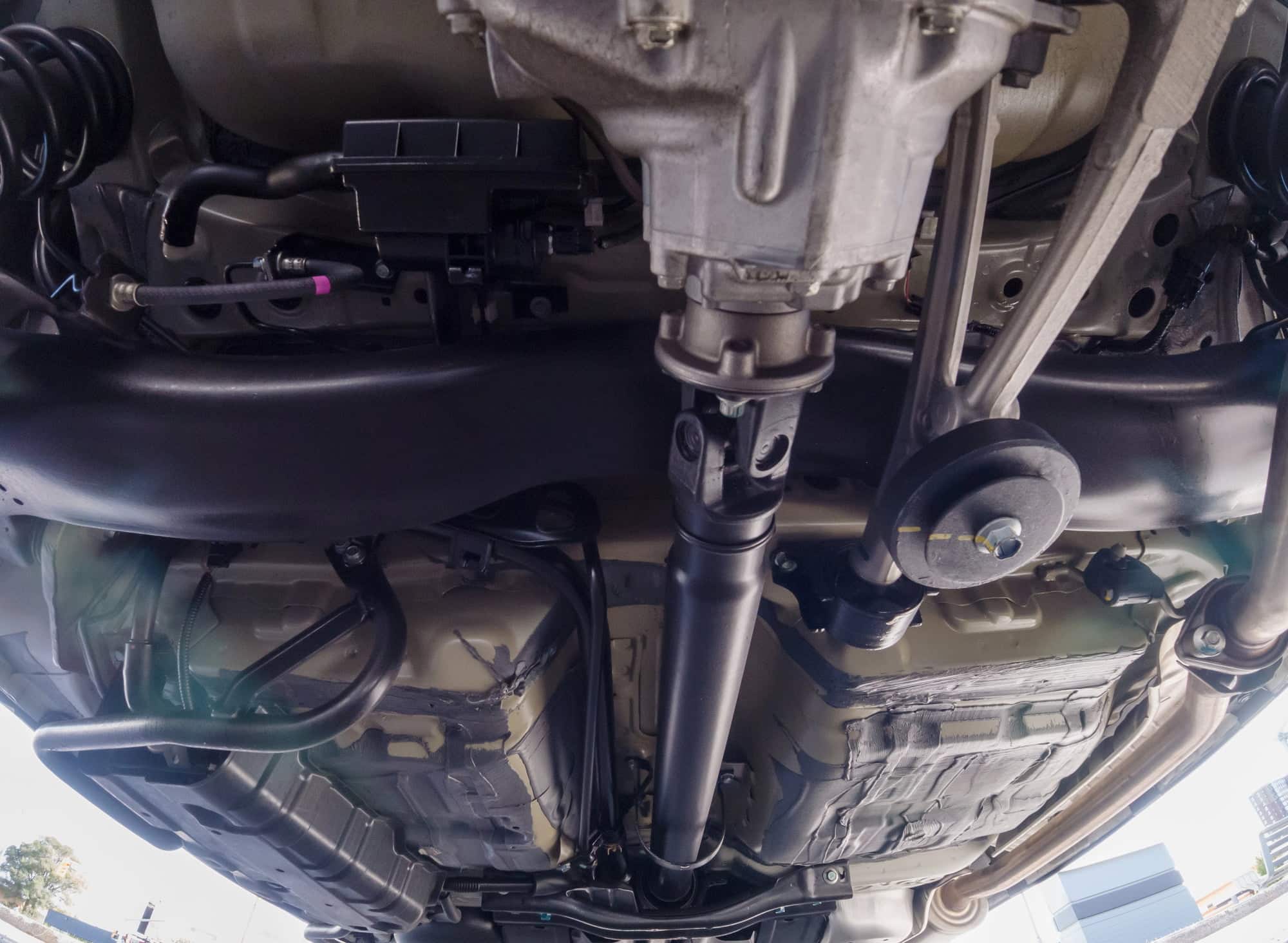
Porsche Drive Shaft Repair at DART Auto
Porsche engineering demands precision at every touchpoint, and nowhere is that more apparent than in the drivetrain. A failing drive shaft on your 911, Boxster, Cayman, Cayenne, or Panamera doesn't just cause vibration – it threatens the finely tuned balance that makes a Porsche handle the way it does. When center support bearings wear, CV joints develop play, or flex discs (commonly called giubo or guibo) deteriorate, the result is driveline lash that cascades through the entire powertrain. On rear-engine 911 platforms (996, 997, 991, 992) and mid-engine Boxster/Cayman models (986, 987, 981, 718), even minor imbalance translates directly to the chassis. Miss the factory torque specs or reuse stretch bolts, and you've compromised both performance and safety.
DART Auto approaches Porsche drive shaft repair with the same diagnostic rigor and OEM-level tooling the factory demands. We use Porsche-specific alignment procedures, torque-to-yield fastener protocols, and the correct grease specifications for each generation. Our master technicians – all with dealer training and over a decade of European experience – understand that a Cayenne's front drive shaft service differs fundamentally from a 911 Carrera 4's rear shaft work, and that PDK-equipped models require transmission adaptation after certain driveline repairs.
When you bring your Porsche to DART Auto for drive shaft repair, expect:
- Complete driveline inspection using factory diagnostic software to identify worn CV joints, failing center support bearings, torn boots, and deteriorated flex discs before they cause secondary damage
- OEM or premium aftermarket parts sourced from trusted European suppliers, never generic universal-fit components that compromise fit and longevity
- Proper torque sequences and single-use fastener replacement per Porsche service documentation, preserving warranty validity and resale value
- Post-repair test drive and vibration analysis to confirm smooth operation across the entire RPM range, backed by our 3-year/36,000-mile parts and labor warranty
Common Drive Shaft Repair Issues on Porsche Vehicles
Getting drive shaft work wrong on a Porsche means throwing away thousands in resale value and opening the door to catastrophic drivetrain failure. These aren't Honda Civics – every fastener torque, every alignment spec, every CV joint angle matters when you're dealing with AWD systems engineered to put 500+ horsepower to the ground without drama.
- CV joint boot tears on 996/997 Carrera 4 and Turbo models (1999–2012): The front axle CV boots crack from heat cycling and road debris, letting grease escape and contaminants in. Once the joint runs dry, the bearings score and the shaft develops play. Porsche's AWD system routes torque through a viscous coupling that cannot tolerate driveline slack – ignore a torn boot for 5,000 miles and you're replacing the entire axle assembly plus diagnosing transfer case wear.
- Center support bearing failure on 991 and 992 Carrera 4S/GTS (2012–present): The two-piece rear drive shaft uses a rubber-isolated center bearing that fatigues from high-rpm launches and track use. When it collapses, the shaft whips against the underbody tunnel, damaging heat shields and exhaust hangers. You'll hear a rhythmic thump under acceleration that escalates to violent vibration if you keep driving.
- Guibo (flex disc) deterioration on rear-drive 911s and Boxster/Cayman (all generations): The rubber coupling between transmission and drive shaft hardens with age and oil contamination. Cracks appear around the bolt holes, then chunks tear out under load. A failing guibo sends shock loads into the transmission output shaft and can crack the differential mount.
- Spline wear on Cayenne and Macan transfer case output shafts (2003–present): The splined connection between transfer case and front drive shaft wears when fluid service intervals are ignored. Porsche specifies PTF-1 fluid changes every 40,000 miles, but many owners skip them. Worn splines cause clunking on throttle tip-in and eventually strip completely, leaving you in rear-drive mode with warning lights.
- Drive shaft imbalance from bent tubes on lowered 981/718 Cayman and Boxster: Aftermarket suspension drops that exceed Porsche's geometry limits put the drive shaft at aggressive angles. The tube flexes under torque, throws the assembly out of balance, and creates a 70-mph vibration that destroys the transmission output bearing.
- Tripod joint binding on 955/957 Cayenne front axles (2003–2010): The inner CV joint uses a tripod design that binds when the boot clamp loosens and moisture enters. Binding creates a shudder during tight low-speed turns and loads the differential side gears asymmetrically, accelerating ring-and-pinion wear.
Why Choose DART Auto for Porsche Drive Shaft Repair
Drive shaft failure on a Porsche isn't just about vibration or noise – it's about protecting a precision drivetrain that depends on exact tolerances and OEM balance specifications. A botched repair can damage your transaxle, differential mounts, or center support bearing, turning a manageable fix into a five-figure catastrophe. DART Auto has been diagnosing and repairing Porsche drive shafts since 2000, and our technicians know the difference between 996-generation guibo wear, 997 Carrera 4S front propshaft flex-disc failures, and Cayenne/Panamera Torsen center-diff vibration patterns.
We invest in the factory-level diagnostic tools and repair data that distinguish a correct Porsche drive shaft repair from generic driveline work:
- Platform-specific torque sequences and alignment procedures – Porsche specifies exact bolt grades, preload values, and phasing marks that generic shops ignore, leading to repeat failures and warranty headaches.
- OEM and premium aftermarket parts sourced from trusted suppliers – We match or exceed factory specifications for guibos, CV joints, center support bearings, and balance-corrected shafts.
- Post-repair road testing and scan-tool verification – Our salaried master technicians (minimum 10 years' experience, dealer-trained) road-test every car and re-scan for stored fault codes before you pick up, catching issues that flat-rate shops miss in their rush to the next job.
- 3-year/36,000-mile warranty on parts and labor – We stand behind the work because we do it right the first time, using factory repair information and specialty tooling designed for European vehicles.
Symptoms – How to Know You Need This Service
Porsche drive shaft problems announce themselves through sensations that disrupt the refined driving experience you expect. Because Porsche's rear- and mid-engine layouts position the drivetrain differently than conventional front-engine cars, failure modes often feel more immediate and pronounced. You may notice:
- Clunking or knocking during acceleration or deceleration – worn CV joints or excessive play in the center support bearing create audible impacts as torque reverses, especially noticeable in Sport or Sport Plus modes when throttle response sharpens
- Vibration that increases with speed – an out-of-balance drive shaft or failing center bearing produces a rhythmic vibration felt through the seat and steering wheel, often most pronounced between 50–70 mph
- Squeaking or chirping from underneath during turns – dry or damaged CV joints bind and release as the suspension articulates, creating high-pitched noise during parking-lot maneuvers or spirited cornering
- Visible grease on the undercarriage or inside wheel wells – torn CV boots allow grease to fling outward, leaving telltale streaks; once the boot tears, contamination and wear accelerate rapidly
- Shuddering during low-speed acceleration – worn tripod joints or excessive driveline lash cause a lurching sensation when pulling away from a stop, particularly in manual-transmission models
- Metallic grinding or rumbling that worsens under load – a failing center support bearing produces a growling noise that intensifies during hard acceleration or when climbing grades; this symptom warrants immediate attention to prevent complete bearing seizure and potential shaft separation
- Dashboard warning lights – on all-wheel-drive Carrera 4, Turbo, Cayenne, and Panamera models, driveline faults may trigger stability control warnings or all-wheel-drive system alerts as sensors detect speed mismatches between axles
Which Porsche Models We See for Drive Shaft Repair
Drive shaft service applies across Porsche's rear-engine, mid-engine, and front-engine platforms, though the specific components and failure patterns vary by layout and generation. We regularly perform this work on:
- 911 (996, 997, 991, 992) – rear-wheel-drive Carrera models typically need rear CV joint and flex disc service; all-wheel-drive Carrera 4, Turbo, and Targa variants add front drive shaft and transfer case output shaft work; 997.2 and later models with PDK may require adaptation after driveline repairs
- Boxster and Cayman (986, 987, 981, 718) – mid-engine layout places unique stress on rear drive shafts; early 986 models (1997–2004) and 987.1 (2005–2008) commonly develop center support bearing wear and CV boot tears; 718 models share many 991-generation components
- Cayenne (955, 957, 958, 9YA) – front and rear drive shafts serve all-wheel-drive system; first-generation 955/957 (2003–2010) models frequently need front CV joint replacement and center support bearing service; 958 (2011–2018) and current 9YA generations use updated designs but still require periodic flex disc and boot inspection
- Panamera (970, 971) – all-wheel-drive sedan and Sport Turismo variants use complex driveline with front and rear shafts; 970 models (2010–2016) share some Cayenne components; 971 generation (2017–present) incorporates hybrid variants with additional driveline complexity
- Macan (95B) – compact SUV shares Audi Q5 platform but uses Porsche-specific calibrations and components; front drive shaft CV joints and rear flex discs are common service items on 2014–present models
Manual-transmission cars typically experience different wear patterns than PDK/Tiptronic models due to torque delivery characteristics. We maintain the diagnostic software and specialty tooling to service all current and recent Porsche platforms; for air-cooled 911 models and earlier cars, we recommend consultation to confirm parts availability and service feasibility.
Causes & Risks – What Happens if Ignored
Drive shaft problems on Porsche vehicles stem from three primary sources: aggressive driving that exceeds OEM joint angles, deferred maintenance on fluid-dependent components, and age-related rubber degradation in high-heat environments. Colorado's temperature swings crack CV boots faster than coastal climates, and our altitude means less air density to cool drivetrain components during mountain passes. Porsche's performance-oriented gearing and lightweight aluminum construction leave no margin for neglect – these systems operate at the edge of material limits even when healthy.
Ignoring early symptoms transforms a $600 CV axle replacement into a $4,000 nightmare involving transfer case internals, transmission mounts, and exhaust system damage. Here's the escalation path:
- Week 1–4 after first symptoms: A clicking CV joint or vibrating guibo is still contained. The damaged component hasn't grenaded yet. Repair costs stay predictable.
- Month 2–3: A torn CV boot that's been leaking grease for 2,000 miles now has metal-on-metal contact inside the joint. The bearings score, creating play. That play hammers the differential side gears every time you accelerate, work-hardening the gear teeth.
- Month 4–6: A collapsed center bearing lets the drive shaft contact the exhaust or tunnel. The resulting vibration cracks transmission mounts and fatigues the output shaft seal. Now you're adding a transmission reseal to the repair order.
- Beyond 6 months: A completely failed CV joint or guibo sends shock loads through the drivetrain that crack the differential housing or strip transfer case splines. What started as a $600 axle is now a $6,000 differential replacement with ancillary damage to exhaust hangers, heat shields, and underbody components.
- Safety threshold: When a drive shaft separates at highway speed, the loose end acts as a ground anchor, pitching the car violently and potentially causing rollover. Porsche's low center of gravity helps, but physics still wins.
Safety Impact – Why Drive Shaft Repair Matters
A failing drive shaft on a Porsche doesn't just make noise – it destabilizes the systems that keep you pointed straight and in control. Porsche's PSM (Porsche Stability Management) relies on predictable torque delivery to all four wheels. When a CV joint binds or a drive shaft vibrates, the ABS wheel-speed sensors see erratic rotation that confuses the stability algorithms. The system throws fault codes, defaults to limp mode, and disables traction intervention exactly when you need it most.
Specific failure modes that create immediate danger:
- Complete CV joint separation during acceleration: The wheel loses drive, causing sudden yaw if it happens mid-corner. On AWD models, the torque imbalance between front and rear can trigger snap oversteer.
- Drive shaft contact with brake lines or ABS sensors: A whipping drive shaft can sever a brake hard line or destroy a wheel-speed sensor, eliminating ABS function and potentially causing brake fluid loss.
- Guibo disintegration under load: Chunks of rubber flex disc can jam between the drive shaft and tunnel, locking the drivetrain and causing the rear wheels to skid. This has caused rear-end collisions when drivers couldn't predict the sudden deceleration.
Stop driving immediately if: you hear metal-on-metal grinding from underneath, see dashboard warnings for PSM/ABS/traction control simultaneously, or feel a violent shudder during acceleration. Schedule within the week if: you notice clicking during turns, vibration at highway speed, or clunking when shifting from drive to reverse.
How Porsche Drive Shaft Repair Actually Works
Porsche's drive shafts aren't simple tubes – they're carefully balanced assemblies that must maintain precise alignment angles while transmitting 400+ lb-ft of torque through CV joints engineered to survive 7,000-rpm launches. On AWD models like the 911 Carrera 4 and Turbo, the front drive shaft routes through a complex path around the engine and includes a slip joint to accommodate suspension travel without binding. The rear shaft on all models uses either a single-piece design (shorter wheelbases) or a two-piece configuration with a center support bearing (longer wheelbases like Cayenne and Panamera).
What makes Porsche drive shaft work different from generic shops:
- OEM-specified preload on CV joint fasteners: Porsche publishes torque values and tightening sequences that must be followed exactly. The triple-square fasteners require specific tooling, and over-torquing cracks the joint housing while under-torquing allows the joint to walk out under load.
- Dynamic balancing requirements: Replacement drive shafts must be balanced to within 5 grams at operating speed. Porsche specifies balancing with the guibo and CV joints installed, not just the bare tube. Generic shops skip this and create 70-mph vibrations that destroy transmission bearings.
- PTM (Porsche Traction Management) calibration after AWD shaft replacement: On Cayenne, Macan, and 911 Turbo models, the PTM control module stores learned values for driveline slack and torque transfer rates. After drive shaft work, the system needs a relearn procedure using PIWIS (Porsche Integrated Workshop Information System) to restore optimal torque distribution. Skip this and you get sluggish AWD response and premature clutch pack wear in the transfer case.
- Aluminum shaft handling procedures: Many Porsche drive shafts use aluminum tube sections that dent if they are clamped in a vice or knocked during removal. We support the shaft at the flanges and leave the balance weights alone, because a dented tube or a lost weight cannot be brought back into balance.
How We Diagnose Drive Shaft Repair Issues on Porsche
Porsche drive shafts transmit enormous torque through compact, precision-engineered assemblies. When a CV joint or center bearing begins to fail, the consequences range from annoying vibration to catastrophic loss of power delivery. Misdiagnosing the source of a driveline vibration – confusing a worn CV boot with a failing wheel bearing, or attributing a clunk to a worn mount when the actual culprit is a splined coupling – wastes your time and money while the real problem accelerates. Here's how we pinpoint the root cause:
- Initial scan and fault code retrieval. We connect Porsche-specific diagnostic software (PIWIS equivalents and factory scan tools) to pull stored and pending codes from the PCM, PSM, and PTV modules. Torque distribution faults, wheel speed sensor discrepancies, and traction control interventions can all point to driveline asymmetry caused by a failing CV joint or imbalanced shaft.
- Road test under varied load conditions. We replicate the customer's complaint – acceleration from a stop, tight-radius turns at parking-lot speeds, highway cruise, and deceleration. On rear-drive 911s (997, 991, 992 generations), we listen for clicking during lock-to-lock maneuvers. On all-wheel-drive Cayenne and Panamera models, we monitor for vibration that changes with throttle position, which often indicates a worn center support bearing or front CV joint.
- Lift inspection and manual checks. With the vehicle on the rack, we rotate each wheel by hand, checking for radial and axial play at the CV joints, inspecting boots for tears or grease expulsion, and examining the center bearing mount for rubber degradation. On 996 and 997 Carrera 4 models, the front drive shafts are known to develop boot tears near the inner tripod joint; catching this early prevents expensive joint replacement.
- Measurement and comparison to factory specifications. We measure runout on the shaft itself and compare CV joint free-play to Porsche tolerances. Excessive play – even a few millimeters – confirms the need for replacement rather than guesswork.
Once we've isolated the failing component, we walk you through what we found, explain why it failed, and provide a detailed quote that reflects only the work your Porsche actually needs.
Drive Shaft Repair on Porsche: Repair vs. Replacement
The term "drive shaft repair" can mean different things depending on the damage and the platform. On a Porsche, the decision hinges on whether the core assembly is still sound or whether wear has compromised safety-critical tolerances.
When True Repair Makes Sense
- Boot replacement on early-stage damage. If a CV boot has torn recently and the joint itself shows no pitting or excessive play, we can clean out contamination, repack the joint with OEM-spec grease, and install a new boot. This is common on Cayenne and Panamera front axles where road debris punctures the outboard boot before the joint is damaged.
- Center bearing replacement on modular shafts. Many Porsche drive shafts use a pressed or bolted center support bearing. If the bearing has failed but the shaft itself is straight and the splines are clean, we replace only the bearing and mount, preserving the original shaft.
When Partial or Full Replacement Is the Right Call
- CV joint wear beyond tolerance. Once the balls and races inside a CV joint show pitting or the cage has fractured, no amount of cleaning will restore smooth operation. On 997 Turbo and GT3 models, the axle shafts endure high torque and lateral loads; a worn joint must be replaced as an assembly to maintain balance and safety.
- Cascading wear or contamination. If a torn boot has allowed dirt into the joint for thousands of miles, the entire half-shaft typically needs replacement – the splines, stub shaft, and joint are all compromised.
- Cost and labor economics. On some platforms, the labor to disassemble, clean, and rebuild a CV joint approaches the cost of a new OEM or premium aftermarket shaft. We compare both options and let you decide which makes sense for your ownership timeline.
We never upsell a full replacement when a targeted repair will deliver the same durability and safety. Our salaried technicians have no incentive to pad the ticket – they're paid to fix your car correctly, not quickly.
How to Make Your Porsche Drive Shaft Repair Last Longer
Once your Porsche's drive shaft is back to factory spec, a few habits will help you extract maximum service life from the new components.
Driving Habits That Preserve Driveline Components
- Allow the drivetrain to reach operating temperature before hard acceleration. Cold CV grease is stiff; launching aggressively before the car is warm concentrates stress on the joint's balls and races. A two-minute warm-up reduces peak loads and extends joint life.
- Minimize full-lock, low-speed maneuvers under power. Tight parking-lot turns with the wheels cranked to the stops force the CV joints through their maximum articulation angle. Coasting through these turns – rather than accelerating – reduces stress on the joint cages.
- Avoid potholes and curb strikes. Impact loads can dent the drive shaft tube or knock the center bearing out of alignment, introducing vibration and accelerating wear.
Maintenance You Can Monitor
- Inspect CV boots during tire rotations. A quick visual check every six months catches torn boots before contamination destroys the joint. Look for grease splatter on the inside of the wheel – a telltale sign of a failed boot.
- Listen for new noises. Clicking during turns or a low-frequency vibration at highway speed both warrant immediate inspection. Catching a failing joint early often means a boot replacement instead of a full shaft.
- Follow Porsche's fluid and filter intervals. On all-wheel-drive models, the transfer case and front differential share lubrication duties with the driveline. Contaminated or degraded fluid accelerates wear on splined couplings and support bearings.
What to Leave to the Shop
Replacing a CV boot or drive shaft requires specialized tools, torque specs, and – on many Porsche models – software recalibration of the all-wheel-drive system. Attempting this work without factory procedures and PIWIS-level diagnostics risks improper installation, imbalanced shafts, or drivetrain faults that trigger limp mode. We handle the technical work; you handle the pre-flight checks and sensible driving.
What to Expect When You Bring Your Porsche In
We know you're trusting us with a high-value machine. Here's how the process works from the moment you call to the moment you drive away confident:
- Appointment and drop-off – Schedule by phone or online. Bring your key and remove valuables; we'll note mileage and any existing cosmetic issues. Loaner vehicles and shuttle service are available depending on scheduling – ask when you book.
- Complete inspection and diagnosis – Before we touch a wrench, we road-test your Porsche to confirm symptoms, then lift it for a full driveline inspection. We check guibos, CV boots, center support bearings, differential mounts, and scan for stored fault codes. If we find additional wear (common on high-mileage 911s and Cayennes), we photograph it and document it.
- Written estimate and your approval – You'll receive a detailed estimate explaining what we found, what we recommend, and the consequences of delaying each repair. No surprise charges, no upselling – just transparent pricing and expert advice.
- Repair using OEM procedures – Our technicians follow factory torque specs, phasing marks, and alignment protocols. We use specialty pullers and installation tools specific to Porsche driveline components, not universal parts-store gear.
- Post-repair verification and pickup walkthrough – Every repaired Porsche gets a road test and a final scan. At pickup, we walk you through what we did, show you old parts if requested, and explain what to listen for. If anything feels off in the first few days, call us – we'll re-check it at no charge.
After-hours key drop and pickup are available by arrangement. We treat your Porsche the way we'd treat our own – because cutting corners on a precision German drivetrain costs you far more than doing it right the first time.
Our Porsche Services
- Air Conditioning AC Repair
- Battery Repair Replacement
- Brake Repair & Brake Fluid Change
- Check Engine Light Diagnostics
- Clutch Repair & Replacement
- Coolant Leak Repair
- Cooling System Repair
- Engine Repair
- Exhaust & Catalytic Converter Repair
- Head Gasket Repair & Replacement
- Oil Change
- Oil Leak Repair
- Scheduled Service Maintenance
- Steering Repair
- Suspension Repair
- Cambelt Timing Belt Replacement
- Transmission Repair
- Tune Up
- Wheel Alignment


