
Porsche Coolant Leak Repair at DART Auto
Porsche cooling systems demand precision that most general repair shops simply cannot deliver. From the mid-engine layout of the 986/987 Boxster and Cayman to the rear-engine configuration of the 996/997/991 911, coolant routing differs dramatically from conventional front-engine platforms. Porsche engineers design these systems with tight tolerances, proprietary coolant specifications, and location-specific torque values that generic repair procedures ignore. When a coolant leak develops on a water-cooled Porsche, addressing it correctly the first time requires factory diagnostic protocols, OEM repair information, and technicians who understand the brand's unique architecture.
At DART Auto, we've specialized in European vehicles since 2000, investing in the Porsche-specific diagnostic tools and training that replicate dealership capability without the dealer price tag. Our master technicians – all with at least ten years of experience and dealer-level training – use salaried compensation structures that eliminate the flat-rate incentive to rush complex jobs. We follow Porsche AG repair procedures, use genuine or premium aftermarket components from trusted suppliers, and apply the exact coolant mixtures and bleeding sequences each platform requires. The 996/997 plastic coolant pipes, 987 expansion tank failures, and 991 radiator end-tank cracks we see regularly all demand different approaches, and we've developed the expertise to handle each correctly.
When you bring your Porsche to DART Auto for coolant leak diagnosis and repair, expect:
- Complete pressure testing and UV dye tracing to locate every leak source, not just the most obvious one
- Transparent explanations of what failed, why it failed on your specific model year, and what happens if you delay the repair
- OEM-spec coolant flush and refill with proper bleeding procedures to eliminate air pockets that cause overheating
- 3-year/36,000-mile warranty on parts and labor, backing every repair we perform
Common Coolant Leak Repair Issues on Porsche Vehicles
Porsche cooling systems are engineered for performance, but that sophistication introduces failure points that generic shops often miss. Because water-cooled Porsches run higher coolant pressures and tighter thermal tolerances than most brands, even small leaks accelerate into catastrophic overheating if left unaddressed. Here are the most common coolant leak scenarios we diagnose on Porsche platforms:
- Coolant expansion tank cracking on 996/997 (1999–2012 911/Boxster/Cayman): The OEM plastic tank becomes brittle with heat cycling. Hairline cracks form along the seams or mounting tabs, leaking coolant onto the undertray. This is compounded by the tank's location near the exhaust, which accelerates degradation. Factory replacement is the only reliable fix – aftermarket tanks often fail within months.
- Radiator end-tank separation on 987 Boxster/Cayman (2005–2012): The crimped aluminum-to-plastic joint on the side-mount radiators fails under pressure cycling. You'll see coolant weeping from the tank seam or pooling under the front bumper. Porsche revised the design mid-production, but early units remain vulnerable.
- Water pump seal failure on Cayenne/Panamera V8 (2003–2016, M48/M55 engines): The mechanical seal behind the impeller wears, allowing coolant to seep past the pump shaft. Early symptoms include a faint coolant odor and slight level drop; ignoring it leads to bearing failure and catastrophic pump disintegration that scatters debris through the cooling system.
- Thermostat housing leaks on 991/981/Macan (2012+): The multi-piece plastic thermostat housing develops leaks at the O-ring interfaces, especially after the first thermostat replacement if non-OEM seals are used. Coolant drips onto the alternator or starter, risking electrical damage.
- Coolant pipe corrosion on air-cooled 911 conversions and early Boxster (1997–2004): Aluminum coolant pipes corrode from the inside out when incorrect coolant mix or tap water is used. Pinhole leaks appear at bends and welds, often hidden behind engine covers.
- Heater core pinhole leaks on Cayenne/Panamera (all generations): The heater core, buried deep in the dashboard, develops pinhole leaks that fog the windshield and leave a sweet coolant smell in the cabin. Repair requires complete dash removal – a 12+ hour job that's cost-prohibitive if delayed until the carpet is soaked.
Why Choose DART Auto for Porsche Coolant Leak Repair
Porsche coolant systems demand specialized attention that goes far beyond typical shop capabilities. Water-cooled 911s (996-generation forward), Boxster, Cayman, Cayenne, and Panamera models each present unique leak points – from the notorious plastic coolant pipes on 997.1 engines to the auxiliary water pump failures common on 2009–2012 Cayenne and Panamera platforms. DART Auto's master technicians bring dealer-level training and over 24 years of Porsche-specific experience to every diagnosis, using factory scan tools and OEM repair procedures that generic shops simply don't have access to.
Because our technicians are salaried rather than flat-rate, there's zero incentive to misdiagnose a minor hose leak as a full radiator replacement. We perform complete pressure testing and thermal imaging to isolate the exact failure point – whether it's a cracked expansion tank on a 987 Cayman, a leaking thermostat housing on a Macan, or corroded coolant pipes behind the engine. Our 3-year/36,000-mile warranty on parts and labor backs every repair, and we use OEM or premium aftermarket components sourced from trusted European suppliers. You get honest, expert-level service without the dealer price tag, and we fix it right the first time.
Symptoms – How to Know You Need This Service
Porsche coolant leaks often announce themselves subtly before escalating into serious damage. Recognizing the early warning signs lets you address problems before a minor leak becomes a catastrophic overheat.
You may notice:
- Sweet smell inside the cabin or near the engine bay – the distinctive odor of ethylene glycol coolant, especially noticeable after the car has been running
- Puddles or drips under the car – bright green, pink, or orange fluid pooling beneath the engine or near the rear wheels on mid-engine models
- Rising temperature gauge or overheating warnings – the needle climbing past normal operating range or dashboard alerts indicating coolant system faults
- Low coolant warning light – Porsche's onboard monitoring detects reservoir levels dropping below safe thresholds
- Visible coolant residue – dried white or colored stains on hoses, around the expansion tank, or near pipe connections
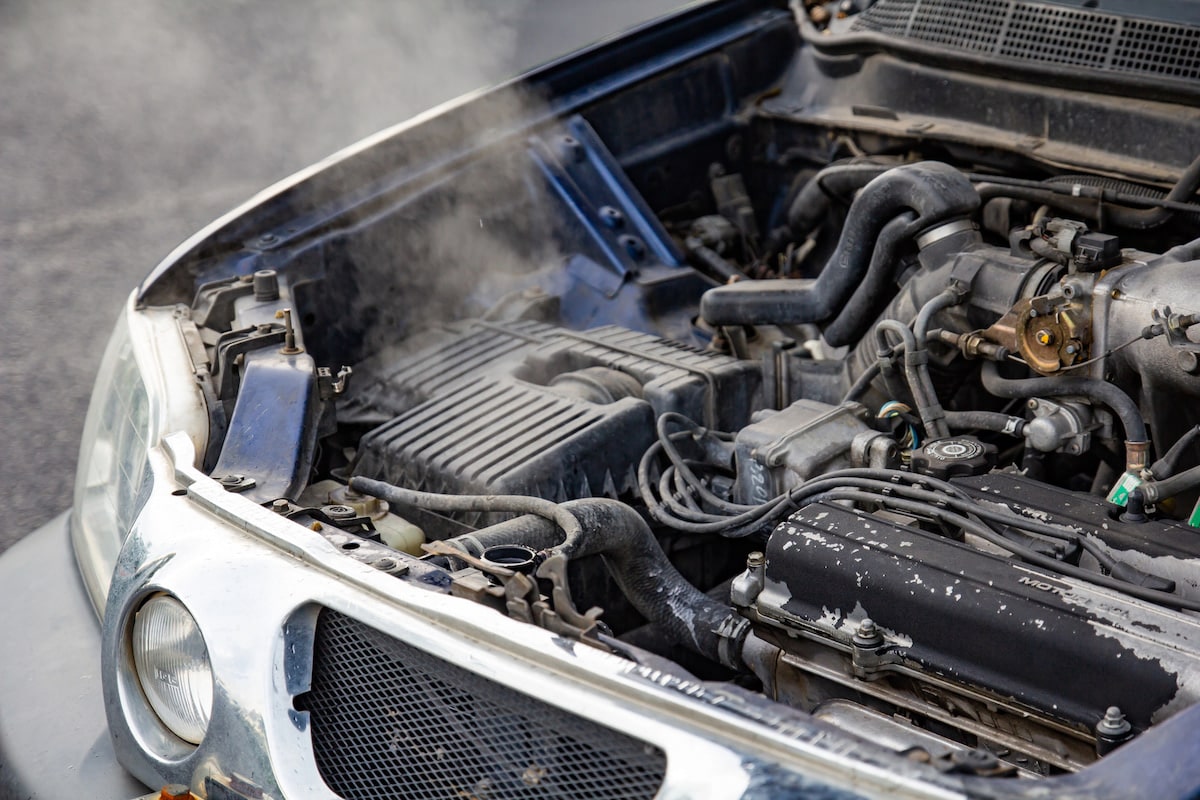
- Steam from the engine compartment – visible vapor escaping when coolant contacts hot engine surfaces
- Heater performance loss – reduced cabin heat output as air pockets form in the system
- Bubbling sounds from the dashboard or engine bay – air trapped in the heater core or coolant passages
If your temperature gauge spikes into the red zone or you see steam, stop driving immediately and arrange for towing. Continuing to operate an overheating Porsche can warp cylinder heads, damage head gaskets, or crack engine blocks. For persistent sweet smells or slowly dropping coolant levels, schedule an inspection soon to prevent escalation.
Which Porsche Models We See for Coolant Leak Repair
We regularly service coolant leak repairs across Porsche's water-cooled lineup, with particular expertise in the platforms that have proven most susceptible to cooling system failures:
- 996 911 (1999–2005) – notorious for brittle plastic coolant pipes that crack at the engine connections; expansion tank failures common after 60k miles
- 997 911 (2005–2012) – similar plastic pipe issues, plus radiator end-tank separations on higher-mileage examples
- 991 911 (2012–2019) – improved materials but still prone to radiator end-tank cracks and coolant flange leaks on 991.1 models
- 986 Boxster (1997–2004) – mid-engine layout complicates access; expansion tanks and coolant hoses degrade with heat cycling
- 987 Boxster/Cayman (2005–2012) – expansion tank mounting points crack; water pump failures leak coolant into the timing cover area
- 981 Boxster/Cayman (2013–2016) – fewer systemic issues but still see radiator and hose failures on higher-mileage units
- Cayenne (all generations) – V6 and V8 variants develop coolant pipe corrosion, thermostat housing leaks, and auxiliary coolant pump failures
- Panamera (2010–present) – complex dual-cooling systems with multiple pumps and thermostats; V8 models particularly prone to coolant crossover pipe leaks
- Macan (2015–present) – shares platform components with Audi; turbo models see coolant flange and intercooler circuit leaks
Our technicians have the diagnostic equipment and repair experience to handle both naturally aspirated and turbocharged variants, manual and PDK transmissions, and rear-wheel-drive or all-wheel-drive configurations. If you own an air-cooled 911 (pre-1998), we recommend a specialist focused exclusively on classic Porsche platforms.
Causes & Risks – What Happens if Ignored
Coolant leaks on Porsche vehicles stem from a combination of high-performance thermal stress, aggressive driving cycles, and the brand's use of lightweight aluminum and composite materials that expand and contract at different rates. Denver's temperature swings – from sub-zero winter mornings to summer track days – accelerate seal degradation and crack formation in plastic components. Porsche's use of long-life coolant (which still requires replacement every four years) means many owners unknowingly run acidic, degraded fluid that corrodes aluminum from within.
When you ignore early symptoms – a faint coolant smell, a slow drop in reservoir level, or a small puddle after parking – the damage escalates predictably:
- Weeks 1–4: A small leak becomes a moderate one. Coolant level drops enough that the low-coolant sensor triggers a dashboard warning. Air pockets form in the system, causing erratic temperature gauge readings and reduced heater output in winter.
- Months 2–3: Persistent low coolant allows localized hot spots in the cylinder head. On flat-six engines (Boxster, Cayman, 911), this can warp the head or blow the head gasket – a $6,000+ repair versus a $400 hose replacement.
- Beyond three months: Catastrophic overheating warps engine internals. Coolant mixing with oil destroys bearings. On turbocharged models (Macan, Cayenne, 991.2 Turbo), a blown intercooler coolant circuit can hydro-lock the engine, requiring a complete rebuild or replacement.
- Electrical damage: Coolant dripping onto alternators, starter motors, or wiring harnesses causes corrosion and shorts. We've seen $2,500 alternator replacements triggered by a $150 thermostat housing leak that was ignored for six months.
- Resale value: CarFax-documented overheating events or visible coolant staining in the engine bay can knock 15–20% off resale value, far exceeding the cost of timely repair.
Safety Impact – Why Coolant Leak Repair Matters
A compromised cooling system on a Porsche doesn't just risk engine damage – it creates genuine safety hazards. When coolant temperature spikes, the engine computer enters limp mode, cutting power to 30–40% to prevent meltdown. On a highway merge or mountain pass, that sudden loss of acceleration can put you in the path of faster traffic. Turbocharged models lose boost pressure entirely, making the car feel dangerously sluggish.
Coolant leaking onto hot exhaust components produces thick white steam that obscures visibility and smells sweet – drivers behind you may panic or brake suddenly. Internal cabin leaks fog the windshield from the inside, cutting visibility to near-zero in seconds. On models with electric water pumps (most 2009+ Porsches), a failed pump stops coolant circulation instantly, and the engine can overheat in under two minutes of highway driving.
When to stop driving immediately:
- Temperature gauge in the red zone or flashing overheat warning
- Steam or coolant smell inside the cabin
- Visible coolant pooling under the car while idling
- Loss of power with check-engine light and temperature warning together
Schedule service within the week if you notice:
- Coolant level dropping between fill-ups
- Faint sweet smell after shutting off the engine
- Small puddles (dime-sized) under the car after overnight parking
How Porsche Coolant Leak Repair Actually Works
Porsche cooling systems are closed-loop, pressurized designs that maintain 15–20 psi to raise the boiling point of the coolant and allow higher operating temperatures without vapor formation. Most water-cooled Porsches use electrically driven auxiliary water pumps in addition to the mechanical engine-driven pump, ensuring coolant circulation even after shutdown to cool turbochargers or manage heat soak. The system is managed by the engine control unit, which monitors coolant temperature at multiple points and adjusts pump speed, thermostat position, and radiator fan operation in real time.
What makes Porsche different is the integration: the cooling system isn't a standalone assembly. It shares data and control logic with the DME (engine computer), the climate control system, and on hybrid models, the battery thermal management. This means proper repair isn't just swapping a part – it often requires adaptation procedures using factory PIWIS diagnostic software to recalibrate flow rates, bleed air pockets electronically, and verify sensor accuracy.
Key design elements that affect repair procedure:
- Electronically controlled thermostats that require coding after replacement to match engine maps
- Aluminum-intensive construction that demands OEM-spec coolant (G12++ or G13) to prevent galvanic corrosion
- Pressurized bleeding procedures that can't be completed without a vacuum-fill tool – gravity bleeding leaves air pockets that cause overheating
- Torque-to-yield fasteners on water pump and thermostat housings that must be replaced, not reused, to maintain seal integrity
- Coolant temperature sensors that drift out of spec with age, giving false "normal" readings even when the engine is overheating – we replace them proactively during leak repairs on high-mileage cars
Because these systems are intolerant of air pockets and incorrect fluid chemistry, cutting corners – using universal coolant, skipping the vacuum-fill step, or reusing old O-rings – leads to repeat failures within months. Our
How We Diagnose Coolant Leak Repair Issues on Porsche
Porsche cooling systems are engineered for precision – water-cooled 911s since 1998, Boxster and Cayman platforms, Cayenne and Macan SUVs all demand exacting diagnostics. A coolant leak on a 996 or 997 isn't the same as a leak on a 991 or 992, and our process accounts for those platform differences from the start.
- Visual inspection under the vehicle and in the engine bay. We look for wet spots, staining, or residue around the water pump, thermostat housing, expansion tank, and radiator end tanks. On 996 and early 997 models, plastic coolant pipes and Y-pipes are notorious for cracking; on Cayenne V8s, the coolant crossover pipes at the rear of the engine often seep.
- Pressure test the cooling system. We use a calibrated pressure tester to hold the system at operating pressure while cold, watching for drops that pinpoint small leaks invisible during a static visual check.
- Scan with Porsche-specific diagnostic software. Factory-level tools like PIWIS or equivalent aftermarket platforms pull fault codes, coolant temperature sensor data, and thermostat operation logs. Overheating events or temperature spikes stored in freeze-frame data tell us whether the leak has already caused secondary damage.
- Dye injection and UV inspection. For elusive leaks – especially on water-cooled flat-six engines where components nest tightly – we inject fluorescent dye, run the engine to temperature, and trace the dye path under UV light.
- Inspect auxiliary components. Heater core hoses, the auxiliary coolant pump on turbocharged models, and the oil-to-coolant heat exchanger on direct-injection engines can all be leak sources that mimic primary system failures.
Once we've isolated the leak, you receive a written estimate detailing the failed part, labor required, and whether adjacent components warrant replacement while we're in there. No guesswork, no upselling – just a clear path to getting your Porsche back to reliable operation.
Coolant Leak Repair on Porsche: Repair vs. Replacement
Not every coolant leak demands a new assembly. The right call depends on the component, the extent of wear, and how long you plan to keep the car.
When a True Repair Works
- Loose hose clamps or degraded O-rings. If the leak is at a connection point – say, a radiator hose or thermostat housing seal – we can often replace the clamp or O-ring without touching the hard part.
- Weeping coolant flange bolts. On some models, re-torquing or replacing fasteners with new sealing washers stops the seep without removing major components.
- Minor expansion tank seepage. If the tank cap or level sensor grommet is the culprit, a cap or seal replacement solves it.
When Partial Replacement Makes Sense
- Cracked plastic coolant pipes on 996/997. The Y-pipe and crossover pipes are separate from the radiator and water pump; we replace the cracked pipe and leave the rest intact.
- Thermostat housing on M96/M97 engines. The housing can crack while the thermostat itself is fine, or vice versa. We replace what's failed.
When Full Replacement Is the Right Move
- Water pump failure on any water-cooled Porsche. If the pump is leaking from the weep hole or the bearing is noisy, replacement is the only fix. We typically replace the thermostat at the same time – both are age-sensitive, and labor overlap makes it cost-effective.
- Radiator end-tank separation. Plastic end tanks on aluminum cores eventually fail; once one side lets go, the other isn't far behind. A new radiator is the durable solution.
We walk you through the trade-offs – repair cost, expected lifespan, and whether deferred replacement just means you'll be back in six months. You make the final call; we give you the information to make it confidently.
How to Make Your Porsche Coolant Leak Repair Last Longer
Once we've fixed the leak, a few deliberate habits keep your cooling system healthy for the long haul.
Driving Habits That Protect the System
- Let the engine warm up before hard acceleration. Cold coolant is thicker and flows more slowly; sudden load spikes before the thermostat opens can stress hoses and seals.
- Avoid prolonged idling in hot weather. Porsches are designed for airflow; sitting stationary in summer traffic without moving air over the radiator taxes the auxiliary fan and raises coolant temperatures unnecessarily.
- Monitor the temperature gauge on spirited drives. If you're on a canyon run or track day, watch for creep above normal operating range. Pull over and let the car cool rather than pushing through.
Owner-Level Maintenance
- Check coolant level monthly. The expansion tank has min/max marks; top off with the correct Porsche coolant mix if it's low. A slow drop signals a small leak worth catching early.
- Inspect hoses and clamps during oil changes. Look for cracks, soft spots, or seepage around connections. Catching a deteriorating hose before it bursts saves a tow and potential overheating damage.
- Keep an eye on the overflow reservoir. If you're finding pink residue or puddles under the car after it's been parked, bring it in before a small leak becomes a roadside emergency.
What to Leave to the Professionals
Coolant system work on a Porsche isn't a shade-tree project. Bleeding air from a flat-six cooling system requires specific procedures; improper bleeding leaves air pockets that cause hot spots and accelerate component wear. Thermostat replacement, water pump installation, and radiator work all involve torque specs, bleed sequences, and pressure checks that need factory tooling and training. We use OEM-spec coolant and follow Porsche's bleeding protocols to the letter – that's what makes the repair last.
What to Expect When You Bring Your Porsche In
From the moment you schedule your appointment, we make the process transparent and convenient. Here's how your visit unfolds:
- Drop-off and intake: Bring your Porsche at your scheduled time. We'll ask about symptoms you've noticed – coolant smell, dashboard warnings, puddles under the car – and note any personal items you'd like removed. Loaner vehicles and shuttle service are available to keep your day on track.
- Comprehensive inspection: Our technicians perform a full cooling-system pressure test, scan for fault codes, and visually inspect hoses, radiator, water pump, expansion tank, and all coolant pipe connections. We use factory diagnostic software to check for stored freeze-frame data that pinpoints when and where the leak occurs.
- Written estimate and consultation: You'll receive a detailed estimate explaining exactly what failed, why it happened, and what we recommend. We walk you through the repair and the consequences of delaying it – no pressure, just facts.
- Repair and verification: Once approved, we complete the work using OEM torque specs and refill the system with Porsche-approved coolant. Post-repair, we pressure-test again, run the engine to operating temperature, and road-test to confirm no warning lights return.
- Pickup walkthrough: At pickup, we show you what we replaced, review the invoice, and explain any follow-up care. If something feels off in the days after, call us – we stand behind every repair and will re-check at no charge.
Our Porsche Services
- Air Conditioning AC Repair
- Battery Repair Replacement
- Brake Repair & Brake Fluid Change
- Check Engine Light Diagnostics
- Clutch Repair & Replacement
- Cooling System Repair
- Drive Shaft Repair
- Engine Repair
- Exhaust & Catalytic Converter Repair
- Head Gasket Repair & Replacement
- Oil Change
- Oil Leak Repair
- Scheduled Service Maintenance
- Suspension Repair
- Cambelt Timing Belt Replacement
- Transmission Repair
- Tune Up
- Wheel Alignment