
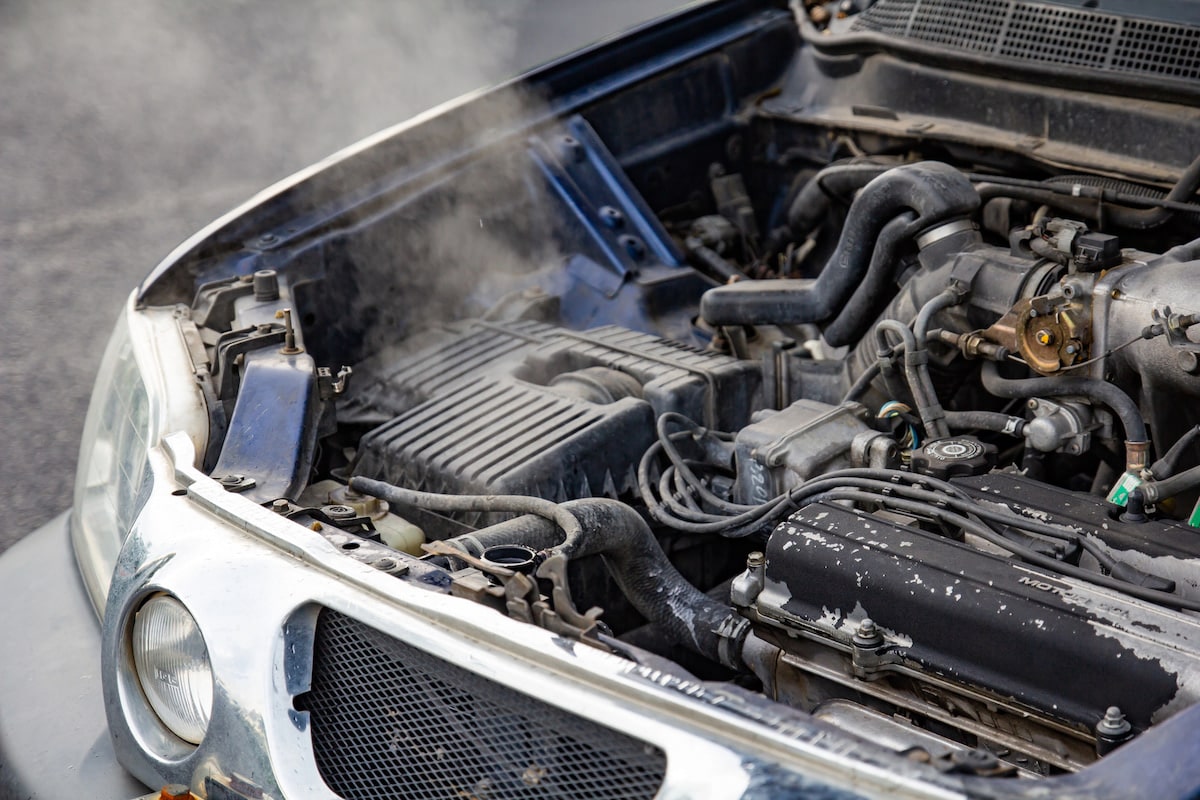
BMW Coolant Leak Repair at DART Auto
BMW cooling systems operate under higher pressures and tighter tolerances than most vehicles, making even small leaks a serious concern. The N20, N55, and B58 engines use electric water pumps and complex thermostat housings that fail in predictable patterns – often leaving owners stranded with overheating warnings on the dash. At DART Auto, we've diagnosed and repaired hundreds of BMW coolant leaks across every generation, from E46 expansion tank failures to F-series transfer pipe leaks behind the engine. Our technicians use BMW-specific diagnostic procedures, factory torque specifications, and OEM-quality parts to ensure your cooling system is sealed properly and bleeding procedures are followed to the letter.
Generic shops often miss the root cause. They'll replace a leaking hose but ignore the worn expansion tank cap causing system over-pressurization, or they'll swap a water pump without updating the pump software through BMW ISTA – leaving you with intermittent faults and reduced pump life. We invest in the same diagnostic tools and repair information the dealer uses, but our salaried technicians take the time to trace every leak to its source and address contributing factors before they cascade into expensive failures.
When you bring your BMW to DART Auto for coolant leak repair, you can expect:
- Pressure testing and UV dye tracing to pinpoint every leak location, including hard-to-see seepage at thermostat housings and valley pan gaskets
- OEM or premium aftermarket replacement parts matched to your specific engine code and production date
- Proper bleeding procedures using factory tooling to eliminate air pockets that cause overheating and heater core issues
- A 3-year/36,000-mile warranty on parts and labor – longer coverage than most independent shops offer
Common Coolant Leak Repair Issues on BMW Vehicles
BMW cooling systems are engineered for precision thermal management, but plastic components and complex routing create predictable failure points as vehicles age. Over 24 years of diagnosing these platforms, we've seen the same weak links appear across generations.
- Electric water pump failure on N52, N54, N55, and B58 engines (2006–present): BMW switched to electric pumps for on-demand cooling, but impeller housings crack and leak coolant into the motor windings. Early warning signs include slow warmup or coolant smell near the serpentine belt. The N20/N26 four-cylinder shares this vulnerability, often failing between 60,000 and 90,000 miles.
- Expansion tank cracking on E90, F30, and G20 platforms (2006–present): The pressurized reservoir uses reinforced plastic that becomes brittle with heat cycling. Cracks typically start at the seam or mounting tabs, causing slow leaks that leave pink residue on the undertray. F30 328i and 335i models built before 2015 show higher failure rates.
- Upper radiator hose connector failure on N52 and N54 engines: The plastic T-connector at the thermostat housing develops hairline cracks, leaking coolant onto the alternator and valve cover. This is common on E90, E60, and E82 chassis after 80,000 miles, and the leak accelerates quickly once it starts.
- Oil cooler gasket leaks on N55 and B58 turbo engines: The oil-to-coolant heat exchanger sits in the valley between cylinder banks. Gasket deterioration allows coolant to seep into oil passages or drip onto the exhaust manifold, creating steam and a sweet smell. F30 335i and 340i models frequently need this repair between 70,000 and 100,000 miles.
- Thermostat housing leaks on M54, N52, and N20 engines: BMW uses composite plastic housings that warp under thermal stress. Coolant weeps from the gasket mating surface or housing body, often pooling near the alternator. The N20 four-cylinder (2012–2016 F30 328i) has a particularly high failure rate due to the housing design.
- Radiator end-tank separation on E46, E90, and F30 models: Plastic end tanks are crimped to the aluminum core. Age and pressure cycles cause the bond to fail, releasing coolant suddenly. This is common on vehicles over ten years old and often happens without warning during highway driving.
Why Choose DART Auto for BMW Coolant Leak Repair
BMW cooling systems demand factory-level diagnostic capability and platform-specific tooling. E90 3-series models from 2006–2011 suffer from cracked expansion tanks and brittle radiator necks, while F30 chassis cars frequently develop water pump failures tied to the electric auxiliary pump. N54 and N55 engines are notorious for thermostat housing leaks where the plastic housing cracks at the mounting ears. Generic shops often miss these platform-specific failure modes and replace the wrong components.
DART Auto owns BMW-specific diagnostic software and pressure-test equipment that mirrors dealership capability. Our master technicians – each with at least 10 years of experience and dealer training – use factory repair procedures to identify the exact leak source before quoting parts. We stock OEM thermostats, expansion tanks, and water pumps sourced from trusted BMW suppliers, not aftermarket alternatives that fail prematurely. Because our technicians are salaried rather than flat-rate, there's no incentive to replace parts that don't need replacing.
Every coolant repair includes post-repair pressure testing and a road test with live data monitoring to confirm operating temperature stays within BMW's specified range. That work is backed by a 3-year/36,000-mile warranty on parts and labor – coverage you won't find at independent shops running generic scan tools and guessing at the root cause.
Symptoms – How to Know You Need This Service
BMW coolant leaks often announce themselves before they become catastrophic. You may notice a sweet smell inside the cabin when the heater is running – a telltale sign of a leaking heater core or valve. Puddles of pink, orange, or green fluid under the car after it's been parked overnight point to external leaks at hoses, the water pump, or expansion tank. White steam from under the hood, especially after shutting down a hot engine, means coolant is hitting hot exhaust components or turbochargers.
Watch for these specific symptoms that indicate your BMW needs coolant leak repair:
- Dashboard warning for "Coolant Level Low" or "Engine Overheating" – stop driving immediately if the temperature gauge climbs into the red
- Visible coolant pooling in the engine bay near the thermostat housing, water pump, or along the valley between cylinder banks on V8 models
- Fluctuating temperature gauge or heater that blows cold air intermittently, suggesting air pockets from a slow leak
- White residue or crusty buildup around hose connections, expansion tank seams, or radiator end tanks
- Rapid coolant consumption requiring frequent top-offs – even a cup every few weeks signals a leak that needs attention
- Gurgling or bubbling sounds from the dashboard when accelerating or climbing hills, indicating air in the heater core
- Oil that looks milky or frothy on the dipstick – a serious symptom of coolant entering the engine through a failed head gasket or oil cooler
If you see the overheating warning or steam from the hood, pull over safely and shut off the engine. Continued driving risks warping the cylinder head or cracking the block.
Which BMW Models We See for Coolant Leak Repair
We service BMW coolant leaks across all modern platforms, with particular expertise in the common failure points that plague specific generations. E90/E91/E92 3-series (2006–2013) frequently develop expansion tank cracks and water pump failures on both the N52 and N54 engines. F30/F31/F34 3-series (2012–2019) with the N20 turbo four-cylinder experience coolant transfer pipe leaks behind the engine – a labor-intensive repair requiring significant disassembly. The N55 and B58 inline-six engines used across F-series 3-series, 4-series, and X3/X4 models are prone to electric water pump failures and thermostat housing leaks, often around 60,000–80,000 miles.
We regularly perform coolant leak repairs on these BMW platforms:
- E46 3-series (1999–2006): expansion tank failures, radiator neck cracks, and cooling system hose deterioration on M54 and M56 engines
- E90/E91/E92/E93 3-series (2006–2013): water pump failures on N52, turbo coolant lines on N54/N55, expansion tank cracks across all engines
- F30/F31/F34 3-series and F32/F33/F36 4-series (2012–2019): N20 transfer pipe leaks, B58 thermostat housing seepage, electric water pump failures
- E60/E61 5-series (2004–2010): valley pan coolant leaks on N62 V8, expansion tank failures, auxiliary water pump issues
- F10/F11 5-series (2011–2016): N55 water pump failures, turbo coolant feed lines, expansion tank cap failures causing system over-pressurization
- E70 X5 and E71 X6 (2007–2013): N55 and N63 engine coolant leaks, transfer case and transmission cooler line failures on xDrive models
- F15 X5 and F16 X6 (2014–2018): B58 and N63TU engine cooling system leaks, electric water pump replacements
- E82/E88 1-series and E89 Z4 (2008–2016): N54 and N55 turbo coolant lines, expansion tank failures, thermostat housing leaks
We also service M models including E9X M3 (S65 V8), F8X M3/M4 (S55 inline-six), and older M5/M6 platforms. If your BMW isn't listed here, call us – we've likely worked on it and can confirm compatibility and common leak points for your specific year and engine.
Causes & Risks – What Happens if Ignored
Coolant leaks start small but accelerate quickly due to BMW's high-pressure cooling systems, which run 18–22 psi when hot. Heat cycling weakens plastic components, and Denver's temperature swings – from sub-zero mornings to warm afternoons – stress materials faster than moderate climates. BMW's use of long-life coolant (blue or green, depending on generation) also means many owners skip flushes, allowing acidic degradation of gaskets and seals.
Delaying repair turns a contained leak into cascading failures:
- Overheating and head gasket damage: Running low on coolant for even one trip can warp the aluminum cylinder head on N52, N54, or B58 engines. Head gasket replacement costs five to ten times more than fixing the original leak and often requires machine work.
- Turbocharger failure on forced-induction models: Turbos on N54, N55, and B58 engines rely on coolant passages for thermal control. Overheating cooks the internal seals, leading to shaft play and oil consumption. A $600 expansion tank repair becomes a $4,000 turbo replacement.
- Electrical system contamination: Coolant dripping onto the alternator, starter, or wiring harnesses causes corrosion and short circuits. We've seen F30 models develop no-start conditions or check-engine lights after prolonged leaks saturate connectors near the valve cover.
- Catalytic converter damage: Coolant entering the combustion chamber (via a warped head) fouls oxygen sensors and clogs the catalyst substrate. This triggers emissions failures and limp mode, adding exhaust work to an already expensive repair.
- Complete cooling system replacement: One failed component often stresses others. A leaking water pump forces the thermostat to cycle excessively, the expansion tank to over-pressurize, and hoses to crack. What starts as a single part repair becomes a full cooling system overhaul.
Safety Impact – Why Coolant Leak Repair Matters
Coolant leaks compromise more than engine longevity – they create immediate hazards. Overheating can cause sudden power loss in traffic, and coolant on hot exhaust components generates dense steam that obscures vision. BMW's turbocharged models (N54, N55, B58) lose boost control when overheated, cutting power output by half and eliminating safe merging or passing ability on highways.
Specific risks include:
- Loss of cabin heat in winter: Low coolant levels prevent the heater core from warming the cabin, creating dangerous visibility issues when windshields fog or frost over during Colorado winters.
- Engine seizure at speed: Severe overheating can weld pistons to cylinder walls within minutes. We've recovered BMWs from I-25 and C-470 where drivers ignored temperature warnings and suffered catastrophic engine failure in moving traffic.
- Scalding coolant spray: Pressurized leaks near the expansion tank or radiator can spray 200°F coolant onto the windshield or into the engine bay, startling drivers and causing swerving or hard braking.
- Fire risk from electrical shorts: Coolant contamination of alternator windings or starter solenoids can create arcing and ignition of nearby plastics or oil residue, particularly on higher-mileage vehicles with existing oil seepage.
When to stop driving immediately: temperature gauge in the red zone, steam from the hood, sweet smell in the cabin, or puddles forming under the car while parked. Schedule soon: slow coolant loss (topping off monthly), visible staining on undertray, or intermittent overheating warnings that clear after cooldown.
How BMW Coolant Leak Repair Actually Works
BMW cooling systems use a sealed, pressurized loop with electronic monitoring and variable-flow control. Unlike older mechanically driven pumps, modern BMWs (2006–present) employ electric water pumps that adjust speed based on engine load, coolant temperature, and even air conditioning demand. The DME (engine control module) commands pump speed via PWM signals, and the system self-bleeds through a dedicated valve in the expansion tank. This eliminates traditional bleed screws but requires specific procedures to purge air after repairs.
Repairing leaks on these platforms demands OEM-aligned processes:
- Pressure testing with BMW-specific adapters: We use a pressurized smoke machine and BMW cooling system test kit to locate leaks without disassembly. The expansion tank cap adapter threads match BMW's unique 1.4 bar (20 psi) pressure spec, revealing slow seeps invisible during static inspection.
- Electronic pump priming and air purge: After replacing components, the electric pump must run at maximum speed while the expansion tank cap is off, allowing trapped air to escape through the integrated bleed valve. This takes 10–15 minutes and requires a scan tool to command pump operation with the engine off.
- Coolant specification and mixing: BMW specifies blue coolant (pre-2018) or green coolant (2018–present), both silicate-free formulas incompatible with generic antifreeze. Using the wrong type causes gasket swelling and accelerated corrosion. We stock OEM-equivalent Pentosin or Zerex G-48 coolant and never mix formulations.
- Torque-critical fasteners on aluminum housings: Thermostat housings, water pump bolts, and radiator mounts thread into soft aluminum. Over-torquing strips threads; under-torquing allows leaks. We follow BMW TIS torque specs (typically 8–10 Nm for small fasteners, 20–25 Nm for pump bolts) and use calibrated digital wrenches.
- Fault code clearing and adaptation reset: The DME logs coolant temperature faults
How We Diagnose Coolant Leak Repair Issues on BMW
BMW cooling systems operate under precise pressure and temperature parameters, and leaks often hide behind engine covers or manifest only when the system reaches operating temperature. Our diagnostic process starts with the factory BMW ISTA diagnostic suite, which monitors coolant temperature sensor data, thermostat function, and electric water pump operation across the CAN bus. This scan reveals fault codes tied to low coolant level sensors, overheating events, or pump control module errors that point us toward the affected circuit.
From there, we follow a methodical inspection sequence:
- Cold Visual Inspection: Check expansion tank condition (common crack points on F-series tanks), hose clamps at the oil cooler and heater core connections, and the valley pan area on N63 V8s where coolant crossover pipes corrode.
- Pressure Test: Pressurize the system to 1.4 bar using OEM-spec adapters and watch for drops. Leaks at the water pump weep hole, thermostat housing gasket, or radiator end tanks become visible under pressure.
- UV Dye Trace: For elusive leaks, we inject UV-reactive dye into the coolant, run the engine to operating temperature, and use a black-light inspection to trace the exact leak path – critical on E90 N52 engines where the electric water pump seeps internally.
- Thermal Imaging: Infrared cameras reveal hot spots that indicate coolant bypassing a failed thermostat or cold zones where flow is restricted by a clogged heater core.
- Component-Specific Tests: On models with electric auxiliary pumps (F30, G20), we command pump activation through ISTA to verify operation independent of engine temperature.
Once we've isolated the failure, you receive a detailed quote that breaks down the failed component, the labor involved, and whether adjacent parts (hoses, clamps, coolant) should be addressed during the same repair window. No guesswork, no upselling – just a clear path forward based on what the diagnostics revealed.
Coolant Leak Repair on BMW: Repair vs. Replacement
True repair – where we restore the original component – applies when the leak source is external and the part itself remains structurally sound. Examples include:
- Retorquing loose hose clamps at the heater core or throttle body coolant lines
- Replacing O-rings on the coolant transfer pipe connections (common on N55 and B58 engines)
- Resealing the thermostat housing with a new gasket when the housing casting is intact
Partial replacement makes sense when one component in an assembly has failed but the rest remains serviceable. On E46 M3 S54 engines, the plastic coolant expansion tank cracks while the cap and sensor stay functional – we replace the tank and reuse the good parts. Similarly, radiator hose replacement often leaves the radiator itself untouched if the core and end tanks pass inspection.
Full replacement becomes necessary when:
- The water pump housing is cracked or the impeller shows cavitation damage (N20, N26 engines)
- The radiator has internal tube corrosion or the plastic end tanks are brittle (common after 100k miles on E90, F30 models)
- The heater core is leaking into the cabin, requiring dash removal and full core replacement
- Repair cost exceeds 70% of replacement cost and the part is known to fail again within 24 months
We walk you through the cost-benefit analysis for your specific situation. Our salaried technicians have no incentive to push the more expensive option – we recommend what makes sense for your BMW's age, mileage, and how long you plan to keep it.
How to Make Your BMW Coolant Leak Repair Last Longer
BMW cooling systems last longest when you avoid heat cycling extremes. Let the engine reach operating temperature before sustained high-load driving – the electric water pump and thermostat rely on gradual warm-up to seat properly. In winter, avoid idling for extended periods; BMWs heat faster under light load than sitting stationary, reducing thermal stress on gaskets and seals.
Owner-level maintenance you can safely perform:
- Check the expansion tank coolant level monthly when the engine is cold – it should sit between the min and max marks
- Inspect visible hoses for cracks, especially where they bend near the firewall or engine mounts
- Watch for coolant odor in the cabin (heater core leak) or white exhaust smoke (head gasket breach)
- Monitor the temperature gauge – any deviation from center position warrants immediate inspection
Brand-specific care that extends component life:
- Use only BMW-spec coolant: The factory blue coolant (PN 82141467704) contains specific corrosion inhibitors for aluminum engine blocks and radiators. Aftermarket "universal" coolant accelerates galvanic corrosion.
- Follow the 4-year coolant flush interval: Old coolant becomes acidic and eats through aluminum components from the inside out.
- Keep software current: BMW releases updates that refine electric water pump control maps, reducing cavitation and extending pump life on turbocharged models.
Leave pressure testing, thermostat replacement, and any work requiring coolant system bleeding to the shop – improper bleeding traps air pockets that cause localized overheating and premature part failure. Our equipment purges air completely and verifies proper flow before the car leaves the bay.
What to Expect When You Bring Your BMW In
Coolant leak diagnosis starts with understanding what you've noticed – dashboard warnings, puddles under the car, or a sweet smell from the vents. When you schedule your appointment, we'll ask about those symptoms and arrange a loaner vehicle or shuttle service if you need it during the repair.
- Drop-off and Initial Inspection: Leave your BMW with us and remove any valuables. Our technician performs a visual inspection of the cooling system, checks for active fault codes, and documents fluid levels and any visible leaks.
- Pressure Testing and Diagnosis: We pressure-test the system cold and hot to replicate the conditions that trigger leaks. This reveals cracks in expansion tanks, weeping hose connections, and thermostat housing failures that only show up under operating pressure.
- Written Estimate and Approval: You'll receive a detailed estimate listing the failed components, OEM part numbers, and labor involved. We explain why each part needs replacement and what happens if the repair is delayed.
- Repair and Verification: Once approved, we replace the failed components using factory torque specs and BMW-approved coolant. After refilling and bleeding the system, we road-test the car and monitor live coolant temperature data to confirm the repair solved the issue.
- Pickup Walkthrough: At pickup, we show you the old parts and walk through what we found. If after-hours pickup works better for your schedule, we can arrange that too.
If anything feels off in the days following your repair – temperature fluctuations, low coolant warnings – contact us immediately. We'll bring the car back in and re-verify the system at no charge. That's part of standing behind the work and fixing it right the first time.
Our BMW Services
- Air Conditioning AC Repair
- Battery Repair Replacement
- Brake Repair & Brake Fluid Change
- Check Engine Light Diagnostics
- Clutch Repair & Replacement
- Cooling System Repair
- Drive Shaft Repair
- Engine Repair
- Exhaust & Catalytic Converter Repair
- Head Gasket Repair & Replacement
- Oil Change
- Oil Leak Repair
- Scheduled Service Maintenance
- Steering Repair
- Suspension Repair
- Cambelt Timing Belt Replacement
- Transmission Repair
- Tune Up
- Wheel Alignment