
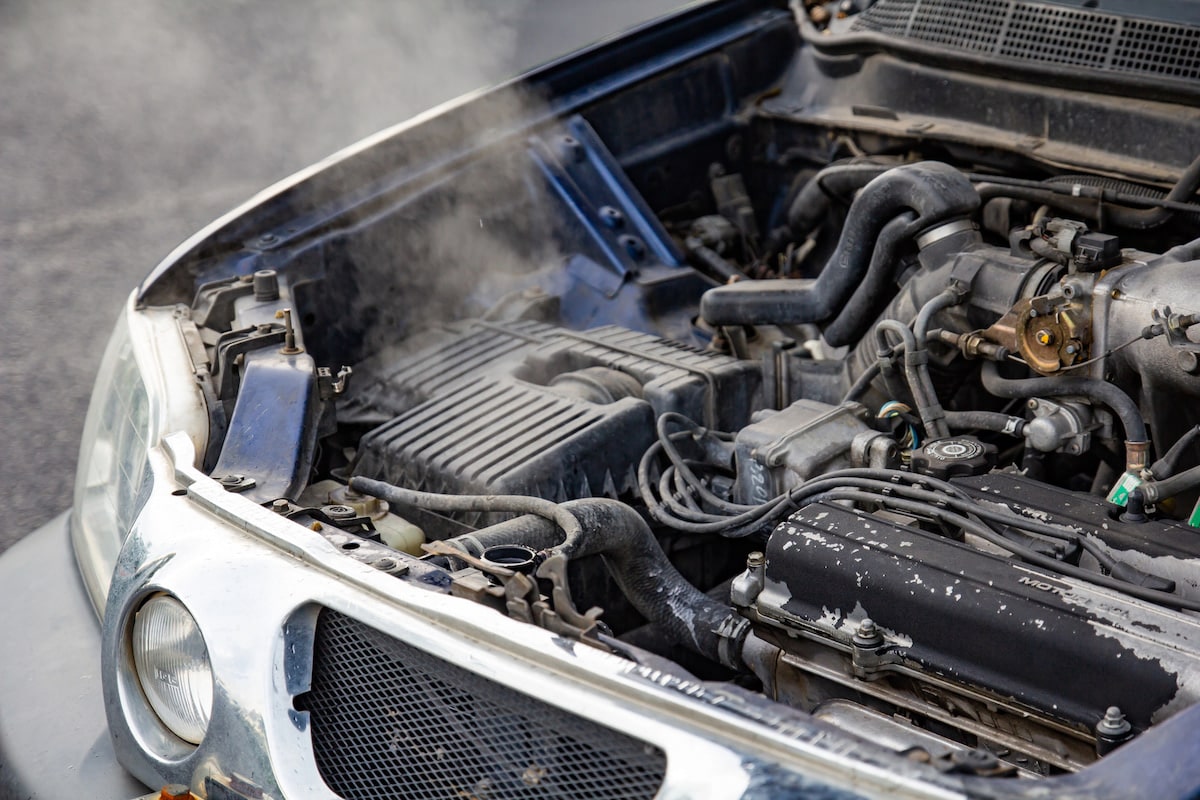
Lamborghini Coolant Leak Repair at DART Auto
When you notice a sweet smell or puddle beneath your Lamborghini, you're facing more than a simple top-off situation. Modern Lamborghini V10 and V12 powerplants run extraordinarily tight thermal tolerances, and even a minor coolant leak can cascade into catastrophic engine damage if ignored. The Gallardo's 5.0L and 5.2L V10 engines, along with the Aventador's 6.5L V12, rely on precise coolant flow through aluminum blocks and heads that expand and contract dramatically under load. A leak from a corroded coolant pipe, failed thermostat housing, or degraded O-ring isn't just messy – it compromises the entire thermal management system that keeps your engine alive at 8,000 RPM.
DART Auto approaches Lamborghini coolant leak repair with the same rigor the factory demands. We use genuine VAG diagnostic software to monitor real-time coolant temperatures across multiple sensors, ensuring we've identified the exact failure point before disassembly begins. Our technicians reference OEM service procedures that specify torque values for aluminum coolant flanges (often as precise as 8 Nm), the correct coolant mixture ratio for your specific model year, and the bleeding sequence required to purge air from complex multi-zone systems. Because Lamborghini shares platform DNA with Audi R8 models, we leverage our deep VAG-group expertise to diagnose issues other shops miss – like the notorious coolant pipe corrosion on 2004–2008 Gallardo models or the thermostat housing cracks common on later LP560 variants.
When you bring your Lamborghini to DART Auto for coolant leak repair, expect:
- Pressure testing and UV dye tracing to pinpoint the exact leak source, not guesswork
- OEM or premium aftermarket parts sourced specifically for your chassis and engine code
- Factory-spec coolant blend and air-purge procedures using dedicated VAG tooling
- Post-repair thermal imaging and road testing to verify system integrity under load
Common Coolant Leak Repair Issues on Lamborghini Vehicles
Lamborghini owners face coolant leak challenges that stem directly from the brand's mid-engine architecture and extreme performance demands. The cooling systems in these cars operate under significantly higher pressures and temperatures than typical vehicles, accelerating wear on components that would last much longer in a sedan. When you notice coolant spots under your car or a sweet smell in the cabin, you're seeing the result of design choices that prioritize track performance over maintenance convenience.
- Radiator end-tank separation on Gallardo (2003–2013): The plastic end tanks on factory radiators develop stress cracks where they bond to the aluminum core, particularly on LP560 and later models with higher cooling demands. The mid-engine placement subjects these tanks to extreme heat cycling, causing the bond to fail and leak coolant rapidly once a crack starts.
- Water pump seal failure on Aventador (2011–2021): The mechanical water pump seals degrade prematurely due to the extreme operating temperatures of the V12 engine. Early LP700 models are especially prone to weeping at the pump shaft seal around 15,000–25,000 miles, often before owners notice any temperature warning.
- Coolant hose deterioration on Huracán (2014–present): The silicone coolant hoses in the rear engine bay harden and crack at connection points after exposure to repeated heat soak cycles. The LP580 and LP610 platforms both show this pattern, with lower hoses near the transmission failing first because of their proximity to exhaust components.
- Expansion tank cracking on Murciélago (2001–2010): The plastic coolant reservoir develops hairline cracks at mounting points and along seams, particularly on 6.5L V12 models. The tank's location in the front trunk exposes it to road debris impact and UV degradation, while pressure spikes from hard driving accelerate crack propagation.
- Thermostat housing gasket weeping on all V10 platforms: The aluminum thermostat housings on Gallardo and Huracán engines develop seepage at gasket interfaces as the factory gaskets compress over time. This issue appears gradually, often starting as minor dampness that owners dismiss until coolant levels drop noticeably between service intervals.
Why Choose DART Auto for Lamborghini Coolant Leak Repair
Your Lamborghini's cooling system operates under extreme thermal stress, and even a small leak can escalate quickly. DART Auto uses factory-level diagnostic equipment to pinpoint the exact source – whether it's a deteriorating O-ring on the Gallardo's water pump, a cracked expansion tank on the Huracán, or a weeping coolant flange on the Aventador's V12. We reference Lamborghini technical service bulletins and OEM repair procedures, so the fix aligns with what the factory engineers intended.
Our salaried master technicians bring dealer-level training without the dealer markup. Because they're not paid flat-rate, there's no incentive to rush through diagnosis or recommend unnecessary work. We invest in specialty tooling – torque-angle wrenches, pressure-decay testers, and scan tools capable of reading Lamborghini-specific fault codes – so we can perform the repair correctly the first time. Every coolant leak repair includes a complete system pressure test and a post-repair road test to confirm stable operating temperatures under load.
- OEM-aligned procedures: Factory torque specs, genuine or premium aftermarket seals, and proper coolant bleed sequences for air-pocket-prone V10 and V12 layouts
- 3-year/36,000-mile warranty: Parts and labor coverage that reflects our confidence in the repair
- Transparent communication: Written estimates with photos of the leak source, so you understand exactly what needs attention
Symptoms – How to Know You Need This Service
Your Lamborghini will telegraph coolant system trouble long before it leaves you stranded. Recognizing these warnings early keeps a minor leak from becoming a five-figure engine rebuild.
- Sweet smell in the cabin or around the engine bay – ethylene glycol has a distinct odor that intensifies after spirited driving
- Coolant puddle or staining beneath the car – often bright green, pink, or orange depending on your model year and whether someone used the correct G12++ or G13 coolant
- Low coolant warning on the instrument cluster – Lamborghini systems are sensitive; even a 10% drop triggers the light
- Temperature gauge climbing higher than normal – especially under load or in traffic, indicating insufficient coolant volume or air pockets
- White steam from the exhaust on cold start – suggests coolant entering the combustion chamber through a head gasket or cracked cylinder head
- Visible coolant weeping from hose connections or flanges – aluminum corrosion creates pinhole leaks that grow rapidly
- Overheating warning or limp mode activation – stop driving immediately; continued operation risks warping heads or seizing bearings
- Milky residue on the oil filler cap – coolant mixing with oil is a severe internal leak requiring immediate shutdown
If you see temperature warnings or steam, do not continue driving. Lamborghini engines have minimal thermal margin – a few minutes of overheating can destroy valve seats, warp cylinder heads, or score cylinder walls. Schedule a tow and let us diagnose the issue safely.
Which Lamborghini Models We See for Coolant Leak Repair
DART Auto services the full range of modern Lamborghini models, with particular depth on VAG-platform cars that share architecture with Audi R8 and other high-performance variants. Our technicians have extensive experience with the cooling system quirks across generations.
- Gallardo (2003–2013) – all variants including LP550-2, LP560-4, LP570-4 Superleggera; early cars (2004–2008) prone to coolant pipe corrosion at aluminum junctions
- Murciélago (2001–2010) – LP640 and LP670-4 SV included; V12 cooling systems require careful air bleeding due to complex routing
- Aventador (2011–2022) – LP700-4, LP750-4 SV, SVJ, and Ultimae; thermostat housing leaks common on higher-mileage examples
- Huracán (2014–present) – LP580-2, LP610-4, LP640-4 Performante, STO, Tecnica; shares cooling architecture with second-gen Audi R8, benefits from our VAG diagnostic depth
- Urus (2018–present) – twin-turbo V8 platform shares cooling components with Audi RSQ8 and Porsche Cayenne Turbo; we see expansion tank cracks and intercooler coolant leaks
We maintain factory service information and diagnostic capability for all models listed. If you own a pre-2000 Diablo or Countach, we recommend contacting us directly to discuss your specific needs – our focus remains on modern water-cooled Lamborghini platforms where our VAG-group expertise delivers the most value.
Causes & Risks – What Happens if Ignored
Coolant leaks on Lamborghini vehicles originate from the intersection of extreme performance engineering and material science limitations. These engines generate far more heat per liter than conventional powerplants, cycling coolant temperatures from ambient to 220°F or higher within minutes of spirited driving. Plastic components and rubber seals face thermal stress that would never occur in daily-driver applications. Denver's altitude compounds the problem – lower atmospheric pressure reduces coolant boiling points and increases vapor lock risk, while our dramatic temperature swings between winter mornings and summer afternoons accelerate material fatigue.
When you postpone coolant leak repairs, the progression follows a predictable and expensive path:
- Immediate air intrusion: Even small leaks allow air into the cooling system, creating hot spots within the first few heat cycles. On V10 and V12 Lamborghini engines, these hot spots form at cylinder head boundaries where coolant flow becomes restricted, warping head gasket surfaces within 50–100 miles of driving.
- Overheating damage within days: Once coolant levels drop below the pump pickup or air pockets form in the heads, localized overheating begins warping aluminum components. Cylinder heads on Lamborghini engines are particularly vulnerable – a single overheat event can require head resurfacing or replacement, turning a $1,200 hose repair into a $15,000+ engine rebuild.
- Catalytic converter failure from coolant contamination: Coolant entering the combustion chamber through a blown head gasket poisons catalytic converters within 20–30 miles. Lamborghini cats are extremely expensive to replace, and this failure mode is entirely preventable by addressing the initial leak promptly.
- Complete engine seizure: Ignoring temperature warnings or driving with visible steam leads to bearing failure and piston scuffing. Lamborghini engines have tight tolerances that leave no margin for thermal expansion beyond design limits – owners who continue driving after the temperature light illuminates often face complete engine replacement.
Safety Impact – Why Coolant Leak Repair Matters
Coolant system failures on mid-engine Lamborghini vehicles create immediate safety hazards that differ from front-engine cars. When coolant sprays onto hot exhaust components positioned inches from the engine bay, it vaporizes instantly and can ignite if mixed with oil residue. The cabin ventilation system draws air from the engine compartment, meaning coolant vapor enters the passenger space quickly, obscuring visibility and creating a distraction at exactly the moment when engine power may cut unexpectedly.
Loss of coolant triggers multiple cascading failures that compromise vehicle control:
- Sudden power loss in traffic: When the ECU detects overheating, it enters limp mode and cuts power to 30% or less. On a highway merge or during passing, this abrupt loss of acceleration creates collision risk with following traffic that expects normal Lamborghini performance.
- Steam obscuring rear visibility: Coolant leaking onto exhaust manifolds produces dense white steam that exits through engine bay vents and billows across the rear window, eliminating rearward visibility within seconds. This is especially dangerous in multi-lane traffic where you cannot see vehicles approaching from behind.
- Fire risk from coolant-on-exhaust contact: Pressurized coolant spraying onto exhaust components at 1,200°F+ creates immediate fire hazard. While modern Lamborghinis have fire suppression considerations in their design, a significant leak can overwhelm these safeguards, particularly if the leak originates from a high-pressure hose near turbos or catalytic converters.
Stop driving immediately if: you see steam from vents, the temperature gauge enters the red zone, or you smell sweet coolant odor in the cabin. Schedule service within days if you notice coolant spots under the car, fluctuating temperature readings, or gradual coolant loss between top-offs.
How Lamborghini Coolant Leak Repair Actually Works
Lamborghini cooling systems use split-circuit designs with separate radiators and pumps for each cylinder bank, a configuration that provides redundancy but doubles the number of potential leak points. The V10 Huracán platform, for example, runs independent cooling loops with electronically controlled thermostats that open at different temperatures depending on driving mode – Strada, Sport, and Corsa each command different coolant flow strategies. This means proper repair requires not just replacing failed components but also verifying that electronic actuators and sensors communicate correctly with the ECU after the system is reassembled.
Design elements that affect how we approach Lamborghini coolant repairs:
- Pressurized fill procedures requiring scan tool activation: Unlike conventional cooling systems that you can burp by hand, Lamborghini systems require running specific ECU routines that cycle pumps and open thermostats in sequence to purge air. We use factory diagnostic software to command these bleed cycles, ensuring complete air removal that hand-bleeding cannot achieve.
- Aluminum component torque specifications with angle-tightening: Thermostat housings, water pump bolts, and coolant pipe fittings on Lamborghini engines require precise torque-to-yield tightening sequences. Over-torquing cracks aluminum castings; under-torquing causes leaks. We follow OEM torque specs and use calibrated angle gauges for final tightening.
- Coolant type and mixture ratios affecting corrosion inhibitors: Lamborghini specifies particular coolant formulations with specific silicate and phosphate balances. Mixing coolant types or using incorrect ratios accelerates galvanic corrosion between aluminum and steel components, creating new leaks within months. We use only factory-specified coolant and verify mixture ratios with a refractometer.
- System pressure testing at operating temperature: Static pressure tests catch obvious leaks but miss thermal expansion failures. We pressure-test systems after bringing the engine to full operating temperature, replicating the conditions under which heat-related leaks actually occur.
How We Diagnose Coolant Leak Repair Issues on Lamborghini
You've spotted a puddle under your Gallardo or Huracán, or maybe the low-coolant warning lit up mid-drive. Coolant leaks in Lamborghini vehicles demand precise diagnosis because the cooling system sits in tight quarters around high-output V10 and V12 engines, and misdiagnosis means wasted time and money.
Here's how we pinpoint the source and build your repair plan:
- Visual inspection under the vehicle and in the engine bay. We check hose connections, radiator end tanks, water pump weep holes, and thermostat housings. Early Gallardo models (2004–2008) are known for cracked coolant expansion tanks and brittle hoses near the rear firewall.
- Pressure test the cooling system. We use a calibrated pressure tester to simulate operating conditions and reveal hairline cracks in plastic components, failed O-rings on coolant flanges, and seepage at the cylinder head gaskets.
- UV dye injection and black-light trace. For elusive leaks that only appear when hot or under load, we add fluorescent dye to the coolant and run the engine through heat cycles. The dye glows under UV light, exposing leak paths invisible to the naked eye.
- Scan for fault codes and live data. We connect factory-level diagnostic equipment to monitor coolant temperature sensors, fan operation, and thermostat response. Anomalies here can point to internal leaks or air pockets masking the real problem.
- Road test and thermal imaging. On select cases, we use infrared cameras to map temperature distribution across the engine and cooling system during a controlled drive, catching hot spots that indicate restricted flow or hidden leaks.
Once we've isolated the fault, you receive a detailed quote that explains what failed, why it failed, and what we'll do to fix it right the first time.
Coolant Leak Repair on Lamborghini: Repair vs. Replacement
Not every coolant leak means replacing an entire assembly. The right call depends on what failed and how much service life remains in the surrounding components.
When a True Repair Makes Sense
- Loose or degraded hose clamps. If the hose itself is still pliable and free of cracks, we replace the clamp and torque it to Lamborghini spec.
- Failed O-rings or gaskets at coolant flanges. Common on Huracán V10 engines where aluminum flanges mate to the block. We clean the mating surfaces, install new OEM seals, and torque to factory specification.
- Minor radiator end-tank seepage. If the core is sound and only the plastic tank seal is weeping, a precision reseal can restore integrity without the cost of a new radiator.
When Partial Replacement Is the Right Move
- Cracked expansion tank on 2004–2013 Gallardo. The tank itself fails while hoses and radiator remain serviceable. We replace the tank and pressure-test the system.
- Water pump with a leaking seal but healthy impeller. On some platforms, replacing the seal and bearing assembly is more cost-effective than a complete pump.
When Full Replacement Is Non-Negotiable
- Corroded or impact-damaged radiator cores. Internal corrosion or road debris damage compromises cooling efficiency and structural integrity.
- Thermostat housing cracks on Aventador V12 engines. The housing is integral to coolant distribution; partial fixes risk catastrophic overheating.
We walk you through the options, explain the trade-offs, and let you decide what fits your budget and how you use the car.
How to Make Your Lamborghini Coolant Leak Repair Last Longer
Once the leak is fixed, a few smart habits keep your cooling system healthy and your Lamborghini on the road instead of on the lift.
Driving Habits That Protect the Cooling System
- Allow proper warm-up before hard acceleration. Lamborghini V10 and V12 engines run tight tolerances; cold starts followed by immediate high load stress hoses, seals, and gaskets.
- Avoid prolonged idling in traffic on hot days. These engines rely on airflow. If you're stuck, monitor coolant temperature and pull over if it climbs.
- Use climate control judiciously. The A/C condenser shares airflow with the radiator. Running max A/C while pushing the engine hard reduces cooling capacity.
Maintenance You Can Monitor Yourself
- Check coolant level weekly. Pop the hood when cold and verify the expansion tank is between min and max. A sudden drop signals a new leak.
- Look for fresh stains under the car. Lamborghini coolant is typically pink or orange. Spots on your garage floor mean it's time to call us.
- Listen for changes in fan operation. If the cooling fans run constantly or never kick on, the system may have air pockets or a failing sensor.
What to Leave to the Professionals
Use only Lamborghini-approved coolant – mixing formulations causes corrosion and seal degradation. Bleeding air from the system requires specialty tools and precise procedures; DIY attempts often trap air and cause overheating. Follow factory service intervals for coolant flushes, typically every three years, to prevent internal corrosion. We handle the technical work so you can enjoy the drive.
What to Expect When You Bring Your Lamborghini In
We know your Lamborghini isn't just transportation – it's an investment. Here's how we handle your visit from arrival to pickup:
- Drop-off and intake: Schedule an appointment online or by phone. When you arrive, we'll document your concerns (coolant smell, temperature gauge climbing, visible drips) and note any personal items to remove from the cabin. Loaner vehicles or shuttle service are available – ask when you book.
- Diagnostic inspection: We pressure-test the cooling system, inspect hoses and clamps under the undertray, and scan for stored fault codes. UV dye may be added if the leak is intermittent. You'll receive a written estimate with photos showing the leak location and any related wear (corroded hose fittings, brittle radiator end-tanks).
- Approval and repair: Once you approve the estimate, we order OEM or premium aftermarket parts and schedule the work. Throughout the repair, we're available by phone or text to answer questions.
- Post-repair verification: Before you pick up, we road-test the car to confirm stable coolant temperatures and re-scan for codes. At pickup, we walk you through the completed work and explain what to watch for in the first few days.
If anything feels off after you leave – temperature fluctuation, lingering coolant odor – contact us immediately. We stand behind every repair and will re-inspect at no charge if a concern arises within the warranty period.
Our Lamborghini Services
- Air Conditioning AC Repair
- Battery Repair Replacement
- Brake Repair & Brake Fluid Change
- Check Engine Light Diagnostics
- Clutch Repair & Replacement
- Cooling System Repair
- Drive Shaft Repair
- Engine Repair
- Exhaust & Catalytic Converter Repair
- Head Gasket Repair & Replacement
- Oil Change
- Oil Leak Repair
- Scheduled Service Maintenance
- Steering Repair
- Suspension Repair
- Cambelt Timing Belt Replacement
- Transmission Repair
- Tune Up
- Wheel Alignment