
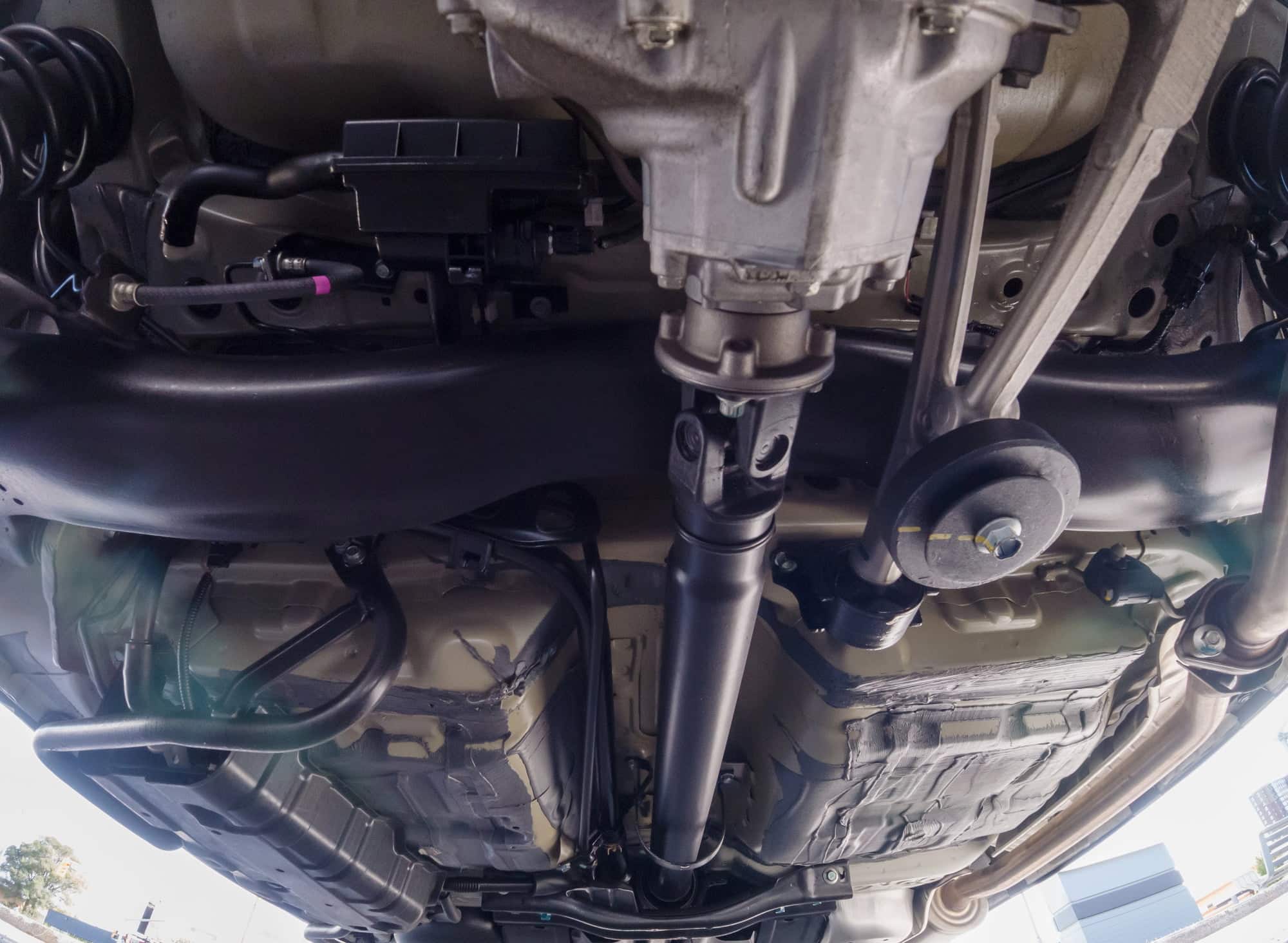
BMW Drive Shaft Repair at DART Auto
BMW drive shafts operate under unique stress profiles that generic shops rarely appreciate. The brand's rear-biased weight distribution, xDrive torque vectoring, and aggressive M Sport calibrations place extraordinary demands on center support bearings, flex discs (giubo), and CV joints. When an E90 335i xDrive exhibits 70 mph vibration or an F80 M3 develops clunking during hard launches, the root cause often traces to components designed for precision balance and specific preload tolerances. Factory BMW drive shafts use compound dampening and multi-piece assemblies that require specialized alignment fixtures and torque-angle specifications – work that exceeds the capability of most independent shops.
DART Auto has invested in the OEM tooling, BMW TIS repair procedures, and diagnostic software necessary to diagnose drive shaft failures accurately. Our master technicians – each with over a decade of experience and dealer training – understand the difference between an E46 M3 single-piece aluminum shaft and the two-piece steel assembly in a standard 330i. We source genuine BMW flex discs and OEM-equivalent center bearings from trusted European suppliers, ensuring proper damping characteristics and longevity. Because our technicians are salaried rather than flat-rate, they take the time to inspect related components – transmission output seals, differential mounts, subframe bushings – that often contribute to drive shaft wear.
When you bring your BMW to DART Auto for drive shaft repair, expect:
- Complete driveline inspection using factory procedures to identify all worn components before disassembly
- Precision balancing and alignment with OEM fixtures to eliminate vibration at highway speeds
- Transparent pricing with detailed explanations of what failed, why it failed, and how we'll prevent recurrence
- 3-year/36,000-mile warranty on parts and labor, backing every repair with confidence
Common Drive Shaft Repair Issues on BMW Vehicles
BMW drive shafts face unique stresses due to the brand's rear-wheel and all-wheel-drive architectures, high-torque engines, and precision engineering tolerances. Unlike mass-market platforms, BMW designs demand exact component alignment and specific elastomer compounds in flex discs and center support bearings. When these components fail, the symptoms are unmistakable – and the consequences escalate quickly.
- Flex disc (guibo) deterioration on E46, E90, and F30 platforms: The rubber coupling between transmission and drive shaft hardens with age and heat cycling, causing vibration at acceleration and deceleration. Common on 2000–2012 models with the six-speed manual and automatic transmissions. The OEM rubber compound degrades faster in Colorado's temperature swings, and aftermarket substitutes rarely match BMW's durometer specifications.
- Center support bearing failure on X5 (E53, E70) and 5 Series (E60, F10): The two-piece drive shaft design uses a rubber-isolated bearing at the midpoint. When the bearing races pit or the rubber mount collapses, you'll hear a pronounced rumble at highway speeds. Particularly common on 2004–2010 X5 models with the N62 V8, where engine torque accelerates wear.
- CV joint wear on xDrive models (F30, F32, G20): All-wheel-drive BMWs use constant-velocity joints at the front axle connection. Boot tears allow contamination, leading to clicking during turns and eventual joint seizure. The xDrive transfer case adds complexity – when CV joints fail, metal debris can migrate into the transfer case itself.
- Aluminum drive shaft tube denting on M3, M4, and M5 platforms: Performance models use lightweight aluminum shafts that are vulnerable to road debris strikes. A small dent throws the shaft out of balance, causing vibration that worsens with speed. Carbon-fiber shafts on recent M models are even less forgiving of impact damage.
- Universal joint failure on older E36 and E46 3 Series: Models equipped with manual transmissions and sport packages often show U-joint wear by 100,000 miles. Symptoms include clunking when shifting from reverse to drive and vibration under load. The factory greaseable U-joints require specific service intervals that most owners skip.
- Spline wear at transmission output shaft on high-mileage E39 and E60: The slip-yoke spline connection can wear if the drive shaft wasn't properly lubricated during assembly or service. This creates a knocking sound during throttle transitions and can eventually damage the transmission output seal, leading to fluid loss.
Why Choose DART Auto for BMW Drive Shaft Repair
BMW drive shafts – particularly the two-piece assemblies on rear-wheel-drive platforms like the E90, F30, and G20 – demand specialized attention. The center support bearing (CSB) is a frequent failure point, especially on higher-mileage 3-series and 5-series models. When that rubber isolator degrades, you'll feel vibration under acceleration and hear a pronounced clunk during throttle transitions. Generic shops often misdiagnose this as a transmission mount or differential issue, wasting your time and money.
DART Auto's technicians bring dealer-level diagnostic capability without the dealer price tag. We reference BMW Technical Service Bulletins for platform-specific fixes – for example, TSB 26 01 15 addresses CSB failure on E90/E92 chassis – and use factory repair information to identify whether you need a CSB replacement, a full drive shaft assembly, or flex-disc (giubo) service at the transmission or differential flanges. Our salaried compensation structure means no incentive to upsell parts you don't need; we'll tell you if the giubo still has life left or if corrosion on the splines requires a complete shaft.
- Platform expertise: We've replaced hundreds of CSBs on E46, E90, F30, and G-chassis BMWs and know the torque specs, alignment procedures, and common pitfalls.
- End-to-end ownership: We diagnose vibration root cause on the lift, source OEM or premium aftermarket shafts (Genuine BMW, GKN, or Corteco), perform the repair, and road-test under load to confirm the fix.
- Cutting-edge tools: Our scan tools read BMW-specific fault codes and live data streams to rule out ABS sensor noise or propshaft speed-sensor issues that mimic mechanical failure.
Symptoms – How to Know You Need This Service
BMW drive shaft failures produce distinct symptoms that worsen progressively. You may notice:
- Vibration at 60–80 mph that feels like driving over rumble strips, often indicating worn center support bearing or imbalanced shaft
- Clunking or thudding when shifting from reverse to drive, pointing to deteriorated flex disc (giubo) or failing CV joint
- Squeaking or chirping during acceleration, especially common in E90/E92 xDrive models with dried center bearing seals
- Metallic grinding under load, a sign of catastrophic CV joint failure – stop driving immediately
- Visible grease spray on the undercarriage near the transmission or differential, indicating torn CV boot and contaminated joint
- Steering wheel shake during hard acceleration, particularly in M Sport and xDrive variants with aggressive torque delivery
- Audible clank when releasing the brake pedal, suggesting excessive driveline slack from worn splines or flex disc
If you hear metallic grinding or see fluid leaking from CV boots, have the vehicle towed rather than driven. Continued operation with a failing drive shaft can damage the transmission output shaft, differential pinion seal, or – in catastrophic cases – allow the shaft to separate and contact the chassis or exhaust system.
Which BMW Models We See for Drive Shaft Repair
Drive shaft repair applies broadly across BMW's rear-wheel-drive and xDrive platforms, though failure modes and component designs vary significantly by generation. We routinely service:
- E46 3-Series (1999–2006) – single-piece aluminum shafts in M3, two-piece steel in 325i/330i; giubo failures common after 100k miles
- E90/E91/E92/E93 3-Series (2006–2013) – center bearing wear epidemic in xDrive models; N54/N55 torque accelerates flex disc deterioration
- F30/F31/F34 3-Series (2012–2019) – revised center bearing design but CV boot failures still prevalent in xDrive variants
- E60/E61 5-Series (2004–2010) – two-piece shafts in RWD, three-piece in xDrive; 535i/550i see higher failure rates due to torque
- F10/F11 5-Series (2010–2016) – improved materials but still require OEM balancing procedures during replacement
- E39 5-Series (1997–2003) – giubo and center bearing wear; M5 uses unique high-strength components
- E53 X5 (2000–2006) – three-piece shaft with dual center bearings; transfer case angle affects longevity
- E70/F15 X5 and E71/F16 X6 (2007–2018) – complex xDrive systems; differential mount wear compounds drive shaft stress
- E82/E88 1-Series (2008–2013) – short wheelbases amplify vibration from worn components; 135i sees accelerated wear
M models – E46 M3, E90/E92 M3, F80 M3, E60 M5, F10 M5 – use reinforced shafts and unique flex discs rated for higher torque. We maintain the specialized tooling and OEM part numbers for these applications. For older E30, E36, and E28 chassis, we assess parts availability on a case-by-case basis.
Causes & Risks – What Happens if Ignored
Drive shaft issues on BMW vehicles stem from a combination of design characteristics and operating conditions. The brand's preference for rear-wheel drive, powerful engines, and lightweight materials creates specific wear patterns. Colorado's freeze-thaw cycles accelerate rubber component degradation – flex discs and center support bearing mounts harden and crack faster than in moderate climates. High-mileage highway driving, aggressive acceleration, and neglected maintenance intervals compound the problem. BMW specifies inspection points at 60,000-mile intervals for drive shaft components, but most independent shops skip this check during routine service.
Ignoring early symptoms transforms a straightforward component replacement into a cascade of expensive failures:
- Flex disc failure progresses to transmission damage: A torn guibo allows the drive shaft to move excessively, hammering the transmission output shaft. Within 500–1,000 miles of severe vibration, you risk damaging the transmission's rear seal and output bearing. What starts as a $400 flex disc replacement becomes a $2,500+ transmission repair.
- Center support bearing collapse leads to drive shaft tube damage: When the bearing seizes, the unsupported drive shaft whips at speed, contacting the exhaust system or chassis tunnel. This bends or cracks the aluminum tube itself, turning a bearing replacement into a complete drive shaft assembly job – and potentially damaging exhaust components in the process.
- CV joint deterioration contaminates the transfer case: On xDrive models, a failed CV joint sheds metal particles that circulate through the all-wheel-drive system. The transfer case shares fluid with the front differential on many platforms. Contamination scores the transfer case's planetary gears and clutch packs, requiring a complete xDrive system overhaul instead of a simple CV axle replacement.
- Unbalanced drive shaft destroys differential mounts: A bent or dented shaft vibrates at frequencies that resonate through the differential housing. Over weeks or months, this fatigues the differential mounting bushings and subframe attachment points. You'll end up replacing not just the drive shaft but also differential mounts, subframe bushings, and potentially the rear subframe itself if cracks develop.
- Delayed repairs create safety failures: A completely separated drive shaft can strike the road surface, causing sudden loss of control. The flailing shaft can puncture the fuel tank, damage brake lines, or sever ABS sensor wiring – any of which creates an immediate safety emergency.
Safety Impact – Why Drive Shaft Repair Matters
Drive shaft integrity directly affects vehicle control and occupant protection. When components fail, the consequences go beyond mechanical damage – they compromise the systems BMW engineers designed to keep you safe. A separated drive shaft can lock the rear wheels without warning, triggering a spin that the stability control system cannot correct. The sudden loss of power delivery confuses the engine management system, potentially causing the vehicle to lurch unpredictably during evasive maneuvers.
Specific safety systems affected by drive shaft failure include:
- Dynamic Stability Control (DSC): The system relies on predictable torque delivery to modulate individual wheel braking. A damaged drive shaft introduces vibration and play that confuses wheel-speed sensors, causing the DSC to intervene inappropriately or fail to activate when needed.
- Anti-lock braking: Drive shaft vibration creates erratic ABS sensor readings. The system may activate during normal braking or fail to prevent wheel lockup in emergency stops – both scenarios dramatically increase stopping distances.
- Airbag deployment logic: BMW's crash detection algorithms monitor deceleration rates and vehicle dynamics. A catastrophic drive shaft failure can trigger airbag deployment during a non-collision event, or prevent deployment in an actual crash due to conflicting sensor data.
- Traction control on xDrive models: All-wheel-drive torque distribution depends on intact CV joints and drive shaft assemblies. Failure creates unpredictable power delivery that can cause loss of control in low-traction conditions – exactly when you need AWD most.
When to stop driving immediately: metallic grinding or clunking from underneath the vehicle, visible fluid leaks near the transmission or differential, vibration severe enough to blur the mirrors, or any warning lights related to drivetrain or stability systems. Schedule service soon: mild vibration at specific speeds, occasional clunking during gear changes, or rubber debris visible around the flex disc. The difference between these categories is measured in days, not weeks – BMW drive shaft failures accelerate rapidly once symptoms appear.
How BMW Drive Shaft Repair Actually Works
BMW drive shafts are engineered as balanced assemblies where every component must meet tight tolerances. Unlike domestic vehicles that often use simple one-piece shafts with universal joints, most BMWs employ a two-piece design with a center support bearing, flex discs at both ends, and precisely balanced tubes. The flex disc – BMW's term for the rubber coupling – absorbs torsional vibration while allowing slight misalignment between transmission and differential. This design reduces noise and harshness but requires exact replacement with OEM-spec components. Aftermarket flex discs use different rubber compounds that either fail prematurely or transmit excess vibration into the cabin.
The repair process differs significantly from generic drive shaft work because of BMW's specific requirements:
- Balance specifications: BMW drive shafts are balanced as complete assemblies, not individual components. Installing a new center support bearing or CV joint requires re-balancing the entire shaft on a specialized machine calibrated to BMW's tolerance standards – typically within 5 grams at operating speeds.
- Torque sequences and thread-locking compounds: Flex disc bolts must be torqued in a star pattern to specific values (typically 47 lb-ft for M10 bolts) using new self-locking hardware. Reusing old bolts or approximating torque values leads
How We Diagnose Drive Shaft Repair Issues on BMW
BMW drive shafts – especially on xDrive all-wheel-drive models and rear-wheel-drive platforms like the E90, F30, and G20 – endure immense torque loads and high-speed rotation. When center support bearings (CSBs) wear, flex discs deteriorate, or CV joints fail, the symptoms can range from subtle vibration to alarming clunking. Proper diagnosis requires more than guessing based on noise; it demands systematic evaluation of the entire driveline.
- Initial interview and road test. We ask when the noise or vibration occurs – acceleration, deceleration, coasting, or turning – and replicate the concern on a test drive. This isolates whether the issue is load-dependent or speed-dependent, narrowing the suspect components immediately.
- Lift inspection and visual assessment. With the vehicle on the lift, we examine the drive shaft assembly for torn flex disc rubber, cracked center support bearing mounts, leaking CV boot grease, and play in universal joints. On xDrive models, we inspect both front and rear drive shafts and the transfer case output flanges.
- Measurement and play testing. We check radial and axial play at each joint and bearing. Excessive play in the CSB or flex disc indicates replacement is due. We also verify driveline angles and alignment – misalignment accelerates wear on even new components.
- Scan and review fault codes. Using factory-level BMW diagnostic software, we scan the DME, transfer case module (on xDrive), and ABS/DSC systems for stored faults. Speed sensor discrepancies or driveline-related codes confirm mechanical findings.
- Component-specific testing. If a particular joint or bearing is suspect, we may perform a dial-indicator runout check or temperature measurement after a drive to confirm the failure mode.
Once diagnosis is complete, we walk you through what we found, show you the worn parts, and provide a detailed quote that explains exactly which components need attention and why. No guesswork, no upselling – just transparent information so you can make an informed decision.
Drive Shaft Repair on BMW: Repair vs. Replacement
The term "drive shaft repair" can mean different things depending on what has failed and how far the damage has progressed. Here's how we approach the decision:
When Genuine Repair Makes Sense
- Minor flex disc cracking with no chunking. If caught early and the drive shaft itself is straight and balanced, replacing just the flex disc (also called a giubo) restores function without replacing the entire assembly.
- Center support bearing replacement. On E46, E90, and F30 rear-wheel-drive models, the CSB can be pressed out and a new bearing and mount installed, preserving the original drive shaft if it's not bent or corroded.
- CV boot replacement on xDrive front shafts. If the boot has just torn and the joint inside is still clean and tight, a new boot and fresh grease prevent further damage.
When Partial or Full Replacement Is the Right Call
- Worn CV joints with play. Once the joint itself is loose or notchy, no amount of fresh grease will restore it. We replace the affected axle or drive shaft section.
- Bent or unbalanced shafts. If the shaft has been damaged by a road hazard or has developed a wobble, replacement is the only safe fix. Attempting to straighten or rebalance a high-speed driveline component introduces risk.
- Cascading wear. When a failed CSB has caused the shaft to run out of true for thousands of miles, the flex disc, transmission output seal, and differential input seal may all be compromised. In these cases, replacing the entire assembly and addressing secondary damage is more cost-effective than piecemeal repairs.
We walk you through the condition of each component, explain the trade-offs, and respect your decision. Our technicians are salaried, not flat-rate, so there's no incentive to sell you more than you need.
How to Make Your BMW Drive Shaft Repair Last Longer
Once your drive shaft components are back in spec, a few mindful habits will help you avoid premature wear and get the most from the repair.
Driving Habits That Protect the Driveline
- Smooth throttle application. Sudden torque spikes – especially from a stop or during aggressive downshifts – stress flex discs and CV joints. Progressive acceleration reduces shock loads.
- Avoid prolonged high-speed cruising on rough pavement. Sustained high-RPM driveline rotation over uneven surfaces accelerates center support bearing wear. If you must travel rough roads, moderate your speed.
- Warm up before hard driving. Cold drivetrain fluids and rubber components are less compliant. A few minutes of moderate driving before spirited acceleration gives everything time to reach operating temperature.
Maintenance You Can Monitor Yourself
- Listen for changes. New clunks, vibrations, or humming that vary with speed are early warning signs. Catching issues early often means a single component replacement instead of collateral damage.
- Visual checks during tire rotations. When your wheels are off, take a moment to look at CV boots for tears and the center support bearing mount for cracks or oil saturation.
- Keep an eye on fluid levels and condition. Low transmission or differential fluid accelerates wear on output seals and can allow driveline components to run hotter than designed.
Brand-Specific Care That Matters
- Use OEM or OE-equivalent flex discs and bearings. Aftermarket parts that don't meet BMW's durometer and balance specs introduce vibration and fail early.
- Follow BMW's service intervals for differential and transfer case fluid. Fresh fluid with the correct friction modifiers protects the components that connect to your drive shaft.
- Keep software current. On xDrive models, transfer case calibration updates can optimize torque distribution and reduce stress on driveline components.
What to leave to the professionals: Drive shaft removal, installation, and torque specifications are safety-critical. Incorrect fastener torque or misaligned components can cause catastrophic failure at highway speed. Visual inspection and fluid monitoring are safe DIY tasks; anything involving fasteners or alignment should be handled by trained technicians with the proper tooling and torque specs.
What to Expect When You Bring Your BMW In
We've streamlined the drive shaft repair process so you know exactly what happens at each step. Transparency starts the moment you schedule your appointment – no surprises, no hidden fees.
- Drop-off and intake: Bring your BMW in at your scheduled time. We'll ask about the symptoms you're experiencing (vibration speed, clunk frequency, recent repairs) and note any personal items you'd like removed from the vehicle. Loaner vehicles and local shuttle service are available – ask when you book.
- Inspection and diagnosis: A master technician lifts the car, inspects the drive shaft assembly for play in the CSB, checks giubo condition at both flanges, and examines CV joints and splines for wear or corrosion. We'll also scan for stored fault codes and review live data to rule out wheel-speed sensor faults.
- Written estimate: You'll receive a detailed estimate listing each component that needs replacement, the labor involved, and the parts we recommend (OEM vs. premium aftermarket). We explain why each repair matters and what happens if you defer it.
- Approval and repair: Once you approve, we order parts from our trusted suppliers and schedule the work. Our techs follow BMW torque specifications, use new fasteners where required, and verify driveline alignment after installation.
- Post-repair verification: Every drive shaft job includes a road test under varied throttle loads to confirm vibration is gone and a final scan-tool check. At pickup, we walk you through what we replaced, show you the old parts if requested, and explain your 3-year/36,000-mile warranty coverage. If anything feels off in the days following repair, call us – we'll get you back in promptly to verify the fix.
After-hours key drop and pickup are available by arrangement. We'll keep you updated by text or phone as the work progresses, so you're never left wondering where your BMW stands.
Our BMW Services
- Air Conditioning AC Repair
- Battery Repair Replacement
- Brake Repair & Brake Fluid Change
- Check Engine Light Diagnostics
- Clutch Repair & Replacement
- Coolant Leak Repair
- Cooling System Repair
- Engine Repair
- Exhaust & Catalytic Converter Repair
- Head Gasket Repair & Replacement
- Oil Change
- Oil Leak Repair
- Scheduled Service Maintenance
- Steering Repair
- Suspension Repair
- Cambelt Timing Belt Replacement
- Transmission Repair
- Tune Up
- Wheel Alignment