
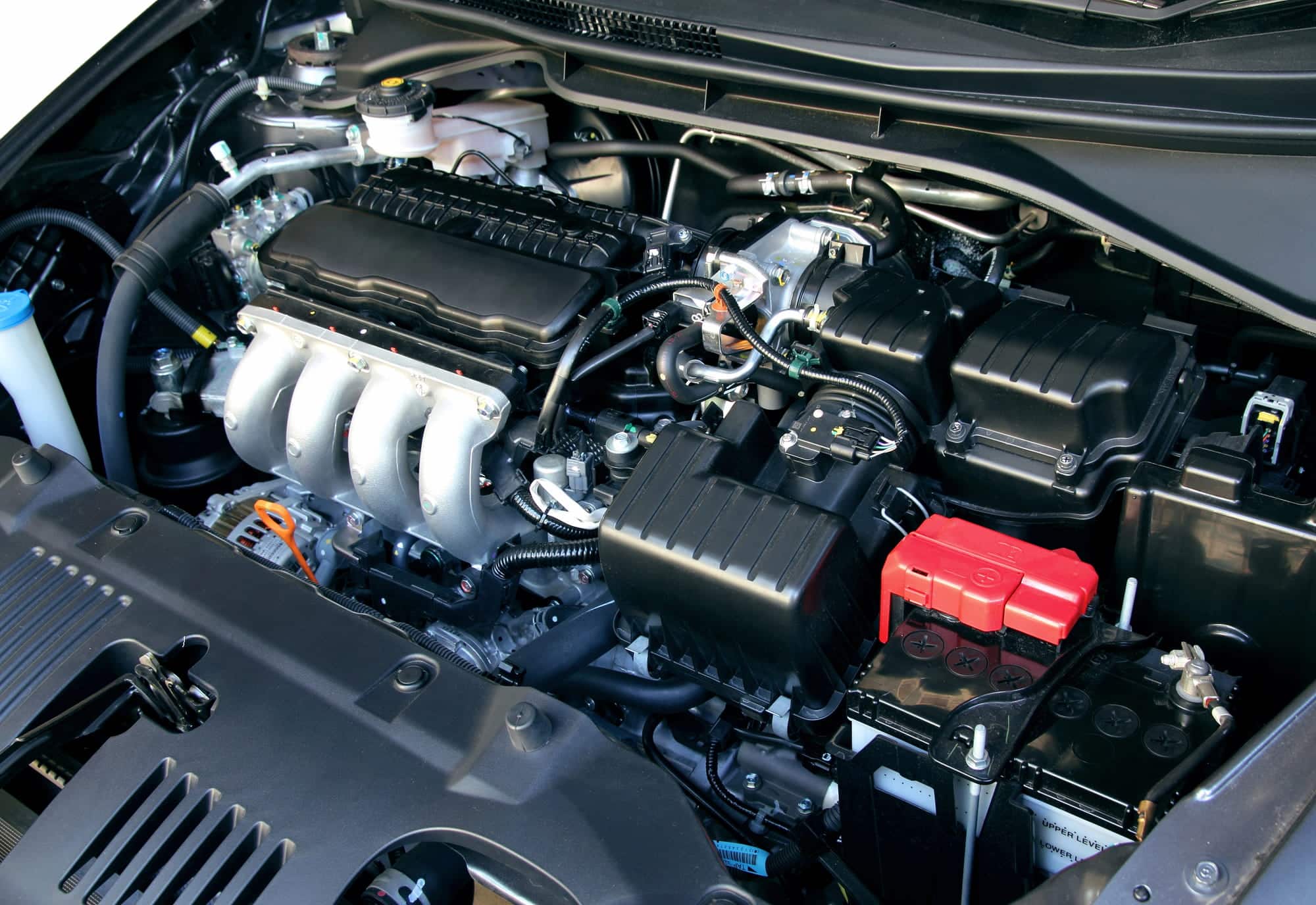
Porsche Engine Repair at DART Auto
Your Porsche's engine represents decades of Stuttgart engineering – a precision instrument designed to deliver exhilarating performance lap after lap. When something goes wrong, the last thing you want is a generic shop treating it like any other car. Whether you're hearing unfamiliar noises from your flat-six or seeing warning lights illuminate your dashboard, the path forward is clear: expert diagnosis and repair that preserves both your investment and your driving experience.
Porsche engine repair demands more than standard tools and goodwill. The boxer configuration, dry-sump oiling systems, and integrated engine management software require factory-level diagnostic equipment and technicians who understand platform-specific vulnerabilities. IMS bearing wear on 1997-2008 M96/M97 engines, bore scoring on Cayenne V8s, and coolant pipe failures on 997.1 models aren't issues you'll find in generic repair manuals. Our master technicians use Porsche System Tester (PIWIS) diagnostics and factory repair procedures to identify root causes, not just symptoms. We source OEM and premium aftermarket components from trusted suppliers who understand that a Porsche engine rebuild isn't the place to compromise on parts quality.
When you bring your Porsche to DART Auto for engine repair, here's what sets the experience apart:
- Complete diagnostic assessment using factory-level scan tools and visual inspection before any repair recommendations
- Transparent communication about what failed, why it happened, and what we'll do to address both the symptom and underlying cause
- Master technicians with dealer training and at least 10 years of experience working on European performance engines
- 3-year/36,000-mile warranty on parts and labor, giving you confidence that the repair will last
Common Engine Repair Issues on Porsche Vehicles
You turn the key, and instead of that signature flat-six growl, you hear a rattle that wasn't there last week. Or maybe your oil pressure warning flickers during hard cornering, and you're wondering if it's time to worry. Porsche engines are engineering marvels, but certain failure patterns emerge across model generations, and catching them early makes all the difference between a manageable repair and a catastrophic rebuild.
- IMS bearing failure on 1997–2008 Boxster, Cayman, and 911 (M96/M97 engines): The intermediate shaft bearing supports the camshaft drive system. When it fails, metal debris circulates through the engine, often destroying the motor entirely. Early symptoms include metallic debris in oil filters and faint rattling at cold start. This is the most infamous Porsche engine issue of the era, and preventive replacement is far cheaper than a grenaded block.
- Cylinder bore scoring on 2009–2012 997.2 and early 991 (9A1 DFI engines): Direct fuel injection combined with lean fuel mapping can cause localized overheating and vertical scoring in cylinder walls. You'll notice excessive oil consumption – sometimes a quart every 500 miles – blue smoke on startup, and eventually misfires. Left unchecked, it requires a complete engine rebuild or replacement.
- Coolant pipe leaks on 996 and 997 Turbo/GT2/GT3 models: Plastic coolant pipes buried deep in the engine bay become brittle with heat cycling and crack, dumping coolant rapidly. The engine can overheat in minutes, warping cylinder heads or blowing head gaskets. You might see steam from the engine bay or sudden temperature spikes on the gauge.
- Air-oil separator (AOS) failure on all water-cooled flat-six engines: The AOS prevents crankcase pressure buildup and oil vapor from entering the intake. When it fails, you'll see oil pooling under the car, smoke from the exhaust, rough idle, and eventually oil sucked into the combustion chambers. It's a maintenance item that becomes an engine-killer if ignored.
- Valve guide wear and oil consumption on early Cayenne V8 models (2003–2006): Worn valve guides allow oil to seep past valve stems into the combustion chamber. Symptoms include blue smoke on deceleration, fouled spark plugs, and oil consumption exceeding one quart per 1,000 miles. Eventually, carbon buildup on valves causes misfires and rough running.
- Timing chain tensioner failure on 2009+ Panamera and Cayenne V8 engines: Plastic tensioner guides wear or the hydraulic tensioners lose pressure, allowing chain slap against the timing cover. You'll hear a distinct rattle on cold start that quiets as oil pressure builds. If the chain jumps timing or breaks, valve-to-piston contact destroys the engine instantly.
Why Choose DART Auto for Porsche Engine Repair
Your Porsche's flat-six or turbocharged four-cylinder wasn't designed for guesswork. When the check engine light illuminates or oil consumption climbs, you need a shop that owns factory diagnostic tools and understands platform-specific failure modes – from IMS bearing wear on 1997–2008 M96/M97 engines to coolant pipe leaks on 991.2 Carrera models. DART Auto has invested in Porsche System Tester II (PIWIS) diagnostics and factory repair information, giving our master technicians the same visibility into fault codes, adaptation values, and calibration data that the dealer uses.
Our salaried technicians – each with over a decade of experience and dealer-level training – diagnose the root cause before turning a wrench. We follow OEM torque specifications, use genuine Porsche gaskets and seals where critical, and verify repairs with post-work road tests and scan-tool confirmation. Because we're not paid flat-rate, there's zero incentive to rush through a head-gasket job or skip the leak-down test that confirms ring seal. You get honest recommendations, a 3-year/36,000-mile warranty on parts and labor, and the peace of mind that comes from fixing it right the first time.
- Factory-level diagnostics: PIWIS tooling reads freeze-frame data, monitors live sensor streams, and clears adaptation faults the way Porsche intended.
- Platform expertise: We know which 997 Carrera S engines are prone to bore scoring, which Boxster model years need IMS bearing inspections, and how to address carbon buildup on direct-injection 991 Carrera engines.
- Transparent process: Complete written estimates before work begins, photo documentation of failure points, and plain-English explanations of what broke and why.
Symptoms – How to Know You Need This Service
Porsche engines communicate distress in specific ways. Recognizing these early warnings can mean the difference between a manageable repair and catastrophic failure.
- Metallic rattling or knocking from the engine bay, especially during cold starts or acceleration – may indicate bearing wear, timing chain issues, or valve train problems
- Blue or white smoke from the exhaust, suggesting oil consumption from worn piston rings, valve seals, or the IMS bearing on M96/M97 engines
- Rough idle or misfires accompanied by check engine lights, often pointing to ignition coil failure, fuel injector issues, or internal mechanical problems
- Loss of power or hesitation under load, which can signal anything from boost leaks on turbocharged models to compression loss from bore scoring
- Unusual oil consumption requiring frequent top-ups between services – a red flag for internal wear on air-cooled and early water-cooled engines
- Coolant in the oil or oil in the coolant, visible as milky residue on the dipstick or oil cap, indicating head gasket or coolant pipe failure
- Grinding or whining noises that change with engine speed, potentially from accessory bearings, water pump failure, or internal engine damage
- Engine overheating warnings on the instrument cluster, especially on Cayenne and Panamera models with coolant pipe vulnerabilities
If you notice metallic knocking, see smoke, or experience sudden power loss, stop driving immediately and arrange for towing. Continuing to operate the engine can transform a repairable issue into a complete rebuild.
Which Porsche Models We See for Engine Repair
DART Auto has served Denver's Porsche community for over 24 years, and we've built deep expertise across the model range. Here are the platforms we most commonly service for engine repair:
- 911 (996, 997, 991, 992) – from IMS bearing replacement on 1997-2008 M96/M97 engines to bore scoring repairs on 997.1 models and direct-injection carbon cleaning on 991/992 platforms
- Boxster and Cayman (986, 987, 981, 718) – mid-engine layout requires specialized procedures for access; we address the full spectrum of flat-six issues including RMS leaks and cylinder head work
- Cayenne (955, 957, 958, 9YA) – V6, V8, and turbocharged variants, with particular attention to coolant pipe failures, timing chain guides, and oil separator issues
- Panamera (970, 971) – both naturally aspirated and turbocharged V6/V8 engines, including the 4.8L V8 prone to coolant crossover pipe leaks
- Macan – EA888-derived turbocharged four-cylinder and VR6 engines, sharing some vulnerabilities with Audi platforms but requiring Porsche-specific calibration and parts
- Classic air-cooled 911s – we have the experience and tooling for earlier models, though our primary focus remains water-cooled platforms from 1997 forward
Whether your Porsche has a manual transmission, PDK dual-clutch, or Tiptronic, and regardless of drivetrain configuration (rear-wheel drive, all-wheel drive, or Porsche Traction Management), our diagnostic approach accounts for how each system interacts with engine performance and repair procedures.
Causes & Risks – What Happens if Ignored
Porsche engines face unique stresses. High-revving flat-six designs generate tremendous heat and mechanical loads. Direct injection systems run leaner fuel mixtures that increase combustion temperatures. Many owners drive enthusiastically – exactly what the car was built for – but that accelerates wear on components already operating near their thermal and mechanical limits. Colorado's altitude reduces air density, forcing the engine management system to compensate, sometimes pushing fuel trims to extremes. Temperature swings from mountain passes to Denver's urban heat further stress gaskets, seals, and coolant system components.
When you ignore early warning signs, the damage multiplies rapidly:
- IMS bearing neglect: A $2,500 preventive replacement becomes a $25,000 engine rebuild or replacement when the bearing disintegrates and metal shavings destroy bearings, camshafts, and cylinder walls.
- Cylinder scoring left unaddressed: What starts as elevated oil consumption progresses to misfires, catalytic converter damage from oil burning, and eventually complete loss of compression in affected cylinders. The repair escalates from a top-end refresh to a full shortblock replacement.
- Coolant leaks ignored: A cracked pipe that costs $800 to replace can cause overheating severe enough to warp aluminum cylinder heads, requiring $6,000+ in machine work and gasket replacement, plus potential damage to the head gasket and block mating surfaces.
- AOS failure延续: Oil sucked into the intake coats throttle bodies and intake runners, fouls mass airflow sensors, saturates catalytic converters, and eventually causes rough running that triggers multiple fault codes. What was a $900 AOS replacement becomes $3,500 in additional sensors, cleaning, and catalytic converter work.
- Timing system failure: Ignoring the rattle means risking catastrophic engine destruction. When a timing chain breaks or jumps, valves and pistons collide at high speed, bending valves, cracking pistons, and sometimes punching holes in cylinder walls – total engine replacement territory.
Beyond cost, safety becomes critical when engine failures happen suddenly. Loss of power on mountain highways or during highway merges creates dangerous situations for you and surrounding traffic.
Safety Impact – Why Engine Repair Matters
A failing Porsche engine doesn't just leave you stranded – it can create immediate hazards. Sudden loss of power while merging onto I-25 or climbing mountain passes puts you in the path of faster-moving traffic with no ability to accelerate out of danger. Coolant leaks that cause rapid overheating can trigger limp mode, cutting power to a fraction of normal output without warning. Oil starvation from AOS or bearing failures can seize the engine instantly, locking the drivetrain and potentially causing loss of vehicle control.
- Stop driving immediately if: You see the oil pressure warning light illuminate and stay on, notice sudden temperature spikes into the red zone, hear loud metallic knocking or grinding from the engine bay, or see large amounts of smoke or steam. These indicate imminent catastrophic failure.
- Schedule service within days if: You notice gradual oil consumption requiring frequent top-ups, hear rattling on cold starts that disappears when warm, see small coolant leaks or spots under the car, or experience rough idle and occasional misfires. These are progressive failures that give you time, but not much.
- Power steering and brake assist dependency: Modern Porsches use engine-driven hydraulic pumps or electric systems that depend on stable electrical power. An engine that suddenly dies can leave you with heavy, manual-effort-only steering and reduced brake assist, dramatically increasing stopping distances and making emergency maneuvers difficult.
- Airbag and stability control integration: Engine fault codes that trigger limp mode sometimes disable traction control and stability systems as a protective measure. On a rear-engine 911 or mid-engine Boxster/Cayman, losing electronic stability aids in slippery conditions significantly increases spin-out risk.
Insurance and liability considerations matter too. If an accident investigation reveals you were driving with known engine defects that contributed to loss of control or inability to avoid a collision, coverage disputes and liability claims become real possibilities.
How Porsche Engine Repair Actually Works
Porsche's flat-six and V8 engines use horizontally opposed or V-configured cylinder layouts that distribute weight low and wide for optimal handling. The flat-six design places cylinders on opposite sides of the crankshaft, creating a compact, low center of gravity. This configuration requires split crankcase construction – the engine block separates horizontally rather than vertically like traditional inline or V engines. That means many internal repairs require complete engine removal and case splitting, a process demanding precision torque sequences, case alignment procedures, and meticulous gasket sealing.
Direct fuel injection systems on 2009+ models spray fuel directly into combustion chambers at extremely high pressure (up to 2,200 psi), controlled by the engine management system through millisecond-precise injector timing. This requires specialized diagnostic equipment to monitor fuel pressure, injector flow rates, and combustion quality. OEM-level scan tools read real-time data streams that generic code readers miss entirely – parameters like individual cylinder contribution, knock sensor activity, and adaptive fuel trim values that pinpoint failing components.
- Porsche-specific calibration requirements: After engine repairs, the DME (Digital Motor Electronics) often requires adaptation procedures to relearn idle characteristics, throttle position, and fuel trims. Without factory tooling, these adaptations don't complete properly, leaving driveability issues and fault codes. <li
How We Diagnose Engine Repair Issues on Porsche
You turn the key and the flat-six sounds different – maybe a metallic rattle on cold start, or oil pressure that takes longer to build than it used to. Porsche engines are precision instruments, and when something changes, you need a shop that knows exactly where to look and how to interpret what the engine is telling you.
Our diagnostic process combines Porsche factory-level scan tools with hands-on mechanical inspection to pinpoint the root cause before we recommend any work:
- Initial consultation and symptom documentation. We start by listening to you – when the noise happens, what driving conditions trigger it, how long it's been occurring. These details guide where we focus first.
- Factory-level scan with Porsche System Tester (PIWIS) or equivalent. We pull stored fault codes, live data streams, freeze-frame snapshots, and adaptation values. This reveals sensor readings, timing deviations, misfires by cylinder, oil pressure trends, and DME-logged events you'd never see with a generic scanner.
- Physical inspection and measurement. We perform compression and leak-down tests to assess cylinder sealing, inspect valve train components through the oil filler or cam covers, check for oil leaks at the intermediate shaft bearing (IMS) area on M96/M97 engines (1997–2008 Boxster, Cayman, 911), and verify accessory belt and chain tensioner condition.
- Road test and operational observation. We drive the car under the conditions that replicate your concern – cold start, highway cruise, hard acceleration – and listen with trained ears for valvetrain noise, bearing rumble, or exhaust tone changes.
- Borescope inspection when warranted. For internal concerns without disassembly, we thread a camera through spark plug ports to view piston crowns, valve faces, and cylinder walls directly.
Once the diagnosis is complete, we walk you through what we found, show you the data or photos, and explain your repair options with transparent pricing. You'll know exactly what needs attention and why before any wrench turns.
Engine Repair on Porsche: Repair vs. Replacement
Not every engine problem means you need a new motor. The right decision depends on the scope of damage, the age and mileage of your car, and what makes financial sense when you factor in warranty and resale value.
When genuine repair is the right call:
- Single-component failures like a failed ignition coil, cracked intake manifold, or leaking valve cover gasket – we replace the part and you're back on the road.
- Carbon buildup on direct-injection engines – walnut-blast cleaning of intake valves restores airflow and performance without touching internal components.
- IMS bearing replacement on M96/M97 engines as preventive maintenance – the rest of the engine is healthy, so we address the known weak point and preserve the original motor.
- Cylinder head work for valve guide wear or minor valve seat recession – machine work and new guides/seals extend engine life significantly.
When partial replacement makes sense:
- Replacing one cylinder bank or head on a flat-six when damage is isolated and the opposing bank shows good compression and no oil consumption.
- Installing a remanufactured short block when bearings or cylinder walls are worn but heads and accessories are sound.
When full replacement is the best path forward:
- Catastrophic bearing failure that sent metal through the oil system – trying to salvage components risks repeat failure.
- Scored cylinders across multiple bores or crankshaft damage beyond machine-shop limits.
- When repair costs approach 70–80% of a factory-remanufactured or low-mileage used engine with warranty.
We lay out all the options with realistic cost and longevity expectations, so you can make the choice that fits your plans for the car. We're not here to sell you the most expensive fix – we're here to get you the best outcome.
How to Make Your Porsche Engine Repair Last Longer
Once we've restored your Porsche engine to proper health, a few mindful habits will help you get maximum life from the repair and protect your investment.
Driving habits that protect your engine:
- Let the engine warm up before high RPM or heavy load – Porsche flat-sixes need oil temperature above 180°F before asking for full power. Watch the oil temp gauge, not just coolant.
- Avoid lugging the engine in high gear at low RPM – downshift and keep revs above 2,500 when accelerating moderately.
- On turbocharged models (991.2, 992, Macan, Cayenne), allow 30–60 seconds of idle before shutdown after spirited driving to let the turbo cool with oil flow.
- Use premium fuel as specified – the knock sensors will pull timing on lower octane, but sustained detonation accelerates wear.
Maintenance you can monitor yourself:
- Check oil level weekly with the dipstick on a level surface after the engine has sat for a few minutes – Porsche engines can consume oil normally, especially when driven hard, so top off as needed between services.
- Listen for changes in engine tone at startup and idle – new ticking, rattling, or exhaust note shifts are early warnings worth investigating.
- Watch for the check-engine light or oil pressure warning – address these immediately; ignoring them turns small problems into expensive ones.
Professional care that makes the difference:
- Follow Porsche's oil change intervals (typically annual or 10,000 miles, but shorter for track use) and use the factory-specified oil viscosity – we stock Mobil 1 0W-40 and other Porsche-approved synthetics.
- Replace air and cabin filters on schedule – a clogged air filter leans out the mixture and increases intake restriction.
- Keep software and adaptations current – Porsche issues updates that refine fuel maps, timing, and component protection strategies.
You're welcome to check your own fluids and filters, but leave internal engine work, timing chain service, and any repair requiring special tooling to us. Some jobs need factory torque specs, alignment procedures, and break-in protocols that aren't safe to improvise at home.
What to Expect When You Bring Your Porsche In
Engine repairs demand precision, and our process reflects that. Here's how we'll guide you from drop-off to pickup:
- Appointment and intake: Schedule online or by phone. At drop-off, describe symptoms in detail – rough idle, oil leaks, loss of power, or warning lights. Leave your key; take personal items with you. We offer loaner vehicles and local shuttle service so you stay mobile.
- Diagnostic inspection: Our technician connects PIWIS diagnostics, pulls stored fault codes, and performs a visual inspection of the engine bay. For internal concerns, we may run a leak-down test or compression check to isolate cylinder health. You'll receive a written estimate detailing the failure, required parts (OEM or premium aftermarket), labor scope, and warranty coverage.
- Authorization and repair: Once you approve the estimate, we order parts and schedule the work. Throughout the repair, we document findings with photos – cracked vacuum lines, worn mounts, sludge buildup – so you understand what we're addressing. If we discover additional issues (a leaking rear main seal during a clutch job, for example), we call before adding scope.
- Quality verification: After reassembly, we road-test the car under load, re-scan for pending codes, and verify that adaptation values have reset. We check for leaks, listen for abnormal noise, and confirm that power delivery feels smooth across the rev range.
- Pickup walkthrough: At pickup, we walk you through the work performed, show you old parts if requested, and explain any maintenance items to monitor. After-hours pickup is available by arrangement. If anything feels off in the first few days, call us – we'll re-evaluate at no charge.
You're not just getting an engine repair; you're getting a documented, warranty-backed solution from technicians who treat your Porsche the way the factory intended.
Our Porsche Services
- Air Conditioning AC Repair
- Battery Repair Replacement
- Brake Repair & Brake Fluid Change
- Check Engine Light Diagnostics
- Clutch Repair & Replacement
- Coolant Leak Repair
- Cooling System Repair
- Drive Shaft Repair
- Exhaust & Catalytic Converter Repair
- Head Gasket Repair & Replacement
- Oil Change
- Oil Leak Repair
- Scheduled Service Maintenance
- Suspension Repair
- Cambelt Timing Belt Replacement
- Transmission Repair
- Tune Up
- Wheel Alignment