
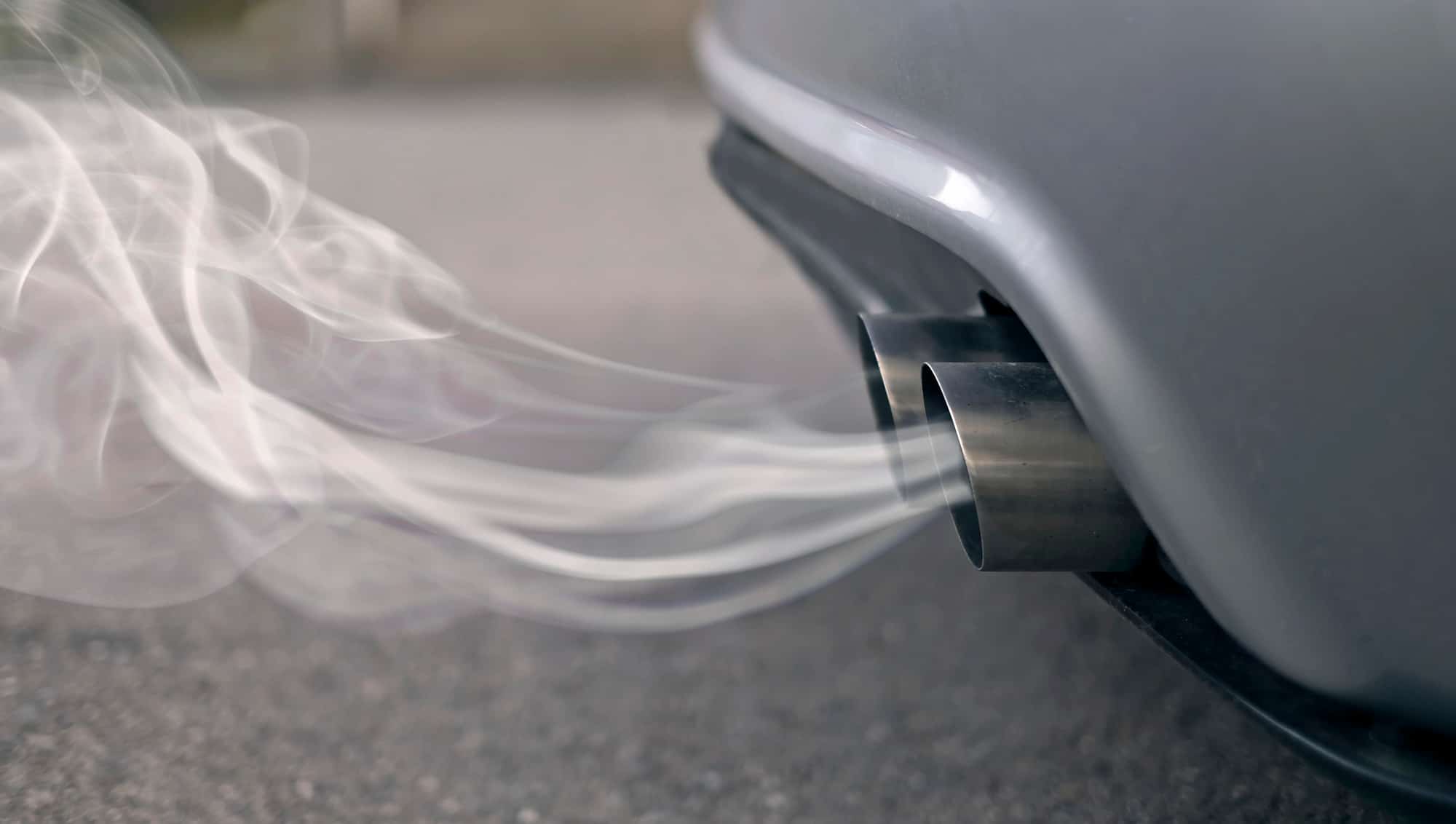
BMW Exhaust & Catalytic Converter Repair at DART Auto
When your BMW starts throwing catalytic converter codes or you notice exhaust leaks, you need a shop that understands how these systems integrate with your car's sophisticated engine management and emissions controls. BMW exhaust and catalytic converter systems are far more complex than most vehicles – they're monitored by multiple oxygen sensors, lambda probes, and temperature sensors that communicate constantly with the DME (Digital Motor Electronics). A generic muffler shop can swap parts, but they often lack the factory diagnostic tooling to properly calibrate the system, clear adaptation values, or verify closed-loop fuel trim after the repair.
At DART Auto, we've been repairing BMW exhaust and catalytic converter systems since 2000, using the same factory repair procedures and diagnostic software found at the dealership. Our master technicians understand platform-specific challenges – like the common catalytic converter failures on N55 and N20 turbocharged engines (2011–2016 F-chassis models), where excessive oil consumption can poison catalysts prematurely, or the complex four-converter layout on V8 and V12 models where backpressure imbalances can cascade into multiple component failures. We diagnose the root cause first, then execute the repair with OEM or premium aftermarket parts that meet BMW's strict emissions and flow specifications.
When you bring your BMW to DART Auto for exhaust or catalytic converter repair, expect:
- Complete pre-repair diagnostics using factory-level scan tools to confirm catalyst efficiency, oxygen sensor response, and fuel trim data
- Inspection of upstream causes – PCV systems, valve cover breathers, turbocharger seals – that may have damaged the converter
- OEM-spec replacement parts with proper substrate cell count and sensor bungs positioned to BMW specifications
- Post-repair drive cycle verification and DME adaptation resets to ensure readiness monitors complete properly
Common Exhaust & Catalytic Converter Repair Issues on BMW Vehicles
When your BMW shows symptoms of exhaust or catalytic converter trouble, you're usually seeing the result of platform-specific design choices meeting Colorado's high-altitude, temperature-swing environment. We diagnose these failures daily, and the patterns are predictable once you know the chassis codes and engine families involved.
- N54 and N55 turbo downpipe cracking (2007–2016 E90, F30, E82): The factory downpipes on twin-turbo and single-turbo inline-six engines crack at the flex joints and bellows due to thermal cycling and vibration. You'll hear a raspy exhaust note under load, smell raw fuel occasionally, and see P0420/P0430 catalyst efficiency codes as hot exhaust gases bypass the sensors.
- Catalytic converter substrate failure on N52 and N51 engines (2004–2015 E60, E90, E91, X3, X5): The naturally aspirated inline-six models running lean at altitude often experience catalyst substrate breakdown, especially after 100,000 miles. The ceramic honeycomb inside disintegrates, rattles, and restricts flow. You'll notice reduced power on highway grades and persistent check-engine lights.
- Exhaust manifold stud failure on N20 and N26 four-cylinder turbo engines (2012–2016 F30, F32, X1, X3): The manifold-to-head studs corrode and snap, creating exhaust leaks that sound like a ticking sewing machine at idle. Left unaddressed, the leak worsens, throws oxygen sensor codes, and can warp the manifold itself.
- Oxygen sensor failure and heater circuit codes on S65 V8 (2008–2013 E90/E92 M3): The high-revving V8 runs four cats and eight O2 sensors. Sensor heater circuits fail frequently, triggering P0135, P0155 codes and limp mode. The narrow-band sensors are expensive OEM-only parts, and misdiagnosis leads to unnecessary catalyst replacement.
- Flex pipe deterioration on E46 and E39 platforms (1999–2006 3-series, 5-series): The stainless flex sections in the mid-pipe corrode from the inside out, especially on cars driven in winter salt. You'll hear a deep rumble that changes with throttle, and exhaust gas can migrate toward the cabin through the firewall.
- Catalytic converter theft on F10, F30, and G30 models: Late-model BMWs with underfloor cats are increasingly targeted. Thieves cut the pipes in minutes, leaving you with a deafening straight-pipe exhaust, no emissions compliance, and a repair bill that includes welding, flanges, and OEM replacement converters with the correct sensor bungs.
Why Choose DART Auto for BMW Exhaust & Catalytic Converter Repair
When your BMW triggers a check-engine light or develops an exhaust leak, you need technicians who understand the platform-specific nuances that separate effective repair from guesswork. DART Auto's master technicians bring factory-level diagnostic capability and over two decades of European vehicle experience to every catalytic converter and exhaust job.
Our shop handles the full spectrum of BMW exhaust issues – from cracked manifolds on N52 engines (common on 2006–2013 E90/E92 models) to failed primary cats on N55 turbocharged platforms. We use factory BMW ISTA diagnostic software to read live sensor data, freeze-frame conditions, and readiness monitors, so we know whether you're facing a genuine catalyst failure or a secondary air injection fault that mimics converter codes. That distinction matters because the wrong diagnosis leads to expensive, unnecessary parts replacement.
Every repair follows BMW-specific torque specs and uses OEM or premium aftermarket components sourced from trusted suppliers. We invest in the specialty tooling required for proper fitment – oxygen sensor sockets, flex-joint alignment fixtures, and stud-extraction kits – so the job is done once, correctly. Our 3-year/36,000-mile warranty backs every catalytic converter and exhaust repair, and our salaried technician model removes any incentive to rush or upsell.
Symptoms – How to Know You Need This Service
BMW exhaust and catalytic converter problems announce themselves in several ways, some subtle and others impossible to ignore. You may notice:
- Check Engine Light with P0420/P0430 codes – these indicate catalyst efficiency below threshold, often triggered when the downstream oxygen sensor reads too similarly to the upstream sensor
- Rattling noise from underneath the car – especially on cold start or deceleration, caused by broken catalyst substrate rattling inside the converter housing (common on high-mileage N52 and N54 engines)
- Sulfur or rotten egg smell – indicates a failing catalytic converter that's no longer properly processing hydrogen sulfide in the exhaust
- Loss of power or sluggish acceleration – a clogged converter creates excessive backpressure, choking engine performance and triggering limp mode on turbocharged models
- Hissing or popping sounds during acceleration – points to exhaust leaks at flex joints, gaskets, or cracked manifolds (particularly problematic on N63 V8 engines with known manifold failures)
- Visible exhaust leaks or soot staining – around manifold flanges, turbocharger connections, or mid-pipe joints
- Failed emissions test – high NOx or hydrocarbon readings that trace back to catalyst inefficiency
If you're experiencing severe power loss or the engine goes into limp mode, schedule service immediately. Continued driving with a severely clogged converter can cause turbocharger damage or overheat the exhaust system.
Which BMW Models We See for Exhaust & Catalytic Converter Repair
We service the full range of BMW platforms for exhaust and catalytic converter work, with deep experience across chassis generations and engine families. The models we see most frequently include:
- E90/E91/E92/E93 3-Series (2006–2013) – particularly N52 naturally aspirated and N54/N55 turbocharged engines with high-mileage converter failures
- F30/F31/F34 3-Series and 4-Series (2012–2019) – N20 and B58 engines where oil consumption issues accelerate catalyst poisoning
- E60/E61 5-Series (2004–2010) – N52, N54, and N62 V8 models with complex multi-converter exhaust layouts
- F10/F11 5-Series (2011–2016) – N55 and N63 V8 engines, where turbocharger seal leaks often damage downstream converters
- E70 X5 and E71 X6 (2007–2013) – N55 and N63 engines with known catalytic converter longevity issues on high-mileage examples
- F15/F16 X5 and X6 (2014–2018) – N55 and N63TU engines requiring careful diagnosis of PCV and turbo oil consumption before converter replacement
- E82/E88 1-Series and E89 Z4 (2008–2016) – N54, N55, and N20 engines with similar failure modes to 3-Series platforms
- M-Sport and M models – we handle S55, S63, and S65 engines, though high-performance exhaust work often requires specialized fabrication and tuning considerations
We work on both rear-wheel-drive and xDrive all-wheel-drive variants. If you own a pre-2004 E46 or earlier model, we're happy to assess it – older naturally aspirated engines typically have simpler exhaust systems but may require custom fabrication for age-related corrosion damage.
Causes & Risks – What Happens if Ignored
Exhaust and catalyst problems on BMWs stem from a combination of high operating temperatures, lean fuel trims at altitude, and the corrosive effects of short trips in winter. The turbocharged engines generate extreme exhaust gas temperatures that fatigue metal and crack welds. Naturally aspirated engines running lean to meet emissions targets push catalysts beyond their thermal limits, especially when climbing I-70 grades. Add road salt, thermal cycling from cold starts, and age-related metal fatigue, and you have a predictable failure path.
Delaying repair accelerates damage in ways that aren't always obvious until the bill arrives:
- Exhaust leaks upstream of the oxygen sensors: Unmetered air enters the exhaust stream, the ECU reads false-lean data, and compensates by dumping extra fuel. You'll see poor fuel economy, fouled spark plugs, and eventually damage to the catalytic converters themselves as raw fuel burns inside the substrate.
- Restricted catalytic converters: A clogged cat creates backpressure that chokes the engine. Turbo engines lose boost, naturally aspirated engines lose top-end power, and exhaust gas temperatures climb high enough to warp manifolds and crack cylinder heads. On N54 engines, we've seen turbos fail prematurely because the backpressure prevented proper spool-down.
- Failed oxygen sensors left in place: The ECU enters open-loop mode, ignores real-time air-fuel data, and runs a generic fuel map. Performance suffers, emissions skyrocket, and you risk failing Colorado's emissions test. Worse, running rich long-term will destroy the remaining catalysts.
- Manifold stud failures that go unrepaired: The leak grows, exhaust gas erodes the aluminum head around the stud holes, and what was a $600 stud-and-gasket job becomes a $3,000 cylinder head repair with helicoil inserts or replacement.
- Ignoring rattling catalysts: Loose substrate pieces eventually block the outlet entirely. The engine stalls under load, won't restart, and requires towing. The replacement cost is the same, but now you've added a tow bill and lost a day of work.
Safety Impact – Why Exhaust & Catalytic Converter Repair Matters
Exhaust system failures on a BMW rarely cause sudden loss of control, but they create conditions that degrade your ability to respond in traffic and expose you to toxic gases. The most immediate risk is carbon monoxide intrusion. A flex-pipe failure or manifold crack upstream of the firewall allows exhaust gas to migrate into the cabin through the HVAC fresh-air intake or around the pedal assembly. You'll smell it first – a sweet, acrid odor – and then experience headache, dizziness, and delayed reaction times. If you're driving alone on a long highway stretch, CO poisoning can render you unable to safely control the vehicle.
Performance degradation introduces secondary risks. A restricted catalyst on an N55-powered F30 will cause the engine to enter limp mode on a highway on-ramp, leaving you merging at half throttle into 75-mph traffic. Turbo cars lose boost, naturally aspirated engines lose power at altitude, and the unpredictability of when the engine will cut power creates dangerous situations in mountain passes and merging lanes.
When to stop driving and call for a tow:
- You smell exhaust inside the cabin with the windows up and HVAC running.
- The engine enters limp mode repeatedly or won't exceed 3,000 rpm.
- You hear loud rattling from underneath that changes with throttle – this indicates loose catalyst substrate that could block the exhaust entirely.
- The exhaust note suddenly becomes deafening and you see a fresh cut or missing section of pipe (theft or catastrophic failure).
Schedule service soon but safe to drive: Check-engine light with P0420/P0430 codes, slight loss of power at altitude, ticking noise from the engine bay at idle, or visible surface rust on exhaust components.
How BMW Exhaust & Catalytic Converter Repair Actually Works
BMW exhaust systems are designed as integrated emissions-control assemblies, not just pipes and mufflers. Each catalytic converter is mapped in the DME (Digital Motor Electronics) software by its position, cell count, and precious-metal loading. The oxygen sensors – typically two per bank on inline engines, four per bank on V8s and V12s – provide real-time feedback that the ECU uses to trim fuel delivery within milliseconds. When you replace a catalyst or oxygen sensor, the system must be told what changed, or it will continue operating on outdated assumptions and throw false codes.
This is where BMW-specific service diverges sharply from generic exhaust work. A typical independent shop can weld in a universal catalyst, but without factory ISTA diagnostic software and the ability to register the new part in the ECU, the check-engine light returns within a drive cycle. We use the same ISTA/D and ISTA/P software the dealer uses to code new components, clear adaptation values, and run readiness monitors to confirm the repair before you leave.
BMW exhaust system design specifics that affect repair:
- Catalysts with integrated oxygen sensor bungs: OEM cats have the sensor ports welded at precise angles and distances from the substrate. Aftermarket "universal fit" cats often place the bungs incorrectly, causing the sensors to read skewed data and trigger nuisance codes.
- Turbo downpipes with wastegate
How We Diagnose Exhaust & Catalytic Converter Repair Issues on BMW
When a BMW arrives with an exhaust concern – whether it's a check-engine light, a rattling cat, or visible smoke – we start by pulling the vehicle into the bay and connecting our factory-grade scan tools. BMW-specific ISTA diagnostics reveal fault codes that generic scanners miss, especially on newer F-series and G-series platforms where the DME monitors oxygen sensor switching rates, catalyst efficiency, and backpressure in real time. We log live data during a controlled road test, watching short-term and long-term fuel trims, lambda sensor voltage, and exhaust gas temperature to pinpoint whether the issue is upstream (engine-side) or downstream (catalyst or muffler).
- Initial scan and freeze-frame data retrieval: We capture the exact conditions when the fault occurred – RPM, load, coolant temp – which tells us whether the problem happens cold, hot, or under specific load conditions.
- Visual inspection on the lift: We check for physical damage, rust perforation, heat discoloration on the catalytic converter shell, loose heat shields, and cracked flex pipes – common on E90/E92 N52 and N54 engines where the downpipe flex section fatigues.
- Backpressure test: Using a pressure gauge in the upstream oxygen sensor port, we measure exhaust restriction. A clogged cat on an N55 turbo engine will show elevated backpressure and sluggish throttle response.
- Leak detection: We run the engine and use a smoke machine or soapy water to identify exhaust leaks at gaskets, flanges, and welds – leaks upstream of the oxygen sensors will skew readings and trigger false catalyst codes.
- Component-level testing: We test oxygen sensor response time and heater circuit function. Lazy or failed sensors (common on high-mileage E46, E39, and early E60 models) often mimic catalyst failure.
Once we've isolated the root cause, we walk you through what we found, what needs attention now, and what can wait. You get a detailed quote that reflects the actual problem – not a guess.
Exhaust & Catalytic Converter Repair on BMW: Repair vs. Replacement
Not every exhaust problem requires replacing the entire system. When a heat shield is rattling loose on an E90 or a single exhaust hanger has torn free, we repair the bracket or weld the shield back into place. If a flex pipe has cracked but the catalytic converter and muffler are still sound, we cut out the failed section and weld in a new flex joint – common on N52 and N54 engines where the factory flex section sees thermal cycling stress.
Partial replacement makes sense when one component has failed but the rest of the system is healthy. Examples include:
- Replacing a failed front catalytic converter on an E46 M3 (S54 engine) while retaining the rear section muffler and mid-pipes.
- Installing a new downpipe and cat assembly on an F30 335i (N55 engine) when the original catalyst has collapsed internally, but the mid and rear sections are intact.
- Swapping a single oxygen sensor when diagnostics confirm sensor failure rather than actual catalyst degradation.
Full replacement is the right call when the catalyst is clogged or broken apart internally, when rust has perforated multiple sections, or when backpressure is causing turbo overboosting or limp mode on turbocharged models. On older E39 540i V8s and E60 550i N62 engines, we often see cascading exhaust failures where heat and age have compromised gaskets, studs, and flanges – at that point, replacing the full system with OEM or premium aftermarket components restores performance and eliminates recurring leaks. We lay out the options, explain the trade-offs in longevity and cost, and let you decide what fits your budget and how long you plan to keep the car.
How to Make Your BMW Exhaust & Catalytic Converter Repair Last Longer
Once we've repaired or replaced your exhaust system, a few smart habits will help it last. Short trips where the engine never reaches full operating temperature leave condensation in the exhaust, accelerating rust from the inside out – especially on older E46 and E39 models in Colorado's winter months. Let the engine warm up fully on longer drives when possible, and avoid idling for extended periods, which leaves unburned fuel in the catalyst.
Maintenance habits that protect the system:
- Watch for new sounds or smells: A new rattle, hiss, or sulfur smell means something has shifted or failed. Catching a loose heat shield early prevents it from damaging adjacent components.
- Monitor the check-engine light: If it illuminates, get it scanned promptly. Ignoring a misfire code will dump raw fuel into the catalyst, overheating and destroying it – a $200 coil pack problem becomes a $2,000 catalyst replacement.
- Use top-tier fuel: BMW's high-compression engines (especially turbocharged N20, N26, N55, B58) are sensitive to fuel quality. Low-quality gas increases carbon deposits and incomplete combustion, both of which shorten catalyst life.
- Follow BMW's oil change intervals: Oil consumption on older N52, N54, and N63 engines can foul oxygen sensors and coat catalyst surfaces. Keeping oil consumption in check and changing oil on schedule (we recommend 5,000–7,500 miles, not the extended 10,000-mile interval) protects the entire exhaust system.
What you can safely check yourself: look under the car occasionally for visible damage, rust, or hanging components. Listen for changes in exhaust note. Leave the actual repairs, welding, and oxygen sensor replacement to the shop – exhaust work involves high heat, toxic gases, and safety-critical emissions components that require proper tooling and ventilation.
What to Expect When You Bring Your BMW In
We start every exhaust and catalytic converter repair with a complete diagnostic process, so you understand exactly what failed and why. Here's how your visit unfolds:
- Appointment and drop-off. Schedule online or by phone. If you need transportation, ask about loaner vehicle availability or our local shuttle service. Remove valuables and personal items from the cabin.
- Initial inspection and scan. Our technicians perform a visual undercarriage inspection, pull stored fault codes, and review live oxygen sensor data to confirm whether the catalyst has degraded or if upstream faults (air leaks, misfires, oil consumption) are contaminating it.
- Written estimate and approval. You'll receive a detailed estimate that explains which components need replacement, why the failure occurred, and what we recommend to prevent recurrence. We walk you through the repair options – OEM versus quality aftermarket – and answer questions before you approve any work.
- Repair and post-repair verification. After installation, we clear codes, complete a drive cycle to set readiness monitors, and re-scan to confirm all systems pass. You'll receive a walkaround at pickup explaining what was replaced and what to watch for in the coming weeks.
If anything feels off after you drive away – a new rattle, a lingering code, anything – call us immediately. We stand behind the work and will bring your BMW back in for a no-charge follow-up inspection. Our goal is long-term reliability, not just clearing the light.
Our BMW Services
- Air Conditioning AC Repair
- Battery Repair Replacement
- Brake Repair & Brake Fluid Change
- Check Engine Light Diagnostics
- Clutch Repair & Replacement
- Coolant Leak Repair
- Cooling System Repair
- Drive Shaft Repair
- Engine Repair
- Head Gasket Repair & Replacement
- Oil Change
- Oil Leak Repair
- Scheduled Service Maintenance
- Steering Repair
- Suspension Repair
- Cambelt Timing Belt Replacement
- Transmission Repair
- Tune Up
- Wheel Alignment