
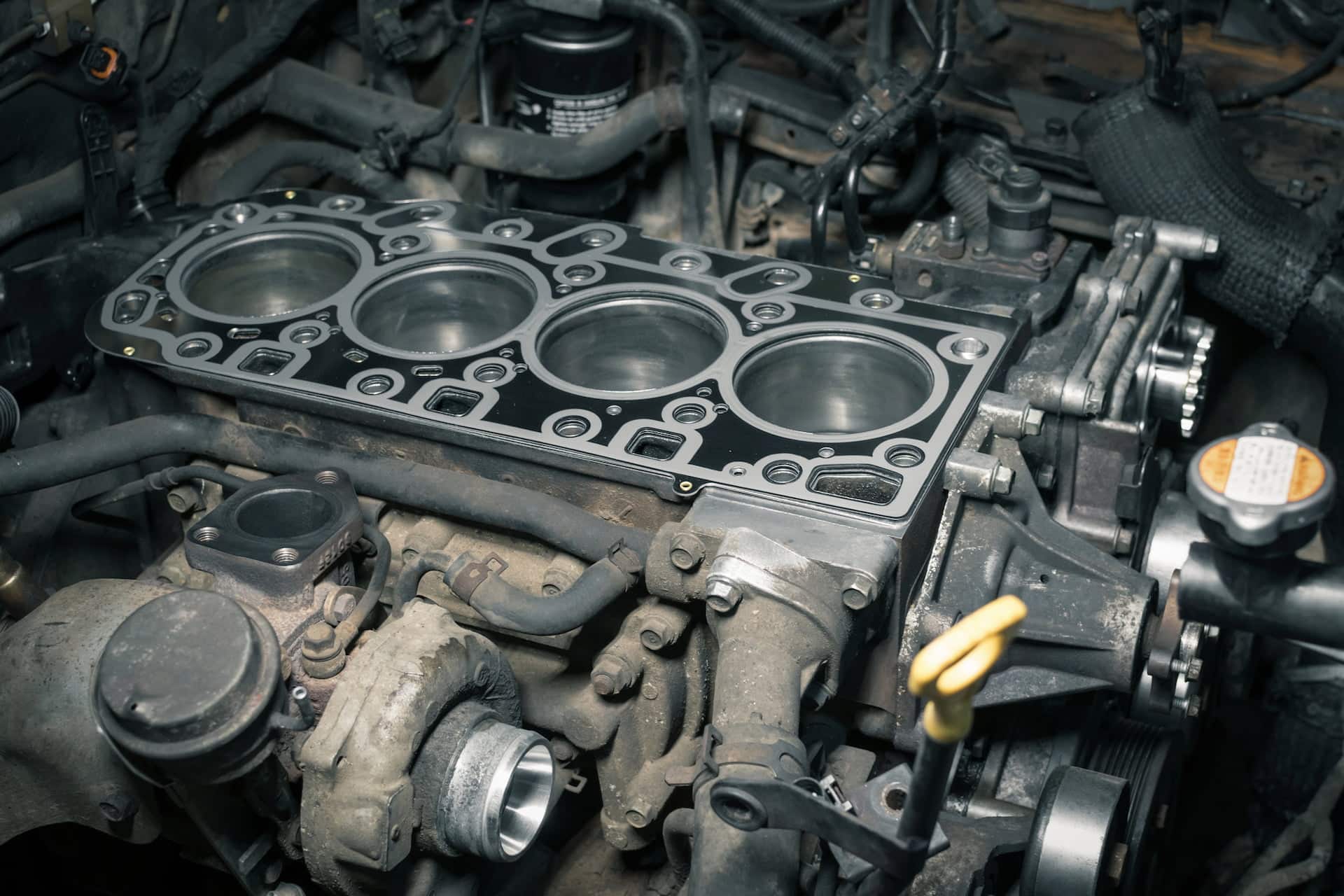
Porsche Head Gasket Repair & Replacement at DART Auto
Porsche engines demand precision at every level, and nowhere is that more apparent than in head gasket work. The flat-six architecture in 911s and the V8s in Cayenne and Panamera models require exacting torque sequences, specialized alignment procedures, and meticulous surface prep that generic shops routinely overlook. M96 and M97 engines (1997–2008 911, Boxster, Cayman) are particularly sensitive to improper head stud torque and coolant system bleeding, while later MA1 and 9A1 engines introduce direct injection and VarioCam Plus timing considerations that can turn a straightforward gasket replacement into a misaligned nightmare if the shop lacks Porsche-specific tooling and training.
At DART Auto, we treat head gasket work as the engine rebuild it often becomes. Our master technicians use factory repair procedures, OEM gasket sets, and the specialized alignment fixtures that ensure cylinder head mating surfaces seat correctly. We verify deck flatness with precision straightedges, re-torque head bolts to Porsche's multi-stage specification, and perform complete coolant system pressure tests before returning your car. Since 2000, we've handled hundreds of Porsche head gasket jobs – from early air-cooled 911s to the latest turbocharged 992 – and our 3-year/36,000-mile warranty backs every repair.
When you bring your Porsche to DART Auto for head gasket repair, expect:
- Complete disassembly with documentation of cylinder head condition, bore wear, and valve train integrity
- Deck surface inspection and machining referrals when flatness is out of spec
- OEM or premium aftermarket gasket sets with updated revisions for known failure points
- Full cooling system flush, pressure test, and bleed procedure using Porsche-specific tooling
Common Head Gasket Repair & Replacement Issues on Porsche Vehicles
Porsche flat-six engines are engineering marvels, but their horizontally-opposed layout introduces head gasket challenges most shops don't anticipate. Here's what we see routinely on Porsche platforms:
- M96/M97 coolant crossover tube leaks (1997–2008 Boxster, Cayman, 911): The coolant crossover pipes that run between cylinder banks corrode internally and crack at the crimped joints. Coolant seeps into the combustion chamber through micro-cracks in the head gasket seal, causing white smoke on startup and gradual overheating. Generic shops often misdiagnose this as a simple external coolant leak.
- 996/997 Turbo head stud failures (2001–2012 911 Turbo): The factory head studs on turbocharged models stretch under boost pressure and repeated heat cycles. Once elongated, they no longer maintain proper clamping force, allowing combustion gases to breach the gasket perimeter. You'll see misfires, rough idle, and eventually coolant contamination in the oil.
- 991.1 DFI carbon fouling and gasket degradation (2012–2016 911 Carrera): Direct fuel injection means no fuel wash over intake valves. Carbon accumulates on valve stems, increasing combustion chamber pressure spikes that stress head gasket fire rings. Combined with thinner MLS gaskets used for tighter tolerances, early gasket failure becomes common past 60,000 miles.
- Boxster/Cayman 2.7L cylinder scoring and gasket blowout (2000–2008): The Lokasil cylinder liners in early 2.7L engines score when oil starvation occurs during aggressive cornering. Once scoring begins, compression escapes past rings and overloads the head gasket's ability to seal. The result is oil consumption, coolant mixing, and catastrophic gasket failure if not caught early.
- Cayenne/Panamera V8 coolant pipe corrosion (2003–2010 Cayenne, 2010–2016 Panamera): The plastic coolant pipes embedded in the valley between cylinder banks crack from thermal cycling. Coolant drips onto the block deck surface, corroding the gasket mating surface and compromising the seal even with a new gasket installed.
- Macan 2.0T EA888 gasket delamination (2015–2018): The VAG-sourced turbocharged four-cylinder uses a multi-layer steel gasket that delaminates when the engine experiences repeated overboost or prolonged high-load operation. You'll notice oil weeping from the head-to-block joint near cylinders two and three before internal coolant contamination appears.
Why Choose DART Auto for Porsche Head Gasket Repair & Replacement
Head gasket failure on a Porsche isn't just about swapping a part – it's about understanding platform-specific failure modes that generic shops overlook. M96 and M97 engines (1997–2008 Boxster, Cayman, and 911) are notorious for coolant migration into cylinders due to cylinder liner slippage, which mimics head gasket symptoms but requires a completely different repair path. Our master technicians perform leak-down testing and cylinder bore-scope inspections before pulling the head, so you don't pay for the wrong repair. We also address the root causes: on water-cooled 996 and 997 platforms, coolant pipe O-rings and expansion tank cracks often contribute to overheating that damages the head gasket in the first place.
We use factory Porsche PIWIS diagnostic software to verify cylinder misfire history, coolant temperature deviations, and stored fault codes that point to gasket degradation versus other cooling system failures. After the gasket replacement, we perform a full pressure test of the cooling system, retorque head bolts to Porsche's multi-stage specification, and run a complete scan to confirm no residual misfires or adaptation faults. Our 3-year/36,000-mile warranty on parts and labor covers the gasket itself and the ancillary seals we replace during the job – valve cover gaskets, coolant pipes, and thermostat housings – because shortcuts lead to comebacks.
Symptoms – How to Know You Need This Service
Head gasket failure on a Porsche rarely announces itself with a single catastrophic event. Instead, you'll notice a constellation of symptoms that worsen over weeks or months. Catching them early can mean the difference between a gasket replacement and a full engine rebuild.
- White or sweet-smelling exhaust smoke – coolant burning in the combustion chamber, especially noticeable on cold starts
- Persistent coolant loss with no visible leaks – the expansion tank drops steadily but you see no puddles under the car
- Overheating or erratic temperature gauge readings – combustion gases pressurizing the cooling system disrupt normal thermostat operation
- Milky or frothy oil on the dipstick or under the oil cap – coolant mixing with engine oil, a sign of internal breach
- Rough idle or misfires that don't resolve with new spark plugs – compression loss in one or more cylinders
- External coolant seepage at the head-to-block joint – visible wetness along the cylinder head perimeter, often stained orange or green
- Bubbles in the coolant reservoir while the engine runs – exhaust gases forcing their way into the cooling system
If you see milky oil or experience sudden overheating, stop driving immediately and have the car towed. Continued operation can warp the cylinder head or damage bearings. For gradual coolant loss or occasional rough running, schedule an inspection within the week – these symptoms accelerate quickly once the gasket begins to fail.
Which Porsche Models We See for Head Gasket Repair & Replacement
Head gasket work spans the entire Porsche lineup, though failure modes and repair complexity vary widely by platform and engine family. We routinely service:
- 911 (996, 997, 991, 992) – M96/M97 flat-sixes (1999–2008) with known coolant pipe and head gasket issues; later 9A1 and turbocharged engines less common but still serviceable
- Boxster and Cayman (986, 987, 981, 718) – M96/M97 engines (1997–2008) share 911 gasket vulnerabilities; MA1 four-cylinders in 718 models (2017+) occasionally see head gasket seepage
- Cayenne (955, 957, 958, 9YA) – V8 engines (M48, M55) in first and second generations prone to coolant crossover pipe failures that mimic head gasket symptoms; verify diagnosis before disassembly
- Panamera (970, 971) – V6 and V8 variants, particularly early 4.8L V8s with direct injection carbon fouling that can complicate head removal
- Macan (95B) – shares EA888 four-cylinder with Audi; less common for head gasket failure but we handle them when needed
- Classic air-cooled 911s – we service these on a case-by-case basis; reach out to discuss your specific model year and engine type
Manual and PDK transmissions don't affect head gasket work directly, but we account for accessory drive and timing system differences across all variants. If your Porsche isn't listed or falls outside 1990–present, call us – we'll let you know honestly whether we're the right shop for your car.
Causes & Risks – What Happens if Ignored
Head gasket failure on Porsche engines stems from a combination of design constraints and operating reality. The horizontally-opposed layout means gaskets seal a longer perimeter than inline engines, and thermal expansion occurs unevenly across the broad deck surface. Add in Porsche's preference for high compression ratios, aggressive ignition timing, and lightweight materials, and you have an engine that demands perfect gasket integrity. Track use, short trips that never reach full operating temperature, and deferred cooling system maintenance accelerate gasket degradation.
Ignore early symptoms and the damage cascades quickly:
- Coolant enters the combustion chamber: White exhaust smoke appears, spark plugs foul, and misfires develop. Within a few hundred miles, the catalytic converters become poisoned by coolant contamination, adding thousands in emissions system repairs.
- Combustion gases pressurize the cooling system: The overflow tank bubbles constantly, hoses bulge, and the radiator cap releases pressure repeatedly. The water pump bearings fail prematurely from cavitation, and the thermostat housing cracks from overpressure. A $3,000 head gasket job becomes a $7,000 engine repair.
- Oil and coolant mix internally: Once fluids cross-contaminate, bearing surfaces lose lubrication. Rod and main bearings score within hours of mixed-fluid operation. Crankshaft journals require machining or replacement, and you're now facing a full engine rebuild rather than a gasket replacement.
- Cylinder head warping: Uneven cooling from compromised gasket sealing causes localized hot spots. Aluminum heads warp beyond the machine shop's ability to resurface them, requiring new castings that are back-ordered or discontinued on older models.
- Electrical system contamination: Coolant leaking externally from a failing gasket drips onto wiring harnesses, corroding connectors for oxygen sensors, knock sensors, and cam position sensors. Intermittent electrical gremlins appear that are difficult to diagnose after the gasket is finally replaced.
Safety Impact – Why Head Gasket Repair & Replacement Matters
A failing head gasket doesn't just threaten your engine; it creates immediate driving hazards. Coolant loss leads to overheating, and modern Porsche engines go into limp mode when coolant temperature exceeds safe thresholds. On a highway merge or mountain pass, sudden power loss puts you and surrounding traffic at risk. Coolant leaking onto hot exhaust components creates acrid smoke that obscures vision and can ignite if oil is also present.
Internal coolant contamination fouls spark plugs, causing random misfires that make the engine buck and hesitate unpredictably. In a rear-engine 911, that translates to traction loss mid-corner when the drivetrain surges unexpectedly. Stability control can't compensate for power delivery that cuts in and out.
Know when to stop driving versus when to schedule service soon:
- Stop immediately: Temperature gauge in the red, steam from under the hood, sweet smell inside the cabin (coolant vapor entering the HVAC), or sudden loss of power with warning lights.
- Schedule within days: White exhaust smoke on cold starts, coolant level dropping without visible leaks, rough idle that smooths out after warm-up, or bubbling in the coolant reservoir.
- Schedule within weeks: Slight oil consumption increase, occasional misfire codes that clear themselves, or minor oil seepage at the head-to-block joint visible during routine service.
Insurance and liability become factors if you continue operating a vehicle with known cooling system failure. An engine fire caused by deferred maintenance may not be covered, and if a breakdown causes a collision, documentation of ignored warning signs can complicate claims.
How Porsche Head Gasket Repair & Replacement Actually Works
Porsche's flat-six and flat-four engines mount cylinder heads horizontally on each bank, with the crankshaft running longitudinally through the center. The head gasket seals combustion chambers, oil passages, and coolant jackets across a broad, flat mating surface. Unlike inline engines where gravity helps keep fluids separated, Porsche's layout means any gasket breach allows fluids to migrate laterally. The gasket itself is a multi-layer steel design with embossed fire rings around each cylinder bore and silicone beads sealing coolant passages.
What makes Porsche head gasket work different from a generic repair:
- Engine removal required on most models: Boxster, Cayman, and 911 engines must come out of the car to access both cylinder heads. The transaxle, exhaust, and suspension components are removed as an assembly. Shops without proper lifting fixtures damage undertray clips, exhaust hangers, and axle boots during removal.
- VarioCam Plus timing system recalibration: Porsche's variable valve timing uses oil pressure to adjust cam phasing. After head removal, the system must be bled, timed with a factory scan tool, and recalibrated to factory specifications. Generic code readers can't access the necessary adaptation channels.
- ARP or OEM head stud upgrade on turbocharged models: Factory studs stretch and should not be reused. Upgraded studs require specific torque sequences and values that differ from naturally aspirated engines. Incorrect torque leads to gasket crushing or insufficient clamping force.
- Deck surface inspection and machining: Porsche specifies flatness tolerances measured in ten-thousandths of an inch. The block deck and head mating surfaces are checked with
How We Diagnose Head Gasket Repair & Replacement Issues on Porsche
Head gasket failures on Porsche engines don't announce themselves with a single, obvious symptom. On water-cooled models like the 996, 997, and 987 platforms (Boxster, Cayman, 911), we see coolant mixing with oil, overheating under load, or white smoke that points to combustion gases entering the cooling system. On air-cooled classics and even the modern turbocharged engines, head gasket issues present differently – often as oil seepage at the cylinder-head junction or loss of compression. Generic shops guess. We measure.
Our diagnostic process for Porsche head gasket concerns follows this sequence:
- Initial interview and visual inspection. We document symptoms: overheating events, coolant loss rate, oil contamination, exhaust smoke color. We inspect the engine bay for external leaks, coolant residue around head bolt areas, and oil weeping at case-to-head seams common on flat-six engines.
- Pressure testing the cooling system. We use a calibrated pressure tester to hold system pressure and watch for drops. On Porsche water-cooled engines, we're looking for internal leaks that don't show externally – a telltale sign of head gasket breach.
- Combustion leak test. We use chemical block testers that change color in the presence of combustion gases in the coolant. This confirms whether exhaust is crossing into the cooling passages, a definitive head gasket failure indicator.
- Compression and leak-down testing. Cylinder-by-cylinder compression readings and leak-down percentages tell us whether the gasket is failing between cylinders, into the cooling jacket, or externally. On flat-six engines, uneven readings between banks often point to a single-side gasket failure.
- Scan tool analysis with Porsche PIWIS. Factory-level diagnostics pull misfires, coolant temperature deviations, and knock events that correlate with gasket failure. We cross-reference fault codes with physical test results to rule out sensor faults masquerading as gasket problems.
- Borescope inspection when warranted. If compression is down or coolant contamination is present, we scope the cylinders to check for coolant pooling, carbon scoring, or piston damage that would change the scope of the repair.
Once testing is complete, we translate the data into a clear repair plan. You'll know which gasket failed, what caused it, whether machine work or parts replacement is needed, and what the job entails before we turn a wrench.
Head Gasket Repair & Replacement on Porsche: Repair vs. Replacement
Head gasket work on a Porsche isn't always a full teardown. The right path depends on what failed and why.
When Repair Makes Sense
True repair – without replacing the gasket itself – is rare but possible:
- Retorquing on air-cooled engines. Early 911 and 356 models sometimes develop minor seepage at the head-to-case joint. If the gasket isn't blown and the surfaces are clean, a careful retorque to factory spec can reseal the joint.
- Fixing external causes. If a cooling system fault (failed thermostat, clogged radiator) caused a single overheat event and the gasket hasn't blown, addressing the root cause and pressure-testing can avoid gasket replacement.
When Replacement Is the Right Call
Most head gasket issues on Porsche engines require replacement:
- Coolant-to-oil contamination. Once combustion gases or coolant cross into oil passages, the gasket is compromised. On M96/M97 engines (1997–2008 Boxster, Cayman, 911), this often accompanies IMS bearing wear and warrants gasket replacement during the larger repair.
- Compression loss between cylinders. A breach between adjacent cylinders – common on high-mileage 996 and 997 engines – requires new gaskets and head resurfacing to restore sealing.
- Warped heads. Overheating events on water-cooled engines can warp the cylinder head. We measure flatness with a straightedge and feeler gauges; if out of spec, the head must be machined or replaced, and new gaskets installed with proper torque sequencing and OEM-spec sealant where called for.
We walk you through the findings and explain why replacement is recommended. Our salaried technicians have no incentive to upsell – if retorquing or a minor fix will hold, we'll tell you.
How to Make Your Porsche Head Gasket Repair & Replacement Last Longer
Once a head gasket is replaced, longevity depends on how the engine is used and maintained. Porsche flat-six engines run hot and demand respect.
Driving Habits That Protect the Gasket
- Warm up before hard use. Let oil temperature reach 180°F before high-load driving. Cold oil doesn't flow into the head properly, leading to hot spots and uneven thermal expansion that stress gaskets.
- Avoid sustained high-load low-RPM driving. Lugging a Porsche flat-six – especially turbocharged models like the 991.2 and 992 – creates cylinder pressure spikes that strain head bolt clamping force.
- Cool down after track or spirited driving. A minute or two of idle before shutdown lets coolant circulate and equalizes head temperatures, reducing thermal shock to the gasket.
- Monitor coolant temperature on the gauge. If temps climb above normal, back off immediately. Overheating is the number-one killer of head gaskets on water-cooled Porsches.
Maintenance You Can Do
- Check coolant level monthly. Sudden drops signal a leak – catching it early prevents gasket-damaging overheats.
- Inspect for external oil seepage. On air-cooled and early water-cooled engines, look for fresh oil at the head-to-case seam. Catch weeping early, before it becomes a blown gasket.
- Use OEM-spec coolant. Porsche specifies G12, G12+, G12++, or G13 depending on model year. Mixing or using generic coolant changes pH and can corrode head gasket fire rings.
What to Leave to the Shop
Do not attempt head gasket replacement yourself unless you have machine-shop access and Porsche-specific tooling. Torque sequences, head resurfacing tolerances, and gasket-sealant application are model-specific. Mistakes here lead to repeat failures. Bring your Porsche to us for gasket work, and we'll back it with our 3-year/36,000-mile warranty.
What to Expect When You Bring Your Porsche In
We start every head gasket job with a thorough diagnostic phase, so you're never paying for guesswork. Here's how the process unfolds:
- Drop-off and Initial Inspection: Schedule an appointment or call ahead for same-day drop-off. We'll ask about symptoms – white exhaust smoke, coolant loss, rough idle, overheating – and pull stored fault codes using PIWIS. If you need a loaner vehicle or shuttle service, let us know when you book; we'll arrange it based on availability.
- Diagnostic Confirmation: Before tearing into the engine, we perform a cylinder leak-down test, cooling system pressure test, and exhaust gas analysis to confirm the head gasket is the culprit. On M96/M97 engines, we also check for cylinder liner movement. You'll receive a written estimate detailing the gasket replacement, machine shop resurfacing of the head (if warped), and any related seals or hoses we recommend replacing while the engine is apart.
- Repair and Communication: Our salaried technicians – not flat-rate mechanics rushing to the next job – disassemble the engine following Porsche's service procedures. We send the cylinder head to a trusted machine shop for pressure testing and resurfacing, then reassemble with OEM or premium gaskets, new head bolts (which are torque-to-yield on many models), and fresh coolant. We'll update you if we discover additional issues like cracked heads or corroded coolant passages.
- Post-Repair Verification: After reassembly, we pressure-test the cooling system, run the engine to operating temperature, and scan for any misfires or adaptation faults. A short road test confirms smooth idle and no overheating under load. At pickup, we'll walk you through what we found, show you the old gasket if you're curious, and explain the break-in period for the new head bolts.
If anything feels off after you drive it home – temperature gauge climbing, rough idle returning – call us immediately. We'll bring it back in for a no-charge recheck, because getting it right the first time means standing behind the work if something needs adjustment.
Our Porsche Services
- Air Conditioning AC Repair
- Battery Repair Replacement
- Brake Repair & Brake Fluid Change
- Check Engine Light Diagnostics
- Clutch Repair & Replacement
- Coolant Leak Repair
- Cooling System Repair
- Drive Shaft Repair
- Engine Repair
- Exhaust & Catalytic Converter Repair
- Oil Change
- Oil Leak Repair
- Scheduled Service Maintenance
- Suspension Repair
- Cambelt Timing Belt Replacement
- Transmission Repair
- Tune Up
- Wheel Alignment