
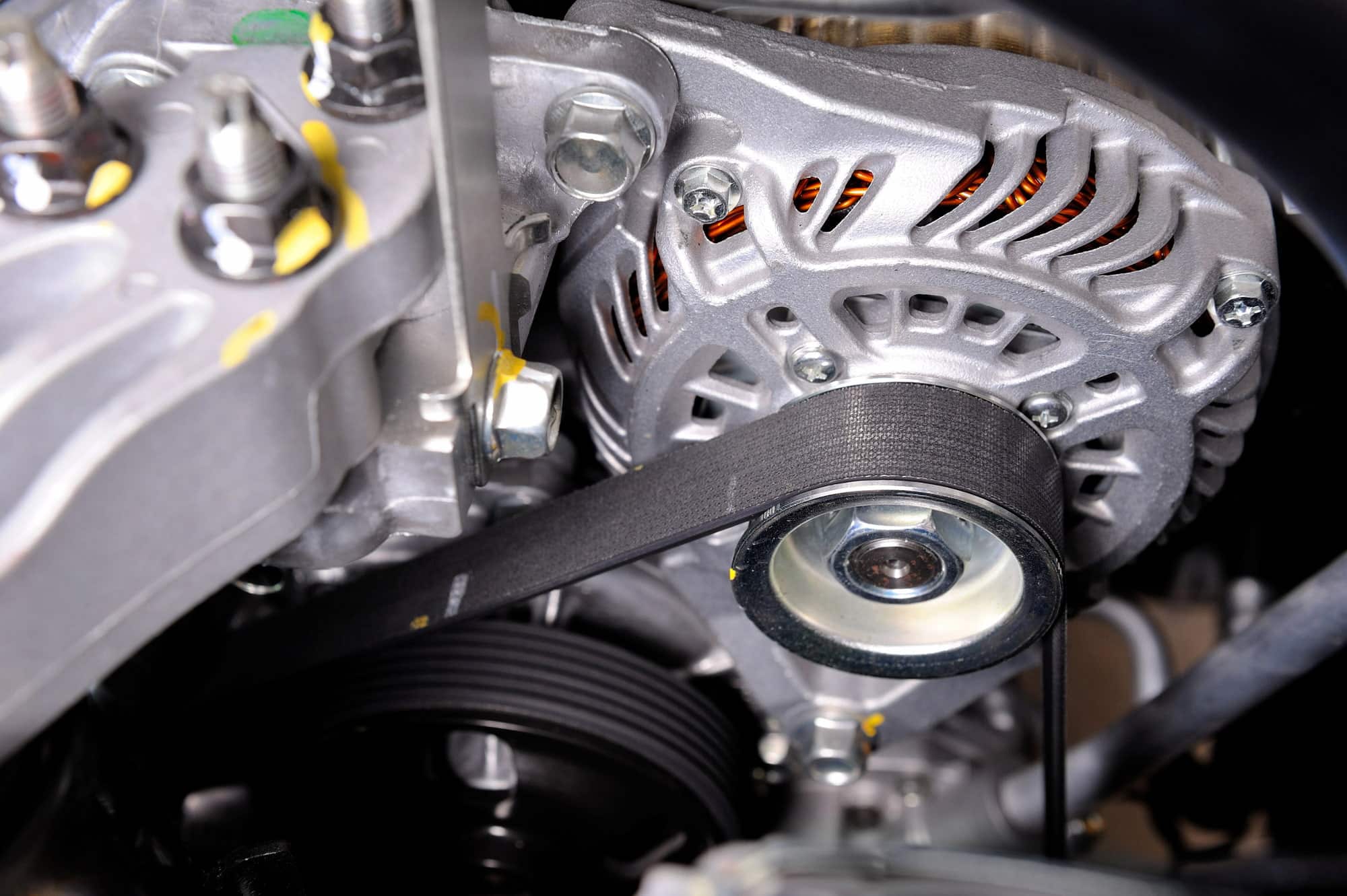
Lamborghini Cambelt Timing Belt Replacement at DART Auto
Lamborghini V10 and V12 engines use interference-design timing belts that demand replacement at strict intervals – typically every 15,000 miles or four years for most Gallardo and Murciélago models, and every 24,000 miles or five years for Aventador platforms. When a timing belt fails on these engines, the pistons collide with open valves at high speed, causing catastrophic internal damage that can exceed the value of the vehicle. Unlike mass-market brands, Lamborghini timing belt service requires lifting the entire powertrain, accessing belts routed through mid-engine or rear-engine bays, and resetting valve timing with factory-specific alignment tools and software. Generic shops lack the Lamborghini-specific tooling, training, and diagnostic capability to perform this work correctly.
DART Auto has served Denver's European car community since 2000, investing in the factory diagnostic equipment, specialty tooling, and ongoing training required to service Lamborghini platforms to OEM standards. Our master technicians – each with over a decade of experience and dealer-level training – follow factory procedures for belt routing, tensioner preload, and cam timing verification. Because we compensate our technicians on salary rather than flat-rate, there's no incentive to rush through complex multi-hour jobs or skip critical steps like coolant system purging or electronic throttle relearning.
When you bring your Lamborghini to DART Auto for cambelt timing belt replacement, expect:
- Complete pre-service inspection of tensioners, idler pulleys, water pump, and accessory drive components to identify any parts that should be replaced while the engine is accessible
- OEM or premium aftermarket belts and components sourced from trusted suppliers, never budget alternatives that risk premature failure
- Factory-correct cam timing verification using Lamborghini-specific alignment pins and diagnostic software to confirm valve timing before reassembly
- Three-year, 36,000-mile warranty on parts and labor, backing every repair with confidence you won't find at independent shops
Common Cambelt Timing Belt Replacement Issues on Lamborghini Vehicles
Lamborghini's exotic V10 and V12 powerplants demand precision maintenance schedules that far exceed typical passenger vehicles. The timing belt on these Italian supercars isn't just a maintenance item – it's the critical link between crankshaft and camshafts in engines spinning to 8,000+ RPM. When these belts age or fail, the interference-design engines suffer catastrophic valve-to-piston contact, often destroying the entire cylinder head assembly.
- Gallardo (2003–2013) V10 belt degradation: The 5.0L and 5.2L V10 engines use dual timing belts that age rapidly in high-heat environments. Denver's temperature swings accelerate rubber compound breakdown, causing surface cracking and tooth separation even before the factory 15,000-mile or 3-year interval. Shops frequently find brittle belts on low-mileage garage queens that haven't seen regular use.
- Murciélago (2001–2010) V12 tensioner bearing failure: The 6.2L and 6.5L V12 platforms use hydraulic tensioners that lose pressure over time. When bearing surfaces dry out, the tensioner arm can seize or flutter, causing uneven belt loading. This creates harmonic vibration that shreds the belt teeth and throws valve timing off by several degrees before complete failure.
- Huracán (2014+) early belt wear on track-driven cars: The 5.2L V10 in the LP610-4 and Performante generates extreme underhood temperatures during track sessions. Repeated heat cycling causes premature belt glazing and hardening, reducing the effective service life by 30–40% compared to street-driven examples. Owners who track regularly need inspection every 7,500 miles.
- Aventador (2011+) V12 accessory belt interference: The 6.5L V12's complex front-end drive system places the alternator and A/C compressor belts in close proximity to timing covers. When accessory belts deteriorate and throw debris, contamination can work past seals and coat timing belt surfaces with rubber particles and oil mist, accelerating wear on what should be a sealed system.
- Countach and Diablo (pre-2001) NLA OEM belt sourcing: Classic Lamborghini V12 models now face parts availability challenges. Original Pirelli or Gates belts specified by the factory are no longer manufactured to original specs. Shops must source premium aftermarket equivalents and verify tooth profile, tensile strength, and heat resistance match or exceed OEM standards before installation.
Why Choose DART Auto for Lamborghini Cambelt Timing Belt Replacement
Lamborghini timing belt service demands precision that goes far beyond typical maintenance. The Gallardo's 5.0L and 5.2L V10 engines (E-gear and manual variants) require simultaneous belt, tensioner, and water pump replacement at factory intervals – typically every four years or 15,000 miles, whichever comes first. The Murciélago's 6.2L and 6.5L V12 platforms share similar interval requirements but add complexity with their longitudinal mid-engine layout. Miss the window, and you risk catastrophic valve-to-piston contact that can total an engine worth more than most cars.
DART's master technicians bring dealer-level training and over a decade of hands-on experience with Lamborghini platforms. We use factory repair procedures, OEM Lamborghini timing components, and the specialized tooling required to lock camshafts and set crankshaft TDC with the precision these engines demand. Our diagnostic equipment reads Lamborghini-specific fault codes and verifies valve timing post-installation – the same capability the dealer uses, without the markup. Because our technicians work on salary rather than flat-rate, there's zero incentive to rush through the exacting alignment process or skip the multi-point inspection that catches oil leaks, coolant weeps, and accessory belt wear before they strand you.
Every cambelt service includes:
- OEM or premium equivalent timing belts, tensioners, and idler pulleys
- Water pump replacement (these fail frequently and require the same labor access)
- Thermostat and coolant system inspection
- Valve cover gasket and cam seal assessment
- Post-repair road test and scan-tool verification of timing parameters
- 3-year/36,000-mile warranty on parts and labor
Symptoms – How to Know You Need This Service
Lamborghini timing belt replacement is interval-driven maintenance, not reactive repair. Most belts show no external symptoms before failure. However, you may notice:
- Service interval reminder displayed on the instrument cluster or tracked in your maintenance records – Gallardo and Murciélago platforms require replacement every 15,000 miles or four years, whichever comes first
- Rough idle or misfires if the belt has stretched slightly and altered cam timing, causing the engine management system to struggle with fuel trim corrections
- High-pitched squealing from the engine bay during cold starts, suggesting tensioner bearing wear or idler pulley failure that will accelerate belt degradation
- Visible belt cracking or fraying if you can access the timing cover during other service work – any surface cracking means immediate replacement is required
- Coolant leaks near the timing cover on Gallardo models, where the water pump is driven by the timing belt and can fail, contaminating the belt with coolant
- Check engine light with cam/crank correlation codes (P0016, P0017, P0018, P0019) indicating the belt has stretched enough to throw timing out of specification
- Loss of power or hesitation under acceleration if retarded cam timing reduces volumetric efficiency and torque output
Stop driving immediately if you hear grinding or rattling from the engine bay, see coolant leaking near timing covers, or experience sudden power loss with warning lights. A failing belt can snap without warning, causing tens of thousands in engine damage within seconds.
Which Lamborghini Models We See for Cambelt Timing Belt Replacement
DART Auto services timing belt replacement on most modern Lamborghini platforms equipped with belt-driven cam systems. The majority of our Lamborghini timing belt work involves:
- Gallardo (2003–2013) – All variants including LP550-2, LP560-4, LP570-4 Superleggera and Spyder models with the 5.0L and 5.2L V10 engines; requires 15,000-mile or four-year intervals and engine removal for access
- Murciélago (2001–2010) – LP640 and LP670-4 SV models with the 6.2L and 6.5L V12 engines; similar 15,000-mile service interval with rear-engine access challenges
- Aventador (2011–2021) – LP700-4, LP750-4 SV, and S variants with the 6.5L V12; extended 24,000-mile or five-year interval but more complex belt routing and electronic integration
- Huracán (2014–present) – LP580-2, LP610-4, and Performante models with the 5.2L V10; shares platform architecture with late Gallardo but uses updated tensioner design and requires Lamborghini diagnostic software for throttle body adaptation after service
We do not typically service pre-2000 Diablo models or other legacy V12 platforms due to parts availability constraints and specialized tooling requirements. For Urus models with the 4.0L twin-turbo V8, timing is controlled by chains rather than belts, requiring different service procedures. If you're uncertain whether your Lamborghini uses belt or chain timing, call us with your VIN and we'll confirm the correct service interval and procedure for your specific chassis.
Causes & Risks – What Happens if Ignored
Timing belt degradation on Lamborghini engines stems from a combination of extreme operating conditions and design limitations. These motors run hotter, spin faster, and demand more from rubber compounds than any mass-market engine. Denver's altitude reduces cooling efficiency, while UV exposure in our 300+ days of annual sunshine breaks down belt polymers even when the car sits unused. Low annual mileage actually accelerates aging – belts dry out and crack when they aren't regularly flexed and lubricated by normal operation.
Delaying replacement transforms a scheduled maintenance item into an engine-destroying event:
- First 6–12 months past interval: Surface cracks appear on belt backing. Teeth begin to show wear patterns and minor glazing. Tensioner bearings develop play. At this stage, the belt still functions but has lost safety margin. A sudden load spike – hard acceleration from low RPM, aggressive downshift – can cause tooth shear.
- 12–24 months overdue: Belt material hardens and loses flexibility. Tensioner springs weaken, allowing belt flutter at idle and low RPM. Cam timing drifts by 2–4 degrees, causing rough idle, misfires under load, and reduced power. The engine computer can't fully compensate. Fuel economy drops 10–15% as injection timing fights mechanical timing errors.
- Beyond 24 months or major heat event: Catastrophic failure becomes likely. When a tooth strip or full belt break occurs on an interference engine, pistons contact open valves at full RPM. The result is bent valves, damaged pistons, scored cylinder walls, and often cracked cylinder heads. Repair costs jump from $3,500–$6,000 for scheduled belt service to $25,000–$45,000 for complete engine rebuilds. On V12 models, both cylinder banks typically suffer damage simultaneously.
- Collateral damage: Belt debris contaminates oil galleries and coolant passages. Metal fragments from broken tensioners circulate through the oil system, damaging bearings and cam lobes. Water pump failure – common when belts let go – can cause overheating and head gasket failure before the driver realizes what's happened.
Safety Impact – Why Cambelt Timing Belt Replacement Matters
Timing belt failure on a Lamborghini creates immediate and severe safety risks that go beyond simple mechanical damage. When the belt breaks or skips teeth during operation, the engine stops producing power instantly – often with no warning. At highway speeds or mid-corner on a canyon road, sudden total power loss eliminates engine braking and can trigger dangerous handling situations as weight transfer dynamics change without driver input.
- Loss of power steering assist: Most Lamborghini models use engine-driven hydraulic power steering pumps. When the engine stops, steering effort increases dramatically within 2–3 seconds. The Gallardo and Murciélago require significant arm strength to maneuver without assist, making emergency lane changes or evasive action nearly impossible for many drivers.
- Brake system degradation: Vacuum-assisted brake systems lose boost after 2–3 pedal applications once the engine stops. While the brakes still function, pedal effort increases 3–4x. Drivers unfamiliar with manual braking often under-brake in panic situations, extending stopping distances by 40–60 feet from highway speeds.
- Electrical system failure cascade: When catastrophic engine damage occurs, metal debris can puncture oil pans or crack blocks, dumping oil onto hot exhaust components. This creates fire risk and heavy smoke that obscures vision. Simultaneously, the alternator stops charging, and battery-dependent systems (ABS, traction control, stability management) begin shutting down within 15–20 minutes of driving.
- Stranded vehicle hazards: A Lamborghini disabled in traffic or on a roadside presents collision risk to the occupants and other motorists. The low profile and bright colors that make these cars visible when moving become liabilities when stationary in unexpected locations. Emergency egress from the low seating position takes longer than conventional vehicles.
When to stop driving immediately: Any sudden loss of power, unusual engine noise (grinding, rattling from timing cover area), or warning lights indicating oil pressure or temperature faults. Schedule service soon: Visible belt cracks during inspection, oil seepage around timing covers, squealing from tensioner bearings, or approaching the 15,000-mile or 3-year service interval – whichever comes first.
How Lamborghini Cambelt Timing Belt Replacement Actually Works
Lamborghini timing systems use toothed rubber belts to synchronize crankshaft rotation with camshaft operation, ensuring valves open and close at precise moments relative to piston position. Unlike chain-driven systems common in modern engines, belts run dry without lubrication, relying on precise tension and alignment to maintain timing accuracy within 1–2 degrees across the RPM range. The interference-design engines mean pistons and valves occupy the same space at different times – if timing slips, they collide with destructive force.
What makes Lamborghini belt service distinct from conventional vehicles:
- Multi-bank complexity: V10 and V12 engines require independent belt systems for each cylinder bank. The Murciélago V12 uses four separate belts (two timing, two balance shaft) that must be replaced and tensioned simultaneously. Timing one bank 2 degrees off creates a 4-degree phase difference between banks, causing severe vibration and potential internal damage.
- Crankshaft locking and camshaft alignment: Factory procedure demands special locking tools that pin the crankshaft and all camshafts in exact TDC position before belt removal. Generic timing tools don't fit Lamborghini's unique bolt patterns and bearing diameters. Without OEM or equivalent tooling, technicians cannot guarantee valve-to-piston clearance during installation, risking bent valves
How We Diagnose Cambelt Timing Belt Replacement Issues on Lamborghini
Lamborghini V10 and V12 engines demand precision timing, and the cambelt service interval on models like the Gallardo (2004–2013) and Murciélago (2001–2010) is non-negotiable. We start every cambelt evaluation by gathering the service history – knowing whether the belt was last changed at 15,000 miles or 30,000 miles tells us whether we're looking at preventive replacement or investigating a missed interval that may have caused valve train damage.
- Visual inspection with the engine cover removed. We check for oil leaks from cam seals or valve covers that can contaminate the belt, inspect the belt surface for cracking or glazing, and verify tensioner bearing condition. On the Gallardo's 5.0L and 5.2L V10, oil seepage from the rear cam seals is common and must be addressed before belt installation.
- Factory-level scan with Lamborghini-specific diagnostic software. We connect our scan tools to read cam and crank correlation data. Any deviation between commanded and actual timing points to belt stretch, tensioner failure, or – in worst-case scenarios – jumped timing that has bent valves.
- Mechanical timing verification. We rotate the engine to TDC and physically verify timing marks on all camshafts align with factory specifications. The Murciélago's V12 has four camshafts; even a single tooth off on one cam can cause misfires and poor throttle response.
- Tensioner and idler pulley assessment. We check for bearing noise, wobble, and hydraulic tensioner function. A failing tensioner can allow belt slack that leads to catastrophic timing loss.
- Water pump and accessory drive evaluation. Because cambelt replacement requires removal of ancillary components, we inspect the water pump, alternator belt, and AC compressor mounts for wear that would justify concurrent replacement.
Once the inspection is complete, we provide a detailed quote that breaks down belt, tensioners, seals, coolant, and any additional components that should be replaced while the engine is accessible. You'll know exactly what's being done and why before any work begins.
Cambelt Timing Belt Replacement on Lamborghini: Repair vs. Replacement
On exotic platforms, the line between repair and replacement is defined by risk tolerance and the cost of catastrophic failure. Lamborghini interference engines – where pistons and valves occupy the same space at different times – leave no room for half-measures.
When Repair Is Appropriate
- Tensioner adjustment within service interval. If a hydraulic tensioner has lost pressure but the belt and pulleys are within spec and mileage is under 15,000 miles, we can replace the tensioner assembly and verify timing without a full belt service.
- Cam seal replacement for minor seepage. Early oil weeps from cam seals can be addressed without belt replacement if caught immediately and the belt shows no contamination.
When Full Replacement Is the Only Safe Option
- Any belt past 30,000 miles or five years. Lamborghini specifies replacement regardless of visual condition. Rubber degrades with heat cycling even if cracks aren't visible.
- Contaminated belts. Oil or coolant contact compromises belt integrity. Attempting to clean and reuse invites timing failure.
- Noisy or worn tensioners and idler pulleys. These components share the belt's service life. Replacing only the belt while leaving aged tensioners guarantees a comeback – and potentially valve damage.
- Water pump age. On the Gallardo, the water pump is belt-driven and accessed during cambelt service. Replacing it concurrently avoids repeating eight hours of labor six months later when the pump fails.
We walk you through the decision with photos and measurements, explaining what happens if a component is deferred. Our salaried technicians have no incentive to upsell – we recommend what we'd do on our own Lamborghinis.
How to Make Your Lamborghini Cambelt Timing Belt Replacement Last Longer
Cambelt longevity on a Lamborghini depends less on driving style and more on disciplined maintenance intervals and operating environment. These engines generate tremendous heat, and heat accelerates rubber degradation.
Driving Habits That Protect the Belt
- Allow full warm-up before high RPM. Cold starts followed by immediate high load increase belt tension and stress on tensioners. Let oil temperature reach 180°F before exploring the upper half of the tachometer.
- Avoid extended idling in traffic. Lamborghinis cool poorly at idle. Prolonged low-speed operation raises underhood temperatures and accelerates belt aging without accumulating meaningful mileage.
- Store in climate-controlled space. Extreme temperature swings – common in Colorado – cause rubber to harden and crack. Garage storage moderates these cycles.
Maintenance You Can Monitor
- Check for oil leaks during every wash. Cam cover seepage shows as dark streaks below the valve covers. Catching leaks early prevents belt contamination.
- Listen for new noises at startup. A failing tensioner or idler pulley often announces itself with a chirp or rattle in the first few seconds after a cold start.
- Track service intervals by date and mileage. Lamborghini's five-year interval matters even if you've only driven 8,000 miles. Rubber ages regardless of use.
What to Leave to the Professionals
Cambelt replacement on a Lamborghini is not a DIY project. Timing verification requires factory tooling, and a single misaligned cam can bend every valve in that bank. We use OEM belts, Lamborghini-specific locking tools, and follow torque sequences that aren't published in generic repair manuals. The 3-year/36,000-mile warranty we back the work with reflects the precision and parts quality that go into every cambelt service.
What to Expect When You Bring Your Lamborghini In
We know your Lamborghini isn't just transportation – it's a significant investment that deserves methodical, transparent service. Here's how we handle every timing belt appointment from start to finish:
- Appointment and Drop-Off: Schedule your visit in advance so we can allocate the uninterrupted bay time your car requires. Bring any service records you have; prior maintenance history helps us spot patterns. Remove personal items and let us know if you need a loaner vehicle or shuttle service to your home or office.
- Pre-Service Inspection: Before we begin, a technician performs a complete visual and scan-tool inspection. We document existing fluid leaks, accessory belt condition, coolant system integrity, and any stored fault codes. You receive a written estimate covering the timing belt kit, water pump, any seals or gaskets that should be addressed while the engine is apart, and labor.
- During the Work: Our technicians follow Lamborghini's factory torque specs and camshaft locking procedures. We photograph critical alignment marks and verify TDC positioning multiple times. If we discover additional wear – a leaking cam seal, a failing tensioner bearing, a cracked coolant hose – we call you with photos and a clear explanation of why it matters and what it costs to address now versus later.
- Post-Repair Verification: After reassembly, we perform a cold start, bring the engine to operating temperature, and road-test under load. The scan tool confirms valve timing parameters match factory specifications. You'll see the data at pickup.
- Pickup Walkthrough: We walk you through everything we did, show you the old parts, and explain the service interval for your next cambelt replacement. If anything feels off in the days following your visit, call us immediately – we'll get you back in and make it right.
After-hours pickup can be arranged if your schedule demands it. Our goal is to return your Lamborghini running exactly as the engineers in Sant'Agata intended, backed by a warranty that reflects our confidence in the work.
Our Lamborghini Services
- Air Conditioning AC Repair
- Battery Repair Replacement
- Brake Repair & Brake Fluid Change
- Check Engine Light Diagnostics
- Clutch Repair & Replacement
- Coolant Leak Repair
- Cooling System Repair
- Drive Shaft Repair
- Engine Repair
- Exhaust & Catalytic Converter Repair
- Head Gasket Repair & Replacement
- Oil Change
- Oil Leak Repair
- Scheduled Service Maintenance
- Steering Repair
- Suspension Repair
- Transmission Repair
- Tune Up
- Wheel Alignment