
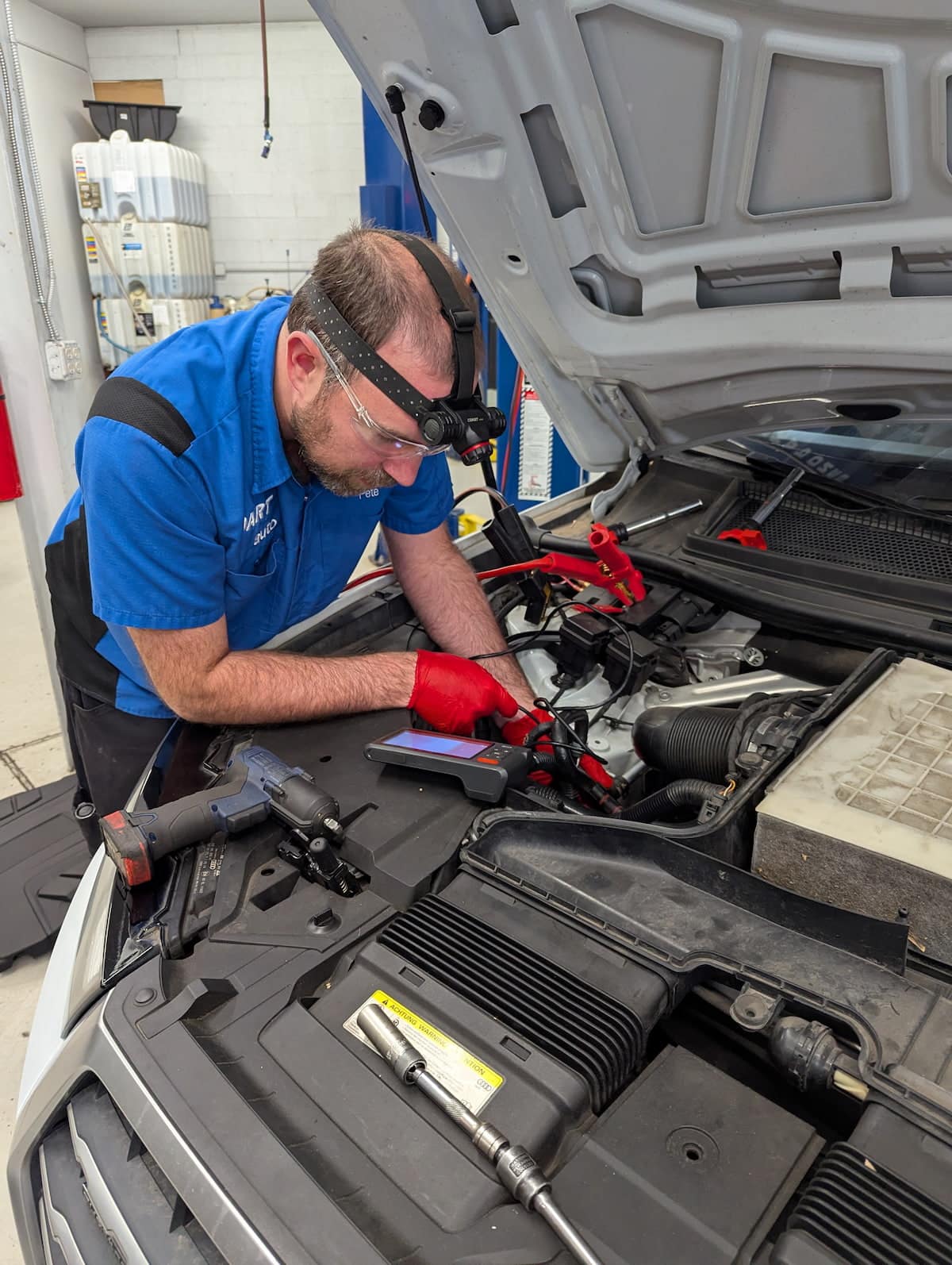
Porsche Tune Up at DART Auto
Most shops treat a Porsche tune up like any other vehicle – swap the plugs, reset the service light, and call it done. That approach misses the platform-specific details that separate a generic service from one that preserves your Porsche's performance and reliability. Modern Porsche engines, from the naturally aspirated flat-sixes in 997-generation 911s to the turbocharged four-cylinders in the 718 Boxster and Cayman, demand precise ignition timing, fuel trim adaptation, and throttle body alignment after any ignition service. Without factory-level diagnostics and proper adaptation procedures, you'll leave power on the table and risk misfires under load.
DART Auto uses Porsche-specific diagnostic software and master technicians with dealer training to perform tune ups that respect the engineering behind your vehicle. We follow OEM service intervals and torque specifications, address coil pack failures common on 996/997 M96/M97 engines, and verify fuel system health on direct-injection platforms prone to carbon buildup. Our salaried technicians take the time to inspect ignition components, check for oil leaks that could foul new plugs, and perform complete system scans to catch secondary issues before they escalate.
When you bring your Porsche to DART Auto for a tune up, expect:
- OEM or premium aftermarket spark plugs and ignition coils matched to your engine platform and model year
- Complete fuel system inspection and adaptation reset using factory diagnostic tools
- Throttle body cleaning and alignment where carbon deposits affect idle quality
- Comprehensive system scan to identify pending faults and verify post-service performance
Common Tune Up Issues on Porsche Vehicles
Porsche engines demand precise ignition timing and fuel delivery to deliver their legendary performance. When tune-up components drift out of spec, you'll feel it immediately in throttle response and smoothness. Here's what we see most often on Porsche platforms rolling into our Denver shop:
- Ignition coil failure on 996/997 (1999–2012) flat-six engines. These coil-on-plug units crack internally from heat cycles, causing misfires under load. One coil fails, and the remaining five work harder, accelerating their decline. You'll notice rough idle, hesitation at 3,000–4,000 RPM, and flashing check-engine lights during spirited driving.
- Carbon fouling on direct-injection 991.2 and 992 Carrera models (2017–present). The turbo four-cylinder and six-cylinder DFI engines build intake valve carbon without port injection to clean them. After 30,000–40,000 miles, carbon restricts airflow, causing rough cold starts, reduced power at higher RPM, and elevated long-term fuel trims that the ECU can't fully correct.
- Spark plug electrode wear on Cayenne and Panamera V8 engines. The 4.8L naturally aspirated and turbo V8s (2008–2016) consume plug electrodes faster than expected, especially if driven gently around town. Gap opens beyond spec, ignition energy drops, and you get cold-start stumbles and poor fuel economy before any fault codes appear.
- Air-oil separator (AOS) clogging on M96/M97 Boxster, Cayman, and 911 (1997–2008). When the AOS fails, crankcase pressure spikes, oil mist coats the intake tract, and spark plugs foul. Symptoms include blue smoke on deceleration, rough idle, and oil consumption that seems unrelated to tune-up until you trace the root cause.
- Throttle body carbon buildup on Boxster/Cayman 987 and early 981 (2005–2016). The electronic throttle plate accumulates varnish, restricting airflow at idle and low throttle openings. Idle hunts between 600–800 RPM, and the engine stumbles when you lift off the throttle in gear.
- Fuel injector varnish on older naturally aspirated models (pre-2009). Porsche's high-pressure injectors develop internal deposits over time, disrupting spray patterns. You'll notice longer cranking on cold starts, uneven cylinder contribution, and elevated emissions that push you past Colorado's inspection limits.
Why Choose DART Auto for Porsche Tune Up
Most shops treat a Porsche tune up like any other car – swap plugs, swap filters, move on. That approach misses the platform-specific details that keep these engines running strong. On the 997-generation 911 (2005–2012), for example, direct-injection carbon buildup can mask itself as a simple misfire; a proper tune up includes borescope inspection of the intake valves and often walnut-blast cleaning before new plugs go in. On the 987 Boxster and Cayman with M96/M97 engines, we check IMS bearing health and RMS seepage during every major service – catching those issues early prevents catastrophic failure down the road.
DART Auto has invested in Porsche-specific diagnostic hardware and factory repair procedures since 2000. Our master technicians average over ten years of experience with European platforms and receive ongoing dealer-level training. We use salaried compensation instead of flat-rate, so there's zero incentive to skip steps or upsell unnecessary work. Every tune up includes a full multi-point inspection with digital photos, so you see exactly what we see – worn engine mounts, early coolant-pipe corrosion on 991-chassis cars, or failing coil packs before they strand you. We back the work with a 3-year/36,000-mile warranty on parts and labor, and we explain what happens if you defer a recommended repair. You get dealer-level expertise without the dealer price tag, and we fix it right the first time.
Symptoms – How to Know You Need This Service
Your Porsche will communicate when ignition components are degrading. Pay attention to these signs:
- Rough idle or vibration at stoplights – worn spark plugs or failing coil packs disrupt smooth combustion, especially noticeable in flat-six engines
- Hesitation or stumble during acceleration – misfires under load point to weak ignition, common on high-mileage 996/997 platforms with original coils
- Check engine light with misfire codes – P0300-series codes indicate cylinder-specific or random misfires that require immediate attention
- Reduced fuel economy – incomplete combustion from worn plugs forces the engine to compensate with richer fuel delivery
- Hard starting or extended cranking – weak spark makes cold starts difficult, particularly in direct-injection engines with carbon buildup
- Loss of top-end power – degraded ignition robs horsepower at high RPM, where Porsche engines are designed to deliver peak performance
- Surging or hunting at steady throttle – inconsistent spark timing causes the engine to hunt for stable combustion
If you see a flashing check engine light or experience severe power loss, stop driving immediately and arrange a tow. A flashing light indicates active misfires that can damage the catalytic converter. For other symptoms, schedule service soon to prevent secondary damage and restore performance.
Which Porsche Models We See for Tune Up
We perform tune up services across the Porsche lineup, with deep experience in the platforms and engine families that define the brand's modern era:
- 911 (996, 997, 991, 992) – naturally aspirated and turbocharged flat-six engines, including GT3, Turbo, and Carrera variants; coil pack failures common on 1999–2008 M96/M97 engines
- Boxster and Cayman (986, 987, 981, 718) – mid-engine platforms sharing ignition components with 911 counterparts; 718 models use turbocharged four-cylinder engines requiring different service intervals
- Cayenne (955, 957, 958, 9Y0) – V6, V8, and turbocharged variants; shared platforms with VW/Audi mean carbon buildup concerns on direct-injection models
- Panamera (970, 971) – V6, V8, and hybrid powertrains; turbocharged models require careful inspection of boost system integrity during ignition service
- Macan (95B) – turbocharged four-cylinder and V6 engines; direct-injection platforms benefit from combined tune up and carbon cleaning service
- Classic air-cooled 911s – we service these on a case-by-case basis; ignition timing and distributor setup require specialized knowledge
Manual, PDK, and Tiptronic transmissions all receive the same attention during ignition service. If you drive a limited-production or race-derived variant (GT2, GT3 RS, Turbo S), call ahead so we can confirm parts availability and schedule appropriate shop time.
Causes & Risks – What Happens if Ignored
Tune-up wear accelerates when Porsches spend too much time idling in Denver traffic or making short trips that never fully heat the oil and combustion chambers. Direct-injection engines are especially vulnerable because fuel never washes the intake valves. Colorado's altitude also leans out air-fuel ratios slightly, stressing ignition components that are already working near their thermal limits. Porsche's aggressive timing maps and high compression ratios leave no margin for weak spark or fouled plugs.
Delaying tune-up work sets off a cascade. A single misfiring cylinder dumps unburned fuel into the exhaust, overheating the catalytic converter. Within a few hundred miles of persistent misfire, the catalyst substrate melts, turning a few hundred dollars in ignition parts into a multi-thousand-dollar exhaust system replacement. Here's the typical escalation path:
- Week one: Rough idle and occasional hesitation. Check-engine light may not illuminate yet because the misfire isn't frequent enough to trip the threshold.
- Week two to four: Misfire becomes consistent under load. Fuel trims max out as the ECU tries to compensate. Catalytic converter inlet temperatures climb above design limits. Fuel economy drops 15–25 percent as the engine runs rich to protect itself.
- Month two: Catalyst efficiency codes appear (P0420/P0430). Converter is damaged but still partially functional. Oil dilution begins if misfires occur during cold starts, thinning your lubricant and accelerating bearing wear.
- Month three and beyond: Converter fails completely, restricting exhaust flow. Engine loses power, runs hot, and risks valve damage from excessive EGT. Oxygen sensors fail from sustained rich conditions. What started as a tune-up now requires cats, O2 sensors, and potentially engine tear-down if oil dilution went unnoticed.
The safety risk peaks when misfires occur during highway merges or mountain passes. Hesitation under acceleration leaves you without the power to complete a pass or climb a grade, putting you and others at risk in traffic.
Safety Impact – Why Tune Up Matters
A misfiring Porsche doesn't just lose performance – it becomes unpredictable. Throttle response turns inconsistent, making it difficult to judge gap timing in traffic or modulate speed through corners. On Porsche models with electronic stability control and torque vectoring (2009–present), a cylinder dropping out confuses the traction management system. The ECU receives conflicting wheel-speed and engine-load data, sometimes cutting power abruptly or allowing wheelspin when you don't expect it.
Specific safety failures tied to neglected tune-up work include:
- Loss of power during acceleration. If a coil fails mid-merge onto I-25 or climbing to the Eisenhower Tunnel, you lose 15–20 percent of your power instantly. The engine bucks, and you're left without the thrust needed to complete the maneuver safely.
- Catalytic converter glow and fire risk. A melting catalyst can ignite dried grass or undercoating if you park over combustible material. We've seen converter shells glow cherry-red after sustained misfires – a genuine fire hazard.
- Stalling at low speed. Severe carbon buildup or multiple fouled plugs can cause the engine to stall when coming to a stop, eliminating power steering and brake boost. You're suddenly wrestling a 3,500-pound car with no assist in traffic.
- Reduced braking effectiveness. If the engine stumbles or stalls, vacuum-assist for the brakes drops. Pedal effort doubles or triples, and stopping distances increase dramatically.
When to stop driving immediately: flashing check-engine light (active misfire), strong fuel smell in the cabin, or any loss of power accompanied by unusual exhaust smoke. Schedule soon: rough idle, hesitation under light throttle, or a steady check-engine light with no performance loss. Continuing to drive with a flashing MIL risks permanent catalyst and engine damage within hours.
How Porsche Tune Up Actually Works
Porsche ignition systems use individual coil-on-plug assemblies mounted directly above each spark plug. The engine control unit fires each coil with precise timing based on camshaft and crankshaft position sensors, adjusting spark advance in real time for load, temperature, and fuel quality. Unlike older distributor systems, there's no mechanical wear in the timing chain – but the coils themselves endure extreme thermal stress, cycling between ambient and 200°F every time you drive. Spark plugs in flat-six engines sit deep in the cylinder head, surrounded by hot aluminum, which accelerates electrode erosion.
What makes Porsche tune-up work different from a generic shop approach:
- Coil replacement strategy. Porsche recommends replacing coils in sets because mixed old and new coils create uneven cylinder performance. A generic shop replaces only the failed unit, leaving you to return in six months when the next one fails.
- Spark plug torque and anti-seize protocol. Porsche specifies dry torque values (no anti-seize) on most aluminum heads to prevent over-torquing. Incorrect torque strips threads or under-seats the plug, causing hot spots and pre-ignition. We follow factory torque specs and sequences exactly.
- Throttle body adaptation. After cleaning carbon from the throttle plate, the ECU must relearn idle position using factory PIWIS diagnostic software. Without this step, idle speed hunts or stalls because the computer expects the old, restricted airflow.
- Intake valve carbon cleaning on DFI engines.</strong
How We Diagnose Tune Up Issues on Porsche
Modern Porsches demand precision diagnostics that go far beyond swapping spark plugs. Our diagnostic sequence for tune up work begins with factory-level tooling and ends with a clear repair roadmap tailored to your specific platform.
- Scan with Porsche PIWIS III and Bosch diagnostic platforms. We pull stored fault codes, live data streams, and adaptation values from the DME (engine control module). This reveals misfires by cylinder, fuel trim deviations, ignition timing anomalies, and sensor drift that generic scanners miss.
- Retrieve freeze-frame data and readiness monitors. We examine the exact conditions when a fault occurred – RPM, load, coolant temperature, airflow – to distinguish between a failing coil pack and a carbon-fouled intake valve on direct-injection engines.
- Perform cylinder contribution and relative compression tests. Using the scan tool, we command the DME to cut fuel to individual cylinders and measure power drop. This pinpoints weak cylinders without a traditional compression gauge and helps isolate ignition versus mechanical faults.
- Inspect ignition components and fuel delivery. We pull spark plugs to read electrode wear and deposits, check coil pack resistance, and verify fuel injector spray patterns. On 997 and 991 models with direct injection, we scope the intake ports for carbon buildup that chokes airflow.
- Road test under load. We drive the car through varying RPM ranges and throttle positions, monitoring live data for hesitation, misfire counts, and knock events that only appear under real-world conditions.
At the end of this process, you receive a detailed quote that separates immediate needs from deferred maintenance, with explanations of what each repair accomplishes and the consequences of waiting.
Tune Up on Porsche: Repair vs. Replacement
The right approach depends on component condition, platform-specific failure modes, and how much service life remains in surrounding parts. We walk through the options with you rather than defaulting to the most expensive fix.
When Repair Makes Sense
- Carbon cleaning on direct-injection engines. On 991 and 981 models (2012–2016), walnut blasting the intake valves restores airflow without replacing valves or heads. This addresses the root cause of rough idle and power loss on DFI engines.
- Ignition coil replacement by cylinder. If one coil fails on a 997 or Boxster 987, replacing that single coil often suffices when the others test within spec and the plugs are fresh.
- Throttle body adaptation after cleaning. On electronic throttle systems, cleaning the throttle plate and running a DME adaptation procedure restores smooth response without replacing the entire throttle assembly.
When Replacement Is the Right Call
- Spark plugs and coils as a set. On high-mileage engines (60,000+ miles), replacing all plugs and coils together prevents return visits for individual failures and ensures balanced ignition across cylinders.
- Fuel injectors on older 996/997 models. When one injector fails, the others are often near end-of-life. Replacing the set avoids mismatched spray patterns and repeat diagnostics.
- Air and cabin filters during tune up. These wear items are inexpensive insurance and prevent secondary issues like MAF sensor contamination.
We present both paths with honest cost-benefit analysis, so you can make an informed decision based on how long you plan to keep the car and your tolerance for future shop visits.
How to Make Your Porsche Tune Up Last Longer
Porsche engines reward careful operation and proactive maintenance. Small habits extend the intervals between major service and keep ignition and fuel systems operating at peak efficiency.
Driving Habits That Protect Components
- Warm the engine before high RPM. Allow oil and coolant to reach operating temperature before pushing past 4,000 RPM. Cold starts with immediate hard acceleration accelerate plug fouling and carbon buildup on direct-injection models.
- Use full-throttle runs occasionally. Once warmed, periodic high-RPM operation (in a safe, legal setting) helps burn off carbon deposits and keeps the DME's fuel and ignition maps sharp.
- Avoid short trips in cold weather. Repeated cold starts without reaching full operating temperature leave unburned fuel on spark plugs and intake valves, shortening plug life and promoting carbon buildup.
Maintenance You Can Monitor
- Check engine behavior at idle. A smooth, consistent idle indicates healthy ignition and fuel delivery. New vibration or stumbling suggests a developing misfire that's easier to address early.
- Watch for hesitation during acceleration. Delayed throttle response or flat spots under load often signal ignition coil weakness or carbon-choked intake valves before a check-engine light appears.
- Follow Porsche's service intervals. The factory schedule for spark plugs (every 40,000–60,000 miles depending on model) and air filters exists for good reason. Stretching intervals invites misfires and sensor contamination.
What to Leave to the Professionals
Spark plug replacement on flat-six engines requires specific torque specs and anti-seize application to prevent thread damage in aluminum heads. Carbon cleaning demands specialized walnut-blasting equipment and intake manifold removal. Attempting these jobs without proper tooling risks expensive secondary damage. We handle the technical work; you handle the driving.
What to Expect When You Bring Your Porsche In
We've designed the process to be transparent from the moment you call. Here's how your visit unfolds:
- Appointment and drop-off. Schedule online or by phone; we'll ask about recent symptoms, service history, and any check-engine lights. Bring your key fob and remove valuables – we'll secure personal items if needed. Loaner vehicles and local shuttle service are available; just request them when you book.
- Initial inspection and scan. Before any wrenches turn, we connect factory-level diagnostic tools (PIWIS, Durametric, or Autel) to pull stored fault codes and freeze-frame data. We photograph wear items – brake pads, tire tread, fluid condition – and note any leaks or abnormal wear patterns.
- Written estimate and approval. You'll receive a detailed estimate with photos, part numbers, and plain-English explanations of why each item matters. We walk you through what's safety-critical, what's preventive, and what can wait. No work starts until you approve the scope.
- The tune up itself. We replace spark plugs with OEM or premium equivalents (NGK, Bosch), install new air and cabin filters, inspect ignition coils and plug boots, check throttle-body cleanliness, and verify fuel-trim data post-service. On direct-injection models, we assess valve deposits and recommend walnut-blast cleaning if needed.
- Post-repair verification and pickup. Every car gets a road test and a final scan to confirm no new codes. At pickup, we review what we did, show you the old parts, and answer questions. If something feels off in the first few days, call us – we'll recheck at no charge and make it right.
Our Porsche Services
- Air Conditioning AC Repair
- Battery Repair Replacement
- Brake Repair & Brake Fluid Change
- Check Engine Light Diagnostics
- Clutch Repair & Replacement
- Coolant Leak Repair
- Cooling System Repair
- Drive Shaft Repair
- Engine Repair
- Exhaust & Catalytic Converter Repair
- Head Gasket Repair & Replacement
- Oil Change
- Oil Leak Repair
- Scheduled Service Maintenance
- Suspension Repair
- Cambelt Timing Belt Replacement
- Transmission Repair
- Wheel Alignment