
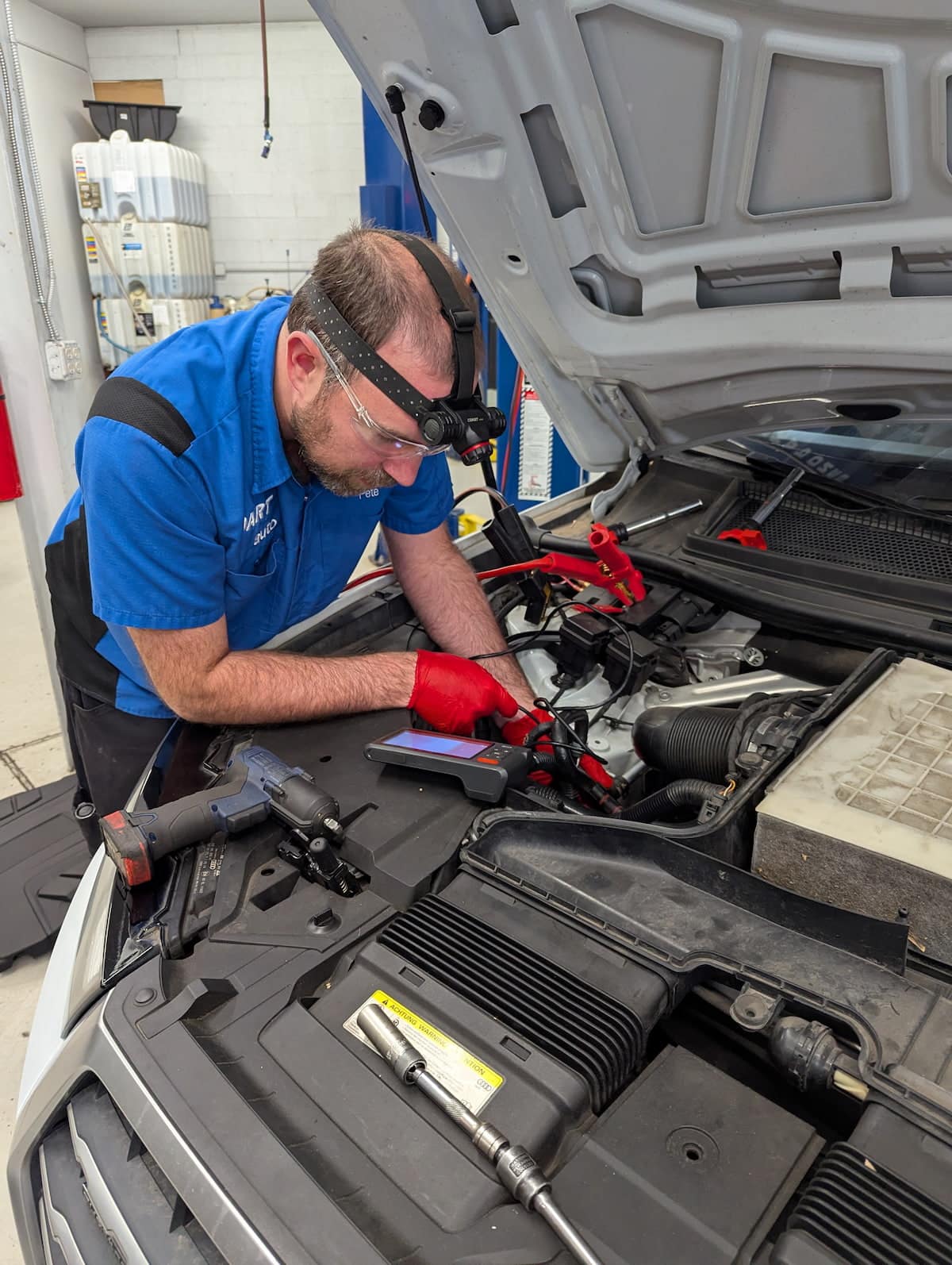
BMW Tune Up at DART Auto
Most shops treat a BMW tune up like any other car – swap plugs, clear codes, send you on your way. That approach ignores the reality that modern BMWs use adaptive engine management, model-specific coil-on-plug systems, and precise ignition timing maps that require factory-level diagnostics to reset properly. Skip the adaptation procedures after replacing components, and you'll drive away with the same stumble or misfire you came in with.
A proper BMW tune up addresses ignition system wear while recalibrating fuel trims, monitoring long-term adaptation values, and verifying that each cylinder is firing within BMW's narrow tolerances. On N20 and N55 engines, for example, we see frequent coil failures paired with carbon fouling on intake valves – a combination that generic shops miss because they don't perform walnut-blast cleaning or use ISTA diagnostic software to verify misfires are truly resolved. We also inspect the valve cover and gaskets for oil seepage, a common issue on turbocharged inline-six engines that accelerates coil degradation.
When you bring your BMW to DART Auto for a tune up, here's what sets our process apart:
- Factory diagnostic protocols – we use ISTA/D and ISTA/P to read fault memory, perform cylinder contribution tests, and reset adaptations after component replacement
- Platform-specific parts sourcing – OEM or premium aftermarket spark plugs and coils matched to your engine code, not universal-fit components
- Comprehensive ignition system inspection – coils, plug wells, valve cover integrity, and PCV system function checked as part of every tune up
- Post-service verification – road test with live data logging to confirm smooth idle, proper fuel trims, and no misfire counts under load
Common Tune Up Issues on BMW Vehicles
BMW tune-ups aren't about swapping distributor caps anymore. Modern BMWs run coil-on-plug ignition and sophisticated fuel management, which means when something goes wrong, you're dealing with misfires, rough idle, and check-engine lights that point to very specific component failures. Here's what we see most often:
- Ignition coil failure on N52 and N55 engines (2006–2016 E90, F30, X3, X5): These coils crack internally from heat cycling. You'll feel a stumble at cold start or under load. One coil fails, the others aren't far behind. Replace all six at once or you'll be back in a few months.
- Carbon buildup on direct-injection engines (N20, N55, B58, S55): Without port injection to wash the intake valves, carbon accumulates and chokes airflow. Symptoms include rough idle, hesitation, and reduced power. Walnut blasting is the only real fix – fuel additives don't touch baked-on carbon.
- Spark plug fouling on turbocharged models (N54, N55, B58): High-pressure turbo environments mean plugs wear faster. Gap erosion and electrode wear lead to misfires under boost. BMW spec calls for replacement every 60,000 miles, but we often see issues earlier on tuned or hard-driven cars.
- Fuel injector clogging on N54 twin-turbo (2007–2010 335i, 135i, Z4): The piezo injectors are sensitive to fuel quality. Clogged nozzles cause lean misfires, rough running, and poor fuel economy. Index 12 injectors solved many issues, but older cars still suffer.
- VANOS solenoid wear (M54, N52, N55 platforms): Variable valve timing solenoids stick or leak, causing rough idle, poor throttle response, and rattling at startup. Oil quality matters – extended intervals accelerate wear on these pressure-sensitive components.
- Mass airflow sensor contamination (all models): Dirty MAF sensors throw off fuel trim and cause hesitation, stalling, or limp mode. Oiled aftermarket air filters are often the culprit. OEM dry filters prevent this entirely.
Why Choose DART Auto for BMW Tune Up
Most shops treat a BMW tune up like any other car – swap plugs, reset the service light, send you on your way. That approach misses the platform-specific gotchas that cause misfires and limp modes weeks later. Our master technicians know that N55 and B58 engines require index-12 spark plugs torqued to exact spec with anti-seize on the threads but not the tips, and that skipping the coil-on-plug resistance test leaves you vulnerable to random cylinder misfires. We've been diagnosing European vehicles since 2000, and every tech on our floor has dealer training plus at least ten years under the hood.
We use factory repair procedures and OEM-equivalent parts sourced from trusted suppliers – the same Bosch, NGK, and Beru components BMW specifies. Our diagnostic suite includes factory-level scan tools that read adaptation values, injector trim, and misfire counters across all modules, so we catch valve cover leaks, intake boot cracks, and PCV valve failures before they turn your tune up into a comeback visit. Because our technicians are salaried rather than flat-rate, they take the time to inspect ignition coils for oil intrusion, check fuel trims, and road-test after the work to confirm smooth idle and throttle response. You get honest, expert-level service without the dealer price tag, backed by our 3-year/36,000-mile warranty on parts and labor.
Symptoms – How to Know You Need This Service
Your BMW will tell you when ignition components are failing, often well before a check engine light appears. Pay attention to these driver-facing clues:
- Rough idle or vibration at stoplights – one or more cylinders misfiring intermittently, most noticeable when the engine is warm and you're stopped in gear
- Hesitation or stumble during acceleration – especially between 2,000 and 4,000 RPM, where weak spark or fouled plugs can't keep up with fuel delivery
- Check engine light with misfire codes – P0300 (random misfire) or P0301-P0306 (cylinder-specific misfire) stored in fault memory
- Reduced fuel economy – incomplete combustion from worn plugs forces the engine to run richer, burning more fuel for the same power output
- Hard starting or extended cranking – weak spark makes cold starts difficult, particularly on turbocharged models with direct injection
- Flashing check engine light under load – this indicates severe misfire that can damage the catalytic converter; stop driving immediately and have the car towed
- Loss of power or limp mode activation – the DME may limit boost or throttle response to protect the engine when it detects persistent misfires
If you notice a flashing check engine light or sudden power loss, pull over safely and call for a tow. Continued driving with severe misfires will overheat and destroy the catalytic converters, turning a tune up into a multi-thousand-dollar exhaust repair.
Which BMW Models We See for Tune Up
We perform tune ups on the full range of BMW platforms, with particular expertise in the turbocharged inline-four and inline-six engines that dominate the lineup from 2007 onward. Here's where we see the most demand:
- E90/E91/E92/E93 3-Series (2006–2013) – N52 naturally aspirated inline-six and N54/N55 turbocharged inline-six engines; coil failures common after 60,000 miles
- F30/F31/F34 3-Series and 4-Series (2012–2019) – N20 turbocharged four-cylinder and N55 turbocharged six-cylinder; carbon buildup and coil degradation frequent service drivers
- E60/E61 5-Series (2004–2010) – N52 and N54 engines; valve cover gasket leaks often contaminate coil packs
- F10/F11 5-Series (2010–2016) – N20, N55, and S63 (M5) engines; turbocharged models require careful inspection of intake valve deposits
- E70 X5 and E71 X6 (2007–2013) – N55 inline-six and S63 V8; larger SUV mass makes misfires more noticeable under acceleration
- F15 X5 and F16 X6 (2014–2018) – N55 and S63 engines; high mileage examples often need comprehensive ignition refresh
- G01 X3 and G05 X5 (2018+) – B46 and B58 engines; newer modular architecture but still benefits from factory diagnostic tooling for adaptation resets
We also service M models (E9X M3, F8X M3/M4, F10 M5) and older naturally aspirated platforms (E46, E39), though tune up intervals and component specifications vary significantly by engine family. If you drive a rare or specialty variant, call ahead – we'll confirm we have the correct tooling and parts access before you schedule.
Causes & Risks – What Happens if Ignored
Most BMW tune-up issues stem from heat, time, and combustion byproducts. Direct-injection engines never wash their intake valves with fuel, so carbon accumulates. Ignition coils sit directly on top of hot cylinder heads and crack from thermal stress. Short trips and city driving mean components never reach full operating temperature, accelerating wear. Colorado's altitude and temperature swings don't help – thin air means leaner mixtures and hotter combustion.
Here's what escalates when you ignore the symptoms:
- Misfires damage catalytic converters: Unburned fuel enters the exhaust and overheats the cats. A $200 coil replacement becomes a $2,500 catalyst job within a few thousand miles of driving on a misfire.
- Carbon buildup leads to valve damage: Severe carbon restricts airflow so badly that intake valves can't seat properly. Compression drops, valves burn, and you're looking at cylinder head work instead of a cleaning service.
- Fouled plugs cause ignition coil failure: When plugs don't fire cleanly, coils work harder and overheat. Delaying a plug change often means replacing coils too – double the cost.
- Fuel trim goes haywire: The ECU compensates for dirty injectors or a bad MAF by adding fuel. You'll see poor economy, rough running, and eventually limp mode when the computer can't adapt any further.
- VANOS problems trigger timing faults: Stuck solenoids throw timing codes and put the engine into a safe mode. Keep driving and you risk actual timing chain issues on engines already prone to stretch (N20, N26).
Safety Impact – Why Tune Up Matters
A misfiring BMW isn't just annoying – it's unpredictable. When cylinders cut out under throttle, you lose power exactly when you need it: merging onto I-25, passing on mountain roads, or accelerating through an intersection. Hesitation and stumbling create dangerous situations where the car doesn't respond as expected.
Here's when tune-up neglect becomes a safety issue:
- Stop driving now: Flashing check-engine light (active misfire damaging the catalyst), strong fuel smell (injector leak), or sudden power loss with warning lights (limp mode). These conditions mean immediate risk.
- Schedule this week: Rough idle, hesitation under load, or a solid check-engine light with misfire codes. The car is drivable but degrading fast.
- Plan for next service: Slightly reduced fuel economy, occasional stumble at cold start, or minor performance loss. Address it before it cascades.
There's also a liability angle. If a known misfire damages emissions equipment and you fail an emissions test, you're facing expensive repairs plus potential fines. Colorado takes emissions seriously – a deferred tune-up can turn into a compliance headache.
How BMW Tune Up Actually Works
Modern BMW tune-ups are about precision, not just parts swapping. Each cylinder has its own ignition coil mounted directly on the spark plug. The DME (Digital Motor Electronics) monitors combustion in real time through crankshaft position sensors and adapts fuel and timing individually per cylinder. When a coil or plug fails, the system knows instantly and logs a misfire code with exact cylinder identification.
Direct injection adds complexity. Fuel sprays directly into the combustion chamber at up to 2,900 psi, meaning injectors are high-precision components that require coding when replaced. The intake valves never see fuel, so carbon accumulates over time. Walnut blasting – using crushed walnut shells and compressed air – is the only method that removes carbon without damaging aluminum ports.
What makes BMW different:
- Coil-on-plug ignition: No distributor, no plug wires. Each coil is a sealed unit that either works or doesn't. Partial failure isn't a thing – when they go, they're done.
- Piezo or solenoid injectors: High-pressure injectors require electronic coding to match flow rates. Swap one without coding and you'll have rough running and fuel trim faults.
- VANOS variable valve timing: Oil-pressure-driven actuators adjust cam timing on the fly. Proper oil viscosity and change intervals are critical – sludge kills VANOS solenoids faster than anything.
- Oxygen sensor strategy: Wideband sensors upstream and narrowband downstream. The DME uses these for closed-loop fuel control. A failing sensor masks other problems, so accurate diagnosis requires factory-level scan tools.
Factory BMW diagnostic software reads misfire counters, fuel trims, and adaptation values that generic scanners miss. We use the same ISTA system the dealer does, which means we catch intermittent faults and verify repairs with the same data BMW engineers designed the car around.
How We Diagnose Tune Up Issues on BMW
BMW tune up diagnostics start with the symptom, not the sales pitch. When you bring your 3 Series, 5 Series, X3, or any other BMW to DART Auto, we connect factory-grade scan tools – BMW ISTA/D and ISTA/P – that read live data streams from the DME (Digital Motor Electronics) and dozens of other control modules. These tools reveal misfires by cylinder, fuel trims drifting outside spec, ignition timing corrections, and stored fault codes that generic scanners miss entirely.
Our diagnostic process follows a methodical sequence:
- Initial scan and fault retrieval: We pull codes from the DME, transmission, ABS, and body modules to see if the tune up symptom is isolated or part of a broader electrical or mechanical issue.
- Live data analysis: With the engine running, we monitor fuel pressure, oxygen sensor response, ignition advance, and throttle adaptation values. On N20 and N55 turbocharged engines, we watch boost control and wastegate duty cycles to rule out boost leaks masquerading as ignition problems.
- Cylinder contribution test: We disable individual cylinders electronically to confirm which cylinder is weak or misfiring, pinpointing whether the fault is spark, fuel injector, or compression-related.
- Physical inspection: We remove ignition coils and spark plugs, inspecting electrode wear, carbon fouling, and oil contamination. On direct-injection models (N54, N55, B58), we scope the intake valves for carbon buildup that chokes airflow and mimics ignition faults.
- Road test verification: We drive the car under load to replicate the customer's concern – hesitation under acceleration, rough idle, or loss of power – and correlate the symptom with live data.
Once diagnostics are complete, we walk you through exactly what failed, why it failed, and what needs replacement or service to restore factory performance. You receive a detailed quote before any wrench turns.
Tune Up on BMW: Repair vs. Replacement
BMW tune up work rarely involves "repairing" ignition or fuel components in the traditional sense – modern BMW coils, plugs, and injectors are sealed units designed for replacement, not rebuild. However, the scope of that replacement varies widely based on what diagnostics reveal.
When Partial Replacement Makes Sense
- Single-cylinder misfire with a failed coil: If only one coil has failed and the spark plugs are within service life, we replace that coil and monitor. On N52 and N55 engines, coil failure is common and often isolated.
- Carbon cleaning instead of injector replacement: On direct-injection engines (N54, N55, B58), intake valve carbon buildup can mimic fuel delivery problems. Walnut blasting the intake valves restores airflow without touching the injectors.
- Plug replacement with reusable coils: If plugs are fouled or worn but coils test within spec, we replace only the plugs. BMW recommends spark plug service every 60,000 miles on most models; coils often last longer.
When Full Replacement Is the Right Call
- Multiple misfires across cylinders: If three or more coils are weak or plugs are worn past spec, replacing all six (or eight, or twelve) at once prevents a comeback in 5,000 miles when the next coil fails.
- High-mileage preventive replacement: On an E90 335i with 100,000 miles and original coils, replacing all coils and plugs together avoids repeat labor charges and ensures even performance across all cylinders.
We present both options with honest cost-benefit analysis. Our technicians are salaried, not flat-rate, so there's no incentive to upsell you into unnecessary parts.
How to Make Your BMW Tune Up Last Longer
BMW ignition and fuel systems thrive on consistent maintenance and mindful driving. Small habits add thousands of miles to coil, plug, and injector life.
Driving Habits That Extend Component Life
- Allow proper warm-up: Cold starts are hardest on ignition coils and injectors. Let the engine idle for 30 seconds before driving, and avoid hard acceleration until coolant reaches operating temperature.
- Avoid chronic short trips: Frequent cold starts without reaching full operating temperature leave unburned fuel in the cylinders, fouling plugs and coating intake valves with carbon. Combine errands into longer drives when possible.
- Use quality fuel: Top-tier gasoline with detergent additives keeps injectors clean and reduces carbon buildup on direct-injection engines. BMW recommends 89 octane minimum on turbocharged models; using 87 octane causes knock and stresses ignition components.
Maintenance Habits You Can Do Yourself
- Monitor the check engine light: If the light blinks, stop driving immediately – a misfire is dumping unburned fuel into the catalytic converter, risking expensive converter damage.
- Listen for changes: A new ticking or popping sound from the engine bay often signals a failing coil arcing to ground.
- Check oil level monthly: Low oil accelerates wear on variable valve timing solenoids and camshaft sensors, which can mimic tune up issues.
What to Leave to the Professionals
Spark plug replacement on BMW engines requires proper torque specs and anti-seize application – overtightening strips aluminum threads, undertightening causes blowout. Coil replacement demands care with fragile plastic connectors. Leave these tasks to trained technicians with the right tools and experience.
What to Expect When You Bring Your BMW In
We know your time matters. Here's how the process unfolds from appointment to pickup:
- Drop-off and intake. Bring your BMW in at your scheduled time. We'll ask about recent symptoms – rough idle, check-engine light, hesitation – and note your service history. If you need to get to work, we offer shuttle service within the Denver metro area or can arrange a loaner depending on availability. Remove personal items from the cabin; we'll keep your key secure.
- Complete inspection and diagnostics. Before we touch a spark plug, we run a full system scan to pull fault codes and check adaptation values. We inspect ignition coils, valve cover seals, intake boots, and PCV components. If we find oil pooling in the spark-plug wells or cracked coil boots, we document it with photos and notes.
- Written estimate and your approval. You'll receive a detailed estimate explaining what we found, what we recommend, and why. We'll walk you through the consequences of doing the work now versus later – no pressure, just clarity. Once you approve, we proceed.
- The work itself. We replace spark plugs, ignition coils if needed, and any related seals or gaskets. After installation, we clear adaptation values, road-test the car under load, and re-scan to confirm no pending codes.
- Pickup walkthrough. At pickup, we'll show you the old parts, explain what we did, and answer any questions. If something feels off in the days after, call us – we'll get you back in and make it right.
Our BMW Services
- Air Conditioning AC Repair
- Battery Repair Replacement
- Brake Repair & Brake Fluid Change
- Check Engine Light Diagnostics
- Clutch Repair & Replacement
- Coolant Leak Repair
- Cooling System Repair
- Drive Shaft Repair
- Engine Repair
- Exhaust & Catalytic Converter Repair
- Head Gasket Repair & Replacement
- Oil Change
- Oil Leak Repair
- Scheduled Service Maintenance
- Steering Repair
- Suspension Repair
- Cambelt Timing Belt Replacement
- Transmission Repair
- Wheel Alignment