
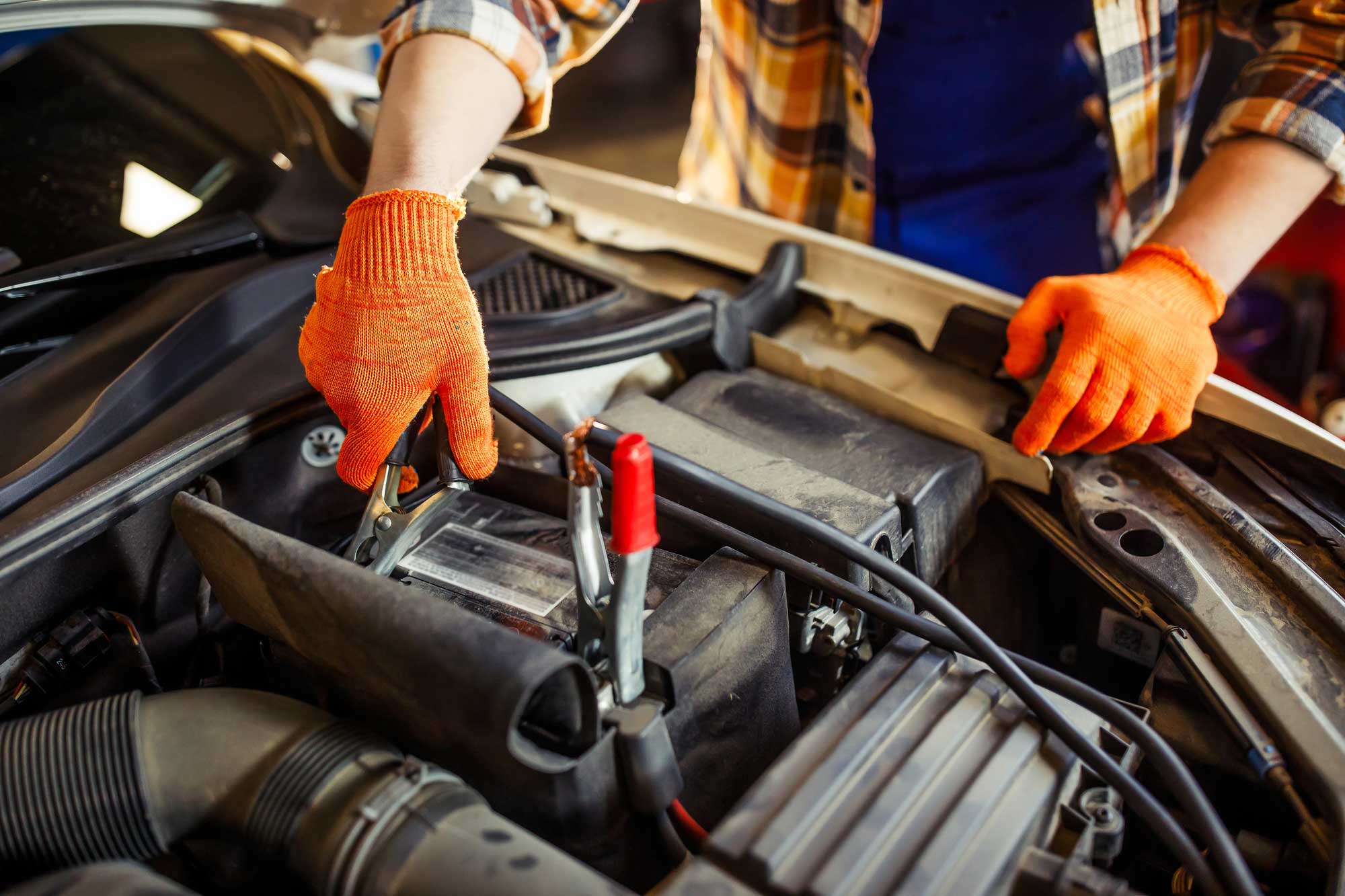
Porsche Battery Repair Replacement at DART Auto
When your Porsche shows signs of battery trouble, the fix goes well beyond swapping in any replacement. Modern Porsche platforms – from 997 and 991 911s to 987/981 Boxster and Cayman models – integrate the battery into complex electrical architectures that manage everything from PSM calibration to adaptive suspension modules. A failing battery on these cars doesn't just mean a sluggish start; it can trigger fault codes across multiple control units, cause adaptive systems to lose memory, and even put the vehicle into limp mode. We handle Porsche battery service with the diagnostic depth and registration procedures the platform demands.
What sets Porsche battery work apart is the software layer. Many 2005-and-newer models require battery registration through PIWIS (Porsche Integrated Workshop Information System) or compatible diagnostic platforms to tell the Porsche Communication Management and energy-management modules that a new battery is installed. Skip this step and you'll see premature battery failure, erratic charging behavior, and persistent warning lights. We use factory-level scan tools and OEM procedures to register the new battery, reset adaptive charging parameters, and verify that all electrical consumers are drawing correctly. Our technicians – each with at least ten years of experience and dealer-level training – understand the nuances of Porsche's electrical systems across generations.
When you bring your Porsche to DART Auto for battery service, you can expect:
- Complete electrical-system diagnostics to confirm the battery is the root cause and identify any parasitic draws
- OEM or premium AGM/lithium batteries sized and spec'd for your exact model year and electrical load
- Battery registration and adaptive-charging reset using PIWIS-compatible tooling
- Post-installation verification of all control modules, charging voltage, and system memory retention
Common Battery Repair Replacement Issues on Porsche Vehicles
Porsche battery problems often present differently than typical vehicles because of the brand's sophisticated electrical architecture and high-demand systems. When your Porsche won't start or shows electrical anomalies, the root cause usually traces to one of several well-documented failure patterns. We diagnose these quickly because our technicians see them regularly and understand the platform-specific quirks that distinguish a simple battery swap from a more complex electrical repair.
- Premature battery drain on 2009–2016 997/991-generation 911 models: The Porsche Communication Management (PCM) system and multiple control modules draw parasitic current even when parked. If the car sits for more than a week, especially in cold weather, the AGM battery discharges below the threshold needed to wake the gateway module. Owners often mistake this for a failed battery when the real issue is cumulative draw from always-on systems.
- Battery registration failures on 2011+ Cayenne and Panamera: These platforms require battery coding via PIWIS (Porsche Integrated Workshop Information System) whenever a new battery is installed. Skipping this step causes the alternator to overcharge or undercharge, shortening the new battery's lifespan to 18–24 months instead of the expected four to five years. Generic code readers cannot perform this registration.
- Trunk-mounted battery corrosion on 1997–2004 Boxster (986) and 1999–2004 911 (996): The battery sits in the front trunk where condensation from climate changes accelerates terminal corrosion. Corroded terminals create high resistance that mimics a dead battery, and the corrosion often spreads to the fusebox and ground strap, requiring additional cleaning and replacement beyond the battery itself.
- Alternator overcharge on 2005–2008 Cayman and Boxster (987.1): A failing voltage regulator pushes 15+ volts into the battery, boiling the electrolyte and warping the internal plates. Owners report a rotten-egg smell and premature battery failure every 12–18 months. Replacing the battery without addressing the alternator results in repeat failures.
- Cold-weather no-start on Macan and Cayenne with start-stop systems: The enhanced flooded battery (EFB) or AGM battery used in start-stop systems loses cranking capacity faster in freezing temperatures. A battery showing 12.4 volts at rest may only deliver 60 percent of rated cold-cranking amps at 0°F, insufficient to turn over the direct-injection engine.
- Battery sensor connector failures on 2017+ 718 Boxster/Cayman and 991.2/992 911: The intelligent battery sensor (IBS) monitors charge state and communicates with the alternator control module. Corrosion or loose connections at the sensor cause erratic charging behavior and false low-battery warnings. Replacing the battery without inspecting the sensor connector leads to recurring electrical faults.
Why Choose DART Auto for Porsche Battery Repair Replacement
Your Porsche's electrical system is more than a battery – it's a tightly integrated network of modules, control units, and adaptive learning parameters that can be disrupted the moment power is interrupted. We handle battery service with the same precision Porsche engineering demands, using factory scan tools to register new batteries in the vehicle's ECU and preserve adaptive memory across 987 Boxster/Cayman, 997/991 911, Cayenne, Panamera, and Macan platforms. Many shops swap the battery and send you on your way; we verify charging-system health, document parasitic draw, and confirm that the Battery Management System recognizes the new cell before you leave.
Our master technicians – each with at least a decade of European experience and dealer training – know that 2011-2016 Cayenne and Panamera models store battery data in the Power Management Control Module, while 981/991-generation cars require PIWIS registration to prevent premature AGM failure. We invest in the diagnostic hardware and OEM repair procedures that let us match or exceed dealer capability, then back every job with a 3-year/36,000-mile warranty on parts and labor. Because our techs are salaried rather than flat-rate, there's no incentive to skip the registration step or ignore a failing alternator that will kill your new battery in six months.
- Factory-level diagnostics: PIWIS-compatible scan tools and TSB access for proper battery registration and module coding
- Complete charging-system verification: alternator output, voltage-regulator function, and parasitic-draw testing before and after installation
- OEM and premium AGM batteries: sourced from trusted suppliers who meet Porsche's exacting cold-cranking and cycle-life specs
- Transparent pricing: honest, expert-level service without the dealer markup
Symptoms – How to Know You Need This Service
Porsche battery failure often announces itself through a cascade of electrical symptoms before the car refuses to start. You may notice:
- Sluggish or delayed engine cranking, especially on cold mornings or after the car has sat for a few days
- Dashboard warning lights for PSM, airbag, or battery/charging system that appear intermittently or stay illuminated
- Electrical accessories behaving erratically – flickering interior lights, slow power-window operation, or the infotainment system resetting unexpectedly
- Charging-system warnings on the instrument cluster, often accompanied by reduced alternator output or voltage fluctuations
- Loss of adaptive settings – seat memory, radio presets, or suspension settings reverting to defaults after the car sits overnight
- Clicking sound from the starter solenoid when you turn the key, indicating insufficient voltage to engage the starter motor
- Complete failure to crank, with only dashboard lights illuminating dimly or not at all
If you experience a complete no-start condition or see multiple warning lights simultaneously, have the car towed rather than attempting repeated start cycles – you risk damaging control modules or draining the battery to a point where registration and reprogramming become more complex.
Which Porsche Models We See for Battery Repair Replacement
We perform battery service across the full range of modern Porsche platforms, with particular expertise in the models where electrical architecture and battery registration are most involved:
- 911 (996, 997, 991, 992): 1999–present, including Carrera, Carrera S, Turbo, GT3, and GT2 variants – all require battery registration on 2005+ models
- Boxster and Cayman (986, 987, 981, 718): 1997–present, including base, S, GTS, and GT4 models – 987.2 and newer generations demand PIWIS registration
- Cayenne (955, 957, 958, 9YA): 2003–present, including V6, V8, Turbo, Diesel, and hybrid variants – hybrid models require specialized high-voltage and 12V battery service
- Panamera (970, 971): 2010–present, including 4, S, Turbo, GTS, and E-Hybrid models – E-Hybrids have dual battery systems with distinct service protocols
- Macan (95B): 2014–present, all trim levels – shares VW Group architecture but retains Porsche-specific electrical management
- Taycan: 2020–present – high-voltage battery diagnostics and 12V auxiliary battery service using Porsche-specific tooling
For air-cooled and early water-cooled models (964, 993, early 996), battery replacement is more straightforward but still benefits from our load-testing and electrical-draw diagnostics to prevent recurring failures.
Causes & Risks – What Happens if Ignored
Battery problems in Porsche vehicles stem from a combination of high electrical loads, sophisticated power management, and driving patterns that don't allow full recharge cycles. Short trips around Denver – especially in winter – prevent the alternator from fully replenishing the battery after startup. The direct-injection engines and multiple control modules draw significant current during cranking, and if the battery can't recover between drives, its capacity degrades rapidly. Porsche's intelligent charging systems attempt to compensate, but a weak battery eventually falls below the voltage threshold where these systems function correctly.
Delaying battery replacement sets off a cascade of secondary problems. Here's what typically escalates:
- Alternator failure: A weak battery forces the alternator to run at maximum output constantly, overheating the diodes and voltage regulator. This turns a $400 battery replacement into a $1,800+ alternator job within six months.
- Control module damage: Voltage sag during cranking causes the PCM, ABS module, and gateway to experience brown-out conditions. Repeated low-voltage events corrupt module memory and can brick sensitive electronics, requiring reprogramming or replacement at $800–$2,500 per module.
- Starter motor wear: A battery delivering insufficient cranking amps makes the starter work harder and spin longer. The starter solenoid contacts pit and the motor brushes wear unevenly, shortening starter life from 150,000 miles to 60,000 miles.
- Stranded vehicle: Porsche batteries often fail suddenly rather than gradually. A battery showing 12.2 volts one morning may drop to 10.8 volts overnight, leaving you stranded in a parking garage or at a trailhead with no warning.
- Loss of safety system calibration: On 2017+ models with adaptive cruise and lane-keeping assist, a dead battery requires recalibration of the forward-facing camera and radar systems after jump-starting. This adds diagnostic time and cost to what should have been a simple battery replacement.
Safety Impact – Why Battery Repair Replacement Matters
A failing battery compromises multiple safety systems before it completely dies. Porsche's stability control, ABS, and brake-assist systems rely on consistent voltage to function properly. When battery voltage drops below 11.5 volts during cranking or driving, these systems may disable themselves or operate in degraded modes. You'll see warning lights on the dash – PSM fault, ABS warning, brake system error – but the underlying issue is insufficient electrical supply to the control modules that manage these critical functions.
Specific safety risks include:
- ABS and stability control dropout: Low voltage causes the ABS module to shut down, leaving you with unassisted braking on wet or icy roads. On Cayenne and Macan models, this also disables hill-descent control and trailer stability assist.
- Power steering failure on electric-assist models: The 718 Boxster/Cayman and newer 911 models use electric power steering that draws heavy current. A weak battery cannot supply the needed amperage during low-speed maneuvers, resulting in sudden loss of assist in parking lots or tight corners.
- Airbag system faults: The airbag control module stores crash data and performs continuous self-checks. Voltage fluctuations trigger fault codes that may prevent airbag deployment in a collision, and the system won't reset until stable voltage is restored.
- Instrument cluster and warning system blackout: A dying battery can cause the digital instrument cluster to reboot while driving, temporarily blanking all gauges and warning lights. This leaves you blind to speed, RPM, and critical alerts for several seconds.
Stop driving immediately if: you see multiple system warnings simultaneously, experience loss of power steering assist, or notice the instrument cluster rebooting. Schedule service within a week if: you see a single battery or charging system warning, notice slow cranking, or require a jump-start.
How Porsche Battery Repair Replacement Actually Works
Porsche battery replacement involves more than swapping the old unit for a new one. Modern Porsches use intelligent charging systems that monitor battery age, temperature, and state of charge to optimize alternator output. The battery management system stores these parameters in the vehicle's gateway module, and installing a new battery without updating this data causes the charging system to treat the fresh battery as if it were old and partially degraded. This is why battery registration through PIWIS or an equivalent Porsche-specific diagnostic platform is mandatory on 2008+ models – the system needs to know it's starting fresh with a new battery's full capacity.
Porsche-specific design considerations that affect the replacement process:
- AGM battery requirement on most 2012+ models: Absorbent Glass Mat batteries handle the deep-cycle demands of start-stop systems and high electrical loads. Standard flooded batteries fail rapidly in these applications. The wrong battery type causes premature failure and potential warranty denial.
- Location-specific challenges: Batteries live in the front trunk on 911 and Boxster/Cayman models, requiring removal of the trunk liner and sometimes the washer fluid reservoir for access. Cayenne and Panamera batteries sit under the driver's seat or in the rear cargo area, requiring seat removal and careful handling of airbag connectors.
- Coding and adaptation procedures: After installation, the technician must register the battery's amp-hour rating and type in the gateway module, then perform a charging
How We Diagnose Battery Repair Replacement Issues on Porsche
When your Porsche shows signs of battery or electrical trouble – sluggish starts, warning lights, or phantom electrical gremlins – we start by confirming what's actually failing before recommending any work. Our diagnostic process combines factory-level scan tools with hands-on testing to separate true battery failure from charging system faults, parasitic drains, or software glitches common on modern Porsche platforms.
- Initial scan and fault code retrieval: We connect Porsche-specific diagnostic equipment (PIWIS or equivalent aftermarket tools) to pull stored fault codes from every control module. On 991-generation 911s and newer, the battery management system logs charge cycles, voltage sag events, and module wake-up behavior that point directly to battery health or charging circuit faults.
- Battery load and capacity testing: We perform a calibrated load test to measure cranking amps and a capacity test to verify the battery can hold a charge under real-world draw. AGM batteries used in 981 Boxster/Cayman and 991/992 911 platforms degrade differently than flooded cells; our testers account for chemistry and OEM specifications.
- Charging system verification: We measure alternator output voltage and ripple at idle and under load. On Cayenne and Panamera models with start-stop systems, the intelligent battery sensor (IBS) must be interrogated separately to confirm it's reporting accurate state-of-charge data to the engine control module.
- Parasitic draw measurement: If the battery drains while parked, we measure key-off current draw and isolate which module or circuit is staying awake. Common culprits include aftermarket alarms, failing convenience modules (especially on 997 and 987 chassis), and software bugs that prevent proper sleep mode.
- Visual and physical inspection: We inspect terminals for corrosion, check cable integrity, and verify the battery is properly secured. Vibration from a loose hold-down can shorten battery life significantly, especially on track-driven cars.
Once testing is complete, we walk you through what we found, explain whether the battery itself has failed or if a charging/drain issue is the real problem, and provide a transparent quote that addresses the root cause. You'll know exactly what needs attention and why before any work begins.
Battery Repair Replacement on Porsche: Repair vs. Replacement
The decision between repairing components around the battery versus replacing the battery outright depends on what testing reveals and how the surrounding electrical system has aged.
When Repair Makes Sense
- Terminal corrosion and cable issues: If the battery itself tests healthy but terminals are corroded or cables show resistance, cleaning connections and replacing damaged cables restores full function without touching the battery.
- Charging system faults: A failing alternator or voltage regulator will kill batteries prematurely. Replacing the alternator (common on high-mileage Cayenne V8 models) and installing a fresh battery together prevents repeat failures.
- Software recalibration: On newer Porsche platforms with intelligent battery management, sometimes a software update or IBS recalibration resolves charging complaints without any hardware changes.
When Replacement Is the Right Call
- Failed load or capacity test: If the battery can't deliver rated cranking amps or hold a charge, replacement is the only fix. AGM batteries in 911, Boxster, and Cayman models typically last 4–6 years; pushing a weak battery risks being stranded.
- Age and preventive replacement: Batteries older than five years, even if still starting the car, often fail without warning. Replacing proactively during scheduled service avoids inconvenient breakdowns.
- After parasitic draw repair: If a parasitic drain has deeply discharged the battery repeatedly, internal plate damage usually means the battery won't recover full capacity even after the drain is fixed.
We present the options honestly, explain the trade-offs, and let you decide. If a repair buys meaningful time and the battery still has life, we'll tell you. If replacement is the smarter long-term move, we explain why and provide an OEM-quality battery with our 3-year/36,000-mile warranty backing the work.
How to Make Your Porsche Battery Repair Replacement Last Longer
Once your Porsche has a fresh battery or repaired charging system, a few deliberate habits will maximize its service life and keep electrical gremlins at bay.
Driving Habits That Help
- Drive regularly: Porsche batteries, especially AGM types in cars with start-stop systems, need regular cycling. If the car sits for weeks, connect a quality battery maintainer designed for AGM chemistry to prevent deep discharge.
- Avoid excessive short trips: Frequent cold starts without adequate drive time prevent the alternator from fully recharging the battery. Aim for at least 20–30 minutes of driving after starting to let the charging system catch up.
- Minimize key-off electrical load: Leaving accessories plugged into the 12V outlet, using remote start excessively, or running the infotainment system with the engine off all draw the battery down faster than the alternator can recover during normal driving.
Maintenance You Can Monitor
- Watch for warning signs: Dimming headlights, slow cranking, or dashboard warning lights related to the charging system are early indicators. Addressing them promptly prevents being stranded and avoids damage to sensitive electronics.
- Keep terminals clean: A quick visual check every few months for white or green corrosion around battery terminals takes seconds. Clean terminals ensure full current flow and prevent voltage drop that can confuse control modules.
- Check battery age: Most batteries have a date code stamped on the case. Knowing when yours was manufactured helps you plan proactive replacement before it fails at an inconvenient time.
What to Leave to the Shop
Battery registration and coding on newer Porsche models must be performed with factory-level diagnostic tools after replacement. The engine control module needs to know a new battery is installed so it can adjust charging profiles and start-stop behavior. Skipping this step can shorten battery life and trigger fault codes. We handle registration as part of every battery replacement, ensuring the car's software and hardware work together as Porsche intended.
What to Expect When You Bring Your Porsche In
We've designed the visit to feel straightforward from the moment you call. Schedule an appointment or drop in – we'll ask a few questions about symptoms (slow cranking, warning lights, how old the current battery is) and get you on the calendar. If you need the car sooner, we'll do everything we can to accommodate. Loaner vehicles and local shuttle service are available when the work requires more time; just ask when you book.
- Drop-off and initial inspection: We pull the vehicle into the bay, connect our scan tool to log fault codes and battery-health data, and perform a visual inspection of terminals, cable condition, and trunk-mounted battery trays common to many Porsche models.
- Written estimate and approval: You'll receive a detailed estimate covering the battery, any needed cables or hold-downs, and labor for registration. We explain what we found, why it matters, and what happens if you delay – then we wait for your go-ahead.
- Installation and system registration: Once approved, we install the new AGM or lithium battery, register it in the vehicle's control modules using factory procedures, and verify that charging voltage, idle current draw, and module communication all fall within spec.
- Post-repair verification and pickup walkthrough: Before you arrive, we road-test the car to confirm clean starts and stable voltage under load. At pickup, we walk you through what we did, show you the old battery if you're curious, and answer any questions about long-term care.
If anything feels off in the days after pickup – a warning light, hesitation at start-up – call us. We'll get you back in, re-scan the system, and make it right at no charge. Our 3-year/36,000-mile warranty means you're covered long after you drive away, and our two-plus decades serving Denver's European car community means we're not going anywhere.
Our Porsche Services
- Air Conditioning AC Repair
- Brake Repair & Brake Fluid Change
- Check Engine Light Diagnostics
- Clutch Repair & Replacement
- Coolant Leak Repair
- Cooling System Repair
- Drive Shaft Repair
- Engine Repair
- Exhaust & Catalytic Converter Repair
- Head Gasket Repair & Replacement
- Oil Change
- Oil Leak Repair
- Scheduled Service Maintenance
- Suspension Repair
- Cambelt Timing Belt Replacement
- Transmission Repair
- Tune Up
- Wheel Alignment