
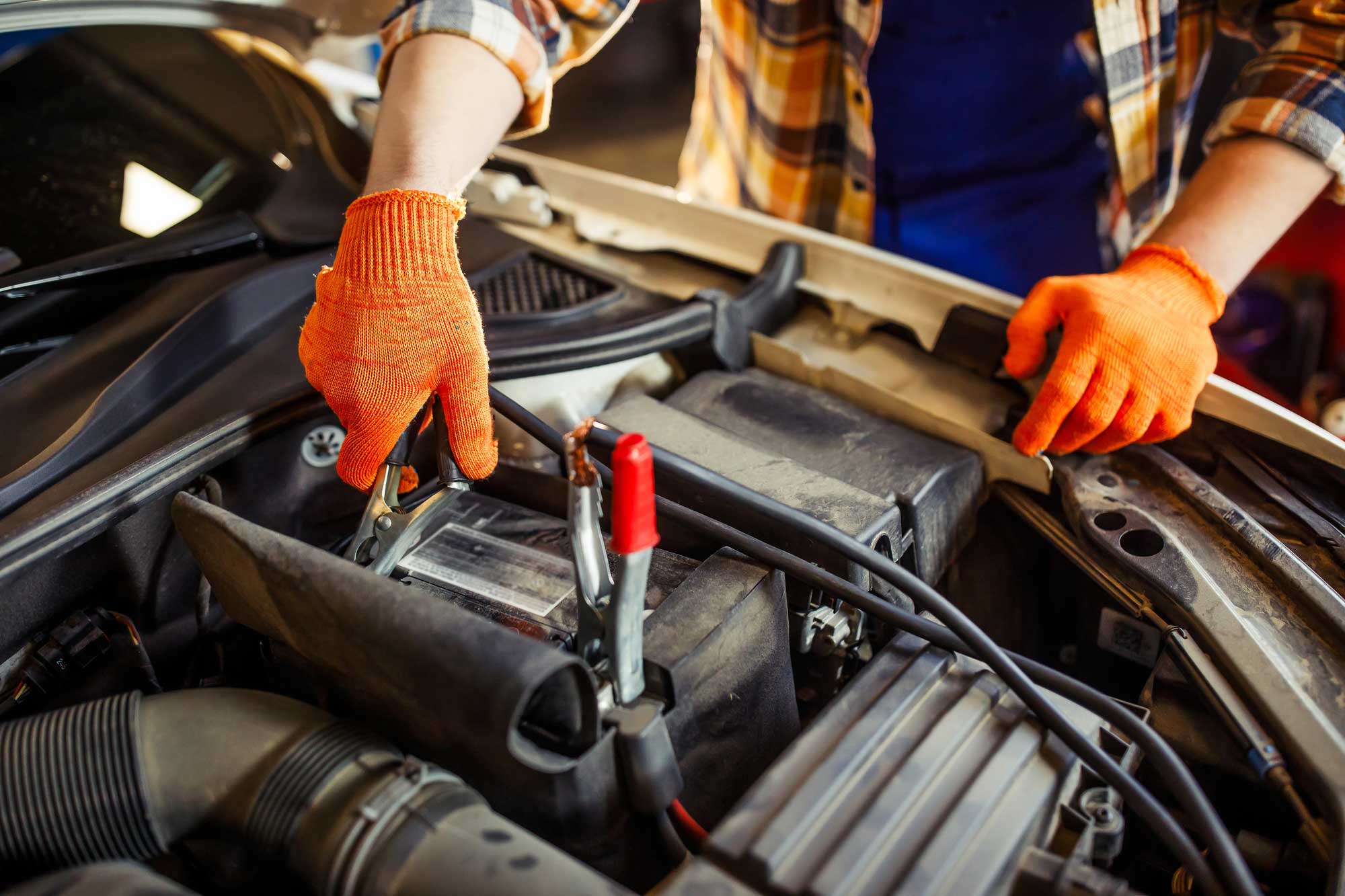
BMW Battery Repair Replacement at DART Auto
Modern BMWs treat the battery as a managed component, not a swap-and-go commodity. From the E60 5-series forward, the DME (engine control module) tracks battery state-of-charge, age, and capacity to optimize alternator output and protect the electrical system. Drop in a new battery without registering it through BMW ISTA diagnostic software, and you'll trigger charge-system faults, shorten battery life, and risk stranding yourself when the car miscalculates available reserve. Generic shops skip this step because they lack the tooling and training – then wonder why the customer returns three months later with a dead battery and a check-engine light.
DART Auto has invested in factory-level diagnostic equipment and OEM repair procedures for every BMW platform we service. We register every battery replacement to the vehicle's DME, clear adaptation values, and verify charge-system output under load. On F-series and G-series chassis, we also confirm that Intelligent Battery Sensor (IBS) data streams correctly and that start-stop logic re-enables after installation. For older E-series cars without registration requirements, we still load-test the charging system and inspect ground straps – corrosion at the engine-block ground is a common cause of phantom electrical faults on 2004–2010 models.
When you choose DART Auto for BMW battery service, you receive:
- Factory battery registration using BMW ISTA diagnostic software to prevent charge-system errors and premature battery failure
- OEM or premium AGM batteries matched to your chassis and equipment level (standard, start-stop, or high-output audio systems)
- Complete charging-system inspection including alternator output, voltage-drop testing, and ground-strap condition
- Our 3-year/36,000-mile parts-and-labor warranty, so you drive with confidence long after installation
Common Battery Repair Replacement Issues on BMW Vehicles
BMW owners often discover battery problems when the car refuses to start on a cold morning or when a cascade of dashboard warnings appears after a short drive. The gotcha that generic shops miss: BMW batteries aren't just power sources – they're registered components in a tightly integrated electrical architecture. Replacing one without proper coding triggers a chain of faults that can disable comfort systems, lock you out of programming modes, and even shorten the lifespan of the new battery itself.
- F-series and G-series IBS (Intelligent Battery Sensor) registration failures (2012–present): Every F30, F10, G20, and G30 platform uses an IBS module that monitors charge state, temperature, and current flow. When a shop swaps the battery without registering the new unit via ISTA, the DME continues using the old battery's aging profile, overcharging or undercharging the replacement and cutting its life in half. You'll see "Increased Battery Discharge" warnings within weeks.
- E-series battery drain from failing comfort-access modules (2004–2013): E60, E90, and E70 models with comfort-access often experience parasitic draw from the CAS (Car Access System) module staying awake. A weak battery masks the real fault – after replacement, the new battery dies in days unless the underlying module fault is diagnosed and addressed.
- AGM battery spec mismatches on start-stop equipped models (2012–present): BMWs with auto start-stop require AGM (Absorbent Glass Mat) batteries with higher cycle tolerance. Installing a conventional flooded battery saves money up front but fails within months under the repeated charge-discharge cycles, leaving you stranded and voiding any parts warranty.
- Trunk-mounted battery corrosion on E46, E39, and E38 platforms (1996–2006): These chassis house the battery in the trunk or under the rear seat. Water intrusion from sunroof drains or tail-light seals causes terminal corrosion that spreads to the body harness. Replacing the battery without cleaning and protecting the connections means the new unit corrodes within a season.
- Voltage-sensitive module failures after jump-starts (all platforms): Jump-starting a deeply discharged BMW without following the proper grounding procedure sends voltage spikes through the CAN bus, damaging the junction box, gateway module, or even the DME. Shops that don't test these systems post-replacement leave you chasing electrical gremlins for months.
- Alternator overcharge on N52 and N54 engines (2006–2013): E90 and E60 models with these engines sometimes develop voltage-regulator faults in the alternator that cook batteries in under a year. Replacing the battery without load-testing the charging system means you're back for another battery before the warranty expires.
Why Choose DART Auto for BMW Battery Repair Replacement
BMW battery service isn't just about swapping in a new 12-volt – it's about post-replacement registration and coding. Skip that step, and your intelligent battery sensor (IBS) will manage charge cycles based on the old battery's health profile, shortening the life of your new one. Generic shops either don't know this or lack the factory-level scan tools to perform it. DART Auto uses BMW ISTA diagnostic software and follows OEM service procedures to register every replacement battery to the DME or BDC module, depending on your chassis generation.
Our master technicians – each with dealer training and over a decade of European experience – handle the full workflow:
- Pre-replacement health scan: We verify the IBS data stream, check for parasitic draws with a milliamp clamp test, and review stored fault codes that point to alternator or voltage-regulator issues before recommending a new battery.
- OEM or premium AGM fitment: F-series and newer platforms require absorbed-glass-mat batteries with exact Ah ratings; we source Bosch S5 AGM or OEM suppliers, never generic flooded cells that fail early.
- Post-install coding: Battery type, capacity, and serial number are programmed into the vehicle's power-management system so charge logic adapts correctly.
- Electrical-system validation: We measure alternator ripple voltage and verify the IBS wiring harness isn't corroded – common on E90 and F30 models parked outdoors.
Because our technicians are salaried rather than flat-rate, there's no incentive to skip the registration step or upsell a battery you don't need. You get honest diagnostics, fair pricing below dealer rates, and a 3-year/36,000-mile warranty on parts and labor.
Symptoms – How to Know You Need This Service
BMW battery failure rarely announces itself with a single dramatic event. Instead, you'll notice a cascade of electrical oddities as the battery loses capacity and the car's power-management system struggles to compensate. Pay attention to these warning signs:
- Sluggish cranking or extended cranking time – especially on cold mornings or after the car has sat for a few days; the starter motor draws heavy current, and a weak battery can't deliver it
- Check-engine light or battery warning light illuminated on the instrument cluster, often accompanied by a "Charging System Malfunction" or "Increased Battery Discharge" message in the iDrive
- Start-stop system disabled – if your BMW has auto start-stop and it suddenly stops working, the DME has detected insufficient battery reserve to safely restart the engine
- Electrical accessories behaving erratically – dimming headlights, flickering interior lights, or infotainment system resets while idling or at low RPM
- Phantom fault codes – modules throwing communication errors or "implausible signal" faults because voltage sags below their operating threshold
- Car won't unlock or alarm chirps weakly – the remote key fob works, but the car's central locking responds slowly or not at all
- Battery is more than five years old – even if the car starts fine, AGM batteries degrade internally and lose cold-cranking amps; proactive replacement prevents being stranded
If you see a battery warning light or the car cranks but won't start, stop driving and arrange a tow. Continuing to operate with a failing battery can damage the alternator or leave you stranded in an unsafe location.
Which BMW Models We See for Battery Repair Replacement
We service battery replacement and registration on nearly every BMW platform from 2000 forward. The work applies universally, but the procedure and battery specification vary by chassis generation, engine type, and equipment level. Here are the platforms we see most often:
- E46 3-series (1999–2006) – early models don't require registration; later MY2006 cars with CAN-bus do
- E90/E91/E92/E93 3-series (2006–2013) – all require battery registration; N52 and N54 engines are sensitive to voltage sags and throw multiple fault codes when the battery weakens
- F30/F31/F34 3-series and 4-series (2012–2019) – use AGM batteries with Intelligent Battery Sensor; registration and IBS coding mandatory
- G20/G21 3-series (2019–present) – same AGM/IBS requirements; start-stop systems are aggressive and demand healthy batteries
- E60/E61 5-series (2004–2010) – first widespread use of battery registration; many cars also have auxiliary batteries in the trunk for convenience systems
- F10/F11 5-series (2011–2017) and G30/G31 (2017–present) – AGM standard, dual-battery setups common on higher trims
- E65/E66 7-series (2002–2008) – complex electrical architecture; some models have three batteries (main, auxiliary, and convenience)
- F01/F02 7-series (2009–2015) and G11/G12 (2016–present) – AGM batteries with active charge management; registration and adaptation critical
- X3 (F25, G01), X5 (E70, F15, G05), X7 (G07) – same registration requirements as corresponding sedan platforms
- M models (E92 M3, F80 M3, F10 M5, F90 M5) – often spec higher-capacity AGM batteries; some use lithium auxiliary batteries that require separate service procedures
If you drive a pre-2000 E39 or E38, or a classic like an E30 or E28, we can still service your battery – those cars use conventional flooded-cell batteries without registration. For any model not listed, call us to confirm compatibility and procedure.
Causes & Risks – What Happens if Ignored
BMW batteries fail for predictable reasons: short-trip driving in cold climates never fully recharges the cells, comfort-access and alarm systems draw current 24/7, and the factory AGM units have a hard service life around five to seven years regardless of mileage. BMW's energy-management strategy also intentionally sheds electrical loads when it detects low voltage – you'll lose heated seats, radio memory, and even throttle response before the car refuses to crank.
Delaying replacement sets off a predictable escalation. Here's what gets worse:
- Alternator and voltage-regulator damage: A failing battery with high internal resistance forces the alternator to work at maximum output continuously, overheating the voltage regulator and shortening alternator life. On N54 and N55 engines, this often means a $900 alternator replacement within six months of ignoring battery warnings.
- DME and module corruption: Voltage sag during cranking can corrupt adaptive data in the DME, transmission control module, and ABS unit. You'll experience rough shifts, hesitation, and ABS faults that require recalibration even after the battery is replaced – adding hours of diagnostic time.
- Starter motor burnout: Cranking on low voltage draws excessive current through the starter, burning the commutator and solenoid contacts. On F-series cars with the starter buried under the intake manifold, that's a $1,200 repair that could have been avoided.
- Stranded without warning: BMWs often start reluctantly for weeks, then fail completely without notice when the battery crosses the threshold. If this happens away from home, you're paying for a tow plus emergency service rates.
- Loss of coding and adaptations: If the battery dies completely and voltage drops below the memory-retention threshold, you can lose window initialization, steering-angle calibration, and even key programming on older CAS modules – requiring dealer-level intervention to restore.
Safety Impact – Why Battery Repair Replacement Matters
A failing battery doesn't just leave you stranded – it compromises active safety systems that depend on stable voltage to function. BMW's DSC (Dynamic Stability Control), ABS, and electric power steering all require clean electrical supply. When voltage sags below threshold during hard braking or evasive maneuvers, these systems can drop offline momentarily, eliminating the electronic safety net exactly when you need it most.
Specific risks include:
- Power-steering assist loss: Electric power steering on F-series and G-series cars cuts assist when voltage falls too low, leaving you wrestling a heavy wheel mid-corner with no warning.
- ABS and DSC faults under braking: Low voltage can disable ABS modulation during emergency stops, increasing stopping distances and eliminating stability control on slippery surfaces.
- Airbag system faults: Some BMW platforms log airbag faults and disable deployment if they detect unstable voltage – a condition you won't know about until the SRS light appears, and by then the system may not fire in a collision.
- Sudden stall in traffic: A battery on the edge can cause the DME to cut fuel delivery if cranking voltage drops during a restart at a stoplight, leaving you stalled in an intersection.
Stop driving now if: you see the battery warning light with multiple system faults, experience power-steering loss, or the car stalls and won't restart. Schedule soon if: you see "Increased Battery Discharge" warnings, slow cranking, or electrical accessories resetting.
How BMW Battery Repair Replacement Actually Works
BMW's electrical architecture treats the battery as an intelligent component, not a generic 12-volt box. The IBS module mounted on the negative terminal constantly measures current flow, voltage, temperature, and state of charge, feeding this data to the DME over the CAN bus. The DME uses this information to manage alternator output, control start-stop operation, and shed electrical loads when capacity drops. When you install a new battery, the system must be told that the old battery's aging profile no longer applies – this is called battery registration, and it requires factory-level diagnostic software like ISTA/D or ISTA/P.
What makes BMW battery service different:
- Registration and coding: The new battery's chemistry (AGM vs. flooded), capacity, and manufacturing date must be coded into the DME. Skipping this step causes the energy-management system to use incorrect charging parameters, dramatically shortening battery life.
- IBS calibration: The intelligent sensor must be reset to recognize the new battery's full-charge voltage and internal resistance baseline, or it will continue reporting faults based on the old unit's degraded state.
- Memory retention during swap: Proper procedure requires a memory-saver connected to the OBD port or cigarette lighter to maintain voltage to modules during replacement, preventing loss of adaptations, radio codes, and window initialization.
- AGM-specific torque specs: AGM batteries require precise terminal torque – over-tightening cracks the internal structure, under-tightening causes voltage drop and arcing. OEM procedures specify exact Newton-meter values that generic shops often ignore.
- Charging-system validation: After installation, the alternator output, voltage-regulator response, and parasitic draw must be tested under load to confirm the new battery won't be destroyed by an underlying fault.
How We Diagnose Battery Repair Replacement Issues on BMW
BMW battery and charging systems have evolved into sophisticated networks that go far beyond a simple 12-volt supply. From the Intelligent Battery Sensor (IBS) introduced on E-series platforms to the advanced energy management in F- and G-series models, a failing battery can trigger cascading faults across multiple control modules. Generic shops often replace the battery and call it done, only to have the customer return days later with persistent electrical gremlins. We start every diagnosis by recognizing that BMW's power management is integrated with everything from start-stop systems to brake energy regeneration, and a proper diagnosis must account for the entire ecosystem.
Our diagnostic process unfolds in a deliberate sequence:
- Initial scan with BMW-specific ISTA/D or equivalent factory-level tooling. We pull fault codes from every module – not just the DME – because a weak battery often logs errors in the junction box, comfort access, and even adaptive headlight modules. We also retrieve live data on battery state-of-charge, state-of-health, and the IBS registration status.
- Battery load testing and voltage drop measurement. We perform a calibrated load test to measure cranking amps and compare against BMW's specifications for your chassis. We check voltage drop across critical ground points and main power feeds to rule out corroded connections that mimic a bad battery.
- Alternator output and charging profile verification. BMW alternators don't run at constant voltage; they modulate output based on driving conditions and battery state. We verify the charge voltage under different load scenarios and confirm the alternator is communicating properly with the power management module.
- Inspection of battery cables, terminals, and the Intelligent Battery Sensor. Corrosion under the IBS connector or a damaged sensor can cause the system to mismanage charging, leading to premature battery failure. We also inspect the main power distribution box for signs of water intrusion – a known issue on E90/E92 models where the cabin filter housing can leak onto the junction box.
- Review of service history and battery registration. If the battery was replaced previously but never registered to the DME, the car may still be using the old charge profile, which accelerates wear on the new battery. We check whether the correct battery type and capacity were installed and properly coded.
Once the data is collected, we translate the findings into a clear repair plan. You'll receive a detailed explanation of what failed, why it failed, and what we recommend to restore reliable starting and electrical function. Our technicians walk you through the options – whether that's a straightforward battery replacement with proper registration, addressing underlying charging system faults, or repairing corroded connections – so you understand exactly what your BMW needs and why.
Battery Repair Replacement on BMW: Repair vs. Replacement
The decision between repairing and replacing components in a BMW's electrical system depends on the root cause and the condition of surrounding parts. In many cases, what appears to be a battery failure is actually a symptom of a different issue that can be addressed without replacing the battery itself.
When Repair Makes Sense
- Corroded or loose battery terminals and cable ends. If the battery tests healthy but you're experiencing intermittent starting issues or electrical faults, the problem may be poor contact at the terminals. We clean corrosion, apply dielectric grease, and torque connections to spec. On some models, the positive terminal boot can trap moisture and cause hidden corrosion that's only visible after removal.
- Faulty Intelligent Battery Sensor. The IBS can fail independently of the battery. Symptoms include inaccurate state-of-charge readings, premature low-battery warnings, or charging system faults. Replacing the sensor and recalibrating the system restores proper energy management without the cost of a new battery.
- Software-related charging issues. Occasionally a software glitch or corrupted adaptation values in the DME can cause improper charging behavior. A reset and re-registration of the battery parameters may resolve the issue if the battery itself still tests within spec.
When Partial Replacement Is Appropriate
- Damaged battery cables or ground straps. If the main power cable or engine ground strap is frayed, corroded internally, or damaged, replacing that cable while retaining a healthy battery is the right move. This is common on higher-mileage E60/E61 and F10/F11 models where the engine harness sees heat cycling and vibration.
- Junction box or fuse carrier faults. Water intrusion or a failed fuse carrier in the power distribution box can mimic battery problems. Replacing the affected module and addressing the leak source preserves the battery investment.
When Full Battery Replacement Is the Right Call
- Battery fails load testing or shows reduced capacity. If cranking amps fall below BMW's threshold or the battery can't hold a charge overnight, replacement is the only reliable solution. AGM batteries used in start-stop-equipped BMWs (most F- and G-series) have a finite cycle life, and once capacity drops, performance degrades rapidly.
- Physical damage or internal cell failure. Swollen cases, leaking electrolyte, or a battery that won't accept a charge indicate internal failure. These batteries must be replaced immediately to prevent damage to the vehicle's electrical system.
- Age and preventive replacement. BMW AGM batteries typically last 5–7 years under normal use. If your battery is approaching that age and showing early warning signs – slow cranking, dimming lights, or increased charging times – replacing it proactively avoids being stranded and prevents voltage fluctuations that can damage sensitive electronics.
We walk you through the diagnostic findings and explain which approach makes sense for your situation. Our salaried technicians have no incentive to upsell, so you can trust the recommendation is based on what your BMW actually needs, not what generates the highest ticket.
How to Make Your BMW Battery Repair Replacement Last Longer
Once your BMW's battery and charging system are restored to proper function, a few mindful habits can extend the service life and help you avoid premature failure. BMW's advanced energy management does much of the work, but your driving patterns and maintenance routine still play a role.
Driving Habits That Extend Battery Life
- Drive regularly and avoid extended periods of inactivity. BMWs with start-stop systems and multiple control modules draw a small parasitic load even when parked. If the car sits for more than a week, consider using a BMW-compatible trickle charger to maintain the battery's state of charge. Letting the battery drain repeatedly shortens its lifespan.
- Take longer drives periodically. Short trips – especially in cold weather – don't give the alternator enough time to fully recharge the battery after starting. If your daily routine involves only 10-minute drives, plan a longer highway run every week or two to allow the charging system to top off the battery and recalibrate the IBS.
- Minimize electrical load during start-up. Turn off headlights, climate control, heated seats, and the stereo before starting the engine. This reduces the current draw during cranking and allows the alternator to prioritize recharging the battery once the engine is running.
- Avoid excessive idling with high electrical loads. Running the air conditioning, headlights, and infotainment system at idle – especially in traffic – can strain the charging system. The alternator output is lower at idle RPM, and sustained high draw can prevent the battery from fully recharging.
Maintenance and Monitoring
- Check battery terminals and connections every six months. Look for white or green corrosion around the terminals and cable ends. Clean any buildup with a wire brush and baking soda solution, rinse, dry thoroughly, and apply dielectric grease. This simple step prevents voltage drop and intermittent electrical faults.
- Monitor for slow cranking or electrical anomalies. If you notice the starter turning over more slowly than usual, dimming interior lights during cranking, or warning messages related to battery or charging, have the system tested promptly. Early intervention can prevent a no-start situation and catch problems before they damage other components.
- Keep the battery and engine bay clean and dry. Water intrusion into the junction box or battery compartment accelerates corrosion and can cause short circuits. After washing the car or driving in heavy rain, check for standing water in the battery area, especially on models with known drain issues (E90 cabin filter housing, F30 sunroof drains).
BMW
What to Expect When You Bring Your BMW In
From the moment you schedule your appointment, the process is designed around transparency and convenience. Here's how a typical battery-service visit unfolds:
- Drop-off and intake: Bring your BMW in at your scheduled time. If you need to get to work, ask about our complimentary shuttle service within the Denver metro area. We'll note any symptoms you've observed – slow cranking, electrical gremlins, or warning lights – and collect your keys.
- Electrical-system inspection: A technician connects our BMW-specific diagnostic platform to pull stored codes, measure resting and cranking voltage, check alternator output under load, and review IBS data logs. We're looking for root causes, not just low voltage.
- Written estimate and consultation: You'll receive a detailed estimate explaining what we found, what needs replacement, and why. If your alternator shows ripple or the IBS harness is corroded, we'll outline those repairs separately so you can prioritize.
- Repair execution: Once you approve, we install the correct AGM battery, register it to your vehicle's control modules using ISTA, and clear adaptive data so the charging system recalibrates from a clean baseline.
- Post-repair verification: We road-test to confirm stable voltage under electrical load (HVAC, headlights, heated seats), re-scan for faults, and verify the IBS is logging the new battery's parameters.
- Pickup walkthrough: At pickup, we'll show you the old battery, explain what we programmed, and answer any questions. If something feels off in the days that follow, call us – we'll bring it back in and recheck at no charge.
Remove any valuables from the cabin before drop-off. After-hours key drop and pickup are available by arrangement – just ask when you book.
Our BMW Services
- Air Conditioning AC Repair
- Brake Repair & Brake Fluid Change
- Check Engine Light Diagnostics
- Clutch Repair & Replacement
- Coolant Leak Repair
- Cooling System Repair
- Drive Shaft Repair
- Engine Repair
- Exhaust & Catalytic Converter Repair
- Head Gasket Repair & Replacement
- Oil Change
- Oil Leak Repair
- Scheduled Service Maintenance
- Steering Repair
- Suspension Repair
- Cambelt Timing Belt Replacement
- Transmission Repair
- Tune Up
- Wheel Alignment