
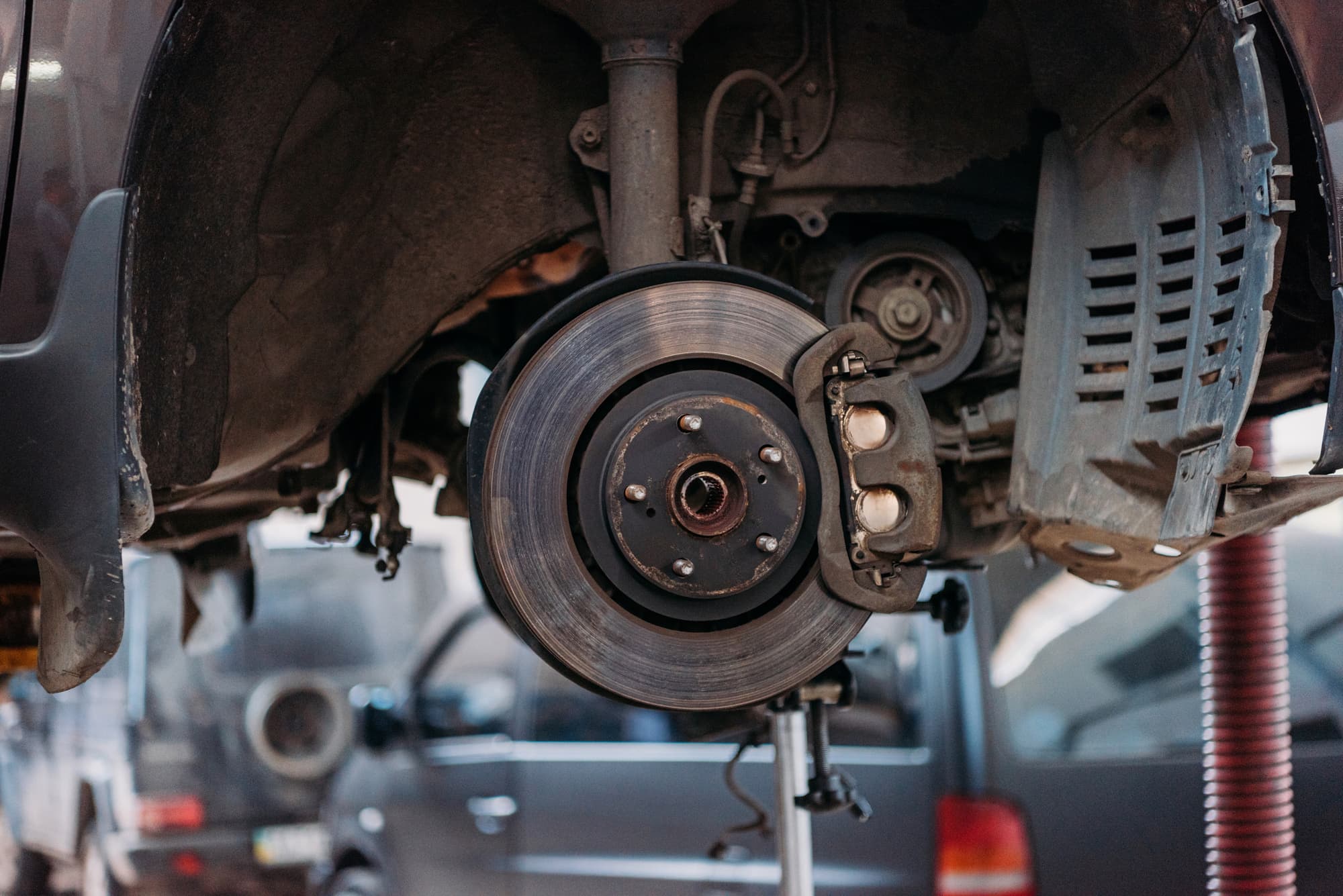
Porsche Brake Repair & Brake Fluid Change at DART Auto
Getting Porsche brake work wrong can cost you thousands – not just in parts, but in rotor damage, caliper seizure, and compromised stopping power that puts you and your investment at risk. Since 2000, DART Auto has specialized in European brake systems, and Porsche brakes demand a level of precision that generic shops simply can't match. Whether you're driving a 997 Carrera with PCCB ceramic rotors, a 981 Boxster with six-piston calipers, or a Cayenne with electronic parking brake integration, the margin for error is razor-thin.
Porsche brake systems require more than pad slaps and fluid swaps. Factory procedures call for specific bedding sequences, electronic parking brake retraction through PIWIS diagnostic software, and DOT 4 low-viscosity fluid that meets strict boiling-point standards. The torque specs on caliper bolts and carrier brackets are platform-specific – over-torque a 991 caliper mounting bolt and you risk cracking the aluminum carrier. Our master technicians use factory repair information, OEM-equivalent tooling, and the diagnostic capability to properly retract electronic calipers, reset brake wear sensors, and verify ABS module communication after service.
When you bring your Porsche to DART Auto for brake work, you can expect:
- Complete brake system inspection – rotors measured for thickness and runout, calipers checked for piston seal integrity and slide pin freedom, fluid tested for moisture content
- OEM or premium aftermarket parts – we source Textar, ATE, Brembo, and genuine Porsche components from trusted suppliers, never economy-grade friction material
- Proper bleeding and bedding procedures – two-person pressure bleeding to factory spec, followed by the correct pad break-in sequence for your driving style
- 3-year/36,000-mile warranty – parts and labor coverage that reflects our confidence in doing it right the first time
Common Brake Repair & Brake Fluid Change Issues on Porsche Vehicles
Porsche brakes are engineered for high-performance driving, but that same capability makes them less forgiving when maintenance lapses. The cost of getting this wrong isn't just money – it's control at speed, confidence under hard braking, and the safety margin you expect from German engineering. Here's what we see most often on Porsche platforms:
- Premature rotor warping on 911 (997/991 chassis) and Cayenne (955/957). Porsche's composite rotors and PCCB (Porsche Ceramic Composite Brake) systems dissipate heat brilliantly, but traditional iron rotors on base and S models warp under repeated high-speed stops, especially when brake fluid has absorbed moisture. The result: pedal pulsation, uneven pad wear, and compromised ABS modulation.
- Seized electronic parking brake calipers on 2009+ Boxster/Cayman (987.2/981) and Panamera (970). The electric parking brake actuators corrode internally, particularly in humid climates or when cars sit unused. When the motor fails, the caliper can lock partially engaged, dragging the pads and overheating the rotor.
- Hygroscopic brake fluid degradation on all models. Porsche specifies DOT 4 low-viscosity fluid and mandates two-year replacement intervals. Moisture absorption lowers boiling point from 500°F+ to below 350°F, causing vapor lock during spirited driving or mountain descents. This is especially critical on turbocharged models (991.2 Turbo, 718 GTS) where brake temperatures spike quickly.
- Pad sensor connector corrosion on 996/997-generation 911 and first-gen Cayenne. The pad wear sensors use exposed connectors near the wheel well. Road salt and moisture corrode the pins, triggering false "brake pad" warnings or leaving you unaware when pads are actually worn to backing plates.
- Brake booster vacuum leaks on naturally aspirated models (Boxster/Cayman M96/M97 engines, 1997-2008). The brake booster diaphragm cracks with age, creating a vacuum leak that causes rough idle, poor pedal feel, and reduced assist. Turbocharged Porsches use different assist systems and don't share this failure mode.
- ABS module failures on 996/986 platforms (1999-2004 911/Boxster). The Bosch 5.3 ABS pump accumulator develops internal leaks, causing extended pedal travel and loss of ABS function. This often coincides with aged brake fluid, which accelerates internal corrosion in the hydraulic unit.
Why Choose DART Auto for Porsche Brake Repair & Brake Fluid Change
Porsche brakes are engineered for performance, and getting the job wrong means compromised stopping power, premature rotor warping, or fluid contamination that accelerates corrosion in the ABS hydraulic unit. Since 2000, DART Auto has specialized in European platforms, investing in the factory diagnostic tools and repair procedures that distinguish a proper Porsche brake service from generic pad-slap work.
Our master technicians – each with dealer training and at least 10 years of experience – handle platform-specific challenges head-on:
- Factory fluid specs and bleeding protocols: Porsche DOT 4 low-viscosity fluid requirements differ across model years; we follow OEM bleed sequences for PSM-equipped cars to purge air from the modulator and avoid soft-pedal comebacks.
- Rotor replacement thresholds: We measure thickness against Porsche minimum specs (not aftermarket guesses) and check for taper wear common on 997 and 991 rear rotors.
- Caliper-specific torque and anti-squeal procedures: Whether it's a base Boxster or a 911 Turbo with PCCB ceramics, we apply the correct pad shims, caliper bolt torque, and bedding-in guidance to prevent noise and judder.
- Salaried technicians: Our techs earn a salary, not flat-rate commission, so there's zero incentive to skip steps or recommend parts you don't need.
Every brake job includes a complete fluid exchange using a pressure bleeder, rotor runout checks, and a post-repair road test to verify pedal feel and ABS modulation. You'll receive a written estimate before we touch the car, transparent pricing that beats the dealer, and a 3-year/36,000-mile warranty on parts and labor.
Symptoms – How to Know You Need This Service
Porsche brake systems communicate clearly when service is overdue. You may notice:
- Pulsation through the brake pedal during moderate to hard braking, indicating warped rotors or excessive runout – common on 987 Cayman and 997 models with aggressive driving habits
- Spongy or soft pedal feel that requires more travel to achieve the same stopping force, pointing to moisture-contaminated brake fluid or air in the hydraulic system
- Grinding or metal-on-metal noise when applying brakes – stop driving immediately; you've worn through the friction material and are damaging rotors
- Brake warning light or "BRAKE WORKSHOP" message on the instrument cluster, often triggered by worn pad sensors on 991, 981, and Macan platforms
- Pulling to one side during braking, suggesting a seized caliper piston or collapsed brake hose restricting fluid flow
- Burning smell after spirited driving – overheated pads or fluid boiling, especially if you track your car or drive mountain roads regularly
- Visible fluid leak near a wheel or under the master cylinder – address immediately to avoid complete brake failure
- Squealing or chirping at low speeds, particularly in damp conditions – often an early warning that pad material is getting thin
Grinding noise and visible fluid leaks demand immediate attention. Pulsation, soft pedal, and warning lights mean schedule service within the week. Porsche recommends brake fluid replacement every two years regardless of mileage due to fluid hygiene and moisture absorption.
Which Porsche Models We See for Brake Repair & Brake Fluid Change
DART Auto services brake systems across the Porsche lineup, with deep experience in the platforms Denver drivers bring us most often:
- 911 (996, 997, 991, 992) – including Carrera, Carrera S, Turbo, GT3, and GT2 variants; we handle both steel and PCCB ceramic rotor systems
- Boxster and Cayman (986, 987, 981, 718) – all trim levels including S, GTS, and GT4; common work includes caliper rebuilds on early 987 models with piston seal degradation
- Cayenne (955, 957, 958, 9YA) – V6, V8, Turbo, and Hybrid models; electronic parking brake service requires PIWIS-level diagnostic access
- Panamera (970, 971) – including 4S, Turbo, and E-Hybrid; brake-by-wire systems on newer models need software verification after pad replacement
- Macan (95B) – all engines and trim levels; shares brake architecture with Audi Q5 but uses Porsche-specific pad compounds and fluid specs
- Taycan (Y1A) – regenerative braking integration and brake blending software require EV-trained technicians and factory procedures
We work on model years from the late 1990s forward. Earlier air-cooled 911s and 928/944/968 models receive service on a case-by-case basis depending on parts availability and specialist tooling requirements. If your Porsche isn't listed, call us – we'll give you an honest assessment of whether we're the right shop for your specific platform.
Causes & Risks – What Happens if Ignored
Brake issues on Porsche vehicles stem from three primary causes: moisture infiltration in hygroscopic brake fluid, heat cycling from performance driving, and electronic system corrosion in parking brake actuators. Denver's dry climate helps, but temperature swings and road salt still accelerate wear. Porsche's performance-oriented design means tighter tolerances and less margin for degraded components.
When you delay brake service, the damage compounds quickly:
- Contaminated fluid becomes corrosive. Moisture in brake fluid doesn't just lower boiling point – it creates acid that etches caliper bores, master cylinder internals, and ABS module valves. What starts as a fluid flush becomes caliper replacement, then a complete hydraulic system overhaul.
- Warped rotors destroy pads and calipers. Pulsation from warped rotors causes uneven pad contact, which accelerates wear and can push caliper pistons back into their bores unevenly. Over six to twelve months, this leads to seized pistons, torn dust boots, and brake fluid leaks from damaged seals.
- Seized parking brake calipers overheat rotors. A dragging electronic parking brake generates constant friction heat. Within weeks, the rotor develops hard spots and cracking. The pad material glazes over, losing friction coefficient. Eventually, the caliper piston seizes completely, requiring full caliper and rotor replacement instead of a simple actuator service.
- Worn pads score rotors beyond resurfacing limits. Porsche brake pads include wear sensors, but corroded connectors can fail to warn you. Once pads wear to the backing plate, the steel scores deep grooves into the rotor face. Most Porsche rotors have minimum thickness specifications that make resurfacing impossible after scoring – you're replacing rotors that could have been saved.
- ABS module failures disable stability control. On Porsche models with PSM (Porsche Stability Management), a failed ABS module takes down traction control, electronic differential, and launch control. What begins as sluggish pedal response becomes a complete loss of driver aids and a four-figure repair instead of preventive fluid service.
Safety Impact – Why Brake Repair & Brake Fluid Change Matters
Porsche brake systems integrate directly with stability control, ABS, and traction management. When brake performance degrades, you lose more than stopping power – the entire suite of electronic safety systems depends on accurate hydraulic pressure and consistent friction at each wheel. Here's what's at stake:
- Vapor lock eliminates braking entirely. When contaminated fluid boils under hard use, the brake pedal goes to the floor. You're pressing a sponge of compressible gas instead of hydraulic fluid. This isn't reduced braking – it's no braking, often mid-corner or mid-descent.
- Uneven pad wear destabilizes ABS intervention. PSM and ABS rely on predictable, even braking force at each wheel. Warped rotors or glazed pads create inconsistent friction, confusing the system's algorithms. The car may brake harder on one side, inducing rotation during emergency stops.
- Seized calipers cause pull and loss of control. A dragging rear caliper on a rear-engine Porsche (911, Cayman) shifts weight distribution unpredictably. Under threshold braking, the car pulls toward the seized side. In wet conditions or at speed, this can trigger a spin.
- Failed brake boosters double pedal effort. On naturally aspirated models, a leaking booster means you're relying on leg strength alone. Most drivers can't generate sufficient force for panic stops without power assist, especially in an emergency where reaction time is already compromised.
Stop driving immediately if: the brake pedal sinks to the floor, you smell burning from the wheels after normal driving, or warning lights for ABS and PSM illuminate together. Schedule service this week if: you feel pulsation during braking, hear grinding or squealing, or notice the car pulling to one side under braking.
When Delayed Maintenance Becomes Liability
If you're aware of a brake issue – dashboard warnings, unusual noises, or overdue fluid changes per the maintenance schedule – and an incident occurs, insurance adjusters and legal teams will review service records. Documented neglect of known safety systems weakens your position significantly.
How Porsche Brake Repair & Brake Fluid Change Actually Works
Porsche brake systems use a hydraulic master cylinder to transmit pedal force to calipers at each wheel, but the execution is far from generic. Most modern Porsches (2009+) incorporate electronic parking brakes that require factory-level scan tools to retract caliper pistons during pad replacement. The system won't release without sending the correct CAN-bus command through Porsche's PIWIS diagnostic interface or equivalent aftermarket tools with Porsche-specific coding. Attempting to force the pistons manually damages the actuator motors and strips internal gears.
Brake fluid service on Porsche vehicles involves more than draining and refilling. The system must be bled in a specific sequence – typically starting at the wheel farthest from the master cylinder – while monitoring for air bubbles and maintaining minimum reservoir levels. On models with PSM, the ABS module contains internal valves that trap old fluid; these require activation through the scan tool to purge completely. Skipping this step leaves contaminated fluid in the system, undermining the entire service.
Key technical distinctions on Porsche platforms:
- Low-viscosity DOT 4 fluid specification. Porsche requires fluid with specific boiling points and flow characteristics. Generic DOT 4 may meet the DOT rating but fail Porsche's internal standards, causing sluggish ABS response or
How We Diagnose Brake Repair & Brake Fluid Change Issues on Porsche
On a Porsche, the cost of misdiagnosing brake issues – or skipping fluid service – can cascade quickly. A contaminated brake fluid reservoir accelerates ABS module corrosion on 996 and 997 generations, turning a routine flush into a multi-thousand-dollar hydraulic control unit replacement. We approach every brake concern with the factory-level rigor these cars demand.
- Visual and road-test baseline. Before connecting any scan tool, we inspect pad thickness, rotor condition, caliper slide pins, and brake lines for corrosion or weeping. A test drive reveals pedal feel, pulsation, pull, and whether PASM damping or PSM intervention masks underlying hydraulic fade.
- Factory-level scan with Porsche PIWIS or equivalent. We pull stored fault codes from the ABS module, PSM controller, and brake-by-wire systems on newer models (Cayenne, Panamera, Taycan). Pressure-sensor drift, accumulator charge faults, and solenoid-valve errors surface here – problems invisible to generic OBD-II scanners.
- Fluid-condition and moisture testing. We measure brake-fluid boiling point with a dedicated tester. Porsche specifies DOT 4 low-viscosity fluid; moisture above 3% drops the boiling point into the danger zone for track use or mountain descents, even if the fluid looks clear.
- Caliper strip and measurement where wear is evident. Seized slide pins, torn dust boots, and piston corrosion are common on cars parked outdoors or driven infrequently. We measure rotor thickness against minimum spec and check for lateral runout with a dial indicator.
- Transparent repair plan and quote. You receive a written estimate that separates immediate safety concerns from deferred maintenance, complete with photos and measurements so you understand exactly what your Porsche needs and why.
Brake Repair & Brake Fluid Change on Porsche: Repair vs. Replacement
Not every brake concern requires new hardware. We distinguish between service, repair, and replacement based on what the system actually needs – not what generates the highest ticket.
When Repair Is the Right Call
- Fluid flush and bleed. If calipers, lines, and the master cylinder are sound, a complete brake-fluid exchange restores pedal feel and protects expensive ABS modules. On 987 Boxster/Cayman and 997 Carrera, this service alone often resolves soft-pedal complaints traced to moisture contamination.
- Caliper service. Cleaning, lubricating slide pins, and replacing dust boots can restore proper pad retraction and eliminate uneven wear – provided the caliper pistons and bores show no pitting.
- Rotor resurfacing. Minor pulsation from pad deposits or light scoring can be machined out if rotors remain above minimum thickness. We measure before committing to a cut; Porsche rotors are often thin from the factory and one resurface may be all they'll tolerate.
When Partial or Full Replacement Makes Sense
- Pads and rotors as a set. Once pad material is below 3 mm or rotors are at or near minimum spec, replacement is the only safe path. Mixing old and new invites uneven braking force and premature wear of the new components.
- Caliper replacement for seized pistons or internal corrosion. A caliper rebuild kit costs nearly as much as a remanufactured unit, and labor is identical. We typically recommend replacement when internal damage is confirmed.
- Lines and hoses on high-mileage or track cars. Stainless-braided lines resist expansion under heavy braking; factory rubber hoses on 15-plus-year-old 996 and 986 models often show cracking and should be replaced during any major brake overhaul.
We walk you through the trade-offs – repair cost, expected service life, and safety margin – so you can make an informed decision rather than feeling pressured into the most expensive option.
How to Make Your Porsche Brake Repair & Brake Fluid Change Last Longer
Porsche brakes are engineered for performance, but they reward disciplined maintenance and thoughtful driving habits.
Driving Habits That Extend Brake Life
- Warm up before hard use. Cold brake pads glaze easily. Allow a few miles of moderate braking before leaning on the system hard, especially after overnight storage.
- Use engine braking on descents. Downshift through the gears (or use manual mode in PDK-equipped cars) to let compression slow the car. Continuous brake dragging on mountain roads boils fluid and warps rotors.
- Avoid riding the brake pedal. Resting your foot on the pedal – even lightly – keeps pads in contact with rotors, accelerating wear and generating heat that degrades fluid.
- Cool-down lap after spirited driving. A gentle lap or two before parking allows brake temperatures to drop gradually, reducing thermal shock to rotors and preventing pad material from baking onto the disc surface.
Owner Maintenance and Inspection
- Check fluid level and color monthly. Low fluid signals pad wear or a leak; dark or cloudy fluid means moisture contamination. Porsche specifies a two-year flush interval regardless of mileage – shorter if you track the car.
- Listen for new sounds. Squealing, grinding, or a pulsing pedal are early warnings. Catching pad wear before metal-to-metal contact saves rotors and calipers.
- Inspect pads through the wheel spokes. Most Porsche wheels allow a sight line to the outboard pad. If material looks thin or uneven, schedule an inspection before your next long trip.
What to Leave to the Professionals
Brake bleeding on Porsche models with PSM or electronic parking brakes requires a scan tool to cycle solenoids and release calipers. Attempting a gravity bleed or vacuum bleed without activating the ABS pump leaves air trapped in the modulator, compromising pedal feel and system performance. Similarly, rotor replacement on PCCB-equipped cars (ceramic composite brakes on GT3, Turbo, and some Cayenne models) demands torque specs and assembly procedures that prevent cracking the rotors during installation. We handle these tasks with the factory tooling and training they require, so your Porsche's braking performance remains as the engineers intended.
What to Expect When You Bring Your Porsche In
We've designed the service experience to keep you informed without requiring you to sit in the waiting room. Here's how a typical brake repair visit unfolds:
- Appointment and drop-off: Schedule online or by phone; we offer early drop-off if you need to leave the car before we open. Remove valuables and let us know about any aftermarket wheels or locking lug-nut keys.
- Initial inspection: A technician road-tests your Porsche to confirm symptoms (pulsation, noise, warning lights), then lifts the car to measure pad thickness, rotor condition, fluid color, and caliper operation. We scan for ABS/PSM faults using Porsche-compatible diagnostics.
- Written estimate and approval: You'll receive a detailed estimate listing parts, labor, and the consequences of delaying the work. We explain why certain components need replacement now versus monitoring for the next service.
- Repair execution: Once approved, we source OEM or premium aftermarket rotors and pads from trusted suppliers, perform the fluid exchange following factory bleed sequences, torque all fasteners to spec, and clear any stored fault codes.
- Post-repair verification: Every job concludes with a road test to bed in the pads and verify pedal feel, ABS modulation, and absence of noise. We re-scan to confirm no new faults have surfaced.
- Pickup walkthrough: At pickup, we review the work completed, show you old parts if requested, and answer any questions about break-in procedures or follow-up care.
Loaner vehicles and local shuttle service are available on a first-come basis – ask when you schedule. If anything feels off after you drive away, call us immediately; we'll get you back in to verify the repair at no charge. After-hours key drop-off is available for early-morning pickups.
Our Porsche Services
- Air Conditioning AC Repair
- Battery Repair Replacement
- Check Engine Light Diagnostics
- Clutch Repair & Replacement
- Coolant Leak Repair
- Cooling System Repair
- Drive Shaft Repair
- Engine Repair
- Exhaust & Catalytic Converter Repair
- Head Gasket Repair & Replacement
- Oil Change
- Oil Leak Repair
- Scheduled Service Maintenance
- Suspension Repair
- Cambelt Timing Belt Replacement
- Transmission Repair
- Tune Up
- Wheel Alignment