
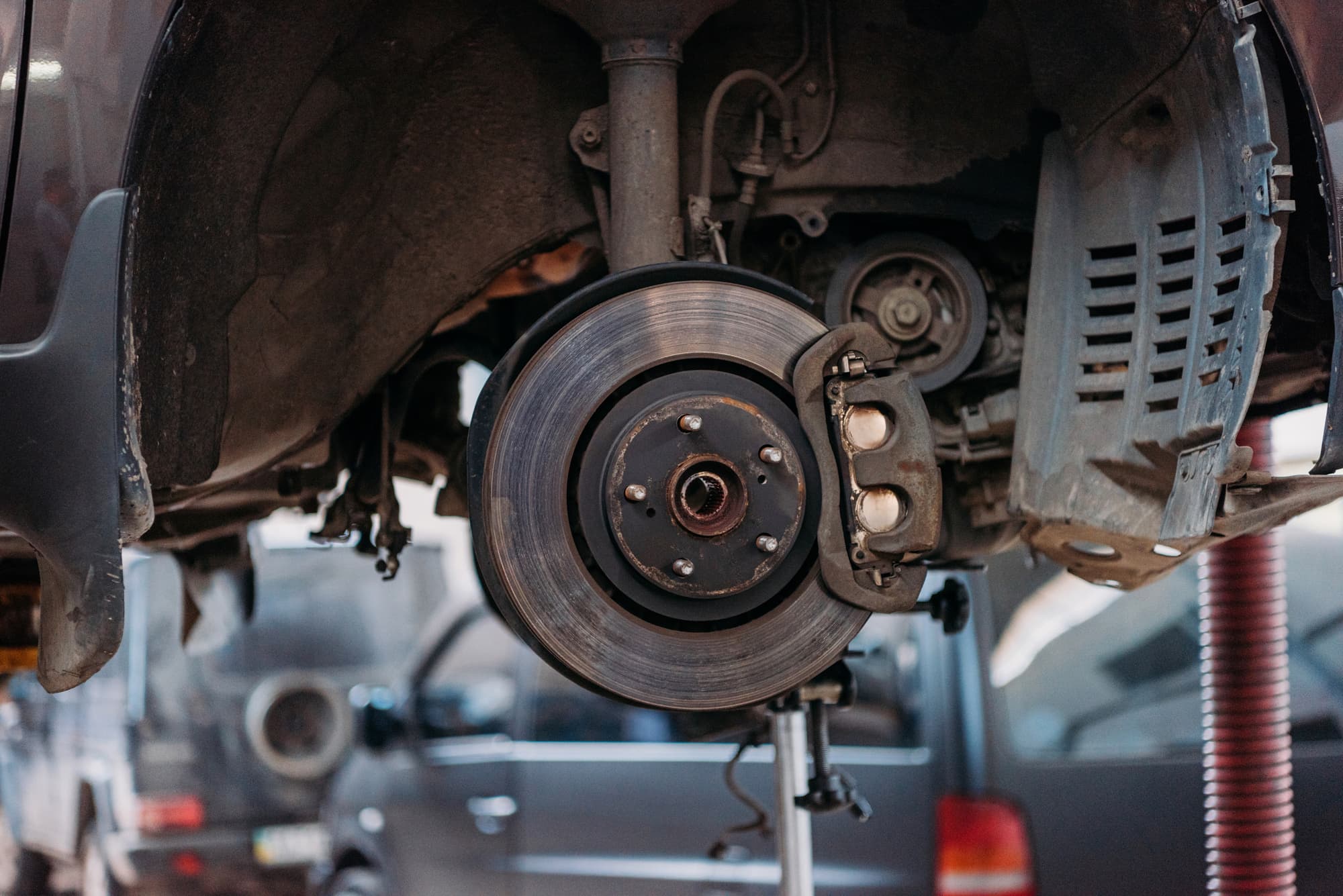
BMW Brake Repair & Brake Fluid Change at DART Auto
BMW brake systems rely on integrated ABS, DSC, and brake-by-wire technology that generic shops often misunderstand. When a 2012-2018 F30 3-series throws a brake pad sensor fault or a G20 displays "Brake fluid low" despite a full reservoir, the root cause isn't always obvious without factory diagnostic access. DART Auto has specialized in BMW brake repair and fluid service since 2000, using the same ISTA diagnostic platform and repair procedures dealerships follow – without the dealer markup.
BMW specifies DOT 4 low-viscosity brake fluid and requires complete system bleeding through the ABS module using bi-directional scan commands. Skipping this step leaves old fluid trapped in the hydraulic unit, defeating the entire service. Our master technicians – each with over 10 years of experience and dealer training – follow OEM torque specifications for caliper brackets, use proper copper washers on banjo bolts, and reset brake pad wear counters through ISTA to prevent nuisance warnings. We've seen E90 and F30 platforms develop spongy pedal feel from moisture-saturated fluid that corrodes ABS valves internally, and we've replaced countless rear calipers on 2006-2013 E90 models where the electronic parking brake motors seize from neglected fluid changes.
When you bring your BMW to DART Auto for brake service, expect:
- Complete visual inspection of rotors, pads, calipers, flex lines, and brake fluid condition
- Factory-spec fluid exchange using pressure or scan-tool-commanded ABS bleeding
- Proper torque procedures and new hardware (caliper pins, pad clips, banjo washers) as needed
- Electronic parking brake reset and pad wear counter programming through ISTA diagnostics
Common Brake Repair & Brake Fluid Change Issues on BMW Vehicles
BMW brake systems are sophisticated, integrating electronic parking brakes, advanced ABS modules, and moisture-sensitive DOT 4 fluid that degrades faster than most owners realize. Generic shops often miss the brand-specific failure modes that leave you with a spongy pedal, premature rotor wear, or a dashboard full of warning lights. Here's what we see regularly on BMW platforms:
- Electronic parking brake actuator failure on E60, E90, F30, and G20 platforms (2004–present): The rear caliper-mounted motors seize or strip gears, triggering a "parking brake malfunction" message. Unlike cable-actuated systems, these require coding after replacement and cannot be serviced with generic scan tools.
- Premature rear pad wear on F-series (F30, F10, F25) with xDrive (2011–2019): The rear-biased torque distribution accelerates pad consumption. Owners often discover 2mm rear pads at the same mileage fronts still have 6mm, leading to metal-on-metal rotor damage if inspections are skipped.
- Brake fluid moisture contamination exceeding 3% after 24–30 months: BMW specifies DOT 4 low-viscosity fluid and mandates replacement every two years. Absorbed moisture drops the boiling point from 230°C to below 165°C, causing vapor lock under hard braking and corroding ABS pump internals on older E-series models.
- Floating rotor hardware corrosion on E46, E39, and E38 (1996–2006): The drive pins and anti-rattle springs rust in Denver's freeze-thaw cycles, causing vibration and uneven pad contact. Replacement requires OEM hardware kits; aftermarket substitutes often fail within 12 months.
- ABS module valve-block failures on E90/E92 (2006–2013): Contaminated fluid clogs the solenoid valves, triggering ABS and traction-control faults. Repair requires module removal, bench testing, and coding – work many shops refer out or misdiagnose as wheel-speed sensor issues.
- Brake-wear sensor circuit faults on all platforms: BMW uses low-resistance loop sensors embedded in the pad backing. Corrosion or improper installation creates phantom warnings or fails to alert when pads are actually worn through, leaving owners unaware until rotor damage occurs.
Why Choose DART Auto for BMW Brake Repair & Brake Fluid Change
BMW brake systems demand more than generic pad slaps. From the integral ABS/DSC modules on E90/E92 platforms to the floating caliper torque specs on F30 models, factory procedures matter. DART Auto's master technicians – each with dealer training and a minimum of 10 years on European platforms – use the same diagnostic protocols and repair information you'd find at the dealership, minus the markup.
We own the work end-to-end. Before recommending pads or rotors, we pull fault codes with BMW-specific scan tools, measure rotor thickness against OEM minimums, and inspect brake fluid for moisture content using a refractometer – not guesswork. On models prone to premature wear (2012–2015 F30 xDrive with run-flat tires, for example), we document baseline measurements so you understand exactly what's worn and why.
- Platform-specific TSB awareness: We track service bulletins for brake vibration on G20 models and parking-brake module failures on early F-series cars.
- OEM fluid specifications: DOT 4 Low Viscosity fluid where required; we don't substitute cheaper alternatives that degrade ABS response.
- Salaried technician model: No flat-rate incentive to oversell rotors or skip bleed procedures – just honest diagnostics and complete repairs.
- Post-repair verification: Every brake job includes a road test and a final scan to confirm ABS self-tests pass and no new faults are stored.
Symptoms – How to Know You Need This Service
BMW brake systems give clear warnings when service is overdue. You may notice:
- Spongy or soft brake pedal that sinks toward the floor – indicates moisture contamination in the fluid or air in the ABS module; schedule service promptly
- Grinding, squealing, or metal-on-metal noise during braking – worn pads contacting rotors; stop driving and arrange immediate service to prevent rotor and caliper damage
- Pulsating brake pedal or steering wheel vibration when stopping – warped rotors from overheating or uneven pad contact; safe to drive short distances but address soon
- Dashboard warning lights including brake pad wear indicator, ABS light, or DSC malfunction – sensor faults or low fluid level; safe to drive cautiously but diagnose immediately
- Pulling to one side during braking – seized caliper slide pins or uneven pad wear; can worsen quickly and affect stopping distance
- Dark brown or black brake fluid visible in the reservoir – moisture saturation and internal corrosion; flush system before ABS components fail
- Burning smell after spirited driving – overheating pads or dragging caliper; inspect immediately to prevent brake fade
- Increased stopping distance or reduced pedal firmness – glazed pads, boiled fluid, or hydraulic leak; stop driving and call for service
Which BMW Models We See for Brake Repair & Brake Fluid Change
DART Auto services brake systems across BMW's passenger car and SAV lineup, with particular depth in platforms from 2000 forward. Common models include:
- 3-series – E46 (1999-2006), E90/E91/E92/E93 (2006-2013), F30/F31/F34 (2012-2019), G20/G21 (2019-present)
- 5-series – E39 (1997-2003), E60/E61 (2004-2010), F10/F11 (2011-2017), G30/G31 (2017-present)
- X3 and X5 SAVs – E83 X3 (2004-2010), F25 X3 (2011-2017), G01 X3 (2018-present); E53 X5 (2000-2006), E70 X5 (2007-2013), F15 X5 (2014-2018), G05 X5 (2019-present)
- M models – E46 M3, E90/E92 M3 with compound brakes, F80 M3, F10 M5, and F82/F83 M4 requiring M-specific pad compounds and carbon-ceramic rotor procedures where equipped
- 1-series, 2-series, 4-series, 6-series, 7-series, X1, X4, X6 – all generations with hydraulic or electromechanical parking brake systems
- i3 and i8 – brake-by-wire systems with regenerative braking integration; requires specialized diagnostic access for proper bleeding
Brake service procedures differ between hydraulic parking brake models (most pre-2009) and electronic parking brake platforms (2006-forward on many models). Our technicians adapt the process to your specific chassis and braking system architecture.
Causes & Risks – What Happens if Ignored
Brake system degradation on BMW vehicles accelerates due to three primary factors: moisture absorption in hygroscopic DOT 4 fluid, Denver's altitude reducing boiling points by 8–10°C, and the aggressive pad compounds BMW specifies for performance. Electronic parking brake actuators corrode internally when fluid isn't changed on the factory two-year interval, and floating rotor hardware seizes when road salt works into the drive-pin bores during winter months.
Delaying brake service creates a predictable cascade of failures:
- Spongy pedal progressing to ABS pump damage: Moisture-saturated fluid boils under normal braking within 6–12 months of the first spongy-pedal complaint. Vapor pockets prevent full hydraulic pressure, and the ABS pump runs continuously trying to compensate, burning out the motor and requiring a $1,200–$2,800 module replacement instead of a $180 fluid service.
- Worn pads scoring rotors: Once pad material drops below 2mm, the backing plate contacts the rotor face within 500–800 miles of city driving. What begins as a $320 pad replacement becomes an $850 pad-and-rotor job, plus potential caliper piston damage if metal shavings contaminate the bore seals.
- Electronic parking brake actuator seizure: Corroded fluid crystallizes inside the caliper motor housing. The actuator stalls, triggering limp-mode and preventing the transmission from shifting out of Park. Towing and emergency caliper replacement costs $600–$950 per side versus $140 for preventive actuator service during a fluid change.
- Brake-by-wire system faults on newer G-series models: Contaminated fluid degrades the electrohydraulic booster seals, causing low-pressure warnings and reduced regenerative braking efficiency on hybrid/electric variants. Booster replacement requires transmission removal on some configurations.
The safety window closes fast – a spongy pedal means you've already lost 20–30% braking force, and rotor scoring begins the moment you hear grinding.
Safety Impact – Why Brake Repair & Brake Fluid Change Matters
Compromised brake hydraulics directly affect every active safety system on your BMW. The ABS module, dynamic stability control, and brake-assist algorithms all depend on consistent hydraulic pressure and predictable pad-rotor friction. When fluid boils or pads wear unevenly, the wheel-speed sensors detect erratic deceleration rates, causing the DSC system to intervene unpredictably or shut down entirely. On xDrive models, asymmetric braking force confuses the torque-vectoring logic, creating understeer in corners where you expect neutral handling.
Here's when symptoms cross from "schedule soon" to "stop driving now":
- Stop driving immediately: Grinding noise during braking (metal-on-metal contact), brake pedal sinking to the floor, ABS and traction-control lights illuminated simultaneously, burning smell from wheels after normal driving, steering pull exceeding one full lane width during moderate braking.
- Schedule within 48 hours: Spongy or soft pedal feel, pulsation through the pedal at highway speeds, single brake-wear warning on the instrument cluster, squealing that persists beyond the first few stops of the day.
- Schedule within two weeks: Parking brake malfunction message without drivability symptoms, minor vibration felt only through the steering wheel during braking, brake-dust accumulation noticeably heavier on one wheel.
Insurance liability becomes relevant if an accident occurs after documented warning lights were ignored – claim adjusters routinely pull diagnostic history from the DME during investigations.
How BMW Brake Repair & Brake Fluid Change Actually Works
BMW brake systems integrate hydraulic force with electronic actuation and software-controlled intervention. Pressing the pedal drives a tandem master cylinder that splits pressure between front and rear circuits – a federal safety requirement – but BMW adds a vacuum booster (or electrohydraulic unit on hybrids) to amplify pedal force. The ABS module sits inline, using solenoid valves to modulate pressure at each wheel independently during threshold braking. Electronic parking brakes replace the mechanical cable with caliper-mounted motors that receive commands from the parking-brake switch via the body control module.
What sets BMW apart and complicates service:
- Electronic parking brake service mode: The rear calipers cannot be compressed without entering service mode through factory-level diagnostics. Generic scan tools lack the bi-directional control needed, forcing techs to manually override with specialty tools that risk damaging the actuator gears.
- Brake fluid specification and bleeding sequence: BMW requires DOT 4 low-viscosity fluid (not DOT 3 or silicone-based) and a specific bleeding order that varies by model – some require ABS pump activation during the bleed, others demand pressure-bleeding at 20 PSI with the ignition cycled. Incorrect procedure traps air in the ABS valve block.
- Sensor coding and adaptation: New brake pads require resetting the wear counter in the instrument cluster using ISTA diagnostic software. Skipping this step leaves the old mileage data active, triggering premature warnings or failing to alert when pads actually wear out.
- Floating rotor torque specifications: The rotor-to-hub bolts on many models require 7 Nm applied in a star pattern – over-torquing warps the hat, under-torquing allows the rotor to shift and create runout. Factory procedures specify torque-to-yield bolts that must be replaced, not reused.
This integration means brake service on a BMW isn't just swapping parts – it's recalibrating a networked system where every component communicates status to the central computer.
How We Diagnose Brake Repair & Brake Fluid Change Issues on BMW
BMW braking systems integrate electronic wear sensors, ABS modules, and brake-by-wire technology that generic shops often misread. A proper diagnosis requires both factory-level scan tools and hands-on inspection to separate sensor faults from genuine mechanical wear.
- Full system scan with BMW ISTA diagnostics. We read fault codes from the DSC (Dynamic Stability Control) module, parking brake controller, and brake fluid level sensor. This reveals electronic parking brake faults common on F-chassis models (2012–2019 3/4/5 Series) and actuator wear on G-chassis EPB systems.
- Brake fluid condition test. We measure moisture content with a digital tester. BMW DOT 4 Low Viscosity fluid absorbs water over time, lowering boiling point and corroding ABS internals – especially problematic on M models with high-performance braking demands.
- Pad and rotor measurement. Minimum thickness specs vary by platform: E90 fronts wear faster due to weight distribution, while F30 xDrive models show accelerated rear pad wear from torque vectoring. We check for uneven wear patterns that indicate sticking calipers or failing guide pins.
- Road test with data logging. We monitor brake pedal travel, ABS activation thresholds, and any pulsation under moderate and hard stops. This catches issues the static inspection misses – warped rotors, air in the hydraulic system, or failing brake boosters on N55/B58 turbocharged models.
- Visual inspection of hydraulics. We check brake lines for corrosion (common where road salt accumulates on subframes), caliper seals for leaks, and flex hoses for age-related cracking on pre-2010 models.
Once the scan data and physical measurements align, we build a repair plan that addresses root causes – not just the symptoms your dashboard is showing. You'll receive a detailed quote explaining what needs attention now versus what can wait for the next service interval.
Brake Repair & Brake Fluid Change on BMW: Repair vs. Replacement
The decision between repair and replacement hinges on component condition, safety margins, and whether a small fix actually solves the underlying problem or just delays the inevitable.
When Genuine Repair Makes Sense
- Brake fluid flush alone. If pads and rotors are within spec and the only issue is moisture-contaminated fluid, a complete flush with BMW-spec DOT 4 LV restores full braking performance. This is routine maintenance every two years, not a repair per se.
- Caliper service on early wear. Sticking slide pins or minor piston corrosion can be cleaned and re-lubricated with high-temp synthetic grease. Works well on E-chassis cars (E90, E60, E70) when caught early, before the piston seals tear.
- Electronic parking brake reset. F-chassis and newer models sometimes throw EPB faults after battery replacement or pad swaps. A service-mode reset with ISTA clears the fault and recalibrates the actuator without replacing hardware.
When Partial Replacement Is the Right Call
- Pads and rotors together. BMW rotors are relatively thin from the factory for weight savings. Once worn past minimum thickness (common at 30,000–40,000 miles on 340i/440i models), you replace both to maintain proper heat dissipation and ABS sensor accuracy.
- Single caliper replacement. If one caliper is seizing but the others function normally, we replace the failed unit and flush the system. Common on rear calipers of xDrive models where parking brake cables corrode.
When Full System Replacement Is Necessary
- Cascading corrosion. Neglected brake fluid leads to ABS module corrosion, rusted hard lines, and pitted caliper bores. At that point, piecemeal repairs don't restore safe, predictable braking – you need calipers, lines, and a module rebuild or replacement.
- High-mileage wear on M cars. M3/M4 carbon-ceramic brakes (when optioned) last the life of the car under normal use, but steel rotors on standard M models need replacement every 40,000–50,000 miles due to track-day heat cycling and aggressive pad compounds.
We walk you through the options with photos and measurements, so you understand why we're recommending what we are. Our salaried technicians have zero incentive to upsell – the goal is fixing it right, not maximizing the ticket.
How to Make Your BMW Brake Repair & Brake Fluid Change Last Longer
BMW braking systems are engineered for performance, but they reward drivers who understand how European components behave under real-world conditions.
Driving Habits That Extend Brake Life
- Engine braking on descents. Use manual mode or sport mode to downshift before long downhill runs. This keeps brake temperatures manageable and reduces pad glazing – especially important on turbocharged models where engine braking is less effective than naturally aspirated inline-sixes.
- Smooth, progressive stops. Hard, late braking generates heat that warps rotors and boils fluid. Anticipate stops and apply steady pressure. This matters more on xDrive models, which are 200–300 pounds heavier than RWD equivalents.
- Avoid standing water and deep puddles. Submerging hot rotors in cold water causes thermal shock and surface cracking. If you must drive through water, apply light brake pressure immediately after to dry the rotors and restore friction.
Maintenance You Can Monitor Yourself
- Check fluid level monthly. The reservoir is visible under the hood on most models. A dropping level without visible leaks often means your pads are wearing (the caliper pistons extend, drawing more fluid from the reservoir).
- Listen for changes. Squealing on cold starts is normal – the pad wear sensors are designed to chirp. Grinding, pulsing, or a spongy pedal are not normal and require immediate attention.
- Watch for dashboard warnings. BMW brake sensors are aggressive – they'll warn you before you're metal-on-metal. Don't ignore the yellow brake light; it's giving you a 1,000–2,000 mile buffer, not a suggestion.
BMW-Specific Care That Matters
- Use BMW-spec DOT 4 LV fluid. Generic DOT 4 has higher viscosity and doesn't meet the low-temperature flow requirements for ABS pumps on 2006-and-newer models. Wrong fluid causes sluggish ABS response and premature module wear.
- Replace fluid every two years. BMW's official interval is every two years regardless of mileage. Moisture absorption is time-based, not distance-based. Skipping this invites internal corrosion you can't see until the ABS module fails.
- Software updates during service. BMW periodically releases updates for DSC and EPB modules that refine braking algorithms. We flash these during brake service to ensure your hardware and software are in sync.
Brake fluid changes and visual inspections are safe to track yourself, but bleeding ABS systems, replacing pads on EPB-equipped cars, and diagnosing electronic faults require factory tooling. We'll show you what to watch for and handle the rest with the precision your BMW was engineered to expect.
What to Expect When You Bring Your BMW In
From the moment you schedule, we treat your BMW like the precision machine it is. Here's how the process unfolds:
- Drop-off and intake: Bring your car at your scheduled time. We'll ask about symptoms – pulsation, noise, warning lights – and note any personal items to secure. Loaner vehicles and local shuttle service are available; just ask when you book.
- Complete inspection: We lift the car, pull wheels, and measure rotor thickness, pad material, and fluid condition. Using factory scan tools, we check for stored ABS/DSC faults and review brake-wear sensor status. You'll receive a written estimate detailing what's worn, what's within spec, and what can wait.
- Transparent communication: If we find additional concerns – a seized caliper slide pin on an E60, a leaking brake-booster vacuum line on an N55 – we call before proceeding. You decide what gets fixed now and what to defer.
- Repair execution: We follow BMW torque specifications for caliper brackets, use OEM or premium aftermarket pads that match factory friction curves, and perform a complete fluid flush with the correct DOT 4 LV spec. Bleed sequences follow the factory order to purge every circuit.
- Post-repair checkout: Every job ends with a road test to verify pedal feel and stopping power, plus a final scan to confirm the ABS module sees no faults. At pickup, we walk you through what we replaced, show you the old parts if requested, and explain what to expect during the pad break-in period.
If anything feels off after you drive away – a vibration, a pull, a soft pedal – call us. We'll get you back in promptly to verify the work and make it right. That's the DART Auto difference: accountability that lasts well beyond the invoice.
Our BMW Services
- Air Conditioning AC Repair
- Battery Repair Replacement
- Check Engine Light Diagnostics
- Clutch Repair & Replacement
- Coolant Leak Repair
- Cooling System Repair
- Drive Shaft Repair
- Engine Repair
- Exhaust & Catalytic Converter Repair
- Head Gasket Repair & Replacement
- Oil Change
- Oil Leak Repair
- Scheduled Service Maintenance
- Steering Repair
- Suspension Repair
- Cambelt Timing Belt Replacement
- Transmission Repair
- Tune Up
- Wheel Alignment