
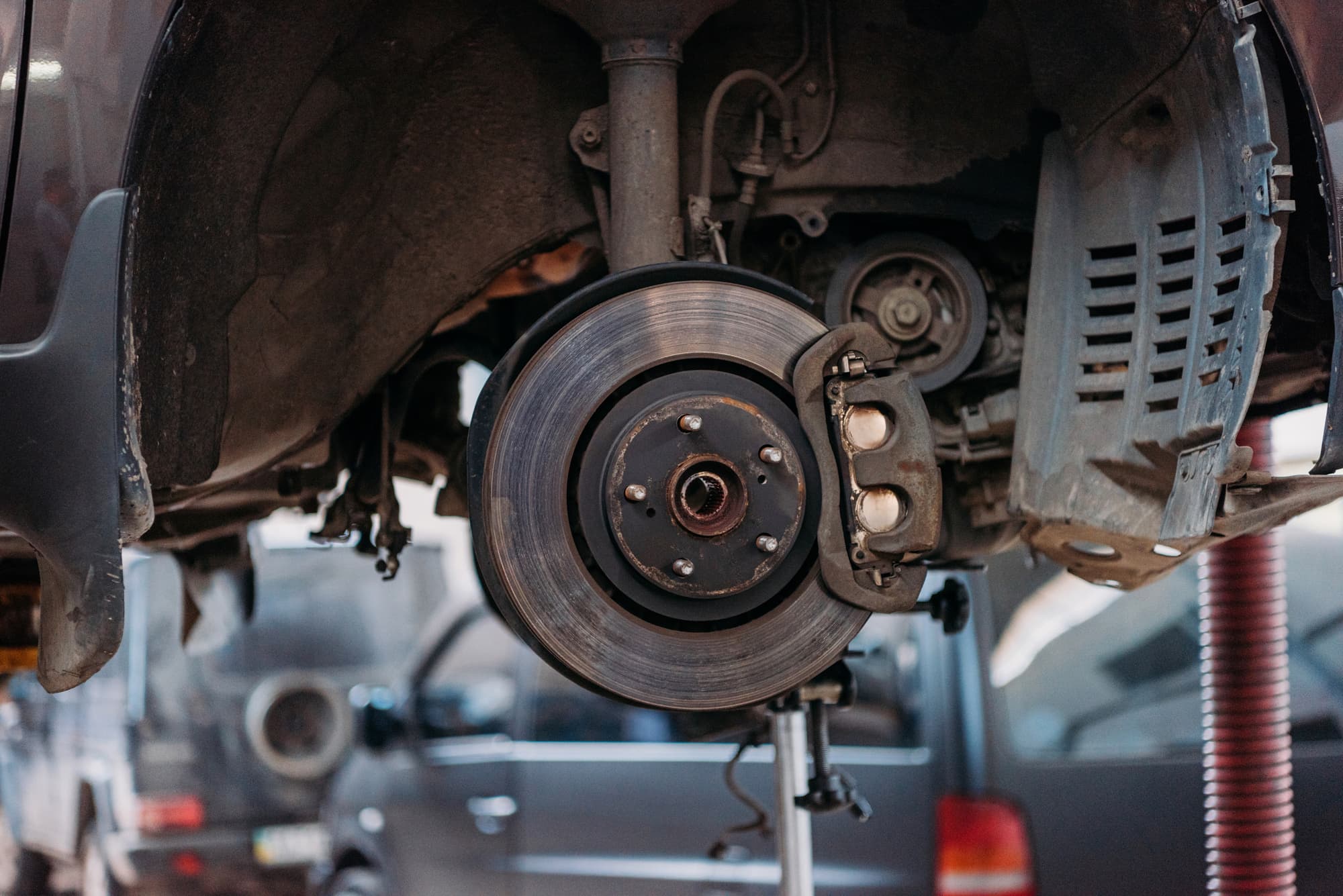
Bentley Brake Repair & Brake Fluid Change at DART Auto
Bentley braking systems represent some of the most advanced engineering in the automotive world, combining carbon-ceramic rotors on performance models, complex electronic stability control integration, and hydraulic actuation that demands precise bleeding procedures. The Continental GT, Flying Spur, and Bentayga platforms share Volkswagen Group architecture with Porsche and Audi, but their curb weights – often exceeding 5,400 pounds – place extraordinary thermal and mechanical loads on brake components. A generic shop may treat your Bentley like any other vehicle, but the factory-specified DOT 4 low-viscosity brake fluid, the need for proper VCDS or VAS diagnostic scanning to reset brake pad wear sensors, and the torque specifications for caliper mounting bolts all require familiarity with VAG Group service procedures.
At DART Auto, we've been servicing European vehicles since 2000, and our master technicians bring dealer-level training and diagnostic capability to every Bentley brake job. We use OEM or premium aftermarket pads and rotors sourced from trusted suppliers, follow factory bleeding sequences to avoid introducing air into the ABS modulator, and reset electronic brake wear monitoring through proper scan tool procedures. Our salaried compensation structure means no technician is incentivized to rush your brake work or recommend unnecessary rotor replacement when resurfacing is still within spec.
When you bring your Bentley to DART Auto for brake service, expect:
- Complete brake system inspection including caliper slide pins, pad thickness, rotor runout measurement, and fluid condition analysis
- Proper bleeding procedure using factory-specified fluid and scan tool actuation of the ABS pump where required
- Electronic reset of brake pad wear sensors and clearing of fault codes stored in the gateway and ABS modules
- Transparent pricing and clear communication about what needs attention now versus what can wait
Common Brake Repair & Brake Fluid Change Issues on Bentley Vehicles
Bentley braking systems are engineered to deliver exceptional stopping power under extreme conditions, but their complexity introduces platform-specific failure modes that demand specialized attention. The Continental GT, Flying Spur, and Bentayga platforms share advanced electronic brake distribution, carbon-ceramic rotor options, and sophisticated brake-by-wire systems that require factory-level diagnostic capability to service correctly.
- Premature rotor warping on 2004–2011 Continental GT (3W platform): The early Continental GT's massive cast-iron rotors are prone to heat-induced distortion when subjected to mountain driving or repeated high-speed stops. Warped rotors create pedal pulsation that owners often mistake for ABS activation. The factory service procedure requires precise lateral runout measurement and rotor replacement in axle pairs to maintain brake balance.
- Carbon-ceramic rotor delamination on 2012+ models: Bentleys equipped with optional carbon-ceramic matrix (CCM) rotors experience edge delamination after 40,000–60,000 miles, particularly in humid climates. The composite material separates in layers, creating audible cracking sounds during braking. Replacement requires recalibration of the brake wear sensors and electronic parking brake module using factory diagnostic software.
- Electronic parking brake (EPB) actuator seizure on Flying Spur and Bentayga: The EPB calipers on 2014+ models use electric motors that corrode internally when brake fluid absorbs moisture. Seized actuators prevent pad replacement and trigger dashboard warnings. Service requires ODIS-equivalent scan tools to retract the pistons electronically before mechanical work can begin.
- Hygroscopic brake fluid degradation: Bentley specifies DOT 4 low-viscosity (LV) fluid with a minimum dry boiling point of 260°C. Colorado's temperature swings accelerate moisture absorption, dropping the boiling point below safe thresholds within 18–24 months. Contaminated fluid causes spongy pedal feel and internal corrosion of ABS pump components, particularly on vehicles driven infrequently.
- Brake dust sensor false alarms on Continental GT Speed: The wear sensors on high-performance variants are positioned closer to the rotor surface and frequently trigger premature warnings due to pad glazing rather than actual wear. Diagnosis requires visual pad inspection and measurement against OEM minimum thickness specifications, not just reliance on the dashboard indicator.
- ABS hydraulic unit valve-body corrosion: The Bosch ABS/ESP units used across the Bentley range develop internal corrosion when brake fluid exceeds 3% water content. This manifests as soft pedal feel, extended stopping distances, and illuminated ABS warnings. Replacement requires complete system bleeding using pressure-bleed equipment and scan-tool-activated pump cycling.
Why Choose DART Auto for Bentley Brake Repair & Brake Fluid Change
Bentley braking systems demand more than generic service. The Continental GT, Flying Spur, and Bentayga platforms employ carbon-ceramic rotors (on performance variants), multi-piston Brembo or Akebono calipers, and low-viscosity DOT 4 or DOT 5.1 fluid with strict moisture-contamination thresholds. Early Continental GT models (2004–2011) are known for electronic parking brake module failures and fluid degradation that triggers ABS/ESP faults, while the Bentayga's advanced brake-by-wire system requires ODIS-compatible scan tools to bleed correctly and reset adaptation values. DART Auto owns the factory-level diagnostic equipment and OEM repair procedures that distinguish proper Bentley brake work from guesswork.
Our master technicians bring dealer training and over a decade of hands-on experience with European platforms. We use salaried compensation, which eliminates the flat-rate pressure to skip steps or recommend parts you don't need. Every brake job includes a complete system scan, rotor thickness measurement against Bentley specifications, caliper piston inspection, and post-repair pressure-bleed verification with the correct scan-tool commands. You'll receive a written estimate before we touch a wrench, transparent pricing without dealer markup, and a 3-year/36,000-mile warranty on parts and labor. Since 2000, we've built our reputation on fixing cars right the first time – no callbacks, no surprises.
Symptoms – How to Know You Need This Service
Your Bentley will communicate brake system degradation through a combination of physical sensations and electronic warnings. Pay attention to these signs:
- Pulsation through the brake pedal or steering wheel during braking – indicates warped rotors or uneven pad deposits, common on heavy vehicles with aggressive driving
- Squealing or grinding noises – high-pitched squeals often mean worn pads triggering the wear indicator; grinding means metal-to-metal contact and rotor damage
- Soft or spongy brake pedal feel – suggests air in the hydraulic system, contaminated brake fluid, or internal master cylinder wear
- Brake warning light or "BRAKE WORKSHOP" message on the instrument cluster – can indicate low fluid, pad wear sensor activation, or ABS system faults
- Pulling to one side during braking – points to uneven pad wear, seized caliper slide pins, or a sticking caliper piston
- Burning smell after spirited driving or descending grades – overheated pads or fluid, especially concerning on carbon-ceramic systems
- Increased stopping distances or reduced pedal firmness – hygroscopic brake fluid that has absorbed moisture lowers the boiling point and compromises hydraulic pressure
- Visible fluid leaks near wheels or under the brake fluid reservoir – requires immediate attention; do not drive if pedal travel increases noticeably
If you experience a sudden loss of pedal firmness, hear grinding metal, or see the red brake warning light illuminate, stop driving and arrange for towing. For gradual symptoms like squealing or pulsation, schedule service promptly to prevent more expensive rotor or caliper replacement.
Which Bentley Models We See for Brake Repair & Brake Fluid Change
DART Auto services brake systems across the modern Bentley lineup, drawing on our deep experience with Volkswagen Group platforms and high-performance European vehicles. We commonly work on:
- Continental GT and GTC (2003–present) – first-generation models on the MSB platform share components with Volkswagen Phaeton; second-generation (2011–2018) and third-generation (2018–present) use updated MSB architecture with optional carbon-ceramic brakes
- Flying Spur (2005–present) – sedan variant of the Continental GT platform, with similar brake configurations including standard steel rotors and optional carbon-ceramic on S and W12 models
- Bentayga (2016–present) – Bentley's SUV on the MLB Evo platform shares architecture with Porsche Cayenne and Audi Q7/Q8, featuring standard steel or optional tungsten-carbide-coated rotors and carbon-ceramic systems on Speed variants
- Mulsanne (2010–2020) – flagship sedan on a unique platform with traditional hydraulic braking; less common but we handle these when needed
- Azure, Arnage, and Brooklands (pre-2010 models) – older platforms with different brake architectures; we evaluate these on a case-by-case basis
Carbon-ceramic brake systems require specialized service procedures and pad compounds – we're equipped to handle both standard and carbon-ceramic configurations. If you own a pre-2003 model or a rare variant, call us to confirm fitment and parts availability before scheduling.
Causes & Risks – What Happens if Ignored
Brake system degradation on Bentley vehicles stems from three primary sources: moisture contamination of hygroscopic fluid, thermal stress from high-performance use, and electronic component corrosion unique to modern brake-by-wire architectures. Denver's altitude and temperature variation exacerbate moisture absorption – brake fluid can gain 2–3% water content annually when exposed to our climate's humidity swings and freeze-thaw cycles.
Delaying brake service creates a predictable escalation path. What begins as minor pedal-feel changes progresses to component failure that multiplies repair costs and introduces genuine safety hazards:
- Moisture-contaminated fluid (6–12 months of delay): Boiling point drops below safe operating temperature, causing vapor lock during mountain descents or emergency stops. Simultaneously, water begins corroding the ABS pump's aluminum valve body and internal solenoids, turning a simple fluid exchange into a hydraulic unit replacement costing several thousand dollars.
- Worn pads ignored past minimum thickness (2–4 weeks): Friction material wears through to the backing plate, allowing steel-on-iron contact that scores rotor surfaces beyond machining limits. On Bentleys with CCM rotors, this damage is irreversible – the carbon-ceramic matrix cannot be resurfaced. A $400 pad replacement becomes a $12,000+ rotor and pad job.
- Warped rotors left unaddressed (1–3 months): Pedal pulsation causes uneven pad wear and accelerates wheel bearing stress due to oscillating lateral loads. The ABS system begins misinterpreting the pulsation as wheel-speed variation, potentially causing inappropriate stability-control intervention during normal braking.
- EPB actuator warnings dismissed (immediate to 2 weeks): A failing electronic parking brake motor can seize completely, locking the caliper piston in the applied position. This drags the brake constantly, overheating the rotor and destroying the pad within days. Drivers often discover the failure only when smoke appears or the vehicle refuses to move.
- ABS/ESP warning lights ignored (varies widely): Loss of anti-lock or stability control eliminates critical safety systems. On wet or icy roads, a panic stop without ABS can trigger wheel lockup and loss of steering control. Insurance liability questions arise if an incident occurs with known, unaddressed dashboard warnings.
Safety Impact – Why Brake Repair & Brake Fluid Change Matters
Bentley braking systems integrate with multiple vehicle safety networks – ABS, electronic stability program (ESP), traction control, adaptive cruise control, and pre-collision braking. When brake hydraulic performance degrades or electronic components fail, these interconnected systems lose their foundation. A spongy brake pedal caused by moisture-saturated fluid doesn't just increase stopping distance; it prevents the ABS pump from generating the rapid pressure pulses needed for threshold braking on slippery surfaces.
Symptoms requiring immediate attention (stop driving, arrange towing):
- Brake pedal sinks to the floor with steady pressure applied
- Grinding, scraping, or metal-on-metal sounds during braking
- Vehicle pulls sharply to one side under braking (indicates caliper seizure or hydraulic failure)
- Brake warning light illuminated solid red (master cylinder or hydraulic pressure fault)
- Burning smell or visible smoke from wheels after driving
Symptoms requiring service within one week:
- Pedal pulsation or vibration during normal stops (warped rotors)
- Spongy or soft pedal feel requiring increased pressure (air in lines or fluid contamination)
- ABS or ESP warning lights illuminated (system disabled, no anti-lock protection)
- Electronic parking brake error messages or failure to release/engage
- Squealing or chirping noises indicating wear-sensor contact
Colorado's mountain roads demand full braking capability. Descending grades like I-70 through the Eisenhower Tunnel or Independence Pass place sustained thermal loads on brake systems. Compromised fluid or worn components that might seem manageable in city driving become dangerous when managing speed on a 7% downgrade for fifteen minutes.
How Bentley Brake Repair & Brake Fluid Change Actually Works
Bentley employs a dual-circuit hydraulic brake system with electronic brake-force distribution, integrating a high-pressure ABS/ESP pump that modulates individual wheel cylinder pressure hundreds of times per second during threshold braking. The Continental GT and Flying Spur use fixed aluminum calipers with opposed pistons (six-piston front, four-piston rear on most variants), while the Bentayga features floating calipers with electronic actuation for the parking brake function. All modern Bentleys require scan-tool communication to service the EPB – the system must be electronically commanded into service mode before caliper pistons can be retracted for pad replacement.
Key Bentley brake system design elements affecting service:
- Low-viscosity DOT 4 fluid specification: Bentley mandates a specific fluid formulation with tighter viscosity tolerances than generic DOT 4. Using incorrect fluid affects ABS valve response time and can damage pump seals. Complete fluid exchange requires pressure-bleeding equipment and scan-tool activation of the ABS pump to purge fluid from the valve body.
- Electronic parking brake calibration: After any rear brake service, the EPB actuators must be calibrated using factory procedures. The scan tool commands each motor through its full travel range, teaching the control module the minimum and maximum positions. Skipping this step causes premature wear warnings and actuator failure.
- Brake pad wear-sensor integration: the wear sensors report to the instrument cluster instead of triggering a standalone lamp, and the counter has to be reset with the scan tool once new pads are in. Leaving the old count in memory means the car warns early on the next set or stays quiet when the pads are down.
How We Diagnose Brake Repair & Brake Fluid Change Issues on Bentley
Bentley brake systems – especially on Continental GT, Flying Spur, and Bentayga models – feature carbon-ceramic options, advanced ABS/ESP integration, and brake-by-wire architecture that demand factory-grade diagnostic capability. Our approach starts with understanding the platform's specific behavior before making any recommendations.
- Pre-scan and fault code retrieval: We connect factory-level diagnostic equipment to interrogate the ABS control module, brake wear sensors, and Electronic Stability Control system. Bentleys from 2011 onward log brake pad wear rates and fluid condition flags that many generic scanners cannot access.
- Brake fluid analysis: We test moisture content with a refractometer. Bentley specifies DOT 4 low-viscosity fluid; moisture above 3% triggers a mandatory flush because water contamination drops the boiling point and accelerates corrosion in aluminum calipers and the hydraulic control unit.
- Physical inspection: Each corner gets measured: pad thickness (Bentley OEM pads often have electronic wear indicators), rotor thickness and runout, caliper piston condition, and flex-line integrity. Carbon-ceramic rotors on GT Speed and Bentayga require specific inspection protocols – surface cracking is normal wear, but delamination is not.
- Road test with data logging: We drive the vehicle while monitoring live brake pressure, pedal travel sensor data, and ABS activation thresholds. Soft pedal feel or pulsation often traces back to air in the system or a failing master cylinder – both common on 2004–2011 Continental GT models.
- Documentation and estimate: Every finding is photographed and explained. You receive a detailed quote that separates immediate safety concerns from items you can schedule later, along with the consequences of deferring each repair.
Brake Repair & Brake Fluid Change on Bentley: Repair vs. Replacement
Not every brake issue demands wholesale replacement. The right choice depends on component condition, safety margin, and long-term value.
When Repair Makes Sense
- Brake fluid flush alone: If pads and rotors meet spec but fluid moisture is high or the service interval has elapsed (Bentley recommends every two years), a complete system flush restores pedal feel and prevents internal corrosion.
- Caliper rebuild: Seized slide pins or sticking pistons on early Continental GT calipers can often be disassembled, cleaned, and resealed with OEM kits – saving the cost of new calipers when the casting itself is sound.
- Sensor replacement: Worn pad sensors trigger dashboard warnings long before the pad backing plate contacts the rotor. Replacing the sensor and confirming pad thickness buys you time if pads still have 4mm or more remaining.
When Replacement Is the Right Call
- Rotors below minimum thickness: Bentley specifies discard dimensions for each platform. Machining rotors thinner than spec – especially on carbon-ceramic setups – compromises heat dissipation and structural integrity.
- Pads at 2mm or less: At this point, you're one panic stop away from metal-on-metal contact, which destroys rotors and creates a safety hazard.
- Caliper body corrosion or casting cracks: Common on 2005–2010 models exposed to road salt. Rebuilding a compromised caliper body is false economy; replacement with OEM or premium aftermarket units is the only safe path.
We walk you through the trade-offs and recommend the option that balances safety, longevity, and your budget – never the most expensive choice by default.
How to Make Your Bentley Brake Repair & Brake Fluid Change Last Longer
Bentley brakes are engineered for high-speed autobahn runs and spirited driving, but daily habits and maintenance discipline determine whether you're servicing them every 20,000 miles or every 50,000.
Driving Habits That Preserve Brakes
- Anticipate stops and coast down: Bentleys are heavy – Bentayga models exceed 5,500 pounds. Gentle, progressive braking reduces pad glazing and rotor heat cycling that leads to warping.
- Avoid riding the brake pedal: Resting your foot on the pedal during highway driving keeps pads in contact with rotors, generating heat and accelerating wear.
- Cool down after spirited driving: If you've used the brakes hard, drive gently for the last mile to allow rotors and calipers to dissipate heat gradually. Parking immediately after hard braking can warp rotors as they cool unevenly.
Maintenance You Can Monitor
- Check brake fluid color annually: Fresh DOT 4 is clear to pale amber. Dark brown fluid indicates moisture contamination and oxidation – schedule a flush before corrosion starts.
- Listen for new sounds: Squealing when cold is often harmless (pad compound characteristics), but grinding, pulsing, or a dragging sensation means immediate inspection.
- Respect dashboard warnings: Bentley brake wear sensors are accurate. When the light appears, you have a narrow window before pad damage becomes rotor damage.
What to Leave to the Professionals
Brake bleeding on Bentleys with ABS and ESP requires a scan tool to cycle the hydraulic control unit – trapped air in the modulator causes spongy pedal feel that gravity bleeding cannot fix. Carbon-ceramic rotor inspection and caliper work demand torque specs and procedures that aren't DIY-friendly. We handle the technical work; you handle the driving.
What to Expect When You Bring Your Bentley In
We've designed our process to keep you informed and confident from the moment you schedule your appointment. Here's how your visit unfolds:
- Drop-off and intake. Bring your Bentley at your scheduled time. We'll ask about any symptoms – pulsing pedal, longer stopping distances, dashboard warnings – and note your service history. Leave personal items at home or take them with you; we'll provide a loaner vehicle or shuttle service if your repair extends beyond a few hours.
- Complete inspection and scan. Before we quote brake work, we run a full system scan to pull ABS, ESP, and parking-brake fault codes. We measure rotor thickness, check pad material remaining, inspect caliper slide pins and dust boots, and test fluid moisture content with a refractometer. This step catches underlying issues – seized calipers, corroded brake lines, failing ABS modules – that a pad-and-rotor quote would miss.
- Written estimate and approval. You'll receive a detailed estimate explaining which components need replacement, why, and what happens if you defer the work. We'll call or email photos of worn parts so you see exactly what we see. No work starts without your clear approval.
- Repair and post-service verification. Once approved, we install OEM or premium aftermarket pads, resurface or replace rotors to Bentley torque specs, perform a pressure bleed using the scan tool's automated sequence, and road-test to verify pedal feel and ABS modulation. We'll walk you through the completed work at pickup and provide a printed invoice with warranty details.
If anything feels off after you drive home – soft pedal, noise, or a warning light – call us immediately. We'll get you back in, diagnose the concern at no charge, and make it right. Our job isn't done until your Bentley stops exactly as it should.
Our Bentley Services
- Air Conditioning AC Repair
- Battery Repair Replacement
- Check Engine Light Diagnostics
- Clutch Repair & Replacement
- Coolant Leak Repair
- Cooling System Repair
- Drive Shaft Repair
- Engine Repair
- Exhaust & Catalytic Converter Repair
- Head Gasket Repair & Replacement
- Oil Change
- Oil Leak Repair
- Scheduled Service Maintenance
- Steering Repair
- Suspension Repair
- Cambelt Timing Belt Replacement
- Transmission Repair
- Tune Up
- Wheel Alignment


