
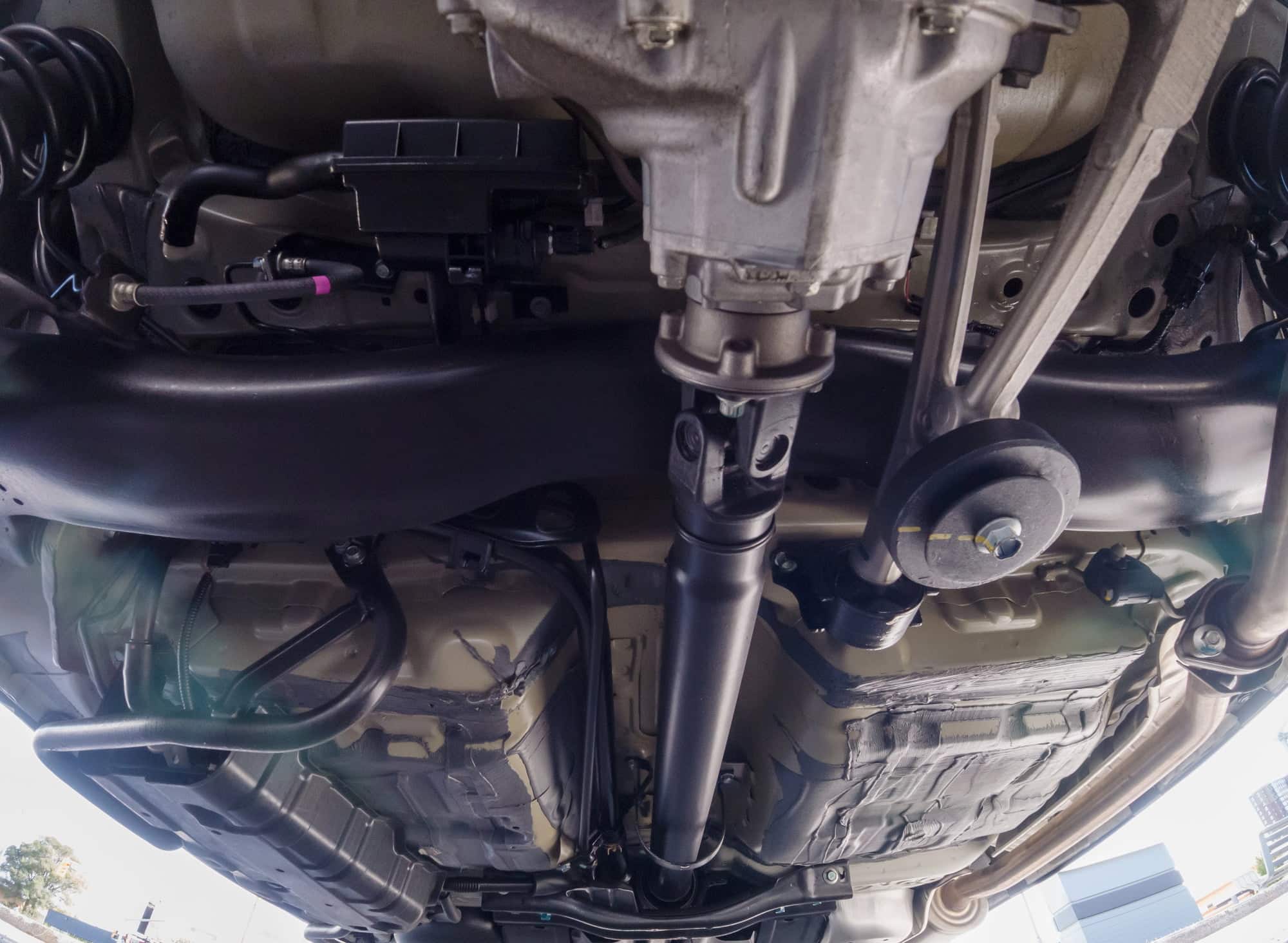
Bentley Drive Shaft Repair at DART Auto
Bentley's all-wheel-drive architecture and rear-biased torque distribution demand precision when servicing the drive shaft assembly. Unlike mass-market platforms, Bentley Continental GT, Flying Spur, and Bentayga models rely on complex torsen differentials, electronically managed clutch packs, and multi-piece carbon-fiber or steel drive shafts that must be indexed and balanced to exacting tolerances. A misaligned center bearing mount or improperly torqued CV joint can trigger fault codes in the drivetrain control module and compromise the sophisticated quattro-derived AWD system that defines the Bentley driving experience.
DART Auto brings factory-level diagnostic capability to drive shaft repair without the dealer markup. We use VAS diagnostic software and Bentley-specific alignment fixtures to ensure proper phasing of multi-piece shafts, verify bearing preload, and clear adaptive learning tables after replacement. Our technicians follow OEM torque sequences for the propeller shaft mounting points – critical on W12 and V8 models where engine torque can exceed 660 lb-ft and any imbalance translates directly into cabin vibration. Because our master techs are salaried rather than flat-rate, they take the time to inspect guibo couplings, center support bearings, and output shaft seals before recommending replacement, avoiding the unnecessary full-assembly swaps common at shops unfamiliar with Bentley's modular design.
When you bring your Bentley to DART Auto for drive shaft service, expect:
- Complete drivetrain inspection using factory diagnostic protocols to identify root causes of vibration or noise
- OEM or premium aftermarket components sourced from Bentley-approved suppliers, with proper part numbers for your chassis generation
- Precision balancing and indexing of multi-piece shafts using alignment fixtures that match dealership equipment
- 3-year/36,000-mile warranty on parts and labor – backing every repair with confidence built over two decades of European specialist work
Common Drive Shaft Repair Issues on Bentley Vehicles
Bentley engineering prioritizes power delivery and refinement, which places exceptional demands on drive shaft components. The brand's preference for all-wheel-drive configurations and high-torque powertrains – particularly on Continental GT and Flying Spur models – creates wear patterns that differ sharply from mainstream luxury vehicles.
- Center bearing failure on W12 Continental GT (2004–2011): The long propeller shaft required for the front-engine AWD layout relies on a rubber-isolated center support bearing. Heat cycling and torque loads cause the rubber to harden and crack, leading to vibration at highway speeds and a characteristic clunking during acceleration. This generation's bearing housing is known for premature wear, especially in vehicles driven aggressively or in hot climates.
- CV joint boot deterioration on Bentayga (2016–present): The SUV platform's increased suspension travel and off-road capability expose CV boots to more flexing and road debris. Split boots allow grease to escape and contaminants to enter, leading to clicking noises during turns and eventual joint failure. The factory-spec Lobro joints require OEM replacement procedures and specific grease formulations.
- Guibo (flex disc) degradation on Flying Spur V8 (2014–2019): The rubber coupling between transmission and drive shaft absorbs torsional shock but degrades with age and heat. Hardened or cracked guibos create a distinct clunk during throttle transitions and can separate catastrophically if ignored, leaving the vehicle immobile.
- Propeller shaft imbalance after component replacement: Bentley specifies dynamic balancing tolerances tighter than most manufacturers. Replacing U-joints or center bearings without proper balancing equipment results in vibration that accelerates wear across the entire drivetrain, including differential mounts and transmission output bearings.
- Spline wear on Mulsanne rear drive shaft (2010–2020): The rear-wheel-drive platform uses a slip yoke to accommodate suspension movement. Insufficient lubrication or misalignment causes spline wear, producing a rhythmic clunk and eventual play that damages the transmission tailshaft seal and housing.
- AWD transfer case output seal leaks affecting drive shaft alignment: Leaking seals allow fluid loss and dirt ingress, but also indicate bearing wear that throws the drive shaft out of alignment. This creates vibration and accelerates U-joint and CV joint wear across multiple shafts simultaneously.
Why Choose DART Auto for Bentley Drive Shaft Repair
Bentley driveline systems demand specialized knowledge that most shops simply don't have. From the W12-powered Continental GT (2004–2019) to the Flying Spur's all-wheel-drive architecture, these platforms integrate driveshaft assemblies with adaptive damping, torque vectoring, and sophisticated drivetrain control modules. Generic repair approaches fail because they ignore factory-calibrated balance tolerances, OEM-specific center bearing mounts, and the software handshake between the driveshaft speed sensors and the vehicle's stability systems.
DART Auto owns the complete diagnostic and repair chain for Bentley driveline work:
- OEM-level scan tools and ODIS software – we read live driveshaft speed data, monitor torque distribution faults, and clear adaptation values after component replacement, matching what the dealer does
- Platform-specific failure recognition – we've seen flex-disc cracking on 2004–2012 Continental GT models, center bearing failures on Flying Spur AWD variants, and CV joint wear patterns unique to Bentayga's torque-on-demand system
- Factory torque specifications and balancing procedures – driveshafts are dynamically balanced to tight tolerances; we use precision tooling to verify runout and phasing before installation
- Salaried master technicians – no flat-rate pressure means time spent on proper alignment checks, road-test validation, and post-repair scan verification
We back every repair with a 3-year/36,000-mile warranty on parts and labor, and we explain exactly what failed, why it matters, and what we're doing to fix it – no jargon, no upselling.
Symptoms – How to Know You Need This Service
Drive shaft issues on Bentley vehicles announce themselves through vibrations, noises, and fault messages that worsen under load. You may notice:
- Vibration at highway speed – a rhythmic shudder between 60–80 mph that intensifies under acceleration, often caused by worn center support bearings or imbalanced propeller shaft sections
- Clunking during acceleration or deceleration – metallic thuds when you apply or release throttle, pointing to worn CV joints or failing guibo couplings on the front or rear sections
- Grinding or squealing from underneath – continuous noise that changes pitch with vehicle speed, typically a failing center bearing or dry universal joint
- Drivetrain fault messages – dashboard warnings like "Drivetrain Malfunction" or "AWD System Fault" triggered by speed sensor discrepancies when a damaged shaft alters rotational velocity
- Visible fluid leaks – transmission or transfer case oil pooling beneath the car, often from output shaft seals damaged by excessive shaft runout
- Steering wheel shake during hard acceleration – pronounced vibration felt through the wheel when launching or merging, indicating CV joint wear in the front propeller shaft on AWD models
Stop driving immediately if you hear sudden loud banging, experience complete loss of power delivery, or see the drivetrain fault light flashing – a separated shaft can destroy the underbody and leave you stranded. For vibration or intermittent clunking, schedule an inspection soon to prevent secondary damage to transmission mounts, differential bearings, and wheel hubs.
Which Bentley Models We See for Drive Shaft Repair
DART Auto services drive shaft assemblies across Bentley's modern lineup, with particular expertise in the VW Group D-platform and MLB-platform vehicles that share drivetrain architecture with Audi and Porsche. Common models include:
- Continental GT (2003–present) – first-generation (2003–2010) and second-generation (2011–2018) coupes and convertibles on the D1/D2 platform, plus third-generation (2018+) models on the MSB platform shared with Porsche Panamera
- Continental Flying Spur (2005–present) – sedan variants across all three generations, with identical drivetrain layouts to the GT coupe
- Bentayga (2015–present) – MLB Evo-platform SUV with longitudinal engine and eight-speed automatic; particularly prone to center bearing wear due to increased vehicle mass and off-road use
- Mulsanne (2010–2020) – rear-wheel-drive flagship with single-piece propeller shaft; less common for drive shaft issues but serviceable when bearing or guibo failures occur
We work on W12, V8, and hybrid powertrains across these platforms. The Continental GT Speed and Bentayga Speed models with uprated torque figures see accelerated wear on CV joints and center bearings. First-generation Continental GT models (2003–2010) often require replacement of the rubber guibo coupling at the transmission output – a wear item Bentley revised in later generations. If you own a pre-2003 Arnage or Azure, we can assess feasibility but recommend contacting us first, as parts availability for the older RR-based platforms requires longer lead times.
Causes & Risks – What Happens if Ignored
Drive shaft problems on Bentley vehicles stem from the intersection of extreme torque delivery, precise engineering tolerances, and real-world operating conditions. W12 engines produce over 600 lb-ft of torque, and even the V8 models exceed 500 lb-ft – loads that stress every rotating component. Age-related rubber deterioration affects guibos, center bearing mounts, and CV boots regardless of mileage. Denver's temperature swings accelerate this degradation, hardening rubber compounds that need flexibility to absorb shock. Aggressive driving amplifies wear, but even conservative owners see time-based failures on vehicles approaching 8–10 years.
Delaying drive shaft repairs transforms manageable component replacements into cascading failures:
- Vibration progresses to mechanical damage: An out-of-balance drive shaft or worn center bearing creates oscillating loads that fatigue transmission output shaft bearings, differential input bearings, and engine mounts. What starts as a $1,200 center bearing replacement becomes a $4,500 repair when the differential requires bearing replacement.
- Failed CV joints destroy expensive housings: Once a CV boot tears and the joint runs dry, metal-on-metal contact begins. Within 500–1,000 miles, the hardened steel balls score the races beyond repair. The entire half-shaft assembly must be replaced, and if metal debris circulates through the differential, the housing and gears require replacement as well.
- Separated guibos leave you stranded: A deteriorated flex disc can separate completely during hard acceleration or high-speed driving. The drive shaft disconnects, and the flailing components damage brake lines, fuel lines, and underbody structure. The repair escalates from a $600 guibo replacement to bodywork, brake system repair, and potential fuel system contamination.
- Worn splines damage transmission components: Loose splines hammer against the transmission output shaft and tailshaft bushing. The resulting wear requires transmission disassembly to replace the output shaft and seal housing – work that adds $3,000–$5,000 to the original drive shaft repair.
- Imbalance accelerates tire wear and suspension damage: Drive shaft vibration transmits through the chassis, causing uneven tire wear and fatiguing suspension bushings and ball joints. You'll face premature tire replacement and suspension overhaul on top of the drive shaft work.
Safety Impact – Why Drive Shaft Repair Matters
Drive shaft failures on Bentley vehicles create immediate safety hazards because of the high speeds and heavy curb weights involved. A separated drive shaft at highway speed can strike the pavement and pole-vault the rear of the vehicle, causing loss of control. Failed CV joints lock up during turns, creating sudden understeer that defeats stability control systems. Severe vibration from imbalanced or damaged shafts fatigues brake line fittings and ABS sensor mounts, compromising braking performance when you need it most.
Symptoms requiring immediate attention:
- Loud clunking or banging from underneath during acceleration or deceleration – indicates imminent component separation
- Vibration that worsens with speed and doesn't correlate with wheel balance – suggests drive shaft imbalance or failing center bearing
- Clicking or popping during turns – CV joint failure in progress; continued driving risks sudden lockup
- Visible grease on wheel wells or undercarriage – torn CV boot requiring immediate replacement before joint damage occurs
Schedule service soon for:
- Subtle vibration at specific speeds (typically 45–55 mph or 70–80 mph) – early-stage imbalance or center bearing wear
- Occasional light clunk during throttle transitions – guibo beginning to deteriorate
- Slight play felt when rocking the vehicle in park – spline wear developing
Bentley's AWD system relies on precise torque distribution to maintain stability in adverse conditions. Drive shaft problems disrupt this balance, reducing traction and increasing stopping distances when roads are wet or icy. The vehicle's mass and performance capability mean that mechanical failures happen faster and with greater consequences than on lighter vehicles.
How Bentley Drive Shaft Repair Actually Works
Bentley drive shafts transmit engine torque to the wheels while accommodating suspension movement and slight misalignments between drivetrain components. On AWD models like the Continental GT and Bentayga, multiple shafts work together: a front propeller shaft connects the transmission to the transfer case or front differential, a rear propeller shaft runs to the rear differential, and half-shafts with CV joints deliver power to each wheel. The system uses flexible couplings (guibos), U-joints, and CV joints to handle angular changes, plus center support bearings on long propeller shafts to prevent resonance.
Bentley-specific design considerations that affect repair procedures:
- Electronically controlled AWD calibration: The Torsen center differential and electronic differential locks require coding and calibration after drive shaft work. Replacing components without performing the factory adaptation procedure leaves the AWD system unable to distribute torque correctly, triggering fault codes and limp mode.
- Precise dynamic balancing requirements: Bentley specifies balance tolerances measured in gram-millimeters at the shaft ends. Generic balancing equipment lacks the resolution to meet these specs. We use Hunter GSP9700 road-force balancing adapted for drive shaft work, matching the OEM process used during assembly.
- Torque-to-yield fasteners throughout: Many drive shaft mounting bolts are single-use, torque-to-yield designs that stretch during installation to achieve precise clamping force. Reusing these fasteners results in loosening and vibration. We stock OEM fasteners and follow the factory torque sequences that specify angle measurements after initial torque.
- Integrated speed sensors and tone rings: ABS and stability control rely on drive shaft-mounted speed sensors. Replacing shafts requires transferring tone rings or installing sensor-compatible components, then performing a sensor learning procedure through the VAS diagnostic system to ensure accurate wheel-speed data.
How We Diagnose Drive Shaft Repair Issues on Bentley
Bentley drive shafts – whether the prop shaft on rear-wheel-drive Continental GT models or the half-shafts on all-wheel-drive platforms – operate under tremendous torque loads and at exacting tolerances. When a vibration, clunk, or drivetrain shudder appears, pinpointing the root cause requires factory-level tooling and systematic inspection. Here's our step-by-step approach:
- Customer interview and road test: We drive the vehicle to replicate the symptom – vibration under load, clunk during direction changes, or shudder on acceleration. Bentley's all-wheel-drive Haldex or Torsen systems can mask or amplify driveline issues, so we note exactly when the noise or vibration occurs.
- Factory scan with VAS or Xentry: We connect OEM-level diagnostic software to interrogate the powertrain control modules, Haldex controller, and ABS/stability systems. Fault codes for torque distribution, wheel-speed mismatches, or drivetrain slip often point directly to a failing CV joint or center bearing.
- Lift inspection and physical measurement: With the vehicle on the lift, we check CV boot condition, center bearing play, U-joint wear, and prop-shaft runout with a dial indicator. On Continental GT and Flying Spur models, the prop shaft center support bearing is a known wear point; excessive play here produces the classic highway-speed drone.
- Torque-check and road test verification: After identifying the worn component, we verify torque specs on mounting hardware and confirm no secondary damage to the differential mounts or transmission output shaft seal.
This process yields a clear repair plan – whether it's a single CV joint, a prop shaft assembly, or related mounts – and a transparent quote before any work begins.
Drive Shaft Repair on Bentley: Repair vs. Replacement
Not every drive shaft issue demands a complete assembly replacement. The right approach depends on the component's condition, the failure mode, and how Bentley engineered the part:
- True repair scenarios: If a CV boot has torn recently and the joint itself shows no scoring or play, we can repack the joint with OEM-spec grease and install a new boot. This preserves the original shaft and saves considerable expense. Similarly, a prop shaft with a worn center bearing but an otherwise sound tube can often accept a new bearing and damper assembly.
- Partial replacement: When a half-shaft's outboard CV joint is worn but the inboard tripod joint and shaft are sound, we replace only the failed joint. On Continental GT models, the prop shaft is modular; if the front or rear section is damaged but the center is intact, we replace only the affected segment.
- Full replacement: If a CV joint has run dry for thousands of miles, metal debris contaminates the entire shaft. If the prop shaft tube is bent from road debris or an impact, or if the splines show wear, full replacement is the safe, long-term solution. Bentley's high-torque W12 and V8 engines leave no margin for compromised driveline components.
We walk you through the options with photos and measurements, explaining why one path makes sense over another. You'll never be steered toward the most expensive option simply because it's the easiest for us.
How to Make Your Bentley Drive Shaft Repair Last Longer
Once your Bentley's drive shaft components are restored, a few thoughtful habits will protect your investment and delay future wear:
Driving Habits That Matter
- Warm up before hard acceleration: Bentley's all-wheel-drive systems and drivetrain fluids need a few minutes at operating temperature before absorbing full torque. Cold, hard launches stress CV joints and center bearings.
- Avoid full-lock maneuvers under power: Tight parking-lot turns at full steering lock place maximum articulation stress on the outer CV joints. Straighten the wheel slightly before accelerating.
- Mind road hazards: Prop shafts and their protective shields sit low. Avoid curbs, speed bumps taken at an angle, and deep potholes that can bend or dent the shaft tube.
Owner-Level Maintenance
- Visual boot checks: Every few months, glance at the CV boots during a wash or tire rotation. A fresh tear is easy to spot and cheap to address before the joint fails.
- Listen for changes: New clunks, vibrations, or drones that appear suddenly deserve immediate attention. Catching a failing center bearing early can prevent collateral damage to the transmission or differential mounts.
- Follow Bentley's fluid and software service intervals: Haldex and differential fluids degrade over time; stale fluid accelerates wear on all driveline components. Keep the car's software current – Bentley occasionally releases calibration updates that refine torque distribution and reduce stress on mechanical parts.
Leave the heavy work to us – drive shaft removal, torque procedures, and alignment checks require specialty tools and factory data. But staying observant and maintaining your Bentley to its original service schedule will keep the drivetrain smooth for years to come.
What to Expect When You Bring Your Bentley In
From the moment you schedule your appointment, we treat your Bentley with the care and precision it was engineered to receive. Here's how the process unfolds:
- Drop-off and intake – Bring your vehicle at your scheduled time. We'll ask about symptoms (vibration at highway speed, clunking during acceleration, drivetrain binding in turns) and note any recent service history. Remove personal items from the cabin; we'll secure your key and provide a loaner or shuttle if you need one.
- Initial inspection and scan – Our technician performs a complete driveline inspection: visual check of CV boots, flex discs, center bearings, and mounting hardware, plus a full ODIS scan to capture fault codes, driveshaft speed sensor discrepancies, and torque distribution data.
- Written estimate and consultation – You'll receive a detailed estimate covering the failed component (driveshaft assembly, center bearing, flex disc, CV joint), related wear items we recommend addressing now, and the labor involved. We explain the repair in plain language and answer every question before you authorize the work.
- Repair execution – We source OEM or premium aftermarket driveshaft components from trusted European suppliers, install them per factory torque specs, verify dynamic balance, and perform drivetrain adaptation resets where required.
- Post-repair validation – Every Bentley gets a road test to confirm smooth operation across the speed range, followed by a final scan to verify no residual faults. We walk you through what we found, what we replaced, and what to expect going forward.
If anything feels off after you leave – a vibration that wasn't there before, a noise during certain maneuvers – call us immediately. We'll bring the car back in, re-inspect, and make it right at no additional charge. That's the DART Auto commitment.
Our Bentley Services
- Air Conditioning AC Repair
- Battery Repair Replacement
- Brake Repair & Brake Fluid Change
- Check Engine Light Diagnostics
- Clutch Repair & Replacement
- Coolant Leak Repair
- Cooling System Repair
- Engine Repair
- Exhaust & Catalytic Converter Repair
- Head Gasket Repair & Replacement
- Oil Change
- Oil Leak Repair
- Scheduled Service Maintenance
- Steering Repair
- Suspension Repair
- Cambelt Timing Belt Replacement
- Transmission Repair
- Tune Up
- Wheel Alignment


