
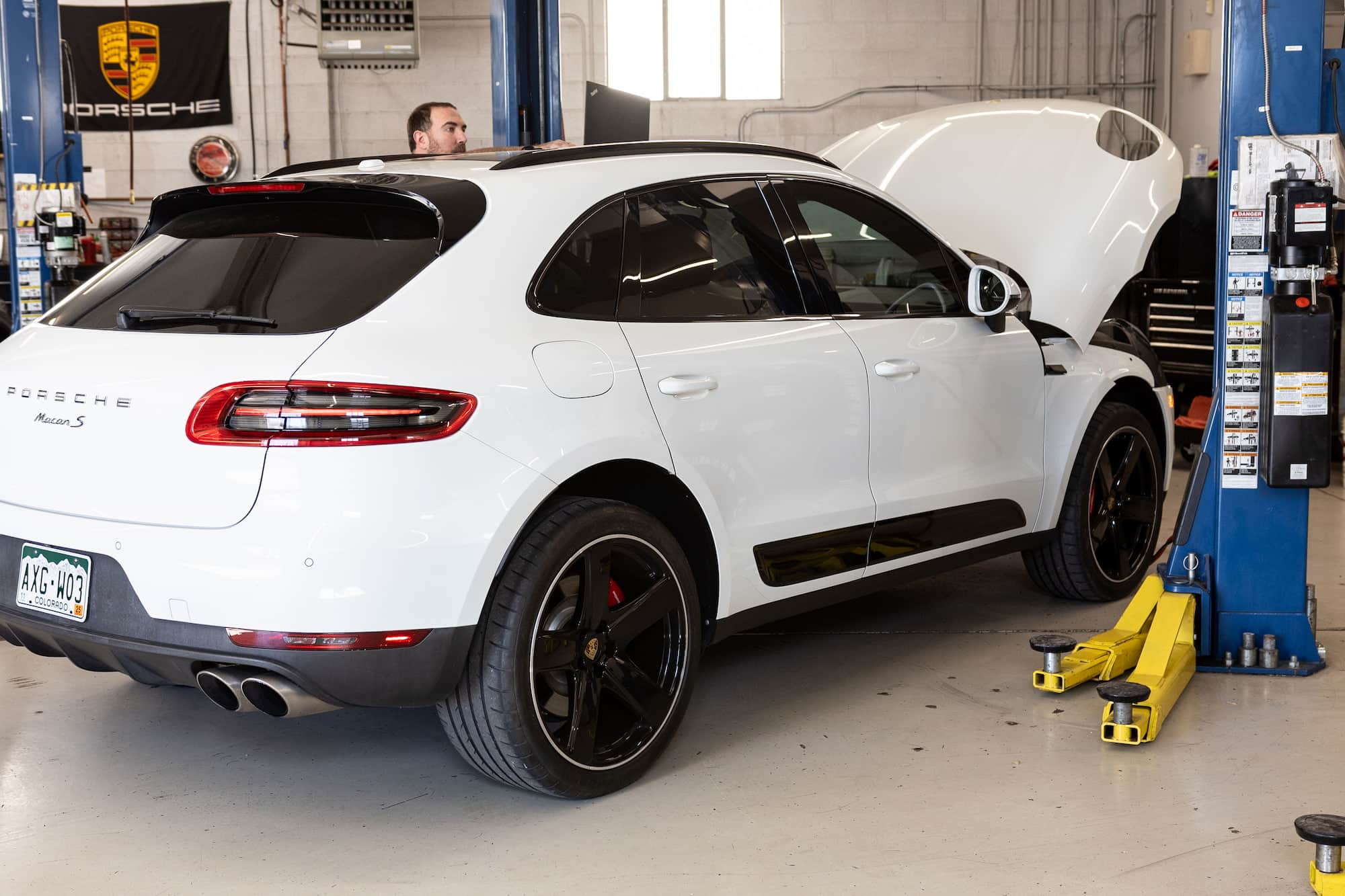
Bentley Transmission Repair at DART Auto
When your Bentley's ZF 8-speed or dual-clutch transmission starts showing signs of trouble, you need a shop that understands how these sophisticated systems integrate with the powertrain control modules and adaptive shift logic unique to modern Bentley platforms. Generic transmission shops often lack the factory scan tools and software access required to properly diagnose adaptive shift faults, mechatronic failures, or torque converter lockup issues on Continental GT, Flying Spur, and Bentayga models. DART Auto combines dealer-level diagnostic capability with transparent pricing and a 3-year/36,000-mile warranty on parts and labor.
Our master technicians – each with over a decade of experience and dealer training – use the same factory repair information and diagnostic protocols Bentley dealers rely on. We invest heavily in the specialty tooling required for proper transmission fluid exchanges, valve body calibrations, and mechatronic unit programming. Bentley transmissions demand exact fluid specifications (ZF Lifeguard 8 or specific ATF variants depending on model year) and precise torque sequences during reassembly. Cutting corners on either invites premature failure.
Here's what sets our Bentley transmission repair apart:
- Complete diagnostic scans of transmission control modules, engine control units, and adaptive shift tables before recommending any repair
- OEM and premium aftermarket parts sourced from trusted suppliers who specialize in European luxury platforms
- Salaried technicians who take the time to do the job right instead of rushing to the next flat-rate ticket
- Transparent estimates that explain what failed, why it failed, and what happens if you delay the repair
Common Transmission Repair Issues on Bentley Vehicles
When your Bentley starts showing transmission symptoms, you're often dealing with platform-specific issues that require deep knowledge of Continental GT, Flying Spur, Bentayga, and Mulsanne architectures. We see these patterns regularly and know exactly how to address them.
- ZF 8HP torque converter shudder on 2011–2018 Continental GT and Flying Spur: The ZF 8-speed automatic used across the W12 and V8 platforms develops a characteristic low-speed vibration during light acceleration or gear engagement. The torque converter clutch wears unevenly, and the mechatronic sleeve can accumulate debris. Bentley issued multiple software updates, but many units still require fluid replacement with the correct ZF LifeguardFluid 8 spec and, in persistent cases, torque converter replacement.
- Mechatronic unit failures on 2004–2011 Continental GT (ZF 6HP26/28): The earlier 6-speed ZF transmission's mechatronic control module is notorious for valve body wear and solenoid degradation. Symptoms include harsh 2–3 or 3–4 shifts, limp mode, and fault codes P0730 through P0734. The unit shares DNA with Audi and VW applications but uses Bentley-specific calibration files that require factory-level diagnostic access.
- Torque converter lockup clutch wear on Bentayga (2016–present): The Bentayga's ZF 8HP transmission, tuned for the SUV's 5,300+ lb curb weight and available W12 torque, can experience premature lockup clutch wear under repeated high-load launches or towing. You'll feel a shudder between 30–50 mph during light throttle application, and the transmission may hunt between gears.
- Transmission cooler line leaks on 2005–2012 Continental models: The hard lines running to the front-mounted transmission cooler corrode at the crimped fittings, especially on cars driven in winter climates. A small seep becomes a significant leak, and low fluid levels quickly damage the pump and clutch packs.
- Shift solenoid failures causing delayed or missed shifts: Individual solenoids within the valve body fail due to heat cycling and contamination. The result is often a single missed gear (commonly 5th or 6th), delayed downshifts, or a persistent check-engine light with P0750-series codes.
- Adaptive shift learning corruption after battery disconnect: Bentley transmissions store adaptive shift maps in volatile memory. An improperly managed battery service or jump-start can erase these maps, leaving the car with harsh or delayed shifts until the system relearns – or until it's properly re-initialized using the factory ODIS diagnostic platform.
Why Choose DART Auto for Bentley Transmission Repair
When your Bentley exhibits delayed shifts, harsh engagement, or fault codes pointing to the ZF 8HP transmission or the earlier 6HP series, you need a shop that understands the intricacies of these platforms. DART Auto has invested in the factory-level diagnostic tools and repair information required to address Bentley-specific transmission issues – from software calibration updates to mechatronic sleeve replacement on 2004–2011 Continental GT models. Our technicians hold dealer-level training and use the same TSB procedures that Bentley references, ensuring your repair meets OEM standards without the dealer markup.
We own the repair from start to finish. That means comprehensive scan-tool interrogation of the transmission control module, road-test validation under real-world conditions, and post-repair verification with live data monitoring. Because our technicians are salaried rather than flat-rate, they have no incentive to rush diagnosis or recommend unnecessary valve-body replacements when a software flash or solenoid swap will restore proper shift quality. Every transmission repair is backed by a 3-year/36,000-mile warranty on parts and labor, and we source OEM or premium aftermarket components from trusted European suppliers – never generic rebuild kits that compromise long-term reliability.
Symptoms – How to Know You Need This Service
Bentley transmissions communicate impending failure through specific symptoms you'll notice behind the wheel or on the dashboard. Catching these early prevents catastrophic damage and keeps repair costs manageable.
Watch for these warning signs:
- Harsh or delayed shifts – especially noticeable when accelerating from a stop or during downshifts under load
- Transmission fault warnings on the instrument cluster, often accompanied by limp mode that limits you to third gear
- Slipping between gears – engine RPM flares without corresponding acceleration, particularly during upshifts
- Shuddering or vibration during light throttle cruising, pointing to torque converter lockup clutch wear
- Whining or grinding noises that change pitch with vehicle speed, indicating internal bearing or planetary gear damage
- Burnt fluid smell – a sweet, acrid odor suggesting overheated clutch packs or degraded ATF
- Leaking fluid pooling under the car, often red or brown and originating from pan gaskets, cooler lines, or output shaft seals
- Cold-start hesitation – transmission takes several seconds to engage Drive or Reverse when the car has been sitting overnight
If you see transmission fault warnings combined with limp mode, stop driving and have the car towed. Continued operation can turn a valve body repair into a complete rebuild.
Which Bentley Models We See for Transmission Repair
DART Auto services transmissions across the full range of modern Bentley platforms. Our technicians have extensive experience with the ZF 8HP and dual-clutch units found in Continental, Flying Spur, and Bentayga models from the mid-2000s forward.
Common platforms we repair:
- Continental GT / GTC (2003–present) – first-generation models with ZF 6HP transmissions, second-generation (2011+) with ZF 8HP, and current W12/V8 variants
- Flying Spur (2005–present) – shares powertrain architecture with Continental GT; early models prone to valve body solenoid failures
- Bentayga (2016–present) – ZF 8HP transmission paired with W12 or V8 engines; we service both standard and hybrid variants
- Mulsanne (2010–2020) – ZF 8-speed with unique calibration for the 6.75L V8; requires specific diagnostic software for adaptive shift resets
- Azure / Arnage / Brooklands – late-model examples with GM 6L80 or ZF 6HP transmissions; we handle fluid services and mechatronic repairs on these platforms
We commonly see mechatronic unit failures on 2011–2016 Continental GT models and torque converter shudder on early Bentayga SUVs. If you own a rare or limited-production Bentley variant, call us to confirm compatibility – our diagnostic equipment and factory access cover most platforms, but some coach-built models require specialized consultation.
Causes & Risks – What Happens if Ignored
Bentley transmission issues stem from a combination of high-performance demands, complex electronics, and maintenance intervals that many owners stretch too far. The ZF units in these cars are engineered for both refinement and durability, but they require the correct fluid – often a proprietary or tightly specified synthetic – and timely service. Colorado's temperature swings accelerate seal degradation, and short-trip driving in Denver traffic means the transmission rarely reaches full operating temperature, allowing moisture and contaminants to accumulate.
Ignoring early symptoms sets off a predictable cascade. A torque converter shudder that feels like a minor annoyance at 40 mph will, over the next few thousand miles, generate metal particles that circulate through the valve body and damage solenoids. A small cooler line seep drops fluid levels below the safe threshold, starving the pump and glazing clutch plates. What starts as a $1,200 fluid service and software update becomes a $6,000+ valve body replacement or full rebuild.
Here's what escalates when you wait:
- Torque converter shudder progresses to lockup clutch failure, sending debris through the entire hydraulic system and contaminating every clutch pack.
- A single failed shift solenoid causes the transmission to default to limp mode, limiting you to 3rd gear and making highway driving unsafe.
- Low fluid from a slow leak leads to overheating, which breaks down the remaining fluid and warps clutch plates – turning a $400 seal job into a $8,000 rebuild.
- Delayed shifts under load cause the clutches to slip during engagement, generating heat and friction material that clogs filters and damages the pump.
- Ignoring fault codes means the adaptive logic continues trying to compensate, masking worsening mechanical wear until a catastrophic failure leaves you stranded.
Safety Impact – Why Transmission Repair Matters
A failing Bentley transmission doesn't just threaten your wallet – it compromises your ability to control a 5,000+ lb vehicle with serious performance capability. When the transmission enters limp mode unexpectedly, you lose access to most gears and your ability to accelerate out of dangerous situations. Delayed downshifts during passing maneuvers leave you in the wrong gear at the wrong time. Harsh, unpredictable shifts can break traction on wet or icy roads, overwhelming the stability control system.
Bentley integrates transmission data into multiple safety systems. The ABS and ESP modules rely on transmission gear position and torque output to modulate braking force and manage wheel slip. A transmission fault that feeds incorrect data to these systems can delay ABS activation or cause the stability control to intervene inappropriately. On the Bentayga, the all-wheel-drive torque distribution depends on accurate transmission signals – a faulty mechatronic unit can leave you in an unintended drive mode on a mountain pass.
Symptoms that require immediate attention:
- Transmission slipping under load or failing to engage any gear – stop driving and arrange a tow.
- Sudden loss of power with a "gearbox fault" message – limp mode is a get-home feature, not a long-term solution.
- Burning smell or visible fluid leaks – continuing to drive risks fire or complete failure.
- Harsh, violent shifts that jolt the vehicle – indicates clutch or valve body damage that will worsen rapidly.
Schedule soon but safe to drive carefully:
- Occasional delayed shifts during cold starts – adaptive learning issue or early solenoid wear.
- Mild shudder during light acceleration – torque converter clutch wear that hasn't yet contaminated the system.
- Check-engine light with stored transmission codes but normal driving behavior – needs diagnosis before it escalates.
How Bentley Transmission Repair Actually Works
Bentley relies almost exclusively on ZF automatic transmissions – the 6HP26/28 in earlier Continental models and the 8HP in everything from 2011 forward. These are planetary-gear automatics with integrated mechatronic control modules that combine the valve body, solenoids, and transmission control unit into a single electro-hydraulic assembly. The system uses clutch-to-clutch shifts with no bands, meaning precise hydraulic pressure and timing are everything. Bentley's calibration adds model-specific shift maps, torque management strategies, and integration with the engine control unit for seamless power delivery.
What makes Bentley transmission work different is the level of integration and the proprietary software required to diagnose, adapt, and code these units. You can't simply swap a valve body or torque converter and call it done. Every major component replacement requires ODIS (Offboard Diagnostic Information System) access to perform coding, adaptation, and reset of fault memory. The transmission learns driver behavior and road conditions over thousands of shifts, and that data must be managed correctly during repair. Fluid specifications are non-negotiable – using generic ATF instead of ZF LifeguardFluid 8 or the Bentley-approved equivalent will cause shift quality issues and accelerated wear.
Key design points that affect the repair process:
- Mechatronic units are programmed with VIN-specific calibration files; replacement units must be coded to the vehicle using factory diagnostic tools.
- Torque converter replacement requires transmission removal, bellhousing access, and careful inspection of the flex plate and crankshaft seal.
- Adaptive shift values must be reset and relearned through a specific drive cycle after any major repair, or the transmission will exhibit harsh or delayed shifts.
- Fluid capacity and fill procedures are precise – overfilling by even half a quart causes foaming and pressure loss, and underfilling starves the clutch packs under hard cornering. The fill is done with the fluid at the temperature ZF specifies and the level set at the overflow tube, not by volume alone.
How We Diagnose Transmission Repair Issues on Bentley
When your Bentley exhibits harsh shifting, delayed engagement, or warning lights, we skip the guesswork and move straight into methodical diagnosis. Our approach combines factory-level scan tools with hands-on inspection to pinpoint exactly what's failing and why.
- Initial scan with Bentley-specific diagnostic equipment. We connect ODIS (Offboard Diagnostic Information System) or equivalent dealer-grade tooling to retrieve fault codes, adaptation values, and transmission control module data. This reveals stored codes for solenoid faults, pressure sensor drift, clutch slip counts, and mechatronic unit errors common on ZF 8HP transmissions used in Continental GT and Flying Spur models from 2011 onward.
- Road test under controlled conditions. One of our master technicians drives the vehicle through normal and stress scenarios – cold starts, highway merges, low-speed maneuvering – while monitoring live data for shift timing, torque converter lockup behavior, and hydraulic pressure readings. This catches intermittent faults that don't always set a code.
- Visual and mechanical inspection. We drop the transmission pan to examine fluid condition, check for metal shavings or clutch material, inspect the filter and magnets, and measure fluid level against factory specifications. On older Bentley platforms with the 6HP transmission, we check for the telltale signs of valve body wear or torque converter shudder.
- Component-level testing where indicated. If scan data points to a specific solenoid, sensor, or mechatronic fault, we verify the component electrically and mechanically before recommending replacement. We also pressure-test circuits to confirm internal seal integrity.
Once diagnostics are complete, we walk you through what we found, explain which components have failed or are wearing, and provide a detailed repair plan with transparent pricing. You'll know exactly what needs attention and why before any work begins.
Transmission Repair on Bentley: Repair vs. Replacement
Not every transmission fault requires a full rebuild or replacement. The right solution depends on what's actually worn, how the rest of the unit has held up, and the cost-to-benefit ratio of each approach.
When Repair Makes Sense
- Mechatronic unit faults on ZF 8HP transmissions. These units can often be rebuilt or replaced as a standalone assembly without touching the main gearbox. Common on 2011-2019 Continental GT and Flying Spur models, mechatronic failures present as erratic shifting, limp mode, or "gearbox fault" warnings. Replacing the mechatronic saves the expense of a full transmission swap when the clutches and internals are still healthy.
- Solenoid or sensor replacement. Individual shift solenoids, pressure sensors, or speed sensors can be swapped without disassembly of the entire transmission. We verify the rest of the system is sound before recommending this targeted fix.
- Valve body service. On older 6HP units, valve body wear causes delayed engagement or soft shifts. Cleaning, re-machining bores, and installing updated valve body kits restore proper hydraulic control at a fraction of replacement cost.
When Replacement Is the Right Call
- Internal clutch pack failure with high mileage. If clutch material has contaminated the fluid and damaged seals throughout the unit, a remanufactured or new transmission becomes more reliable and cost-effective than chasing multiple internal repairs.
- Torque converter shudder with internal damage. Converter lockup clutch failure often sends debris through the system. Once that happens, replacing the converter alone rarely solves the problem – the transmission internals are already compromised.
- Cascading wear across multiple subsystems. When scan data shows faults in solenoids, sensors, and clutch slip all at once, it signals the unit has reached end of service life. Replacing ensures all wear items are fresh and backed by warranty.
We present both options with honest cost comparisons and reliability expectations. Our salaried technicians have no incentive to upsell – we recommend what makes sense for your Bentley and your budget.
How to Make Your Bentley Transmission Repair Last Longer
Once we've restored your transmission to proper function, a few deliberate habits will protect that investment and delay future wear.
Driving Habits That Protect the Transmission
- Allow proper warm-up before hard acceleration. Bentley's ZF 8HP and earlier 6HP units rely on precise hydraulic pressure. Cold fluid is thicker and slower to build pressure, which stresses clutches during aggressive shifts. Let the car idle for 30 seconds and drive gently for the first mile or two.
- Avoid prolonged idling in Drive with the brake applied. This generates heat in the torque converter without airflow through the cooler. Shift to Park or Neutral when stopped for more than a minute.
- Use manual mode or Sport mode sparingly in stop-and-go traffic. Holding lower gears increases clutch slip and heat. Reserve manual control for spirited driving on open roads where the transmission can operate in its optimal range.
Maintenance You Can Monitor
- Check for new warning lights or shift quality changes immediately. Early intervention prevents small faults from cascading into major damage. If you notice delayed engagement, harsh downshifts, or flashing gear indicators, schedule diagnostics right away.
- Follow Bentley's fluid service intervals religiously. The factory calls for transmission fluid and filter changes at specific mileage points (typically 40,000–60,000 miles depending on model year). This interval isn't negotiable – ZF transmissions are sensitive to fluid condition, and degraded fluid accelerates mechatronic and clutch wear.
What to Leave to the Professionals
Transmission fluid service on modern Bentleys requires dealer-grade scan tools to set fluid level correctly (it's done at a specific temperature with the transmission running through a precise procedure). DIY fluid changes without proper tooling can result in overfill or underfill, both of which cause damage. Likewise, software updates for the transmission control module address shift logic and torque management – these must be flashed with ODIS and validated against VIN-specific calibration files. We handle both as part of routine service, ensuring your Bentley transmission operates exactly as the engineers intended.
What to Expect When You Bring Your Bentley In
We've designed our process to keep you informed at every stage while ensuring your Bentley receives the attention it deserves. Here's how a typical transmission repair visit unfolds:
- Appointment and drop-off: Schedule a time that works for you. We offer loaner vehicles and local shuttle service – just ask when booking. Remove personal items from the cabin and glove box; we'll handle the rest.
- Diagnostic inspection: Our technicians connect factory-grade scan tools to pull stored fault codes, review freeze-frame data, and perform a road test to replicate the symptoms you've described. We inspect fluid condition, check for leaks at the torque converter seal and cooler lines, and assess whether the issue is mechanical, electrical, or software-related.
- Written estimate and authorization: You'll receive a detailed estimate outlining the recommended repair – whether that's a mechatronic unit replacement, valve-body service, or complete transmission rebuild. We explain what we found, why the repair is needed, and the consequences of delaying it. No work begins until you approve.
- Repair execution: Using OEM torque specs and fluid capacities specific to your Bentley platform, we complete the repair. If software calibration is required, we apply the latest Bentley flash files to match your transmission's hardware revision.
- Post-repair verification and pickup: We road-test the vehicle under varied conditions, re-scan for codes, and monitor live shift data to confirm normal operation. At pickup, we walk you through what we did and answer any questions. If something feels off in the days following your repair, call us – we'll get you back in promptly to address it.
Our Bentley Services
- Air Conditioning AC Repair
- Battery Repair Replacement
- Brake Repair & Brake Fluid Change
- Check Engine Light Diagnostics
- Clutch Repair & Replacement
- Coolant Leak Repair
- Cooling System Repair
- Drive Shaft Repair
- Engine Repair
- Exhaust & Catalytic Converter Repair
- Head Gasket Repair & Replacement
- Oil Change
- Oil Leak Repair
- Scheduled Service Maintenance
- Steering Repair
- Suspension Repair
- Cambelt Timing Belt Replacement
- Tune Up
- Wheel Alignment


