
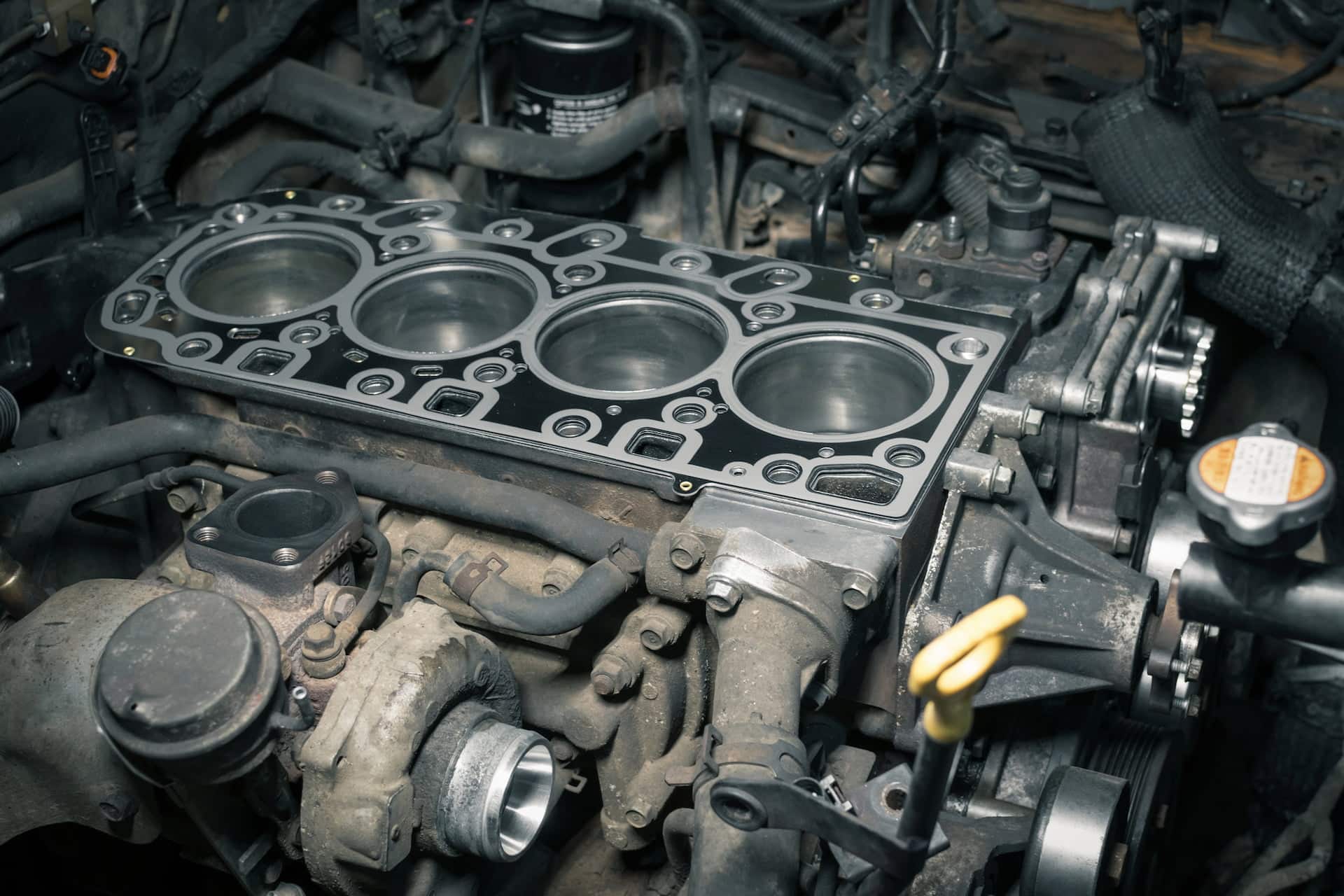
Bentley Head Gasket Repair & Replacement at DART Auto
When your Bentley shows signs of head gasket failure, you're facing one of the most demanding engine repairs in the luxury automotive world. These hand-assembled powerplants – whether the twin-turbo W12 found in Continental GT and Flying Spur models or the 4.0-liter twin-turbo V8 shared with certain Audi platforms – demand precision torque procedures, multi-stage bolt sequences, and factory-specific coolant formulations that generic shops simply aren't equipped to handle. The W12 architecture, in particular, presents unique challenges with its staggered-bank cylinder layout and complex valley cover integration that requires specialized tooling and intimate knowledge of VW Group engineering.
At DART Auto, we approach Bentley head gasket work with the same rigor as the factory, but without the inflated dealer pricing. Our master technicians use ODIS diagnostic software to verify combustion leak paths, monitor coolant-to-oil contamination in real time, and ensure proper engine relearn procedures post-repair. We follow VW Group torque-to-yield bolt protocols exactly, source OEM head gaskets and ARP or factory hardware, and perform complete thermal cycling tests before returning your vehicle. This isn't a job for flat-rate technicians rushing to the next ticket – our salaried team takes the time to address root causes, whether that's a failed PCV system on V8 models or coolant-pipe corrosion common on early Continental platforms.
When you bring your Bentley to DART Auto for head gasket repair, expect:
- Complete teardown documentation with photos of cylinder head and block mating surfaces
- Precision resurfacing or replacement of warped heads, measured to factory flatness specs
- Inspection and replacement of timing components, valley cover seals, and ancillary gaskets exposed during disassembly
- Our 3-year/36,000-mile warranty covering parts and labor – protecting your investment long after you leave
Common Head Gasket Repair & Replacement Issues on Bentley Vehicles
Your Bentley was engineered for effortless power and refinement, but the W12 and V8 engines that deliver that performance place enormous thermal and mechanical stress on head gaskets. When you notice white smoke from the exhaust on cold starts, coolant disappearing without visible leaks, or that distinctive sweet smell inside the cabin, you're likely facing head gasket degradation. Here's what we see most often on the Bentley platforms we service daily:
- W12 coolant crossover passage failures (Continental GT/Flying Spur 2004–2010): The 6.0L W12 uses a complex coolant distribution system between cylinder banks. Early Continental GT and Flying Spur models develop external weeping at the rear cylinder bank crossover points, often mistaken for valve cover leaks until coolant mixes with oil in the valley.
- Turbo V8 exhaust-side gasket erosion (Continental GT V8 2013–2018): The 4.0L twin-turbo V8 runs extremely high exhaust gas temperatures. Gaskets on the exhaust side of cylinders 2, 3, 6, and 7 erode first, allowing combustion gases into the cooling system and creating pressure that forces coolant into the expansion tank.
- Mulsanne 6.75L V8 valley gasket seepage (2010–2020): The venerable pushrod V8 develops slow seepage between the block and heads in the lifter valley. Oil and coolant mix gradually, creating a tan sludge visible during oil changes long before external symptoms appear.
- Bentayga W12 head bolt stretch (2016–2019 early production): Early Bentayga W12 engines share architecture with the Audi/Porsche family and can experience head bolt elongation after repeated heat cycles, losing clamping force and allowing micro-seepage that pressurizes the cooling system.
- Arnage/Brooklands coolant migration into cylinders (1998–2009): The older Turbo R-derived V8 develops internal gasket failure that allows coolant into combustion chambers overnight, causing rough cold starts and white exhaust smoke that clears after warmup.
Why Choose DART Auto for Bentley Head Gasket Repair & Replacement
When your Bentley shows signs of head gasket failure – white exhaust smoke, coolant loss without visible leaks, or overheating after spirited driving – you need technicians who understand the W12 and V8 platforms inside and out. DART Auto has invested in the factory-level diagnostic software and specialty tooling required to properly diagnose and repair Bentley engines, from the 6.75L turbocharged V8 in older Arnage and Mulsanne models to the twin-turbo W12 found in Continental GT and Flying Spur variants. Our master technicians follow OEM torque sequences and head bolt procedures that differ significantly from generic V8 or V12 work, preventing comebacks and preserving your engine's integrity.
We handle the entire repair process in-house, which means:
- Complete cylinder head inspection and machining coordination – we verify flatness tolerances to factory spec and arrange precision surfacing when needed
- OEM or premium gasket sets sourced from trusted European suppliers, never economy-grade parts that fail prematurely
- Salaried technicians with dealer training who take the time to inspect timing components, cam phasers, and coolant passages during disassembly
- Post-repair pressure testing and road validation using the same diagnostic protocols Bentley dealerships employ
Our 3-year/36,000-mile warranty on parts and labor gives you confidence that the repair will hold, and our transparent estimates mean no surprises when you pick up your car. We've been serving Denver's European car community since 2000, and we know that a Bentley head gasket job done right preserves both performance and resale value.
Symptoms – How to Know You Need This Service
Head gasket failure on a Bentley rarely announces itself with a single catastrophic event. Instead, you'll notice a pattern of symptoms that worsen over weeks or months:
- White exhaust smoke on cold starts that lingers longer than normal condensation – indicates coolant entering the combustion chamber
- Persistent coolant loss with no visible leaks under the car; you're topping off the expansion tank every few hundred miles
- Overheating warnings or temperature fluctuations on the instrument cluster, especially under load or during spirited driving
- Milky, chocolate-colored oil visible on the dipstick or under the oil filler cap – a clear sign of coolant contamination
- Rough idle or misfires accompanied by check-engine codes for cylinder-specific misfires (P0300-P0312 range)
- Bubbling or pressurization in the coolant reservoir when the engine is running – combustion gases forcing their way into the cooling system
- Loss of power under acceleration as compression escapes past the failed gasket
- Sweet coolant smell from the exhaust or inside the cabin when the HVAC is running
Stop driving immediately if you see white smoke combined with overheating warnings or if the oil appears contaminated. Continued operation can warp cylinder heads, score bearing surfaces, or crack the block. If you're only noticing minor coolant loss or occasional temperature spikes, schedule an inspection soon – early intervention prevents catastrophic damage and keeps repair costs manageable.
Which Bentley Models We See for Head Gasket Repair & Replacement
We service head gasket issues across the modern Bentley range, with particular expertise in the platforms built from 2003 forward when VW Group integration standardized many diagnostic and repair protocols:
- Continental GT and GTC (2003–present) – both W12 (6.0L twin-turbo) and V8 (4.0L twin-turbo) variants; first-generation models (2003–2010) more prone to coolant-pipe corrosion that accelerates gasket failure
- Continental Flying Spur (2005–present) – shares powertrain architecture with Continental GT; same W12 and V8 considerations apply
- Bentayga (2016–present) – V8 and W12 configurations; newer platform with improved gasket materials but still susceptible to PCV-related pressure issues
- Mulsanne (2010–2020) – 6.75L twin-turbo V8 (L-series engine unique to Mulsanne); different gasket design and torque sequence than VW Group powertrains
- Azure, Brooklands, Arnage (late 1990s–2009) – older L-series V8 engines; we handle these on a case-by-case basis depending on parts availability
We're fully equipped for both naturally aspirated and turbocharged configurations, manual and ZF automatic transmissions, and all-wheel-drive systems. If you're driving a pre-VW Group Bentley (pre-2003 Arnage, Turbo R, or earlier), contact us directly – these require different diagnostic approaches and parts sourcing, but we've successfully completed repairs on select vintage models when factory documentation and components are available.
Causes & Risks – What Happens if Ignored
Head gasket failures on Bentley engines stem from the extreme duty cycle these powerplants endure. The W12 generates over 600 horsepower in some applications, creating cylinder pressures and temperatures that challenge even the multi-layer steel gaskets Bentley specifies. Thermal cycling from cold Denver mornings to full operating temperature stresses the gasket seal. Coolant chemistry degradation – common when service intervals stretch past the factory-recommended two years – creates corrosive conditions that attack gasket material and aluminum head surfaces.
When you delay head gasket work, the damage compounds quickly:
- Coolant contamination turns catastrophic: What starts as trace coolant in the oil becomes a mayonnaise-like emulsion that clogs oil passages, starves bearings, and scores cylinder walls. We've seen $8,000 head gasket jobs become $35,000 short-block replacements after three months of "topping off coolant."
- Combustion gases pressurize the cooling system: Exhaust pressure forces coolant past radiator cap seals, cracks plastic expansion tanks, and bursts aged hoses. The resulting overheat event warps aluminum heads beyond the machine shop's ability to resurface them.
- Hydrolock destroys internals: Coolant pooling in cylinders overnight creates a hydraulic lock on startup. Connecting rods bend, pistons crack, and in severe cases the crankshaft itself suffers damage. One failed gasket becomes a complete engine replacement.
- Corrosion attacks machined surfaces: Coolant leaking between head and block etches the precision-machined aluminum surfaces. Even after gasket replacement, the corroded surfaces won't seal properly without extensive – and expensive – machine work.
Safety Impact – Why Head Gasket Repair & Replacement Matters
A failing head gasket creates immediate risks that go beyond repair costs. Coolant loss leads to overheating, and an overheated Bentley loses power steering assist when the hydraulic pump cavitates from low fluid circulation. On W12 models, sudden coolant loss can trigger limp mode at highway speeds, cutting power to 30 percent with no warning. We've diagnosed Bentleys that stalled in traffic after coolant flooded a cylinder, creating a no-start condition in the middle of an intersection.
Here's when symptoms demand immediate action versus scheduled repair:
- Stop driving immediately: Temperature gauge in the red zone, steam from under the hood, sudden loss of power with warning lights, rough running that worsens as the engine warms, or visible coolant puddles under the vehicle after it's been parked.
- Schedule within the week: Gradual coolant loss requiring top-ups every few hundred miles, white exhaust smoke on cold starts that clears within a minute, slight sweet smell in the cabin with heat on, or bubbles visible in the coolant expansion tank with the engine running.
- Monitor closely and schedule soon: Occasional coolant smell, slight reduction in heater performance, or oil that looks darker and thinner than normal between changes.
Insurance and liability concerns arise when known cooling system issues aren't addressed. If a gasket failure causes an accident – engine fire from overheating, loss of control from sudden power loss – and service records show you were aware of the problem, coverage can be contested.
How Bentley Head Gasket Repair & Replacement Actually Works
Bentley's high-output engines use multi-layer steel head gaskets with precision-engineered sealing beads around each cylinder, coolant passage, and oil gallery. These gaskets rely on exact clamping force from torque-to-yield head bolts, which stretch during installation to maintain constant pressure across the entire sealing surface. The W12 configuration adds complexity – it's essentially two narrow-angle VR6 engines joined at the crankshaft, so coolant and oil must transfer between banks through passages sealed by the gaskets.
What makes Bentley head gasket work different from conventional repairs:
- Factory diagnostic protocol required: Bentley's guided diagnostics through the official system verify gasket failure versus other causes (cracked block, failed oil cooler, transmission cooler leak into coolant). Generic scan tools miss the nuanced data streams.
- Torque-to-yield bolts are single-use: Head bolts stretch permanently during installation and must be replaced. Bentley specifies exact torque values, angles, and tightening sequences that differ by engine family and even production year.
- Head machining limits are strict: Bentley publishes maximum resurfacing specifications. Remove too much material and the head must be replaced – there's no "good enough" with interference-fit valve seats and precise combustion chamber volumes.
- Timing chain service is mandatory: On V8 and W12 engines, head removal requires timing chain and guide replacement. These components are under tension and cannot be safely reused after disturbance.
- Coolant system coding and bleeding: After reassembly, the cooling system requires a specific bleed procedure using factory tooling and software activation of electric coolant pumps in the correct sequence to purge air from all six banks on a W12.
This isn't shade-tree work. Our technicians follow factory repair procedures, use calibrated torque equipment, and verify the repair with pressure testing and diagnostic confirmation before returning your Bentley.
How We Diagnose Head Gasket Repair & Replacement Issues on Bentley
Your Bentley's head gasket sits at the heart of engine sealing, and when it fails, symptoms can range from subtle coolant loss to catastrophic overheating. We've diagnosed head gasket issues on Continental GT, Flying Spur, and Mulsanne platforms since the early 2000s, and we know the telltale signs. Here's how we pinpoint the problem and build a repair plan that protects your investment:
- Visual and physical inspection: We check for external coolant seepage around the head-to-block mating surface, examine oil cap and dipstick for milky emulsion, and inspect the expansion tank for oily residue or combustion gas bubbles. On twin-turbo W12 engines, coolant can migrate into cylinders without obvious external leaks.
- Pressure and leak-down testing: We perform cylinder leak-down tests to measure compression loss and identify which cylinders are affected. A combustion gas analyzer checks coolant for exhaust byproducts – a definitive sign of head gasket breach.
- Factory-level scan with ODIS or equivalent: Bentley-specific diagnostic software reveals misfires, coolant temperature anomalies, and adaptation values that point to head gasket failure. We log live data during a controlled heat cycle to see if coolant temps spike unevenly across banks.
- Thermal imaging and endoscopic inspection: Infrared cameras can reveal hot spots indicating coolant-to-combustion crossover. If accessible, we use a borescope to inspect combustion chambers for steam-cleaning (a sign coolant is entering the cylinder).
- Documentation and estimate: We photograph findings, compile scan data, and present you with a detailed quote that explains whether machine work, head resurfacing, or block deck inspection is needed alongside gasket replacement.
This methodical process ensures we're addressing the root cause – not just chasing symptoms – and gives you a clear roadmap to get your Bentley back to factory-sealed performance.
Head Gasket Repair & Replacement on Bentley: Repair vs. Replacement
Head gasket work on a Bentley almost always means replacement rather than repair, but the scope can vary widely depending on what we find when the heads come off. Here's how we decide:
- Gasket-only replacement: If cylinder heads measure flat within Bentley's 0.05 mm tolerance and block deck surfaces are clean and true, we replace the multi-layer steel gaskets, ARP or OEM head bolts (which are torque-to-yield and must be replaced), and reseal the coolant passages. This is the baseline job on a W12 or V8 with no prior overheating history.
- Head resurfacing and valve work: Overheating warps aluminum heads. We send heads to a trusted machine shop for pressure testing, deck milling, and valve-seat inspection. On 2004–2010 Continental GT 6.0L W12 engines, we commonly find slight warpage on the rear bank due to restricted coolant flow. Resurfacing restores the seal and prevents a comeback.
- Full short-block work: If the block deck is scored, warped, or shows signs of coolant corrosion in the bores, we're into block machining or replacement. This is rare but not unheard of on high-mileage or neglected examples. We walk you through cost versus vehicle value and help you decide whether to proceed or consider other options.
We don't upsell machine work you don't need. Our salaried technicians measure everything, document it, and present the facts so you can make an informed decision.
How to Make Your Bentley Head Gasket Repair & Replacement Last Longer
Once your Bentley's head gasket is replaced and torqued to spec, a few smart habits will keep it sealed for the long haul. Here's what makes a difference:
Driving and Operating Habits
- Allow proper warm-up: Bentley's W12 and V8 engines have large thermal mass. Let coolant reach operating temp (around 90°C) before sustained high load. Cold-start full-throttle runs can shock gasket material and cause micro-leaks.
- Avoid prolonged idling in extreme heat: Sitting in traffic on a hot day with the A/C on max can push coolant temps higher than highway cruising. If temps climb, pull over and let the engine idle in neutral with A/C off to stabilize.
- Monitor coolant level between services: Check the expansion tank every few weeks. A slow drop signals a developing leak – catch it early and you may avoid a full gasket job.
Maintenance You Can Do
- Use only Bentley-spec coolant (G12++ or G13): These long-life formulations protect aluminum heads and prevent electrolytic corrosion. Generic green coolant will corrode passages and compromise gasket sealing.
- Flush coolant per the factory schedule: Bentley calls for coolant replacement every three years regardless of mileage. Old coolant loses corrosion inhibitors and can etch head surfaces.
- Watch for warning signs: Sweet smell from the vents, white exhaust smoke, or fluctuating temp gauge are red flags. Bring the car in immediately – catching a head gasket leak early can save thousands.
Leave pressure testing, thermostat replacement, and any head-bolt retorquing to us. These are precision jobs that require factory torque specs and sequences – not DIY territory on a Bentley.
What to Expect When You Bring Your Bentley In
We know that scheduling major engine work on your Bentley requires planning, so here's how we make the process as smooth as possible:
- Appointment and drop-off. When you call or book online, we'll ask about the symptoms you're experiencing – coolant smell in the cabin, rough idle when cold, or milky oil on the dipstick. Bring your service history if available; knowing when the cooling system was last serviced helps us diagnose faster. We offer loaner vehicles and local shuttle service so you're not stranded.
- Diagnostic inspection and estimate. Before we tear into the engine, we perform a complete inspection: coolant system pressure test, compression check across all cylinders, and scan-tool analysis for misfires or coolant temperature anomalies. You'll receive a written estimate detailing the head gasket replacement, any additional work discovered (warped heads, timing component wear), and the parts we'll use. We explain what happens if you delay the repair – usually catastrophic engine damage from coolant entering the oil or vice versa.
- Repair and communication. Once you approve the estimate, we keep you updated if we find anything unexpected during disassembly. Our technicians document the condition of valve seals, timing chains, and coolant passages with photos when needed.
- Post-repair verification and pickup. Every Bentley gets a road test and a final scan to confirm no codes, proper operating temperature, and smooth power delivery. At pickup, we walk you through the work performed and what to monitor over the next few hundred miles. If anything feels off afterward, call us – we'll get you back in immediately.
Remove any valuables from the cabin before drop-off, and let us know if you need after-hours pickup arrangements. We're here to make a stressful repair as straightforward as possible.
Our Bentley Services
- Air Conditioning AC Repair
- Battery Repair Replacement
- Brake Repair & Brake Fluid Change
- Check Engine Light Diagnostics
- Clutch Repair & Replacement
- Coolant Leak Repair
- Cooling System Repair
- Drive Shaft Repair
- Engine Repair
- Exhaust & Catalytic Converter Repair
- Oil Change
- Oil Leak Repair
- Scheduled Service Maintenance
- Steering Repair
- Suspension Repair
- Cambelt Timing Belt Replacement
- Transmission Repair
- Tune Up
- Wheel Alignment


