
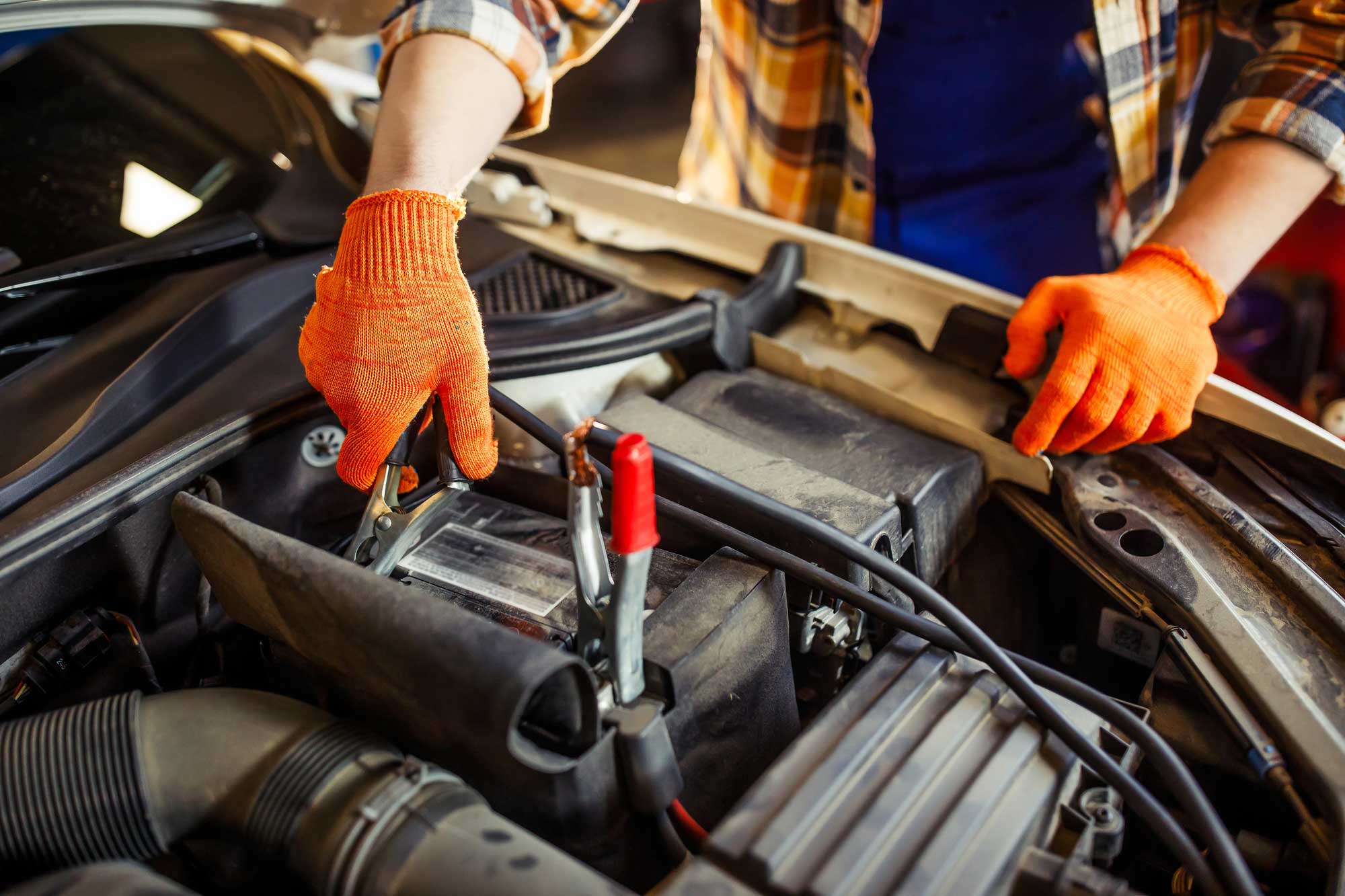
MINI Battery Repair Replacement at DART Auto
Most shops treat a MINI battery as a simple swap-and-go job. That's exactly where things go wrong. Modern MINIs – especially F-series cars (2014+) with start-stop, regenerative braking, and intelligent battery management – require software registration every time you install a new battery. Skip that step and you'll see charging faults, reduced fuel economy, and premature battery death within months. The DME needs to know battery age, capacity, and chemistry to manage alternator load correctly. Generic shops don't own BMW/MINI diagnostic platforms, so they bolt in a battery and send you on your way with a ticking clock.
We handle MINI battery service the way the factory specifies: proper AGM or lithium-ion replacement matched to your chassis, torque-controlled terminal fastening to avoid hidden corrosion paths, and full ISTA registration so the car's energy management adapts immediately. On R-series cars (2007–2013), we address the common trunk-mounted battery corrosion that spreads to the IBS sensor and causes phantom electrical faults. For plug-in Coopers and Countryman hybrids, we verify high-voltage interlock integrity and 12V auxiliary battery health separately – both matter.
When you bring your MINI to DART Auto for battery service, expect:
- Full electrical system health scan before and after installation, capturing parasitic draw and alternator output under load
- OEM-spec AGM or lithium battery sourced from trusted suppliers, never a generic flooded-cell unit that fails in six months
- ISTA/D software registration so your DME recognizes the new battery's state of charge and adjusts charging profiles immediately
- Inspection of battery tray, hold-down hardware, and terminal connections for hidden corrosion that causes repeat failures
Common Battery Repair Replacement Issues on MINI Vehicles
MINI owners face a unique challenge when it comes to battery health: these cars demand far more from their electrical systems than most compact vehicles. The brand's reliance on sophisticated electronics, start-stop systems, and tightly packaged engine bays creates failure patterns that generic shops often misdiagnose as alternator or starter problems.
- R56/R57 (2007–2013) IBS sensor failures: The Intelligent Battery Sensor mounted on the negative terminal corrodes or loses calibration, triggering false low-voltage warnings and preventing proper charge management. When this sensor fails, the DME can't regulate alternator output correctly, leading to chronic undercharge or overcharge conditions that destroy an otherwise healthy battery within months.
- F-series (2014+) start-stop system battery drain: The AGM battery required for start-stop operation degrades rapidly when subjected to short-trip driving or aftermarket accessories that bypass the power management system. Owners report sudden no-start conditions even when the battery tested "good" days earlier, because conventional testers can't evaluate AGM state-of-charge accurately.
- R50/R53 (2002–2006) trunk-mounted battery corrosion: The rear-mounted battery sits in a carpeted well that traps moisture from tailgate seal leaks. Corrosion spreads to the junction box and trunk release solenoid wiring, creating parasitic draws that kill batteries overnight while masking the real problem.
- Clubman and Countryman (all generations) auxiliary battery failures: Models with comfort access and alarm systems use a secondary 12V battery that fails independently, causing bizarre electrical glitches – keyless entry stops working, alarm triggers randomly, or the car won't recognize the key fob even though the main battery voltage reads normal.
- Post-2014 models with micro-hybrid systems: These vehicles require battery registration through dealer-level diagnostics whenever a replacement is installed. Skip this step and the DME continues using the old battery's charge profile, leading to premature failure of the new battery and potential damage to the voltage regulator.
- Cold-weather failure cascade on all turbocharged models: The combination of high-compression direct injection, electric power steering, and heated seats creates massive cranking loads below 20°F. A battery at 70% capacity that starts fine in September will fail without warning in January, often taking the starter motor with it due to extended cranking attempts.
Why Choose DART Auto for MINI Battery Repair Replacement
MINI battery failures often trigger a cascade of electrical faults that generic shops misdiagnose as alternator or starter problems. R56-generation Cooper S models (2007–2013) are particularly vulnerable to Intelligent Battery Sensor (IBS) miscommunication after aftermarket battery swaps, leaving the DME unable to manage charge cycles properly. We own factory-level ISTA diagnostics and the BMW/MINI-specific coding tools to register new batteries to the vehicle's power-management system – a step most independents skip entirely.
Our master technicians have dealer training on MINI's energy-management architecture and know which TSBs apply to your chassis. We verify:
- IBS calibration – the battery sensor must be re-coded or the alternator will overcharge and cook a new AGM cell in months
- Parasitic-draw testing – F-series MINIs (2014+) suffer comfort-access module drain; we isolate the circuit before you buy another battery
- Alternator output and ripple voltage – diode-pack failures on N14/N18 engines create voltage spikes that kill batteries prematurely
- Ground-strap integrity – corroded chassis grounds mimic dead-battery symptoms on R50/R53 first-gen cars
Because our technicians are salaried, they take the time to trace root causes rather than swapping parts on flat-rate speed. You get the correct OEM or premium AGM replacement, properly registered, with a 3-year/36,000-mile warranty on parts and labor.
Symptoms – How to Know You Need This Service
You may notice your MINI struggling to crank on cold mornings, turning over slowly before catching. Dashboard warning lights – especially the battery symbol or "Increased Battery Discharge" message – appear intermittently or stay illuminated after startup. Start-stop function stops working altogether, forcing the engine to idle at every stoplight even when conditions should allow automatic shutdown.
Other telltale signs include:
- Clicking or rapid ticking from the starter relay when you turn the key, indicating insufficient voltage to engage the starter motor
- Flickering interior lights, dim headlamps at idle, or radio presets resetting after the car sits overnight
- MINI Connected or infotainment system rebooting randomly while driving, often paired with brief instrument cluster blackouts
- Burning smell or visible corrosion around battery terminals, especially on trunk-mounted R-series setups where moisture accumulates
- Battery age beyond four years in Colorado's temperature extremes – heat and cold both accelerate internal plate sulfation
- Parasitic draw symptoms: battery drains completely if the car sits unused for three to five days, even with no accessories left on
- Check-engine light with stored faults for low system voltage, alternator over-voltage, or IBS sensor communication errors
If you see smoke, smell sulfur, or the battery case is swollen, stop driving immediately and call for a tow. A failing battery can damage the alternator, DME, and sensitive control modules.
Which MINI Models We See for Battery Repair Replacement
We service battery replacement across the full MINI lineup, with particular expertise in the platform-specific quirks that distinguish each generation. Software registration requirements and battery location vary significantly by chassis, so knowing your platform matters.
- R50/R52/R53 Cooper and Cooper S (2002–2008): First-generation cars with simpler electrical architecture; battery under hood, but corrosion on positive terminal and fusebox connections common
- R55/R56/R57/R58/R59 (2007–2015): Second-generation with trunk-mounted battery and IBS sensor integration; software registration required on 2011+ models with start-stop
- R60/R61 Countryman and Paceman (2011–2016): Larger AGM battery in rear cargo area; ALL4 variants draw more current and show earlier battery fatigue
- F54/F55/F56/F57 (2014–present): Third-generation with mandatory ISTA registration for all battery replacements; start-stop and brake energy regeneration dependent on accurate battery data
- F60 Countryman (2017–present): Includes plug-in hybrid variants requiring separate 12V auxiliary and high-voltage battery service protocols
- Electric and plug-in hybrids (Cooper SE, Countryman PHEV): Dual battery systems where 12V auxiliary failure can strand the car even with a full traction battery
We handle Clubman, Convertible, Coupe, and Roadster variants across all generations. If you own a classic pre-2001 MINI or a heavily modified John Cooper Works edition with aftermarket electrical loads, call ahead so we can confirm parts availability and diagnostic compatibility.
Causes & Risks – What Happens if Ignored
MINI battery problems stem from three converging factors: the brand's aggressive power management algorithms, owner driving patterns that don't match the engineering assumptions, and Colorado's temperature swings. Most MINI models assume regular highway driving that fully recharges the battery; short urban commutes leave it chronically undercharged. The start-stop system compounds this by cycling the battery hundreds of times more than a conventional vehicle, accelerating sulfation and plate degradation.
Ignoring early warning signs – dimming headlights during idle, sluggish cranking on cold mornings, or intermittent electrical gremlins – sets off a predictable chain reaction:
- Week 1–2: The alternator begins working harder to compensate for battery voltage drop, running hotter and wearing its brushes and bearings faster. You won't notice this yet.
- Week 3–4: The voltage regulator starts cycling between overcharge and undercharge states as it tries to revive a failing battery. This voltage instability stresses every electronic module in the car, particularly the DME, transmission controller, and body control module.
- Month 2: One cold morning the car won't start. Jump-starting works, but the starter motor has now experienced several extended cranking cycles at low voltage, damaging its commutator and bushings. The next failure will likely require starter replacement alongside the battery.
- Month 3+: Voltage spikes from the dying battery corrupt adaptive data in the DME, causing rough idle, hesitation, or check-engine lights. The body control module may lock you out of comfort features or trigger phantom warnings. At this stage, a $300 battery problem has become a $1,800 electrical diagnostic nightmare.
The safety dimension becomes critical when power steering assist drops during a turn or the brake booster loses vacuum assist due to insufficient electrical power to run the vacuum pump on turbocharged models. These aren't theoretical risks – they happen on busy intersections when the battery voltage sags below the threshold these systems need.
Safety Impact – Why Battery Repair Replacement Matters
MINI engineers eliminated traditional hydraulic power steering and mechanical brake boosters on most models built after 2006, replacing them with electrically assisted systems that depend entirely on stable battery voltage. When that voltage drops below spec, the consequences go far beyond inconvenience.
Electric power steering on R56 and newer platforms draws 40–60 amps during low-speed maneuvers. A weak battery can't supply this current, causing sudden loss of assist mid-turn. Drivers report the wheel becoming "impossibly heavy" when pulling into parking spaces or navigating tight corners. On turbocharged models, the electric brake vacuum pump requires consistent voltage to maintain boost pressure; voltage sag means your brake pedal goes hard and stopping distances double without warning.
The stability control and ABS modules are equally voltage-sensitive. When battery voltage fluctuates, these systems may disable themselves or provide erratic intervention. We've diagnosed cars where weak batteries caused the DSC light to illuminate during hard braking, leaving the driver with no anti-lock protection in emergency stops.
When to stop driving immediately:
- Power steering assist cuts out during turns
- Brake pedal becomes abnormally hard or requires excessive force
- Multiple warning lights illuminate simultaneously (especially DSC, ABS, and battery symbols)
- Headlights dim severely when using turn signals or brakes
Schedule service this week:
- Slow cranking, especially on cold starts
- Electrical accessories (radio, windows, locks) behaving erratically
- Start-stop system no longer functioning
- Battery warning light appears even briefly
How MINI Battery Repair Replacement Actually Works
MINI's battery system is far more complex than the "unbolt the old one, bolt in the new one" approach that works on older vehicles. Starting with the R56 generation, every MINI tracks battery age, type, and charge history in the DME's permanent memory. The car continuously adjusts alternator output, start-stop behavior, and accessory load management based on this data. Install a new battery without telling the computer, and the car continues managing charge cycles as if the battery were old and degraded.
Proper replacement requires factory-level diagnostic equipment to access the battery management module and register the new battery's specifications – capacity, type (flooded vs. AGM), and manufacture date. This registration resets the charge algorithms and recalibrates the Intelligent Battery Sensor. On F-series and newer models, skipping registration voids any battery warranty and typically causes premature failure within 18 months.
MINI-specific battery system design points:
- AGM batteries required on all start-stop equipped models – conventional flooded batteries fail within months under the cycling load
- Rear trunk mounting on hardtops means longer cable runs and higher voltage drop; terminal connections must meet exact torque specs or resistance increases
- IBS sensor calibration requires driving the car through specific charge/discharge cycles after registration – simply installing and coding isn't enough
- Auxiliary battery on Clubman/Countryman must be replaced simultaneously with the main battery if either fails, as mismatched batteries confuse the power management system
- Post-2018 models with micro-hybrid systems use enhanced flooded batteries with different charging profiles than standard AGM; mixing battery types causes charging system faults
The diagnostic process starts with a complete electrical system test using MINI-specific scan tools that read battery state-of-health, alternator ripple voltage, and parasitic draw with all modules active. We verify the IBS sensor is reading accurately, check for corrosion in the battery monitoring circuit, and test the alternator's ability to meet MINI's voltage regulation specs under load. Only after confirming the charging system is healthy do we proceed with battery replacement and registration.
How We Diagnose Battery Repair Replacement Issues on MINI
MINI battery issues often masquerade as other electrical gremlins – phantom check-engine lights, sluggish starts, or erratic idle-stop behavior. Generic shops chase symptoms with a parts cannon. We go straight to the root cause with MINI-specific protocols that reveal what's actually failing.
- Battery state-of-health testing: We use midtronics or equivalent testers to measure cold-cranking amps, internal resistance, and voltage under load. MINI F-series models (2014+) with intelligent battery sensors require IBS coding when replaced – a step many shops skip, leading to premature battery death and alternator overwork.
- Charging system analysis: We verify alternator output voltage (13.8–14.4V typical), ripple, and load response. R-series and first-gen Countryman models (2007–2016) can suffer voltage regulator failures that cook batteries slowly. We catch that before you're stranded.
- Parasitic draw testing: With the vehicle asleep, we measure milliamp draw on the battery. MINI comfort-access modules, amplifiers, and telematics units can stay awake and drain batteries overnight. Factory wiring diagrams let us isolate which circuit is the vampire.
- BMW ISTA diagnostic scan: We pull stored fault codes and live data from the DME, junction box, and battery management system. MINI uses BMW's architecture – generic OBD-II scanners miss half the story. We see battery registration status, charge cycles, and module wake/sleep behavior.
- Visual and physical inspection: Corroded terminals, frayed ground straps, and aftermarket accessories (especially poorly wired dash cams or alarms) all stress the electrical system. We document what we find with photos.
Once diagnostics are complete, we walk you through what failed, why it failed, and exactly what it takes to fix it right. You get a detailed quote before any work begins – no surprises, no upselling.
Battery Repair Replacement on MINI: Repair vs. Replacement
Not every battery issue means swapping the whole unit. We assess whether repair, targeted replacement, or full replacement makes sense for your MINI and your wallet.
When Repair Makes Sense
- Terminal corrosion cleanup: White or blue-green buildup on posts and clamps creates resistance. We remove, clean with a wire brush and baking soda solution, apply dielectric grease, and reinstall. Takes 20 minutes; saves you from a needless battery purchase.
- Ground strap repair: Frayed or corroded ground straps between battery, chassis, and engine block cause voltage drops that mimic a dying battery. Replacing the strap (especially common on R56 Cooper S models) restores proper current flow.
- Intelligent Battery Sensor (IBS) replacement: F-series MINI models mount a sensor on the negative terminal that monitors charge state. The sensor can fail while the battery remains healthy. We replace the sensor, code it to the car with ISTA, and you're done.
When Full Replacement Is the Right Call
- Failed load test: If the battery can't deliver rated cold-cranking amps or voltage sags below 9.6V under load, the internal plates are sulfated or shorted. No repair brings that back.
- Age and charge cycles: MINI batteries typically last 4–7 years depending on use. Once capacity drops below 80%, replacement prevents the alternator from overworking and failing prematurely.
- Physical damage: Cracked cases, bulging sides, or leaking electrolyte mean immediate replacement for safety.
We present the options, explain the trade-offs, and let you decide. Our technicians are salaried, not flat-rate – they have zero incentive to sell you more than you need.
How to Make Your MINI Battery Repair Replacement Last Longer
A quality battery replacement should give you years of trouble-free starts. How you drive and maintain your MINI determines whether you get four years or seven.
Driving Habits That Extend Battery Life
- Take longer drives regularly: Short trips (under 10 minutes) never fully recharge the battery. MINI's idle-stop system and comfort-access modules draw power even when parked. One 30-minute highway drive per week keeps the battery topped off.
- Minimize electrical load at startup: Turn off heated seats, stereo, and climate control before cranking. Let the alternator focus on recharging the battery rather than powering accessories during the critical first few minutes.
- Watch for parasitic drains: Aftermarket alarms, dash cams, and phone chargers left plugged in can slowly kill a battery. If the car sits for more than a week, consider a trickle charger or disconnect the negative terminal.
Maintenance You Can Do
- Inspect terminals monthly: Look for white or green corrosion. Wipe terminals with a damp rag; apply dielectric grease if you see buildup starting.
- Check the battery hold-down: A loose battery vibrates, damaging internal plates. Tighten the bracket if you can wiggle the battery by hand.
- Monitor warning lights: If the battery light glows or you see a "charging system" message, get it diagnosed immediately. Driving on a failing alternator destroys batteries fast.
What to Leave to the Professionals
Battery registration and IBS coding on F-series MINI models require factory-level software. Skipping this step confuses the car's energy management, leading to chronic undercharging or overcharging. We handle the coding as part of every battery replacement – it's not optional, it's engineering.
Stick to MINI's service intervals for software updates and electrical system checks. We use the same repair information and diagnostic tools as the dealer, but our labor rates and parts pricing won't make you wince.
What to Expect When You Bring Your MINI In
From the moment you schedule, we treat battery issues as electrical-system diagnostics, not simple part swaps. Here's how the process unfolds:
- Drop-off and intake interview – We ask about recent symptoms: slow cranking, dashboard warning lights (battery symbol, charging system fault), accessory behavior after shutdown. Bring your key fob; we'll test its battery too, since a weak fob can mimic electrical gremlins on keyless models.
- Electrical-system inspection – The technician performs a load test, checks alternator output under load, measures parasitic draw with a digital multimeter, and scans for stored fault codes. On F-series cars we verify the comfort-access and telematics modules aren't staying awake.
- Written estimate and consultation – You receive a detailed breakdown: battery condition, alternator health, any parasitic-draw sources, and whether IBS registration or software updates are required. We explain what happens if you delay the work (risk of being stranded, potential alternator damage from a shorted cell).
- Repair execution – We install the OEM or equivalent AGM battery, register it to the DME via ISTA, update any relevant software patches, and torque all terminals to spec. Post-repair, we road-test to confirm charging voltage stabilizes and no new faults appear.
- Pickup walkthrough – We show you the old battery's test results, review the new unit's specs, and schedule a complimentary re-check in two weeks to verify charge cycles are normal. If anything feels off afterward, call us – we'll scan it again at no charge.
Loaner vehicles and shuttle service are available by request. After-hours key drop and pickup can be arranged. Remove valuables and garage-door openers before drop-off; we'll secure your keys in our lockbox.
Our MINI Services
- Air Conditioning AC Repair
- Brake Repair & Brake Fluid Change
- Check Engine Light Diagnostics
- Clutch Repair & Replacement
- Coolant Leak Repair
- Cooling System Repair
- Drive Shaft Repair
- Engine Repair
- Exhaust & Catalytic Converter Repair
- Head Gasket Repair & Replacement
- Oil Change
- Oil Leak Repair
- Scheduled Service Maintenance
- Steering Repair
- Suspension Repair
- Cambelt Timing Belt Replacement
- Transmission Repair
- Tune Up
- Wheel Alignment


