
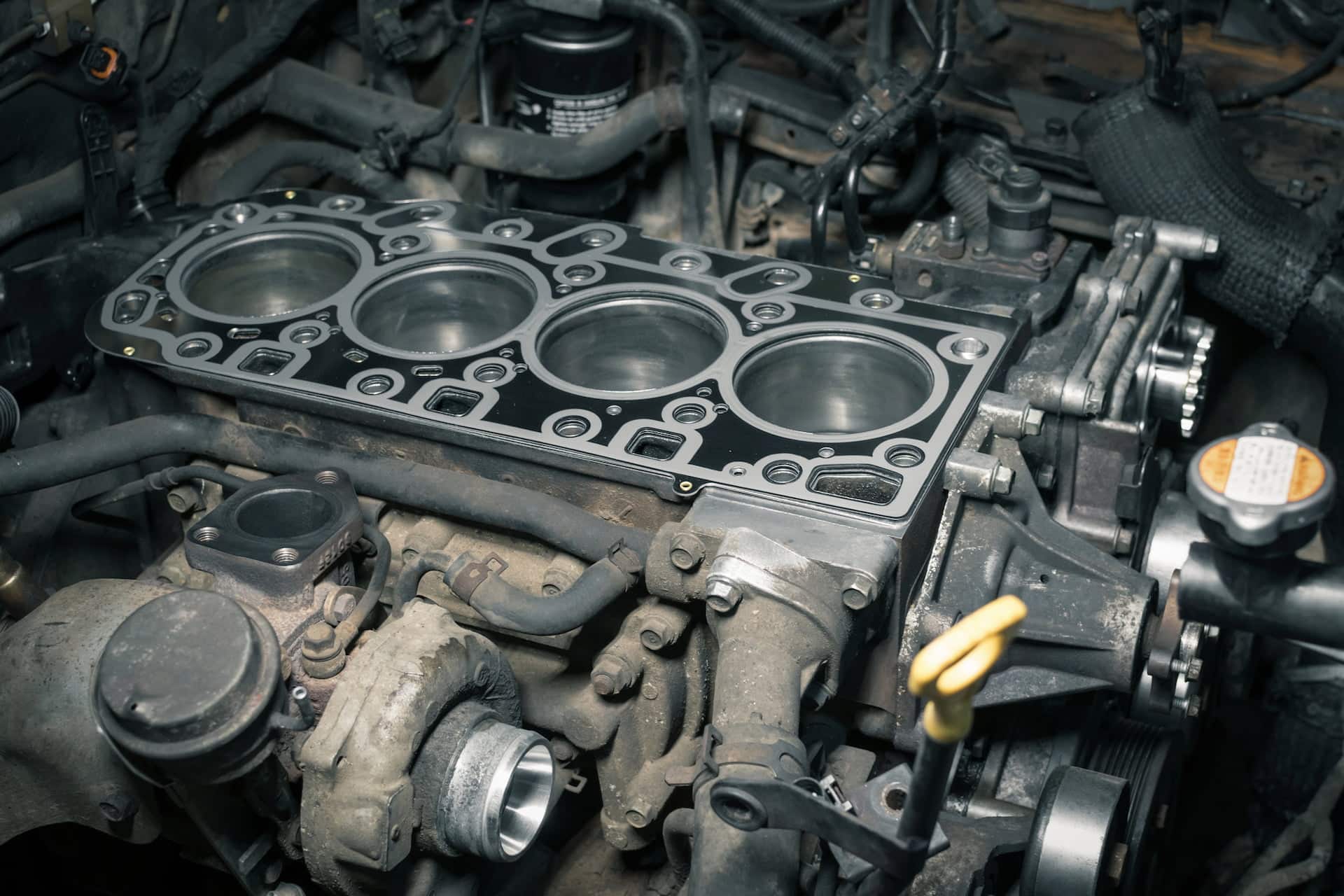
MINI Head Gasket Repair & Replacement at DART Auto
You've noticed milky residue under the oil cap, or maybe your MINI is running hot despite normal coolant levels. Head gasket failure on MINI engines – particularly the Prince (N14/N18) and B-series platforms – creates a cascade of problems that generic shops often misdiagnose as simpler cooling system issues. The head gasket seals combustion pressure and separates oil, coolant, and combustion gases; when it fails, those systems cross-contaminate, leading to overheating, oil dilution, and potential catastrophic engine damage if ignored.
MINI head gasket work demands more than torque specs and a new gasket. The N14 engine (2007-2010 Cooper S) is notorious for head bolt stretch and requires precise multi-stage torque procedures with angle measurements. The cylinder head must be inspected for warpage using a precision straightedge and feeler gauges, then resurfaced if out of spec – often as little as 0.002 inches matters. Timing chain position must be locked during disassembly, and on turbocharged variants, the turbo oil feed and return lines require specific torque values to prevent post-repair leaks. DART Auto uses factory MINI diagnostic software to verify cam timing correlation after reassembly and to clear adaptation values that can cause rough running if left in the ECU.
When you bring your MINI to our Denver shop for head gasket work, expect:
- Complete cooling system pressure testing and combustion gas detection to confirm head gasket failure versus other leak sources
- Cylinder head removal, inspection, and professional resurfacing to OEM flatness specifications
- Multi-layer steel (MLS) OEM gasket installation with torque-to-yield bolts replaced per MINI procedure
- Timing chain verification, coolant system flush, and post-repair leak-down testing to ensure proper sealing
Common Head Gasket Repair & Replacement Issues on MINI Vehicles
If your MINI is consuming coolant, running hot, or showing white smoke from the exhaust, you're likely dealing with a head gasket problem. These failures are more than inconvenient – they can destroy your engine if ignored. Here's what we see most often:
- R50/R52/R53 (2002–2008) W10/W11 Supercharged Engines: The W11 engine in the Cooper S is notorious for head gasket failure, especially on models with high mileage or a history of overheating. The thin multi-layer steel gasket struggles with the thermal cycling from the supercharger, and once coolant breaches into the combustion chamber, you'll see rapid contamination of the oil and white exhaust smoke. Early intervention is critical – waiting often means warped heads and block damage.
- R55/R56/R57 (2007–2013) N12/N14 Turbocharged Engines: The N14 is infamous for timing chain failure, but head gasket issues often follow overheating episodes caused by failed water pumps or thermostat housings. The aluminum head expands unevenly, and the factory torque-to-yield head bolts lose their clamping force. We see coolant mixing with oil, pressure in the cooling system, and misfires on cylinders near the failure point.
- F55/F56 (2014–2019) B38/B46/B48 Engines: BMW's modular B-series engines are generally more reliable, but we still see head gasket weeping on high-mileage examples, particularly where coolant maintenance has been neglected. The integrated exhaust manifold in the head creates extreme thermal stress, and hairline cracks can develop around coolant passages. Symptoms start subtle – slight coolant loss, occasional rough idle – then escalate quickly.
- R60/R61 Countryman/Paceman N18 Engine: The revised N18 addressed many N14 issues, but head gasket failure still occurs after overheating events or when the cooling system isn't properly maintained. The all-wheel-drive models generate additional heat under the hood, accelerating gasket degradation if the cooling fans or auxiliary water pump fail.
- Post-Overheat Damage Across All Generations: MINIs use aluminum heads and blocks with different thermal expansion rates. Any overheating event – even brief – can warp the head surface enough that the gasket can no longer seal. We often find this after a customer ignored a coolant warning light or drove with a failed thermostat.
Why Choose DART Auto for MINI Head Gasket Repair & Replacement
When your MINI starts showing signs of head gasket failure – white smoke from the exhaust, persistent overheating, or coolant mysteriously disappearing – you need technicians who understand the unique architecture of BMW-derived powertrains. DART Auto has been diagnosing and repairing European vehicles since 2000, and our master technicians bring dealer-level training to every MINI head gasket job without the dealer markup.
Head gasket work on MINI platforms demands more than generic repair knowledge. We use factory repair procedures specific to your engine family – whether it's the Prince/Peugeot-PSA N12/N14/N16/N18 engines (common in 2007–2015 Cooper and Cooper S models) or the later BMW B38/B48 turbocharged units. Our shop maintains the diagnostic software and specialty tooling required to verify combustion-chamber integrity, perform cylinder leak-down tests, and re-torque head bolts to the exact multi-stage specifications your engine requires. Because our technicians are salaried rather than flat-rate, they have every incentive to diagnose the root cause correctly the first time – whether that's a warped head from repeated overheating, a failed thermostat that led to thermal cycling, or carbon buildup that created hot spots.
- Platform-specific diagnostics: We identify contributing factors like timing chain stretch on N14 engines or coolant-pump failures that cause localized overheating.
- Complete machine-shop coordination: We work with trusted machine shops to resurface or pressure-test cylinder heads, then verify flatness before reassembly.
- OEM and premium parts: We source genuine MINI gaskets, ARP studs when appropriate, and OEM-equivalent cooling-system components from suppliers we've vetted over two decades.
- 3-year/36,000-mile warranty: Our warranty backs both parts and labor, giving you confidence the repair will hold.
Symptoms – How to Know You Need This Service
Head gasket failure on MINI vehicles presents distinct symptoms that often start subtle and escalate quickly. You may notice:
- White or tan milky sludge on the oil filler cap or dipstick – coolant mixing into the oil system, which destroys bearing surfaces
- Persistent overheating even after thermostat or water pump replacement, especially under load or highway driving
- Sweet coolant smell from the exhaust or white steam that doesn't dissipate like normal cold-start condensation
- Bubbling or gurgling in the coolant reservoir while the engine runs, indicating combustion gases entering the cooling system
- Rapid coolant loss with no visible external leaks – the coolant is being burned in the combustion chamber
- Rough idle or misfires caused by coolant fouling spark plugs or washing oil off cylinder walls
- Oil level rising on the dipstick as coolant dilutes the oil, creating a thin, contaminated mixture
- Check engine light with codes for misfires, oxygen sensor faults, or coolant temperature sensor implausibility
If you see milky oil or rapid coolant loss with overheating, stop driving immediately – continued operation will warp the cylinder head or spin bearings. Bubbling coolant or minor steam means schedule diagnosis this week before the failure progresses.
Which MINI Models We See for Head Gasket Repair & Replacement
Head gasket failures appear most frequently on turbocharged MINI platforms, particularly those using the Prince and early B-series engines. We regularly perform this work on:
- R56 Cooper S / JCW (2007-2013) – N14 and N18 engines, with N14 (2007-2010) showing higher failure rates due to head bolt stretch and thermal stress around cylinders 2 and 3
- R55 Clubman S (2008-2014) – same N14/N18 platform concerns as R56, often exacerbated by higher-mileage highway use
- R57 Convertible S (2009-2015) – N14/N18 turbocharged variants with additional cooling challenges from soft-top insulation
- R58 Coupe S / R59 Roadster S (2011-2015) – N18 engine, less common than R56 but same failure modes
- R60 Countryman S / R61 Paceman S (2011-2016) – N18 engine with ALL4 variants requiring additional subframe work for access
- F56 Cooper S (2014-2018) – early B48 engines occasionally show gasket seepage, though far less common than Prince engines
- F55 Cooper S / F57 Convertible S (2015-2018) – B48 platform, same early production considerations
Naturally aspirated Cooper models (non-S) using the N16 or B38 engines rarely need head gasket work. We focus on the turbocharged variants where boost pressure and thermal cycling create the conditions for gasket failure. Manual and automatic transmissions don't affect the repair procedure, though ALL4 models require more disassembly for engine access.
```htmlCauses & Risks – What Happens if Ignored
Head gasket failure in MINIs typically stems from overheating, age-related gasket material breakdown, or inadequate cooling system maintenance. The compact engine bay and turbocharged or supercharged configurations generate intense heat, and any weakness in the cooling system – a leaking water pump, stuck thermostat, or clogged radiator – puts tremendous stress on the head gasket. Once the gasket begins to fail, the damage accelerates rapidly.
Here's what deteriorates when you delay repair:
- Coolant contamination of engine oil: Within days, your oil turns milky and loses its lubricating properties. Bearings, camshafts, and timing components begin to wear at an accelerated rate. On N14 engines already prone to timing chain issues, contaminated oil can trigger catastrophic chain failure.
- Combustion gases entering the cooling system: Pressure builds in the cooling system, forcing coolant out of the overflow tank and creating air pockets that prevent proper circulation. The engine overheats repeatedly, warping the cylinder head and potentially cracking it entirely.
- Cylinder head warping and surface damage: Aluminum heads warp when exposed to uneven heating. Once the mating surface is no longer flat, a simple gasket replacement becomes a head resurfacing job – or complete head replacement if the warping is severe or cracks have formed.
- Hydrolock risk: If coolant pools in a cylinder when the engine is off, attempting to start can bend connecting rods or crack the piston. This transforms a gasket job into a complete engine rebuild or replacement.
- Catalytic converter damage: Coolant passing through the exhaust coats and destroys the catalyst substrate, adding another expensive component to the repair bill.
The timeline matters. Catching a weeping gasket early might mean a straightforward replacement. Driving for weeks with coolant loss and intermittent overheating often means you're looking at head machining, new bolts, a timing chain service, and possibly a complete engine teardown.
Safety Impact – Why Head Gasket Repair & Replacement Matters
A failing head gasket creates immediate and escalating safety risks. Loss of coolant leads to overheating, which can cause sudden engine shutdown – dangerous in traffic, on highways, or in inclement weather. White smoke pouring from the exhaust reduces visibility for you and drivers behind you. If the engine seizes due to oil contamination or overheating, you lose power steering and brake assist, drastically increasing stopping distance and making the vehicle difficult to control.
Know when to stop driving versus when to schedule repair soon:
- Stop driving immediately if: The temperature gauge is in the red, you see steam from under the hood, the oil pressure warning light is on, or the engine is misfiring badly and losing power.
- Schedule service this week if: You're adding coolant regularly, you see occasional white smoke on startup, the heater isn't working properly, or you notice a sweet smell from the exhaust.
- Get it diagnosed now if: The cooling system is pressurizing (hard upper radiator hose when cold), you see oil residue in the coolant reservoir, or the engine runs rough when cold but smooths out when warm.
Driving a MINI with a compromised head gasket isn't just risking a larger repair bill – it's risking your safety and the safety of others on the road. Engine failure at speed or in traffic can lead to accidents, and the sudden loss of critical systems leaves you with limited control.
How MINI Head Gasket Repair & Replacement Actually Works
The head gasket on your MINI seals the junction between the cylinder head and engine block, containing combustion pressure, engine oil passages, and coolant channels. Modern MINIs use multi-layer steel gaskets designed to handle the high cylinder pressures from turbocharging or supercharging, but they rely on precise clamping force from torque-to-yield head bolts that stretch during installation and cannot be reused.
What makes MINI head gasket work different from a generic repair:
- Torque-to-yield bolt procedure: BMW specifies a multi-stage tightening sequence with angle measurements, not just torque values. The bolts must be replaced every time, and the sequence must be followed exactly to achieve even clamping force across the gasket.
- Cylinder head resurfacing requirements: The aluminum head must be measured for flatness with precision tools. If it's warped beyond specification (common after overheating), it requires machining on a specialized surfacer. Over-milling can affect compression ratio and valve timing.
- Timing component access and replacement: On N14 and N18 engines, head removal provides access to the timing chain, which should be inspected and often replaced given the known failure history. This requires proper timing tool sets and knowledge of the variable valve timing system.
- Coolant system bleeding procedure: MINIs require a specific bleeding process using a pressure filler tool to purge air from the system. Trapped air causes overheating and repeat failures.
- DME adaptation and fault code clearing: After reassembly, the engine control module may need adaptation procedures run with factory-level diagnostic software to relearn fuel trims and clear stored fault codes related to the failure.
This isn't a job for a general repair shop. The combination of precision machining requirements, BMW-specific tooling, and electronic system knowledge means you need a shop with deep MINI experience and the right equipment to do it correctly the first time.
```How We Diagnose Head Gasket Repair & Replacement Issues on MINI
If your MINI is overheating, losing coolant without visible leaks, or blowing white smoke from the exhaust, you're likely facing head gasket failure. We've seen this pattern hundreds of times across Cooper, Clubman, and Countryman models, particularly on N12 and N14 engines from 2007–2010 where thermal stress and marginal OEM gasket design converge. Here's how we confirm what's happening and build a repair plan you can trust:
- Intake interview and symptom timeline. We ask when the overheating started, whether you've noticed sweet coolant smell in the cabin, and if the temperature gauge swings wildly. This narrows the failure mode before we touch a tool.
- Visual inspection of the cooling system. We check for external coolant weeping at the head-to-block joint, oil cap contamination (milky residue), and expansion tank pressure. On R56 Cooper S models, we look for telltale coolant staining near cylinder 2 and 3.
- Combustion gas test. We use a block tester with chemical indicator fluid over the coolant reservoir. If exhaust gases are crossing into the coolant passages, the fluid changes color instantly – definitive proof of head gasket breach.
- Compression and leak-down testing. We measure cylinder pressures and introduce shop air to pinpoint which cylinders are compromised. Low compression in adjacent cylinders often signals gasket failure between bores.
- Scan with factory-level ISTA/D tooling. We pull freeze-frame data for overheating events, check coolant temperature sensor rationality, and review long-term fuel trims that reveal lean conditions from coolant intrusion into the combustion chamber.
- Cooling system pressure test. We pressurize the system cold and monitor for pressure drop, isolating internal leaks from external hose or radiator failures.
Once we've confirmed head gasket failure and ruled out cracked head or block, we walk you through what we found, show you the test results, and provide a detailed quote that includes machining, new hardware, and the timing components we replace while the head is off. No surprises, no upselling – just the work your MINI needs to get back on the road.
Head Gasket Repair & Replacement on MINI: Repair vs. Replacement
Head gasket work on a MINI is almost always a full replacement job, but understanding the scope helps you see why. The gasket itself is a multi-layer steel assembly that fails when combustion pressure breaches the fire ring or coolant passages erode. Once that happens, there's no "repair" – the gasket must come out and a new one torqued in with fresh head bolts.
When it's genuinely a repair:
- External coolant seepage from a loose head bolt (rare, but we've seen it on high-mileage N18 engines). We torque to spec, pressure-test, and monitor.
- Minor surface corrosion on the head or block deck that cleans up with careful resurfacing – no replacement needed if the material is still within flatness tolerance.
When partial replacement makes sense:
- Replacing the head gasket and timing chain (common on 2007–2010 N14 engines where chain stretch accelerates once the head is off). You're already there; the labor overlap is significant.
- Swapping the thermostat, water pump, and coolant hoses during gasket replacement. These components are exposed during disassembly and often due for service anyway on R55/R56/R57 models past 80,000 miles.
When full replacement is the right call:
- Head warpage beyond machine-shop limits (we see this on overheated N12 engines). A warped head won't seal even with a new gasket – you need a remanufactured or new head.
- Cracked head between valve seats (catastrophic overheating). No amount of machining fixes a crack; replacement is the only safe option.
We machine the head on every gasket job and measure deck flatness with a precision straightedge. If your head is savable, we'll save it. If it's not, we'll show you why and source a quality replacement. Our salaried technicians have no incentive to upsell – we recommend what the car needs, nothing more.
How to Make Your MINI Head Gasket Repair & Replacement Last Longer
Once we've installed a fresh head gasket, torqued the new hardware, and pressure-tested the cooling system, your MINI is ready for another 100,000+ miles – if you protect the repair. Head gaskets fail from heat and pressure, so managing both extends the life of every component we just installed.
Driving habits that protect the head gasket:
- Let the engine reach operating temperature before hard acceleration. Cold engines run rich and create uneven thermal expansion that stresses the gasket.
- Watch the temperature gauge. If it climbs past center, pull over immediately – even 30 seconds of overheating can warp the head we just machined.
- Avoid lugging the engine in high gear at low RPM. MINI turbo engines (N14, N18, B38) build tremendous cylinder pressure under boost; keep RPMs above 2,000 under load.
Maintenance you can do yourself:
- Check coolant level weekly for the first month after repair. A slow leak or trapped air will show up early if you're watching.
- Look for new oil leaks or coolant stains around the head. Catch seepage early and we can address it before it becomes a problem.
- Listen for changes in engine sound – pinging or knocking can signal pre-ignition from cooling system issues.
Brand-specific care that matters:
- Use only MINI-approved coolant (or equivalent Pentosin). Aftermarket "universal" coolant corrodes aluminum heads and causes gasket failure on BMW-era MINI engines.
- Follow MINI's 2-year coolant flush interval religiously. Old coolant loses its anti-corrosion additives and attacks the head gasket from the coolant side.
- Replace the expansion tank cap every 4 years. A weak cap allows pressure loss and localized boiling that damages the gasket.
What to leave to us: cooling system pressure testing, thermostat replacement, and anything requiring head bolt torque specs. These are not DIY jobs on a turbocharged MINI – the margin for error is zero and the consequences are expensive. Bring it in if you see temperature swings, smell coolant, or notice oil contamination. We'll catch it early and keep your fresh gasket doing its job.
What to Expect When You Bring Your MINI In
Head gasket diagnosis and repair is methodical work, and we walk you through every phase so there are no surprises. Here's how the process unfolds:
- Drop-off and symptom review: When you arrive, we'll discuss what you've been experiencing – overheating episodes, coolant loss, rough idle, or visible exhaust smoke. We'll note any recent repairs or warning lights and ask about your driving conditions.
- Diagnostic inspection: Our technicians perform a cylinder leak-down test, combustion-gas test on the coolant, and compression check across all cylinders. We scan for stored fault codes and inspect the cooling system for leaks, air pockets, or component failures that may have caused the gasket to fail.
- Written estimate and consultation: Once we've confirmed head gasket failure, we provide a detailed written estimate covering gasket replacement, cylinder-head resurfacing (if needed), timing-component inspection, and any cooling-system parts that should be replaced during the repair. We'll explain what we found, why the gasket failed, and what happens if you delay the work.
- Repair and reassembly: We disassemble the top end following factory procedures, send the head out for machining if required, replace the gasket and related seals, re-torque fasteners in the correct sequence, refill and bleed the cooling system, and verify timing-chain tension.
- Post-repair verification: Before you pick up your MINI, we road-test the car under load, monitor coolant temperature and pressure, and re-scan for codes. If anything feels off after you drive it, call us immediately – we'll recheck the work at no charge.
We offer loaner vehicles and local shuttle service to keep you mobile during the repair. If you need to leave personal items in the car, just let us know at drop-off. After-hours key drop and pickup are available by arrangement, and we'll walk you through the completed work and warranty coverage when you collect your vehicle.
Our MINI Services
- Air Conditioning AC Repair
- Battery Repair Replacement
- Brake Repair & Brake Fluid Change
- Check Engine Light Diagnostics
- Clutch Repair & Replacement
- Coolant Leak Repair
- Cooling System Repair
- Drive Shaft Repair
- Engine Repair
- Exhaust & Catalytic Converter Repair
- Oil Change
- Oil Leak Repair
- Scheduled Service Maintenance
- Steering Repair
- Suspension Repair
- Cambelt Timing Belt Replacement
- Transmission Repair
- Tune Up
- Wheel Alignment


