
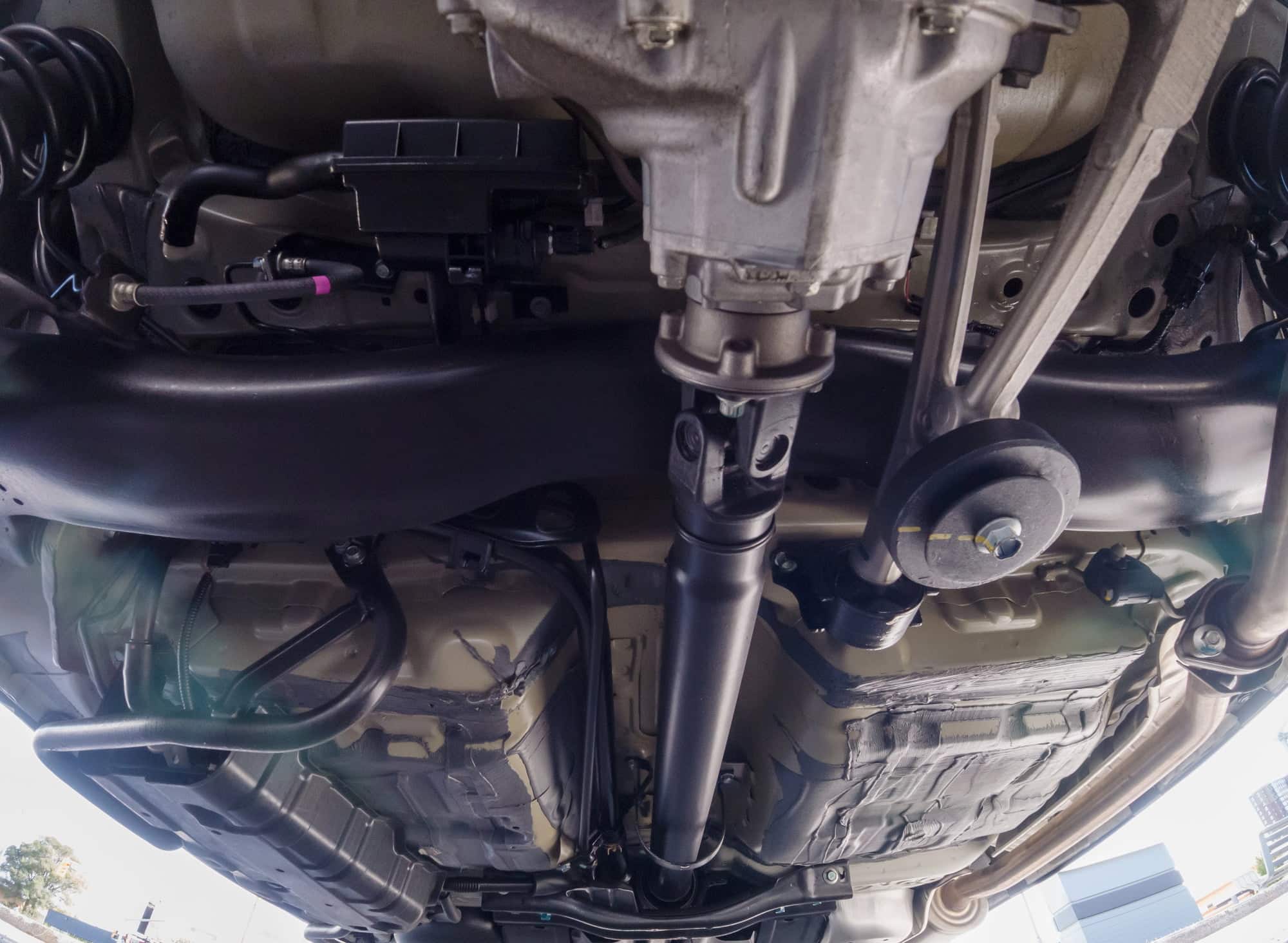
MINI Drive Shaft Repair at DART Auto
MINI vehicles use a sophisticated all-wheel-drive system (ALL4) on many models, and even the front-wheel-drive variants employ CV axles and intermediate shafts that demand precision during service. The second-generation Countryman and Clubman (F60/F54 platforms, 2016-present) feature an electronically controlled rear differential that communicates constantly with the DSC module – meaning drive shaft work isn't just mechanical replacement, it often requires coding and adaptation using factory diagnostic protocols. We've invested in the same ISTA tooling BMW dealerships use, because MINI drive shaft repairs frequently trigger fault codes that won't clear without proper software handshakes.
What sets drive shaft repair on a MINI apart is the tight packaging and integration with electronic stability systems. The ALL4 system on R60 Countryman (2011-2016) and later F-series models uses a power take-off unit mounted to the transmission, and any play or imbalance in the drive shaft creates vibration that confuses the yaw sensors. Our master technicians – each with over a decade of European vehicle experience – follow OEM torque specifications to the Newton-meter and verify proper phasing of multi-piece shafts before final assembly. We don't guess at alignment or reuse stretch bolts the way quick-service shops sometimes do.
When you bring your MINI to DART Auto for drive shaft service, expect:
- Complete undercarriage inspection to identify related wear in CV joints, center support bearings, and differential mounts
- Factory diagnostic scanning using ISTA to check for stored fault codes in the transfer case and ABS modules
- OEM or premium aftermarket components sourced from GKN, Rein, or Genuine BMW suppliers – never off-brand parts that fail prematurely
- Post-repair test drive and software verification to confirm smooth operation and proper ALL4 engagement under load
Common Drive Shaft Repair Issues on MINI Vehicles
MINI drive shafts operate under unique stress conditions due to the brand's characteristic front-wheel-drive architecture and transverse engine layout – a design that traces back to the original 1959 Mini and persists through today's BMW-era platforms. The R-series (2001–2015) and F-series (2014–present) generations share similar packaging constraints that concentrate torsional loads on relatively short half-shafts, making certain failure modes predictable across model years.
- CV joint boot tears on R50/R52/R53 (2002–2008) first-generation models: The outboard constant-velocity joint boots on these early MINI Cooper and Cooper S models are prone to splitting at the fold creases, especially on vehicles driven in cold climates or subjected to frequent full-lock steering maneuvers. Once the boot tears, grease escapes and contaminants enter, accelerating bearing wear. The R56 generation (2007–2013) improved boot material but still shows similar wear patterns after 80,000–100,000 miles.
- Inner tripod joint wear on manual-transmission F55/F56 models (2014–present): The sliding tripod joint on the transmission side develops play as the needle bearings wear, creating a pronounced clunk during throttle transitions. This is particularly common on Cooper S models with the six-speed manual, where aggressive clutch engagement amplifies shock loads through the joint.
- Intermediate shaft bearing failure on automatic-equipped R-series Coopers: Models fitted with the Aisin six-speed automatic or CVT transmission use a two-piece right-side drive shaft with a center support bearing. This bearing can fail prematurely – often before 60,000 miles – producing a droning vibration at highway speeds that intensifies under load.
- Axle nut loosening on track-driven or modified MINIs: Owners who participate in autocross or track days sometimes experience axle nut backing-off, especially if the factory torque specification (280 Nm/206 lb-ft on most models) wasn't properly applied during previous service. This creates dangerous hub play and can lead to catastrophic wheel bearing or hub damage.
- Spline wear on Clubman and Countryman ALL4 models: The rear drive shafts on all-wheel-drive MINI platforms (R60 Countryman, F60 Countryman, F54 Clubman) use a different spline interface with the rear differential. High-mileage examples – particularly those used for winter driving with aggressive tire choices – show accelerated spline wear that manifests as a metallic clicking during acceleration.
- Corrosion-induced seizure on coastal and salt-belt MINIs: The aluminum alloy used in MINI drive shaft components is susceptible to galvanic corrosion when exposed to road salt. The hub-to-shaft interface can corrode severely, making drive shaft removal extremely difficult and sometimes requiring hub replacement even when the shaft itself is the primary failure.
Why Choose DART Auto for MINI Drive Shaft Repair
MINI Cooper and Cooper S models – particularly the second-generation R56/R57 (2007–2013) and third-generation F56 (2014+) – rely on constant-velocity joints and drive shafts that endure unique stress from the transversely mounted engine and front-wheel-drive layout. When you hear clicking during tight turns or feel vibration under acceleration, you need a shop that knows the difference between a torn CV boot that can be re-packed and a shaft that requires full replacement. DART Auto's technicians use factory service information and MINI-specific torque specifications to diagnose whether the issue is a failed inner Tripod joint, an outer Rzeppa joint with worn bearings, or a center bearing on all-wheel-drive Countryman and Clubman models.
We invest in the diagnostic tooling that matches what MINI dealerships use – including scan tools that read drivetrain fault codes and live-data streams from the Dynamic Stability Control module. Our master technicians have dealer training and over ten years of experience, so they recognize platform-specific failure modes: the R56 Cooper S is prone to inner CV joint wear when original boots crack, and the F60 Countryman ALL4 system can develop center-bearing noise around 80,000 miles. Because our technicians are salaried rather than flat-rate, there's no incentive to replace parts that can be serviced or to skip the road-test verification that confirms the repair solved the problem.
- Factory-level diagnostics: MINI-compatible scan tools and access to Technical Service Bulletins that guide repair decisions.
- OEM and premium aftermarket parts: We source GKN, Meyle HD, or genuine MINI shafts – never bargain-bin rebuilds that fail early.
- End-to-end ownership: From initial inspection through post-repair road test, one team handles your car with no hand-offs.
- 3-year/36,000-mile warranty: Parts and labor coverage that backs every drive shaft repair we perform.
Symptoms – How to Know You Need This Service
Drive shaft problems on MINI vehicles announce themselves through vibration, noise, and sometimes sudden loss of power delivery. Because many MINIs use all-wheel drive with an electronically managed rear axle, symptoms can range from mechanical clunks to dashboard warnings. You may notice:
- Vibration that increases with speed – especially between 40-60 mph, often felt through the floor or seat rather than the steering wheel, pointing to an out-of-balance or bent drive shaft
- Clunking or clicking when accelerating from a stop – particularly noticeable in ALL4 models when the rear axle engages, indicating worn CV joints or loose splines
- Squeaking or grinding from underneath the vehicle – center support bearings on two-piece shafts (common on Countryman and Clubman) fail and create rhythmic noise that matches wheel speed
- Shuddering during tight turns – damaged CV boots allow grease to escape and dirt to enter, causing the joint to bind and create a lurching sensation
- Dashboard warning lights – the DSC (Dynamic Stability Control) or 4WD malfunction lamp may illuminate if the ALL4 system detects unexpected speed differences between axles
- Visible grease splatter on the inside of wheels – a torn CV boot will fling grease outward, coating the wheel barrel and brake components
- Metallic grinding or rattling over bumps – a failed center carrier bearing allows the drive shaft to contact the underbody or exhaust
If you hear sudden loud banging or lose power to the rear wheels entirely, stop driving immediately – a completely separated drive shaft can cause catastrophic damage to the undercarriage, fuel lines, or brake components.
Which MINI Models We See for Drive Shaft Repair
Drive shaft and CV axle service applies to nearly every MINI model, though the complexity varies significantly between front-wheel-drive hatchbacks and ALL4 all-wheel-drive variants. We regularly service:
- R60 Countryman (2011-2016) with ALL4 – two-piece drive shaft with center support bearing; prone to bearing failure around 80,000 miles
- F60 Countryman (2017-present) with ALL4 – electronically controlled rear differential requiring ISTA coding after drive shaft replacement
- R61 Paceman (2013-2016) with ALL4 – shares R60 platform and drive shaft configuration
- F54 Clubman (2016-present) with ALL4 – identical rear-axle architecture to F60 Countryman, same software dependencies
- R55/R56/R57 (2007-2013) front-wheel-drive models – CV axles and intermediate shafts; the driver-side intermediate shaft bearing is a common failure point
- F55/F56/F57 (2014-present) front-wheel-drive models – updated CV joint design but similar wear patterns, especially on JCW variants with higher torque
- R53 Cooper S (2002-2006) – supercharged models with manual transmission see accelerated CV boot wear from spirited driving
We also service the electric drive units on Cooper SE models, though those use a different architecture without traditional drive shafts. If you're unsure whether your MINI has ALL4 or which generation platform it is, our service advisors can identify it from your VIN and explain exactly what components your vehicle uses.
Causes & Risks – What Happens if Ignored
Drive shaft problems on MINI vehicles typically stem from a combination of design-specific factors and operating conditions. The short wheelbase and tight suspension geometry inherent to the MINI platform create larger CV joint articulation angles during cornering, accelerating wear on the constant-velocity bearings. Colorado's freeze-thaw cycles cause rubber boots to harden and crack, while our high-altitude driving conditions – with steeper grades and thinner air requiring more aggressive throttle inputs – place additional torsional stress on shaft components. Many MINI owners are enthusiasts who drive spiritedly, and the cars' go-kart handling encourages full-lock parking maneuvers that cycle the CV joints through their maximum articulation range thousands of times per year.
Delaying drive shaft repair creates a predictable cascade of escalating damage:
- Boot tear to CV joint failure (2–6 months): Once a CV boot tears, the joint typically survives 1,000–3,000 miles before contamination causes the bearings to pit and score. What starts as a faint clicking noise during turns evolves into a pronounced popping, then sudden catastrophic failure where the joint binds or separates entirely.
- Worn CV joint to wheel bearing damage (immediate to 3 months): A failing CV joint transmits irregular loads and vibrations directly into the wheel bearing assembly. On MINI platforms where the bearing is pressed into the hub and not separately serviceable, this can necessitate a complete hub replacement – turning a $400 shaft replacement into a $900+ repair.
- Intermediate bearing failure to transmission damage (1–4 weeks): When the center support bearing on two-piece shafts fails completely, the unsupported shaft whips against the transmission case and subframe. This can crack the transmission output seal housing or damage the differential side gear, transforming a $350 bearing repair into a $2,500+ transmission rebuild.
- Loose axle nut to hub destruction (days to immediate): An axle nut that's backed off even slightly allows the drive shaft to hammer against the hub splines with every acceleration and braking event. Within 50–200 miles, the splines are damaged beyond repair, the hub is cracked, and sometimes the wheel bearing race is displaced – requiring complete corner replacement including control arms if the bearing outer race spins in the knuckle.
- Minor vibration to differential wear on ALL4 models: Rear drive shaft imbalance or play on all-wheel-drive MINIs forces the rear differential to compensate for speed mismatches. Over several thousand miles, this accelerates differential clutch pack wear and can damage the transfer case coupling, leading to expensive repairs that often aren't covered under extended warranties due to "lack of maintenance."
Safety Impact – Why Drive Shaft Repair Matters
Drive shaft integrity directly affects vehicle control and occupant safety. A failing CV joint doesn't just make noise – it compromises the mechanical link between the transmission and wheels, which is fundamental to maintaining directional stability. On front-wheel-drive MINIs, where the drive shafts also serve as part of the suspension geometry, a separated joint can cause immediate loss of power to one wheel, creating an asymmetric braking condition that pulls the vehicle violently to one side. The electronic stability control system cannot fully compensate for a mechanical disconnection.
Specific safety scenarios that require immediate attention:
- Stop driving immediately: Loud banging or clunking from the front wheels accompanied by vibration through the steering wheel; sudden loss of power during acceleration; grinding noise that changes with vehicle speed; visible grease splatter on the inside of the wheel; any sensation of the wheel "hopping" or binding during turns.
- Schedule within one week: Clicking noise during tight turns that's progressively getting louder; vibration at highway speeds that wasn't present before; play or looseness felt when rocking the vehicle while parked; any fresh tears or damage visible on CV boots during visual inspection.
- Monitor and schedule within one month: Faint clicking only at full steering lock during slow-speed maneuvers; minor vibration that appears only under hard acceleration; slight grease seepage from a boot but no visible tear; metallic dust or debris on the inside of the wheel rim.
From a liability perspective, documented knowledge of a drive shaft issue – such as a note on a previous inspection report – creates responsibility to address it. If a known CV joint failure causes loss of control resulting in an accident, insurance companies have denied claims based on deferred maintenance, and in commercial use cases, fleet operators have faced negligence findings.
How MINI Drive Shaft Repair Actually Works
MINI drive shafts use a constant-velocity joint design that allows the shaft to transmit torque through varying angles as the suspension compresses and extends. The outboard joint – closest to the wheel – is typically a Rzeppa-type ball bearing CV joint that can articulate up to 47 degrees, while the inboard joint uses either a plunging tripod design (manual transmissions) or a second CV joint (many automatics) to accommodate changes in shaft length during suspension travel. This dual-joint configuration is necessary because MINI's MacPherson strut front suspension creates significant geometry changes during cornering and over bumps.
What makes MINI drive shaft service distinct from generic front-wheel-drive work:
- Hub torque specifications and staking requirements: MINI axle nuts require precise torque (typically 280 Nm) followed by a 90-degree angular turn, then staking the nut collar into the shaft groove. This isn't a simple "torque to spec" operation – it requires a calibrated angle gauge and proper staking tools to prevent the nut from backing off.
How We Diagnose Drive Shaft Repair Issues on MINI
MINI models – particularly the R53 Cooper S and R56 generation with the Getrag six-speed – are known for their spirited handling, but that same driving character can expose weaknesses in the drivetrain. Because MINI uses a transverse-mounted engine with a complex angle drive and intermediate shaft arrangement, diagnosing drive shaft issues requires more than just a visual inspection. We start with factory-level scan tools that communicate with the DSC (Dynamic Stability Control) and powertrain modules to capture fault codes, wheel speed sensor discrepancies, and torque distribution anomalies that point to driveline binding or imbalance.
- Initial scan and fault code retrieval: We connect BMW ISTA diagnostic software to read stored and pending codes from the engine, transmission, and stability control modules. Codes related to wheel speed mismatches or drivetrain vibration are logged and cross-referenced with known R-series platform issues.
- Road test under load: A technician drives the vehicle through a range of conditions – slow-speed turns, highway merging, and hard acceleration – listening for clunks, vibrations, or binding that manifest under torque. Front-wheel-drive MINIs with worn CV joints often produce clicking in tight turns; all-wheel-drive variants may show shudder during lane changes if the propeller shaft or center support bearing is failing.
- Lift inspection and measurement: With the car on the lift, we rotate the drive shafts by hand, checking for play in the CV joints, torn boots, and rust or corrosion on the shaft itself. We measure runout with a dial indicator and inspect the center support bearing (on models equipped) for rubber deterioration or lateral movement.
- Component-specific tests: For all-wheel-drive models (R60 Countryman, F60 generation), we inspect the propeller shaft, transfer case mounts, and rear differential input for wear patterns that indicate misalignment or fluid contamination.
Once the diagnosis is complete, we walk you through exactly what failed, why it happened, and what the repair entails. You'll receive a detailed estimate that breaks down parts, labor, and the warranty coverage – so there are no surprises when you approve the work.
Drive Shaft Repair on MINI: Repair vs. Replacement
Not every drive shaft problem requires a full replacement. The right approach depends on what's actually worn, how far the damage has progressed, and whether adjacent components are still sound. Here's how we determine the best path forward:
- True repair: If a CV boot has just started to tear and the joint itself is still clean and tight, we can replace the boot, repack the joint with fresh grease, and seal it properly. This is common on lower-mileage R-series cars where the boot split from age rather than wear. Similarly, if the center support bearing on an all-wheel-drive model shows early rubber cracking but the bearing itself is smooth, we may replace just the bearing assembly and preserve the shaft.
- Partial replacement: When a single CV joint is worn but the opposite end and the shaft are still good, we replace the affected axle half or the complete axle assembly, depending on availability and labor access. On many MINI platforms, it's more efficient to replace the entire half-shaft than to disassemble and rebuild a joint, especially when OEM or quality aftermarket axles are readily available.
- Full replacement: If the CV joint has been running dry for an extended period – evidenced by metal shavings in the boot, grooved bearing surfaces, or audible grinding – the entire axle must be replaced. Likewise, if the propeller shaft on an all-wheel-drive model has a failing center bearing and shows signs of imbalance (vibration at highway speed), we replace the complete assembly to ensure proper balance and alignment.
We never push you toward the most expensive option. Instead, we explain what each approach accomplishes, how long it will last, and what risks remain if you choose a less comprehensive repair. The goal is to fix your MINI correctly and keep it reliable without spending more than necessary.
How to Make Your MINI Drive Shaft Repair Last Longer
Once we've repaired or replaced your drive shaft components, a few conscious habits will help you get the most life out of the work. MINI drivetrains are engineered for performance, but they reward careful operation and regular attention.
Driving Habits That Protect the Drivetrain
- Avoid full-lock, full-throttle starts: Turning the wheel to its stop and accelerating hard puts maximum stress on the outer CV joints. Ease into throttle when the wheel is turned sharply, especially in parking lots or tight corners.
- Let the car warm up before spirited driving: Cold transmission and differential fluid is thicker and slower to lubricate. Give the drivetrain a few minutes of gentle driving before hard pulls or aggressive cornering.
- Minimize curb strikes and potholes: Impact loads can crack CV boots, dent shafts, or knock the center bearing out of alignment. When possible, slow down for rough pavement and avoid hitting curbs at speed.
Maintenance You Can Monitor
- Visual boot checks: Every few months, glance at the CV boots (the rubber accordion covers at each end of the axle). Look for fresh grease splatter, cracks, or tears. Catching a split boot early can save the joint.
- Listen for new noises: A clicking sound during turns or a vibration that wasn't there before often signals early CV or bearing wear. Address it promptly – small problems become expensive when ignored.
- Follow MINI's service intervals: Transmission and differential fluid changes (especially on all-wheel-drive models) keep the drivetrain lubricated and reduce the heat and friction that accelerate wear.
Leave the actual repair and replacement work to trained technicians. Drive shafts are safety-critical – improper installation can lead to separation at speed. We use OEM or premium aftermarket parts, torque fasteners to factory specifications, and verify proper CV joint angles before the car leaves the shop. Your job is to drive it thoughtfully and let us know when something feels or sounds different.
What to Expect When You Bring Your MINI In
Drive shaft work starts with an accurate diagnosis, so we take time to understand what you're experiencing – clicking noises, vibration at certain speeds, or grease visible on the wheel well. Here's how the process unfolds when you schedule an appointment:
- Drop-off and intake: Bring your MINI at the scheduled time. We'll ask about symptoms, driving conditions when the noise occurs, and any recent service history. Remove personal items from the cabin; we'll provide a loaner vehicle or shuttle service if you need to leave the car with us.
- Inspection and diagnosis: A master technician lifts the car, inspects CV boots for tears or grease leaks, checks for play in the joints, and road-tests to replicate the concern. We scan for drivetrain fault codes and review live data from the wheel-speed sensors and stability-control system.
- Written estimate: You'll receive a detailed estimate that explains which shaft or joint needs replacement, why the repair is necessary now, and what happens if you delay. We walk through the findings by phone or email – your choice.
- Repair authorization and execution: Once you approve, we order the correct OEM or premium part, remove the old shaft following MINI torque specs, install the new assembly, and torque all fasteners to factory specification. If your model has ALL4, we verify transfer-case fluid level and condition.
- Post-repair verification: Every drive shaft job includes a road test to confirm the noise is gone and a final scan to clear any stored codes. At pickup, we show you the old part and explain the work completed.
If you notice any unusual behavior after pickup – a new vibration or a return of the original symptom – call us immediately. We'll bring the car back in, re-inspect at no charge, and make it right. Our salaried compensation structure means there's never pressure to declare a job finished before it truly is.
Our MINI Services
- Air Conditioning AC Repair
- Battery Repair Replacement
- Brake Repair & Brake Fluid Change
- Check Engine Light Diagnostics
- Clutch Repair & Replacement
- Coolant Leak Repair
- Cooling System Repair
- Engine Repair
- Exhaust & Catalytic Converter Repair
- Head Gasket Repair & Replacement
- Oil Change
- Oil Leak Repair
- Scheduled Service Maintenance
- Steering Repair
- Suspension Repair
- Cambelt Timing Belt Replacement
- Transmission Repair
- Tune Up
- Wheel Alignment