
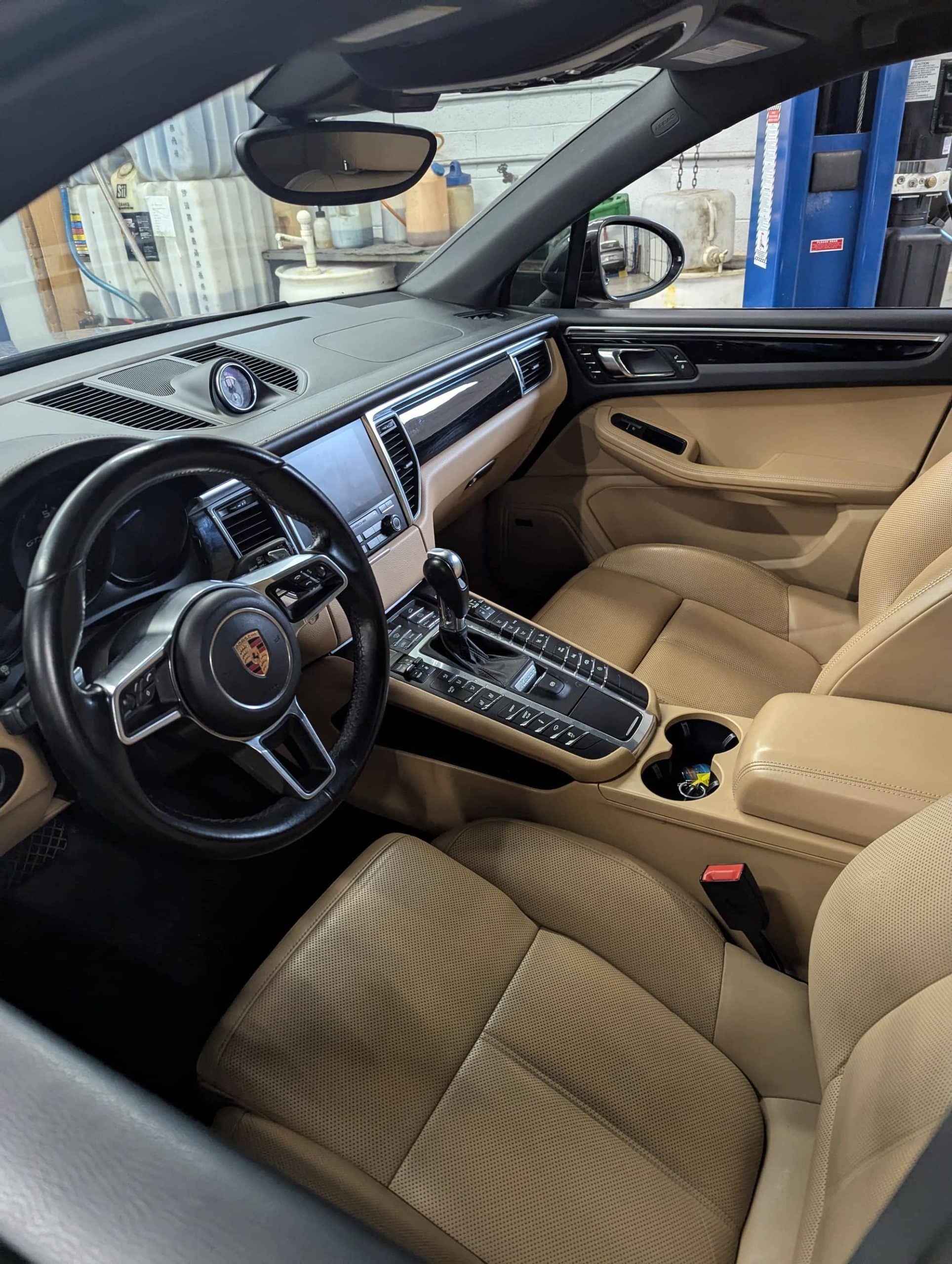
MINI Steering Repair at DART Auto
Your MINI pulls left under braking. The wheel feels notchy through tight corners. You hear a groan when parking. These aren't quirks of a sporty European car – they're signs your steering system needs attention from someone who understands how MINI engineered these components. Since the BMW takeover in 2000, MINI has used electric power steering (EPS) systems calibrated for precise feedback and agile handling. When these systems develop faults, generic shops often misdiagnose the issue or replace parts that don't address the root cause.
At DART Auto, we've been diagnosing and repairing MINI steering systems for over 24 years. We use MINI-specific diagnostic software to interrogate the EPS control module, read stored fault codes, and perform active tests that reveal intermittent failures invisible to basic scan tools. The R-series cars (2002–2015) commonly experience steering column angle sensor drift and EPS motor brush wear. The F-series platforms (2014+) use different EPS calibration and require torque-angle tightening procedures that generic torque wrenches can't replicate. We follow factory repair procedures, use OEM or premium aftermarket components from suppliers like ZF and Lemförder, and apply the correct fluid specs for hydraulic-assist models.
When you bring your MINI to DART Auto for steering repair, you can expect:
- Complete diagnostic scan of the EPS module, ABS system, and suspension control units to identify electrical faults affecting steering assist
- Physical inspection of tie rod ends, ball joints, steering rack boots, and mounting bushings for wear or fluid leaks
- Test drive evaluation to replicate the symptoms you're experiencing and verify the repair solves the problem
- Transparent explanation of what failed, why it failed, and what happens if you delay the repair – no pressure, just facts
Common Steering Repair Issues on MINI Vehicles
If your MINI is pulling to one side, the wheel feels loose, or you're hearing clunks during turns, you're likely dealing with one of several well-documented steering problems that affect these cars. MINI vehicles share BMW platforms and inherit both their engineering sophistication and their specific wear patterns. Here's what we see most often:
- Electric Power Steering (EPS) motor failure on R56/R57 (2007–2013): The EPS motor and control module on second-generation Cooper and Clubman models are notorious for sudden failure, often triggered by moisture intrusion or internal bearing wear. You'll see a yellow steering wheel warning light and feel heavy, manual-like steering with no assist. The module sits low in the engine bay where road spray accelerates corrosion.
- Steering rack bushing wear on R50/R52/R53 (2002–2008): First-generation cars develop play in the steering rack mounting bushings, especially on cars driven hard or in cold climates. You'll feel a clunk when turning at low speeds or hitting bumps mid-corner. The rack physically shifts in its cradle, creating inconsistent steering feel and accelerating inner tie rod wear.
- Tie rod end failure across all generations: MINI tie rod ends wear faster than many European brands due to the short wheelbase and aggressive steering geometry. Outer tie rods develop play first, causing a wandering feel at highway speed and uneven tire wear on the outer edges. Inner tie rods follow, producing a knocking sound during parking maneuvers.
- Control arm ball joint separation on F55/F56 (2014–present): Third-generation cars on the UKL platform share front suspension architecture with BMW's front-drive models, and the lower control arm ball joints can separate under load if wear goes unchecked. You'll hear creaking over speed bumps and feel vague turn-in response before the joint fails completely.
- Steering column U-joint wear on Countryman/Paceman (R60/R61): The taller ride height and longer steering shaft on these crossover models puts extra stress on the intermediate shaft universal joint. A worn U-joint creates a clicking sensation through the wheel during slow-speed turns and can bind during cold starts.
- Power steering fluid leaks on pre-2007 models: First-generation cars with hydraulic power steering develop leaks at the rack seals and high-pressure hose fittings. You'll notice fluid pooling under the car after it sits, a whining pump noise, and progressively heavier steering as the reservoir runs low.
Why Choose DART Auto for MINI Steering Repair
If your MINI is pulling, wandering, or making noise through the steering wheel, you're dealing with more than a simple alignment issue. Modern MINI steering systems – especially the electric power steering (EPS) found on R56, R60, and F-series platforms – require factory-level diagnostics to separate a failing motor, a corrupted steering-angle sensor, or a simple tie-rod end from software glitches that throw false codes. We use the same BMW-MINI diagnostic tooling the dealer does, along with ISTA/D and ISTA/P software to read live steering data, perform steering-angle recalibrations, and flash updates when a TSB calls for it.
Our master technicians bring dealer training and over a decade of hands-on experience with MINI platforms. They know the common failure points:
- R56 Cooper S (2007–2013): EPS motor brush wear and intermittent assist loss, often misdiagnosed as a rack issue
- R60 Countryman: steering-column U-joint wear causing clunking on lock-to-lock turns
- F56 third-generation models: software calibration drift after battery disconnects, requiring ISTA recalibration
- Rack bushings and inner tie-rods: premature wear on spirited-driving examples, especially lowered cars
Because our technicians are salaried – not flat-rate – they take the time to road-test before and after, verify torque specs on every fastener, and perform a post-repair steering-angle reset. You get honest diagnosis, OEM or premium aftermarket parts from trusted European suppliers, and a 3-year/36,000-mile warranty that backs the work long after you drive away.
Symptoms – How to Know You Need This Service
You may notice these warning signs when your MINI's steering system needs repair:
- Steering wheel pulls to one side during acceleration, braking, or steady cruising – often caused by worn tie rod ends, failing control arm bushings, or uneven steering rack wear
- Groaning or whining noise when turning at low speeds, especially in parking lots – common on R56/R57 models with hydraulic power steering pumps experiencing fluid starvation or bearing wear
- Notchy or sticky feel through the steering wheel when making small corrections – indicates steering column bearing failure or EPS motor brush degradation on F-series cars
- Dashboard warning lights including the yellow steering wheel icon, traction control light, or stability control fault – the EPS system shares data with these modules, and faults cascade
- Excessive play or looseness in the steering wheel, requiring constant correction to hold a straight line – points to worn steering rack bushings or inner tie rod wear
- Vibration or shudder felt through the wheel at highway speeds that changes with steering input – often a failing wheel bearing or CV joint, but sometimes a bent tie rod from impact damage
- Complete loss of power assist making the wheel suddenly heavy – stop driving immediately and have the car towed; this indicates EPS motor failure or catastrophic fluid loss on hydraulic systems
If you experience sudden loss of assist or the steering locks up, pull over safely and call for a tow. For other symptoms, schedule an appointment soon – steering faults rarely improve on their own and often worsen rapidly.
Which MINI Models We See for Steering Repair
We regularly perform steering repairs on these MINI platforms and generations:
- R50/R52/R53 (2002–2008) – First-generation Cooper, Cooper S, and Convertible with hydraulic power steering; common issues include rack boot tears, pump pulley bearing noise, and tie rod end wear
- R55/R56/R57 (2007–2015) – Clubman, Hardtop, and Convertible; hydraulic steering on early models transitions to EPS on later years; steering column bearing failure and rack bushing wear are frequent
- R58/R59 (2011–2015) – Coupe and Roadster variants share R56 steering components and failure modes
- R60/R61 (2010–2016) – Countryman and Paceman with EPS; larger vehicles put more stress on tie rod ends and control arm bushings
- F54/F55/F56/F57 (2014–present) – Current-generation Clubman, Hardtop, and Convertible with fully electric steering; EPS motor software updates available for early production units, steering angle sensor recalibration required after rack replacement
- F60 (2017–present) – Second-generation Countryman with EPS; shares platform with BMW UKL architecture, requiring BMW-specific diagnostic procedures
- John Cooper Works variants – All JCW models use stiffer steering calibration and may have unique tie rod or control arm specs depending on suspension package
We maintain diagnostic coverage and tooling for all BMW-era MINI platforms. If you have a classic pre-2000 Mini, we recommend a specialist in vintage British vehicles.
Causes & Risks – What Happens if Ignored
Most MINI steering problems start with normal wear accelerated by Denver's freeze-thaw cycles, aggressive driving on mountain roads, and the reality that many of these cars see enthusiastic use. The short wheelbase and stiff suspension tuning that make a MINI fun to drive also concentrate loads on steering components. Electric power steering systems fail when moisture finds its way into connectors or the motor housing, while hydraulic systems on older cars leak as rubber seals age and harden. Potholes and curb strikes shock-load ball joints and tie rods beyond their design limits.
When you ignore early symptoms, here's the typical progression:
- Tie rod play becomes complete separation: A loose outer tie rod that starts as a minor vibration will eventually pull apart at highway speed, causing instant loss of directional control. The wheel flops to one side and the car veers unpredictably. What begins as a $180 tie rod replacement becomes a tow bill, potential collision damage, and anxiety you don't need.
- EPS motor failure leaves you stranded: Electric power steering doesn't degrade gradually – it quits. One moment you have assist, the next you're wrestling a manually-steered car in traffic. If this happens mid-corner or during an evasive maneuver, the sudden increase in effort can cause you to under-steer or over-correct.
- Worn rack bushings destroy the rack itself: When the steering rack shifts in its mounts, the internal seals and bushings inside the rack housing wear unevenly. A $220 bushing replacement becomes a $1,400 rack replacement because the internal components are scored and leaking.
- Ball joint separation causes suspension collapse: A control arm ball joint that clicks and clunks will eventually pop free from the knuckle, letting the wheel tuck under the car. You lose all steering and the vehicle drops onto the brake rotor, often at speed. This is a flatbed tow, potential subframe damage, and a genuine safety emergency.
- Delayed alignment after tie rod replacement ruins new tires: Even after replacing worn steering components, skipping the required four-wheel alignment means your new tires will feather and wear unevenly within a few thousand miles, costing you another $800 in rubber you shouldn't have needed yet.
Safety Impact – Why Steering Repair Matters
Your steering system is the primary interface between your intentions and the car's response. When it's compromised, every other safety system – ABS, stability control, traction management – becomes less effective because the chassis can't execute the corrections those systems command. A MINI with a failing tie rod or separated ball joint won't track straight under hard braking, and the ABS can't compensate for a wheel that's no longer properly located. Stability control intervenes based on steering angle sensor input; if the wheel position doesn't match the sensor reading due to excessive play, the system may intervene inappropriately or fail to intervene when needed.
When to stop driving immediately versus schedule soon:
- Stop now: Steering wheel warning light with heavy steering effort, clunking that you can feel through the chassis during turns, visible wheel wobble when the car is jacked up, any pulling to one side that requires constant correction, or a steering wheel that doesn't self-center after a turn.
- Schedule this week: Minor play at the wheel (less than an inch of free movement), intermittent creaking over bumps, slight wandering at highway speed that's easily corrected, or a power steering fluid leak that's leaving small spots but the reservoir is still full.
- Schedule within the month: Steering feel that's changed subtly – slightly heavier or lighter than normal, uneven tire wear appearing on the edges, or a steering wheel that's off-center when driving straight but the car tracks normally.
If you're involved in an incident and an investigation reveals you were driving with known steering defects, liability questions get complicated quickly. More importantly, you're risking your safety and that of everyone around you on the road.
How MINI Steering Repair Actually Works
MINI vehicles use either electric power steering (2007 and newer) or hydraulic power steering (2006 and earlier), and the distinction matters for diagnosis and repair. Electric systems rely on a brushless motor mounted directly on the steering column or rack, controlled by a dedicated module that reads steering angle, vehicle speed, and driver input to calculate assist. There's no fluid, no pump, no hoses – just sensors, a motor, and software. Hydraulic systems use an engine-driven pump to pressurize fluid that acts on a piston inside the steering rack, providing mechanical assist that's proportional to the pressure you apply to the wheel.
What makes MINI steering repair different from generic work:
- EPS module coding and calibration: After replacing an electric power steering motor or control module, the new part must be coded to the car's VIN and the steering angle sensor must be recalibrated using factory diagnostic software. Generic scan tools can't perform this initialization – it requires BMW/MINI-specific software and an understanding of the CAN bus architecture.
- Rack-specific torque sequences: MINI steering racks use stretch bolts and multi-stage torque specifications for the mounting hardware. The inner tie rods require a specific torque value followed by an angular tightening sequence, and the rack bushings must be torqued with the suspension at ride height to avoid preloading the bushings incorrectly.
- Integrated steering angle sensor: The steering angle sensor is part of the clockspring assembly in the steering column and feeds data to the DSC (stability control) system. Any steering work that involves removing the wheel or column requires a sensor reset and DSC recalibration, or you'll have stability control faults and a yellow warning triangle on the dash.
- Subframe alignment considerations: On cars that have had front-end collision repairs or subframe work, the steering rack mounting points may be out of specification. We measure subframe position and verify rack centerline before installing new components
How We Diagnose Steering Repair Issues on MINI
If your MINI's steering feels vague, heavy, or makes noise when turning, you're probably looking for answers – not guesswork. Our diagnostic process starts with what you're experiencing behind the wheel, then systematically narrows down the root cause using factory-level tools and hands-on inspection.
- Initial interview and road test: We drive your MINI to replicate the symptom – whether it's a clunk over bumps, play at highway speed, or binding in tight turns. We note when it happens, under what conditions, and how it feels compared to factory spec.
- Factory scan with BMW ISTA or equivalent: MINI vehicles share BMW architecture, so we use ISTA-D and ISTA-P to pull fault codes from the steering angle sensor, electric power steering module (EPS on R56/F56), and Dynamic Stability Control. Codes like "steering angle sensor implausible signal" or "EPS motor current out of range" point us directly to the affected circuit or component.
- Physical inspection on the lift: We check tie rod ends, ball joints, control arm bushings, and subframe mounts for play or torn boots. On early R50/R53 models, we look for worn inner tie rod sockets – a known weak point. We also inspect the steering rack boots for leaks and measure rack play with a dial indicator.
- Steering angle sensor calibration check: If the steering wheel sits off-center after an alignment or the DSC light is on, we verify sensor zero position and compare to actual wheel angle. Miscalibration often follows suspension work or a dead battery.
- Fluid and electrical tests: For hydraulic racks (R50/R52/R53), we check power steering fluid condition and pressure. For electric systems (R55 onward), we monitor motor current draw and verify wiring integrity at the EPS module.
Once we've pinpointed the issue, we walk you through what we found, show you the failed part if possible, and explain your repair options with a transparent quote. No surprises, no upselling – just a clear plan to restore confident, precise steering.
Steering Repair on MINI: Repair vs. Replacement
Not every steering problem on a MINI requires replacing the entire assembly. The right approach depends on what's actually worn, how the rest of the system looks, and whether a repair will hold up long-term.
When Repair Makes Sense
- Steering angle sensor recalibration: If the sensor is healthy but out of sync (common after battery disconnect or alignment), we recalibrate it using ISTA. No parts needed, just software and a known-good centerline.
- Tie rod end or ball joint replacement: Outer tie rods and lower ball joints wear independently. We replace the failed joint, align the car, and the rest of the steering system continues working as designed.
- EPS motor connector repair: Corrosion at the electric power steering motor connector (especially on early F56 models) can cause intermittent assist loss. Cleaning and sealing the connector often restores full function without replacing the motor.
- Rack boot and bellows: A torn boot doesn't mean the rack is bad – if caught early, we replace the boot, add fresh grease, and preserve the rack internals.
When Replacement Is the Right Call
- Internal rack wear: If the rack has play between input and output (common on high-mileage R56 with repeated pothole impacts), repair isn't viable. We replace the rack with a remanufactured or new unit.
- EPS motor failure: When the motor itself has failed (seized brushes, burnt windings, internal sensor fault), replacement is the only fix. We use OEM or premium remanufactured units with full calibration afterward.
- Subframe bushings collapsed: Severe subframe movement affects alignment and steering feel. We replace the bushings and, if the subframe has elongated bolt holes (R53 and early R56), install reinforcement plates per the factory service bulletin.
We present both options when they exist, explain the trade-offs, and let you decide. Our salaried technicians have no incentive to push the most expensive route – just the one that makes sense for your car and budget.
How to Make Your MINI Steering Repair Last Longer
Once your MINI's steering is back to factory feel, a few habits and maintenance checks will keep it that way. Most of this is straightforward – no special tools required – but knowing what to watch for and when to leave it to the pros makes all the difference.
Driving Habits That Protect Steering Components
- Avoid holding the wheel at full lock: Parking lot maneuvers with the wheel cranked hard and held puts maximum load on the rack, pump (if hydraulic), or EPS motor. Turn, straighten, and keep moving.
- Slow down for potholes and curbs: MINI suspension is firm by design, and hard impacts transfer directly to tie rods, ball joints, and rack mounts. Spotting a pothole early saves hundreds in front-end repairs.
- Warm up before aggressive driving: Cold power steering fluid (or cold grease in EPS gears) doesn't lubricate as well. Let the car come up to temp before track days or spirited canyon runs.
Owner-Level Maintenance You Can Do
- Visual checks every oil change: Look under the car for fluid leaks at the rack boots, torn tie rod boots, or play in ball joints. Catching a torn boot early means a simple replacement instead of a rack rebuild.
- Listen for new noises: Clunking over bumps, groaning when turning, or a rubbing sound at full lock are early warnings. Address them before the part fails completely.
- Check power steering fluid level (R50/R52/R53): If your MINI has hydraulic assist, verify fluid level monthly. A slow leak can starve the pump and damage the rack.
What to Leave to the Shop
- Alignment and steering angle sensor calibration: These require factory scan tools and a proper alignment rack. DIY attempts lead to tire wear, pulling, and DSC faults.
- Rack replacement and subframe work: Torque specs, thread-locking compound, and alignment are critical. This is not the job for a weekend warrior.
- EPS software updates: BMW periodically releases updates to improve EPS behavior and address fault codes. We flash the module with ISTA-P as part of any EPS repair.
Follow MINI's service intervals, use OEM or equivalent fluids, and address small issues before they cascade. That's how you get another 100,000 miles of precise, confidence-inspiring steering from your MINI.
What to Expect When You Bring Your MINI In
From the moment you schedule, we treat your MINI like our own. Here's how the process unfolds:
- Drop-off and intake: Describe the symptoms – pulling, vibration, noise, warning lights – and any recent events (pothole hit, curb strike). We'll note mileage and ask about modifications or prior steering work. If you need a loaner or shuttle, let us know at booking; we'll arrange transport so you're not stuck.
- Inspection and diagnosis: We road-test to replicate the concern, then lift the car for a full steering and suspension inspection. We scan for fault codes, check live steering-torque data, measure tie-rod play, inspect rack boots for fluid leaks, and examine steering-column bushings. If software or calibration is suspect, we connect ISTA to compare stored vs. actual steering-angle values.
- Written estimate and consultation: You'll receive a detailed estimate that explains what failed, why it matters, and what happens if you delay. We walk you through options – OEM vs. premium aftermarket, whether an alignment is needed post-repair – and answer every question before you authorize work.
- Repair and verification: Once approved, we replace failed components using factory torque specs and fluid requirements. After reassembly, we clear codes, perform a steering-angle reset if the system was disturbed, road-test to confirm assist feel and center return, and re-scan to verify no new faults.
- Pickup walkthrough: At pickup, we show you the old parts, explain what we found, and review the final invoice. If anything feels off in the days following repair – unusual noise, drift, or a warning light – call us immediately. We'll bring the car back, re-check our work, and make it right at no charge.
Remove personal items and valuables before drop-off. If you need after-hours pickup, ask – we'll coordinate key and vehicle placement. Your MINI leaves only when the steering feels factory-correct and every system check passes.
Our MINI Services
- Air Conditioning AC Repair
- Battery Repair Replacement
- Brake Repair & Brake Fluid Change
- Check Engine Light Diagnostics
- Clutch Repair & Replacement
- Coolant Leak Repair
- Cooling System Repair
- Drive Shaft Repair
- Engine Repair
- Exhaust & Catalytic Converter Repair
- Head Gasket Repair & Replacement
- Oil Change
- Oil Leak Repair
- Scheduled Service Maintenance
- Suspension Repair
- Cambelt Timing Belt Replacement
- Transmission Repair
- Tune Up
- Wheel Alignment