
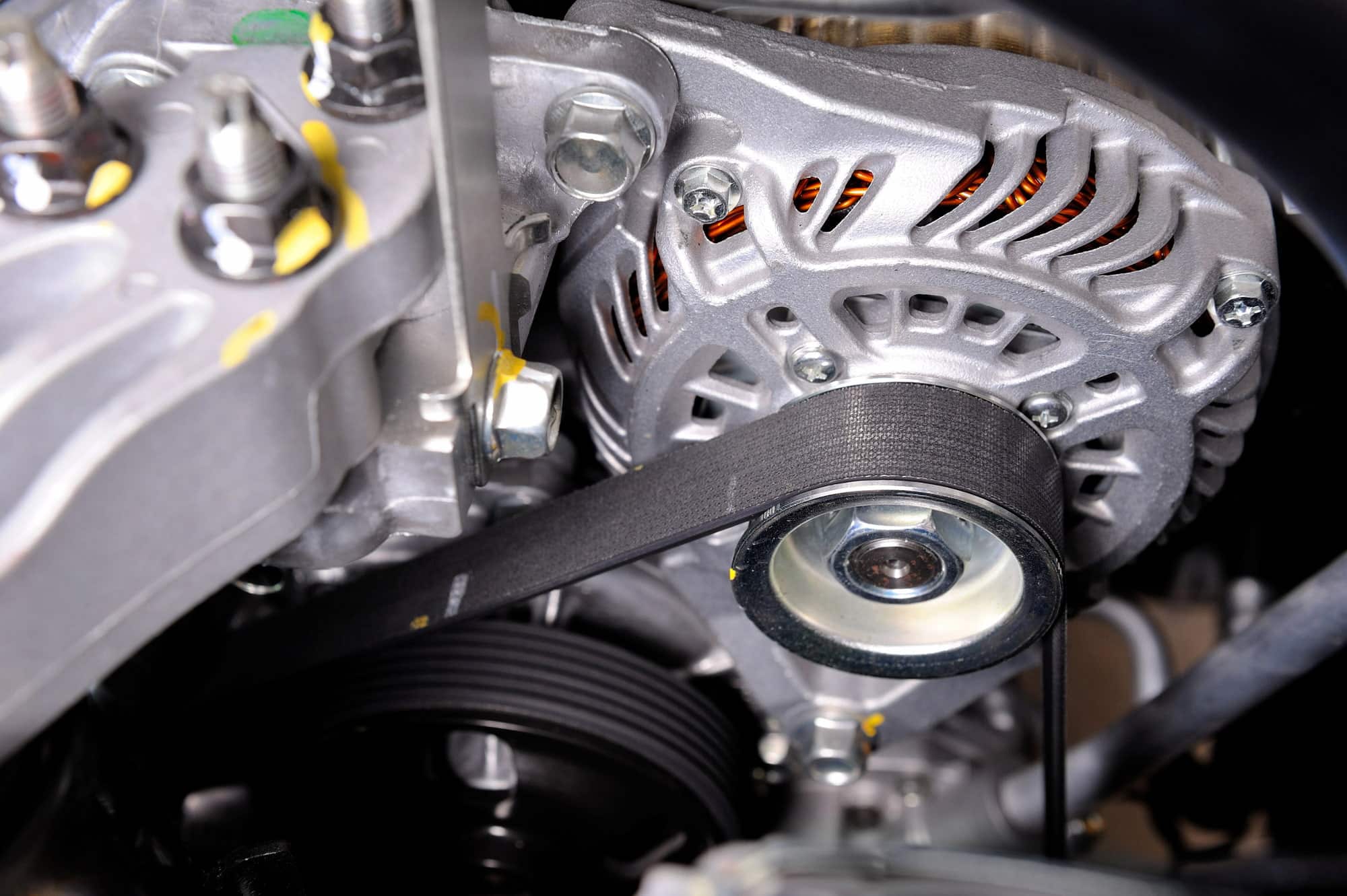
MINI Cambelt Timing Belt Replacement at DART Auto
When your MINI needs a timing belt replacement, you're looking at one of the most critical maintenance intervals in your car's life. The timing belt keeps your engine's valves and pistons moving in perfect synchronization – and when it fails, the result is often catastrophic engine damage. At DART Auto, we treat every MINI timing belt job with the precision it deserves, using factory procedures and OEM-spec parts to protect your investment.
MINI timing belt replacement is more involved than many drivers realize. On the R50/R52/R53 generation Cooper and Cooper S models (2002–2008) with the Tritec and supercharged engines, the belt drives not only the camshaft but also the water pump, making this a comprehensive job that requires removing the supercharger on S models. The Prince engine family introduced in 2007 (N14 and later N18) switched to timing chains, but the earlier Tritec and Chrysler-derived engines absolutely require belt service at the prescribed intervals. We follow BMW/MINI torque specifications to the Newton-meter, use the factory crankshaft locking tools to ensure proper valve timing, and replace the tensioner, idler pulleys, and water pump as part of a complete kit – because doing the job twice is never the plan.
When you bring your MINI to DART Auto for timing belt replacement, you can expect:
- Complete inspection of all belt-driven components, including the water pump, tensioner, and idler pulleys, with replacement of wear items as a package
- Factory-correct valve timing setup using BMW/MINI special tools and locking procedures to ensure your engine runs exactly as designed
- OEM or premium aftermarket belt kits sourced from trusted suppliers, never budget parts that compromise longevity
- A 3-year/36,000-mile warranty on parts and labor, backing every repair we perform
Common Cambelt Timing Belt Replacement Issues on MINI Vehicles
MINI owners often face timing belt wear that accelerates faster than the factory service interval suggests, particularly on vehicles driven in stop-and-go Denver traffic or exposed to our temperature swings. When you bring your MINI to DART Auto, we start with a thorough inspection of the belt itself, the tensioner hardware, and all associated pulleys to catch problems before they turn catastrophic. Here's what we see regularly:
- R50/R52/R53 Cooper S (2002–2006) – Supercharged Tritec engine belt slippage: The Tritec 1.6L supercharged engine uses a cambelt that's vulnerable to oil contamination from valve-cover or front-main-seal leaks. Once oil saturates the belt, it slips on the crank sprocket, jumps timing, and bends valves. We inspect for oil weepage during every service and replace seals proactively when the belt is due.
- R56 Cooper S (2007–2013) – N14 timing chain guide failure: While the N14 engine technically uses a chain rather than a belt, many owners search "cambelt" when they hear rattling at startup. The plastic chain guides fracture, allowing the chain to skip teeth and destroy the valvetrain. We perform a cold-start inspection and measure chain stretch with factory BMW tooling to catch this before catastrophic failure.
- First-generation Clubman and Convertible – Tensioner bearing seizure: The hydraulic tensioner on early R55/R57 models develops internal leaks, losing pressure and allowing belt flutter. You'll hear a chirping or squealing from the front of the engine that changes with RPM. We replace the tensioner assembly, not just the belt, because a weak tensioner will destroy a new belt within months.
- All cambelt-equipped MINI platforms – Water pump failure during belt service: The water pump is driven by the timing belt on Tritec engines. When the pump bearing seizes or the impeller corrodes, it can snap the belt without warning. We replace the pump, thermostat, and coolant during every belt service because the labor overlap makes it the only sensible approach.
- Countryman and Paceman (2011–2016) with N18 engine – Accessory belt contamination: Oil leaks from the valve cover or turbo oil-return line drip onto the accessory belt, which then flings oil onto the timing cover. Owners mistake this for a timing belt leak. We trace the oil source, reseal it, and verify timing-component integrity before closing the job.
Why Choose DART Auto for MINI Cambelt Timing Belt Replacement
When your MINI needs a timing belt, the shop you choose makes all the difference between a straightforward service and a comeback headache. DART Auto has spent over two decades mastering the peculiarities of MINI platforms – from R50/R52/R53 Coopers with the Tritec engine to second-generation R56/R57 models running the PSA/BMW Prince engine. We know that the Prince 1.6L (N12/N14) isn't just a belt job; it's a full front-end teardown that exposes the high-pressure fuel pump, thermostat housing, and accessory drive components that often fail at similar mileage. Our technicians replace the belt, tensioner, and water pump as an assembly, inspect the camshaft position sensors for oil seepage, and torque the crankshaft bolt to MINI's revised spec – not the generic shop-manual figure that can lead to harmonic balancer walk.
We rely on factory repair procedures and the same diagnostic hardware dealerships use, so we catch the details other shops miss:
- Platform-specific tooling: camshaft locking pins, crankshaft TDC holders, and the correct counterhold socket for the crank pulley bolt.
- OEM and premium aftermarket parts: we source INA or Dayco kits that include updated tensioners, not budget-brand assemblies prone to early failure.
- Post-installation verification: every job gets a road test and a scan-tool check for correlation faults between crank and cam position sensors.
- Salaried technicians: no flat-rate incentive to skip the thermostat housing inspection or reuse a stretched tensioner spring.
Because we've been Denver's European-specialist independent since 2000, we've seen the same failure modes cycle through hundreds of MINIs. That experience means we fix it right the first time and back the work with a 3-year/36,000-mile warranty on parts and labor.
Symptoms – How to Know You Need This Service
MINI timing belt failure rarely gives you much warning, which is why this service is interval-based rather than symptom-driven. That said, there are a few signs that your belt may be nearing the end of its life or that related components are failing:
- Squealing or chirping from the front of the engine during cold starts or acceleration, often pointing to a glazed or misaligned belt or failing tensioner bearing
- Visible cracks, fraying, or missing teeth on the belt itself if you inspect under the timing cover – this means immediate replacement before catastrophic failure
- Engine misfires or rough running that come and go, sometimes caused by a stretched belt allowing valve timing to drift slightly out of spec
- Coolant leaks near the timing cover on R50/R52/R53 models, indicating water pump failure – the pump is belt-driven and should always be replaced with the belt
- Ticking or rattling from the timing cover area that changes with engine speed, suggesting a worn tensioner or idler pulley bearing
- Check engine light with timing-related fault codes, such as camshaft position sensor correlation errors, which can indicate the belt has stretched or jumped a tooth
- Your service records show you're at or past the interval – MINI specifies timing belt replacement every 100,000 miles or 10 years on Tritec engines, whichever comes first, and age matters as much as mileage
If you see visible belt damage or hear sudden loud noises from the timing cover, stop driving immediately and have the car towed. A broken timing belt on these interference engines will bend valves and potentially crack pistons.
Which MINI Models We See for Cambelt Timing Belt Replacement
Timing belt service applies specifically to older MINI models equipped with the Tritec or supercharged Tritec engines. Later MINI models switched to timing chains, which have their own service considerations but don't require the same interval-based replacement. Here are the platforms we commonly service for timing belt replacement:
- R50 Cooper (2002–2006) – Tritec 1.6L naturally aspirated engine, belt drives camshaft and water pump
- R52 Cooper Convertible (2005–2008) – Tritec 1.6L, same belt-driven layout as the R50 hardtop
- R53 Cooper S (2002–2006) – Supercharged Tritec 1.6L, requires supercharger removal for full belt access, more labor-intensive
- R52 Cooper S Convertible (2005–2008) – Supercharged engine, same complexity as R53 hardtop
Models we do not typically perform timing belt replacement on, because they use timing chains:
- R56/R57/R58/R59 Cooper and Cooper S (2007–2013) – Prince N14 and N18 engines with timing chains (though these chains have their own known stretch and tensioner issues)
- F56/F57 Cooper and Cooper S (2014+) – B38 and B48 engines, all chain-driven
- Countryman, Paceman, Clubman (all generations) – Prince and B-series engines, timing chain equipped
If you own an R50, R52, or R53 MINI and you're approaching 100,000 miles or the belt is more than ten years old, it's time to schedule this service. We have the factory tooling, the experience with these early MINI platforms, and the commitment to do it right the first time.
Causes & Risks – What Happens if Ignored
Timing belt degradation on MINI vehicles accelerates due to a combination of heat cycling, oil contamination, and tensioner wear. Denver's altitude means your engine works harder, generating more heat around the timing cover. Short trips prevent full warm-up, leaving moisture in the crankcase that eventually finds its way past seals and onto the belt. MINI's compact engine-bay packaging means there's little airflow around the timing components, so heat and oil vapors concentrate exactly where the belt runs.
When you ignore early warning signs – squealing at cold start, visible cracks in the belt ribs, oil stains on the timing cover – the failure progression is predictable and expensive:
- Weeks 1–4: Belt develops surface cracks and fraying. Tensioner bearing starts making noise. No loss of function yet, but the clock is ticking.
- Weeks 4–8: Belt begins skipping on the cam sprocket under load (hard acceleration, uphill driving). You may notice rough idle, hesitation, or a check-engine light for camshaft position correlation faults. Valve timing is off by a few degrees.
- Weeks 8–12: Belt jumps multiple teeth or snaps entirely. On interference engines like the Tritec supercharged 1.6L, pistons collide with open valves at full speed. The result is bent valves, damaged pistons, scored cylinder walls, and a destroyed cylinder head. What started as a $900 timing belt service becomes a $6,000–$9,000 engine rebuild or replacement.
- Secondary damage: A snapped belt often takes out the water pump, thermostat housing, and front crankshaft seal. If the engine overheats before you can pull over, you add a warped head and blown head gasket to the repair list.
- Stranded vehicle: Timing belt failure is instant and total. The engine stops running immediately, often in traffic or on the highway. You'll need a flatbed tow, and the vehicle is undriveable until the engine is rebuilt.
Every week you delay increases the odds of catastrophic failure. DART Auto's approach is straightforward: we inspect the belt and tensioner at every major service, photograph any wear or oil contamination, and give you a clear timeline for replacement before you're left stranded.
Safety Impact – Why Cambelt Timing Belt Replacement Matters
A failed timing belt doesn't just leave you stranded – it can create dangerous situations depending on where and when the failure occurs. When the belt snaps, the engine loses all power instantly. If you're merging onto I-25, climbing a mountain pass, or navigating an intersection, the sudden loss of power steering assist and brake-vacuum boost makes the vehicle much harder to control. Modern MINI models have electric power steering, but older R50/R52/R53 Coopers use hydraulic assist driven by the engine – when the engine stops, steering effort increases dramatically.
Here's how timing belt failure affects your ability to control the vehicle safely:
- Immediate loss of power steering: On hydraulic-assist models (2002–2006 Coopers), the steering wheel becomes extremely heavy the moment the engine stops. Maneuvering to the shoulder in highway traffic requires significant upper-body strength.
- Reduced braking power: The brake booster relies on engine vacuum. After two or three pedal applications with the engine off, the vacuum reserve is exhausted and pedal effort doubles. Emergency stops become much harder.
- No hazard lights or electrical accessories: If the alternator stops spinning, the battery begins draining immediately. Hazard lights, turn signals, and headlights will function only as long as battery reserve lasts – often 20–40 minutes in a modern MINI.
- Inability to restart: On interference engines, internal damage from valve-piston contact means the engine will not turn over even if you try to restart it. You're waiting for a flatbed, not a jump-start.
When to stop driving immediately: If you hear a sudden rattling or grinding from the front of the engine, see the check-engine light flashing (indicating misfires), or notice a burning-rubber smell from the engine bay, pull over safely and shut off the engine. Continuing to drive can turn a belt replacement into an engine replacement.
When to schedule soon: If you hear chirping or squealing at cold start that goes away after warm-up, or if your MINI is within 10,000 miles of the factory belt-replacement interval, schedule an inspection within the next two weeks. We'll measure belt condition and tensioner function, then give you a clear timeline.
How MINI Cambelt Timing Belt Replacement Actually Works
The timing belt on cambelt-equipped MINI engines (primarily the Tritec 1.6L used in 2002–2006 Cooper and Cooper S models) synchronizes crankshaft and camshaft rotation so that valves open and close precisely as pistons move up and down. The belt is a toothed rubber composite reinforced with fiberglass or Kevlar cords, running on sprockets at the crank and cam ends. A spring-loaded or hydraulic tensioner keeps the belt tight enough to prevent skipping but loose enough to avoid premature wear. On the supercharged Cooper S, the belt also drives the water pump, making pump replacement part of every belt service.
MINI's design differs from typical timing-chain engines (used in most post-2007 MINI models) in several important ways that affect how the work is performed:
- Interference engine design: The Tritec 1.6L is an interference engine, meaning pistons and valves occupy the same space at different times. If the belt skips or breaks, pistons strike open valves at full speed, causing immediate internal damage. This makes preventive replacement critical and requires precise cam/crank alignment during installation.
- Water pump integration: The timing belt drives the water pump directly. We replace the pump
How We Diagnose Cambelt Timing Belt Replacement Issues on MINI
When your MINI shows symptoms of timing belt wear – rough idle, misfires, or that telltale rattling on cold starts – we move straight into a methodical diagnostic sequence that pinpoints exactly what's happening inside the engine timing system.
- Initial scan and fault code retrieval: We connect factory-grade diagnostic equipment to pull stored and pending codes from the DME (Digital Motor Electronics). On N14 and N18 engines (2007–2015 Cooper S models), we're specifically watching for correlation faults between camshaft and crankshaft position sensors, which flag timing discrepancies before catastrophic failure occurs.
- Live data monitoring: With the engine running, we observe cam timing advance/retard values and compare actual versus commanded positions. Deviations beyond 3–5 degrees typically indicate stretch or slack in the timing system, common on higher-mileage N14 engines where the chain and tensioner begin to wear.
- Visual and mechanical inspection: We remove the valve cover and timing cover to directly inspect the belt or chain condition, tensioner wear, and guide rail integrity. On Prince engines (N12, N14, N16, N18), we check for oil sludge accumulation that accelerates timing component wear – a known issue when oil change intervals exceed 7,500 miles.
- Measurement and tolerance checks: Using precision tools, we measure chain stretch against factory specifications and assess tensioner plunger travel. If the tensioner has extended beyond its service limit, replacement is non-negotiable to prevent valve-to-piston contact.
- Documentation and customer walkthrough: We photograph wear points, document measurements, and build a detailed quote that explains what failed, why it failed, and what we're replacing to restore factory timing accuracy and long-term reliability.
This structured approach ensures you're never paying for guesswork – just the parts and labor your MINI actually needs.
Cambelt Timing Belt Replacement on MINI: Repair vs. Replacement
The decision between repairing a timing component and replacing the entire assembly depends on what's actually worn and how much service life remains in the surrounding parts.
When Repair Makes Sense
- Isolated tensioner failure: If the timing chain itself shows minimal stretch (within 1–2% of spec) but the hydraulic tensioner has lost pressure, replacing just the tensioner and guide rails can restore proper operation on N12 and N16 engines without the expense of a full chain kit.
- Oil control valve cleaning: On variable valve timing systems, a clogged VVT solenoid can mimic timing belt issues. Cleaning or replacing the solenoid – a $150–$300 intervention – often resolves rough idle and performance loss without touching the timing components.
When Partial Replacement Is Appropriate
- Replacing the chain, tensioner, and guides while reusing the cam and crank gears works when those gears show no scoring or wear – common on engines under 80,000 miles with good maintenance history.
When Full Replacement Is the Right Call
- Cascading wear: On N14 engines with documented timing chain issues (2007–2010 production years), stretched chains damage guides, tensioners, and sprocket teeth. Replacing only one component leaves you vulnerable to secondary failure within months.
- High mileage or deferred maintenance: Beyond 100,000 miles or if oil changes were irregular, the entire timing assembly has likely degraded together. Replacing everything as a system ensures another 100,000+ miles of reliable service.
We walk you through the condition of each component with photos and measurements, so you understand exactly why we're recommending repair, partial replacement, or a complete timing system overhaul. Our salaried technicians have zero incentive to upsell – just the expertise to guide you toward the solution that keeps your MINI running reliably for years.
How to Make Your MINI Cambelt Timing Belt Replacement Last Longer
Once we've restored your MINI's timing system to factory spec, a few smart habits will help you extract maximum life from the new components.
Driving Habits That Protect Timing Components
- Allow proper warm-up: Let the engine idle for 30–60 seconds before driving, especially in cold weather. Cold oil doesn't lubricate the timing chain tensioner hydraulics effectively, accelerating wear on startup.
- Avoid sustained high-RPM operation when cold: The N14 and N18 turbo engines love to rev, but keep it below 4,000 RPM until the oil temperature gauge shows normal operating range. Cold metal expands at different rates, stressing timing components unnecessarily.
- Minimize short trips: Frequent cold starts without reaching full operating temperature prevent oil from circulating properly and allow sludge to accumulate – the primary enemy of timing chain longevity on Prince-generation engines.
Maintenance You Can Monitor
- Check for new noises: A rattling sound on cold starts that disappears after 2–3 seconds may indicate early tensioner wear. Catching it early means a $600 repair instead of a $3,000 emergency.
- Watch the oil level: MINI engines consume oil by design (especially N14 turbos). Check monthly and top off with the correct spec (typically 5W-30 or 0W-40 depending on model year). Low oil starves the timing chain tensioner.
- Monitor the check engine light: Cam correlation codes are early-warning signals. Don't ignore them.
Professional Maintenance That Matters
- Strict oil change intervals: Follow MINI's 7,500-mile interval religiously, or drop to 5,000 miles if you drive primarily in stop-and-go traffic. Use only BMW/MINI LL-01 approved synthetic oil – off-spec fluids accelerate sludge formation.
- Software updates: MINI has released multiple DME calibration updates addressing timing control strategies. Keeping software current optimizes tensioner operation and valve timing maps.
You can safely handle oil level checks and visual inspections yourself, but leave timing cover removal and tensioner service to professionals with the proper tools and torque specs. Our 3-year/36,000-mile warranty backs every timing belt and chain replacement, so you can drive with confidence knowing the work was done right.
What to Expect When You Bring Your MINI In
Timing belt replacement is a planned service, not an emergency, so we make the process as clear and convenient as possible. Here's how your visit unfolds:
- Appointment and drop-off: Schedule a day that works for you. When you arrive, we'll ask about any recent symptoms – rough idle, accessory-belt squeal, coolant loss – that might indicate related components need attention. Leave personal items at home or take them with you; we'll provide a shuttle ride or loaner vehicle if you need one.
- Pre-work inspection: Before we crack open the timing cover, a technician performs a complete visual and scan-tool check. We document oil leaks at the valve cover or front main seal, coolant weeps at the thermostat housing, and any stored fault codes. You'll receive a written estimate that itemizes the belt kit, water pump, any seals or hoses we recommend replacing while the front end is apart, and the labor involved.
- Authorization and updates: Once you approve the estimate, we order parts and schedule the work. If we discover something unexpected – a worn camshaft position sensor, a cracked serpentine-belt tensioner – we call or text with photos and a revised quote before proceeding.
- Completion and pickup: After reassembly, we road-test the car to verify smooth idle, proper throttle response, and no accessory-drive noise. A final scan confirms cam-crank correlation is within spec. At pickup, we walk you through what we replaced, show you the old parts if you're curious, and explain the 3-year/36,000-mile warranty coverage.
If anything feels off in the days after pickup – a new vibration, a check-engine light, unusual noise – call us immediately. We'll get you back in, re-check our work, and make it right at no charge. That's the advantage of a shop that stands behind every repair with both expertise and accountability.
Our MINI Services
- Air Conditioning AC Repair
- Battery Repair Replacement
- Brake Repair & Brake Fluid Change
- Check Engine Light Diagnostics
- Clutch Repair & Replacement
- Coolant Leak Repair
- Cooling System Repair
- Drive Shaft Repair
- Engine Repair
- Exhaust & Catalytic Converter Repair
- Head Gasket Repair & Replacement
- Oil Change
- Oil Leak Repair
- Scheduled Service Maintenance
- Steering Repair
- Suspension Repair
- Transmission Repair
- Tune Up
- Wheel Alignment