
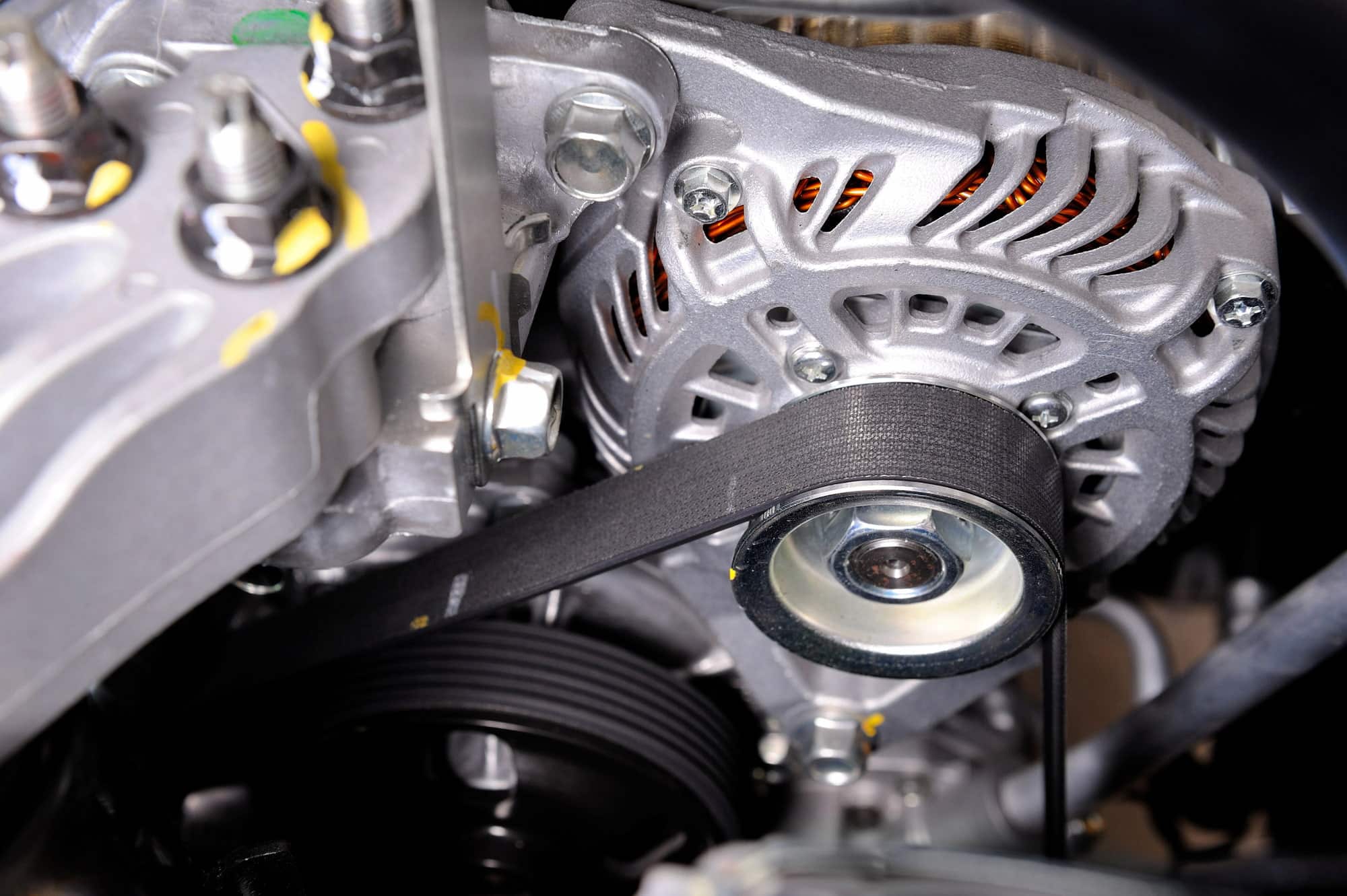
Bentley Cambelt Timing Belt Replacement at DART Auto
Bentley's twin-turbocharged W12 and V8 engines are marvels of engineering, but they demand precise timing belt service intervals to protect valve trains and prevent catastrophic interference damage. Unlike simpler pushrod engines, Bentley's multi-cam configurations rely on timing belts that synchronize four camshafts per bank on W12s and two per bank on V8s. When a belt fails on these interference engines, valves meet pistons at highway speed, turning a routine maintenance item into a five-figure engine rebuild.
DART Auto approaches Bentley cambelt replacement as a complete system service, not just a belt swap. We follow factory procedures that include tensioner replacement, idler pulley inspection, water pump evaluation (often driven by the timing belt on Continental GT and Flying Spur models), and crankshaft seal renewal. Our technicians use OEM-specified locking tools to position camshafts and crankshafts at TDC, ensuring valve timing stays within the tight tolerances Bentley engines require. We reference ETKA parts diagrams and factory torque specifications for every fastener, and we verify cam timing with diagnostic software after reassembly.
When you bring your Bentley to DART Auto for cambelt service, you can expect:
- Complete timing system renewal – belt, tensioners, idlers, and seals replaced as an assembly to eliminate future failure points
- Factory tooling and procedures – cam locking plates, crankshaft positioning tools, and torque-angle specifications from Bentley service information
- Diagnostic verification – pre- and post-service scans to confirm cam correlation values and clear any adaptation faults
- Transparent pricing and timeline – detailed estimate before work begins, with no surprises when you pick up your car
Common Cambelt Timing Belt Replacement Issues on Bentley Vehicles
Bentley's W12 and V8 platforms demand precision timing belt service. The Continental GT and Flying Spur models built between 2003 and 2018 use interference engines where even minor belt slippage results in catastrophic valve-to-piston contact. These are not forgiving powerplants.
- W12 dual-bank timing chain tensioner failure (2004–2012 Continental GT/Flying Spur): The 6.0L W12 uses timing chains, but early tensioners fail prematurely, causing slack that leads to jumped timing and bent valves. Revised tensioners appeared mid-2012, but earlier cars require proactive replacement around 60,000 miles.
- 4.0L V8 twin-turbo timing chain stretch (2013+ Continental GT V8, Bentayga): The Audi-derived EA824 V8 exhibits chain elongation under aggressive driving or extended oil-change intervals. Stretched chains trigger cold-start rattle and eventual misfire codes. Replacement involves removing turbos and exhaust manifolds.
- Auxiliary belt drive system wear on all W12 models: The serpentine belt system driving water pump, alternator, and AC compressor deteriorates faster than expected due to engine bay heat and tension cycling. Failed tensioner pulleys can shred belts, leaving the engine without coolant circulation.
- Camshaft adjuster solenoid contamination (all twin-turbo V8 platforms): Oil sludge from extended service intervals clogs variable valve timing solenoids, throwing timing correlation faults. The engine enters limp mode, and continued operation damages the timing system components.
- Idler pulley bearing failure on 6.75L V8 (Mulsanne, Arnage): The older pushrod V8 uses a conventional serpentine setup where idler bearings seize without warning. A locked pulley instantly destroys the belt, stranding the vehicle and risking overheating damage.
- Thermostat housing coolant leaks affecting timing cover seals: Coolant migrating into the timing cover area on W12 engines softens gasket material and accelerates seal degradation. Left unchecked, coolant enters the oil system, requiring extensive teardown.
Why Choose DART Auto for Bentley Cambelt Timing Belt Replacement
Bentley timing belt service demands precision – the W12 and V8 platforms use interference engines where a single tooth off in timing can bend valves and destroy the top end. DART Auto's master technicians hold factory-level training on Continental GT, Flying Spur, and Bentayga platforms, and we follow OEM service procedures down to the torque spec. We replace not just the belt but the tensioners, idler pulleys, and water pump as a complete assembly, because a $40 tensioner bearing that fails at 70,000 miles will destroy a $3,000 repair.
Our shop uses the same ODIS diagnostic platform and Bentley-specific tooling found at the dealer – cam-locking fixtures, crankshaft holding tools, and electronic torque-angle wrenches – so timing is set to factory specification every time. We've been Denver's European auto specialists since 2000, and our salaried technicians have zero incentive to rush your job or sell unnecessary work. Every timing belt service includes a full cooling-system pressure test, accessory-belt inspection, and post-repair road test with live data verification.
- Factory diagnostic capability: ODIS scan tools and TSB access to match dealership-level diagnostics.
- Complete assembly replacement: Belt, tensioners, idlers, and water pump installed as a system.
- 3-year/36,000-mile warranty: Parts and labor coverage that backs our work long-term.
- Transparent pricing: Written estimates before we start, with no hidden fees or upsells.
Symptoms – How to Know You Need This Service
Bentley timing belts rarely announce their impending failure with dramatic symptoms. Most failures happen without warning, which is why interval-based replacement is critical. That said, certain signs suggest your cambelt service window is closing:
- Mileage or age milestone approaching – Bentley specifies cambelt replacement every 60,000 to 80,000 miles or 5 to 6 years, whichever comes first; rubber degrades with age even on low-mileage cars
- Rough idle or misfires at startup – stretched belts can allow cam timing to drift slightly, causing hesitation or stumbling when cold
- Rattling or ticking from the timing cover area – worn tensioners or idler pulleys produce metallic noise that rises and falls with engine speed
- Visible belt damage during inspection – cracks, fraying, or oil contamination on the belt surface (requires removing covers to see)
- Coolant seepage near the timing cover – water pump leaks often contaminate timing belts, accelerating wear
- Check engine light with cam correlation codes – P0016, P0017, P0018, or P0019 faults indicate cam-to-crank timing discrepancies
If you hear sudden loud clattering or the engine dies and won't restart, do not attempt to start the engine again. A snapped belt may have already caused valve-to-piston contact; cranking the engine will worsen the damage. Arrange for flatbed transport to avoid turning a belt replacement into an engine replacement.
Which Bentley Models We See for Cambelt Timing Belt Replacement
DART Auto services cambelt systems across Bentley's modern lineup, with particular expertise in the Continental family and Flying Spur sedans. The platforms we see most often include:
- Continental GT / GTC (2004–2018) – first-generation and second-generation models with 6.0L W12 twin-turbo engines; early cars used belt-driven water pumps requiring simultaneous replacement
- Continental Flying Spur (2006–2019) – shares W12 platform with Continental GT; same service intervals and component overlap
- Continental GT V8 / GTC V8 (2013–2018) – 4.0L twin-turbo V8 models also use timing belts, though service intervals and procedures differ slightly from W12 variants
- Mulsanne (2010–2020) – 6.75L V8 engine with traditional timing belt setup; less common but we maintain factory tooling and information for these flagship sedans
- Bentayga (2016–2019) – early W12 models used timing belts; later versions switched to chains, so verify your model year before scheduling
We do not typically service pre-2004 Arnage or Azure models due to parts availability challenges and specialized tooling requirements for those older platforms. If you own a 2020-or-newer Bentley, confirm whether your engine uses a belt or chain system; most recent models have transitioned to timing chains that require different service protocols.
Causes & Risks – What Happens if Ignored
Bentley timing system failures stem from a combination of high-performance engineering and owner maintenance habits. The W12's complex architecture stacks two VR6 cylinder banks at a 72-degree angle, doubling the number of timing components and failure points. Extended oil-change intervals – common when owners follow "flexible service" schedules – allow sludge buildup that starves tensioners and solenoids of clean hydraulic pressure. High under-hood temperatures in twin-turbo applications accelerate rubber and plastic component aging. Colorado's temperature swings exacerbate cold-start stress on chains and tensioners already weakened by heat cycling.
Ignoring early symptoms transforms manageable maintenance into engine replacement scenarios:
- Cold-start rattle ignored for 5,000 miles: Chain stretch progresses to jumped timing, bending valves and requiring cylinder head removal. A $2,500 chain service becomes a $15,000+ rebuild.
- Auxiliary belt squealing dismissed as "normal": Worn tensioner pulley bearings seize, shredding the belt and leaving the water pump inoperative. Overheating warps cylinder heads and cracks the block in minutes of continued driving.
- Check engine light for timing correlation faults left unaddressed: The ECU compensates until it can't, then defaults to limp mode during highway merging – a dangerous loss of power. Continued operation damages camshaft lobes and followers.
- Coolant seepage near timing covers treated as minor: Glycol contamination destroys main and rod bearings within 1,000 miles. What started as a $600 gasket job escalates to complete engine replacement.
- Postponing factory-interval timing service: Bentley specifies chain inspection at 80,000 miles on W12 platforms. Delaying this allows marginal components to fail catastrophically, often taking out other engine internals when the timing jumps.
Safety Impact – Why Cambelt Timing Belt Replacement Matters
Timing system failure on a Bentley creates immediate hazards beyond mechanical damage. When a timing chain jumps or a tensioner fails, the engine loses power instantly – often without warning – leaving the driver without acceleration in traffic. Electronic power steering and brake assist rely on engine vacuum and hydraulic pressure; a stalled engine dramatically increases steering effort and brake pedal travel. Modern Continental GT and Bentayga models use electric power steering, but sudden engine cutoff still triggers multiple warning lights that distract the driver during an emergency maneuver.
Symptoms requiring immediate action:
- Metallic rattling from the engine bay at startup: Indicates imminent timing component failure. Park safely and arrange towing – do not continue driving.
- Sudden loss of power accompanied by check engine light: Timing correlation fault or jumped chain. Pull over immediately to prevent valve damage.
- Engine stalling in traffic or at speed: Complete timing failure. Attempt to coast to safety with hazard lights active; steering and braking will be severely compromised.
- Coolant smell inside the cabin with rough idle: Timing cover leak allowing coolant into cylinders. Stop driving to prevent hydrolock and bearing damage.
Insurance claims following accidents where known mechanical defects contributed to loss of control face scrutiny. Documented timing system warnings ignored by the owner can affect liability determinations and coverage.
How Bentley Cambelt Timing Belt Replacement Actually Works
Bentley's W12 engine uses a chain-driven timing system with four camshafts and two cylinder banks that must maintain precise phase relationship. Each bank has its own chain, tensioner, and guide rails. The crankshaft drives an intermediate shaft, which in turn drives each bank's camshaft chain. Variable valve timing solenoids adjust cam phasing in real time based on load and RPM. The ECU monitors camshaft position sensors and compares actual versus commanded timing, throwing correlation codes when discrepancies exceed tolerance.
The twin-turbo V8 shares architecture with Audi's EA824 but uses Bentley-specific calibration and reinforced components. Timing chain replacement requires specialized Bentley diagnostic software to lock camshafts in position, verify timing marks, and perform relearn procedures after assembly. Unlike simpler engines where you can visually confirm timing marks, Bentley platforms demand electronic verification through factory tooling.
Design factors affecting service complexity:
- Interference engine architecture: Zero piston-to-valve clearance when timing is off. Even one tooth of slippage bends valves, requiring cylinder head work.
- Hydraulic tensioners with electronic monitoring: The ECU expects specific oil pressure rise times during tensioner bleeding. Incorrect procedure leaves slack in the system.
- Camshaft locking tools and crankshaft holding fixtures: Factory tooling prevents rotation during disassembly. Generic tools don't fit Bentley's unique cam profiles and crank bolt access.
- Post-installation adaptation procedures: The ECU must relearn cam timing correlation through a guided drive cycle. Skipping this step causes persistent fault codes and rough running.
- Torque-to-yield fasteners throughout: Most timing cover bolts and chain tensioner mounts are single-use. Reusing old hardware risks loosening and oil leaks.
How We Diagnose Cambelt Timing Belt Replacement Issues on Bentley
Bentley engines – from the twin-turbo W12 in the Continental GT to the 4.0-liter V8 shared with Audi's S-series – rely on precise valve timing. The factory service intervals for cambelt replacement vary by platform: the 6.75-liter V8 in older Arnage and Mulsanne models typically calls for replacement every 40,000 miles, while the Continental GT (2004–2011) on the VW Group platform follows a 60,000-mile interval. Missing that window risks catastrophic interference-engine damage. Our diagnostic process confirms belt condition and identifies any collateral wear before we quote the job.
- Service history review. We pull records to confirm when the belt was last replaced and whether tensioners, idlers, and water pump were included. Many Bentleys arrive with incomplete documentation, so we verify actual belt age visually.
- Visual inspection with covers removed. We remove the upper timing covers to examine the belt for cracks, glazing, fraying, or oil contamination. Oil leaks from camshaft seals or crankshaft seals accelerate belt degradation and must be addressed during replacement.
- Tensioner and idler bearing assessment. We spin each pulley by hand, listening for roughness or play. Failed bearings can shred a new belt within thousands of miles, so replacement is non-negotiable if wear is present.
- Water pump and ancillary drive check. On platforms where the water pump is cambelt-driven (common on the Continental GT V8 and W12), we assess pump bearing play and look for weepage. Replacing the pump during belt service avoids duplicate labor later.
- Scan for fault codes and timing correlation. We connect factory-level diagnostic software to verify cam/crank correlation. Codes for timing deviation or camshaft position sensor faults can indicate a belt that has already jumped teeth – a red flag for immediate replacement.
Once the inspection is complete, we walk you through our findings with photos and a detailed estimate. You'll know exactly which components need replacement, why they matter, and what the timeline looks like. No surprises, no upselling – just a clear plan to keep your Bentley running as intended.
Cambelt Timing Belt Replacement on Bentley: Repair vs. Replacement
Timing belts themselves are not repairable – once worn, cracked, or contaminated, replacement is the only safe option. The decision point lies in the surrounding components: tensioners, idlers, seals, and the water pump. Here's how we approach each scenario on Bentley platforms.
When Repair Makes Sense
- Seal replacement without belt service. If a camshaft seal is weeping but the belt is relatively new (under 20,000 miles) and uncontaminated, we can replace the seal and clean the belt. This buys time until the next scheduled interval.
- Tensioner adjustment on hydraulic systems. Some Bentley engines use hydraulic tensioners that can be bled and reset if they've lost pressure due to air ingress. This is rare and only applies if the belt and other components are still within service life.
When Partial Replacement Works
- Belt and tensioner only. If idler pulleys and the water pump were recently replaced and show no wear, we can replace just the belt and tensioner. This is common on well-maintained Continental GTs where the previous service included all ancillaries.
When Full Replacement Is the Right Call
- At or near factory interval. Bentley specifies belt, tensioners, idlers, and water pump as a kit for good reason – these components age together, and labor overlap makes bundled replacement cost-effective.
- Oil contamination present. If seals have leaked onto the belt, we replace the belt, seals, and any contaminated idlers. Running a compromised belt risks sudden failure and valve-to-piston contact.
- Unknown service history. On pre-owned Bentleys without documentation, we default to full replacement. The cost of guessing wrong far exceeds the cost of new components.
We present options with transparent reasoning, not a one-size-fits-all pitch. Our salaried technicians have no incentive to oversell – we recommend what we'd do on our own cars.
How to Make Your Bentley Cambelt Timing Belt Replacement Last Longer
Bentley timing belts are built to exacting standards, but their lifespan depends heavily on how the car is driven and maintained. A few deliberate habits can help you reach – or exceed – the factory interval without incident.
Driving Habits That Protect the Belt
- Allow proper warm-up. Cold starts put stress on the belt and tensioner. Let the engine reach operating temperature before aggressive acceleration, especially in winter. The W12 in particular benefits from a gentle first few miles.
- Avoid prolonged idling. Extended idling (especially in hot weather) can cause oil thinning and increased seal weepage, which contaminates the belt. If you're stopped for more than a few minutes, shut down.
- Mind the load. Hard launches and sustained high-RPM operation increase tensioner load. Spirited driving is fine – these engines were built for it – but constant redline abuse accelerates wear on all rotating components.
Maintenance You Can Monitor
- Check for oil leaks monthly. Pop the hood and look for fresh oil around the timing cover. Early detection of a weeping camshaft seal can prevent belt contamination.
- Listen for new noises. A failing tensioner or idler bearing often announces itself with a chirp or whine at idle. If you hear something new, have it checked before it becomes a belt-shredding failure.
- Track your service intervals. Keep a log of cambelt replacement dates and mileage. Bentley's interval is based on time and distance – whichever comes first – so a garaged car with low miles still needs service every five to six years due to belt material aging.
What to Leave to the Professionals
Timing belt replacement on a Bentley W12 or V8 requires specialty tools, precise torque specs, and cam-locking fixtures. This is not a DIY job. Attempting it without the correct equipment risks bent valves, destroyed pistons, and a five-figure repair bill. We use factory tooling and OEM-spec belts to ensure the work is done right the first time, backed by our 3-year/36,000-mile warranty. Schedule your service based on the book, not when you hear trouble – by then, it's often too late.
```What to Expect When You Bring Your Bentley In
We know your Bentley represents a significant investment, and timing belt replacement is high-stakes work. Here's how we handle your visit from arrival to pickup:
- Appointment and drop-off: Schedule by phone or online. Bring your service records if you have them – knowing prior work helps us spot patterns. We offer loaner vehicles and local shuttle service; just ask when you book.
- Pre-work inspection: Before we crack the timing covers, a technician performs a complete visual inspection and pulls stored fault codes. We document oil leaks, accessory-belt condition, coolant hoses, and any deferred maintenance that might affect the job.
- Written estimate: You'll receive a detailed estimate listing every part and labor operation. We explain what we found, why the timing belt needs replacement now, and what happens if you delay. No pressure – just facts.
- During the repair: If we discover additional wear (a leaking front main seal, for example), we call before adding work. You approve every line item.
- Post-repair verification: After reassembly, we road-test the car under load, re-scan for fault codes, and verify cam/crank correlation with live data. If anything feels off in the first week, bring it back – we'll recheck timing and tensioner preload at no charge.
At pickup, your technician walks you through what was replaced, shows you the old parts, and answers any questions about break-in or maintenance intervals. You'll leave with a printed invoice, warranty documentation, and our direct shop number for follow-up.
Our Bentley Services
- Air Conditioning AC Repair
- Battery Repair Replacement
- Brake Repair & Brake Fluid Change
- Check Engine Light Diagnostics
- Clutch Repair & Replacement
- Coolant Leak Repair
- Cooling System Repair
- Drive Shaft Repair
- Engine Repair
- Exhaust & Catalytic Converter Repair
- Head Gasket Repair & Replacement
- Oil Change
- Oil Leak Repair
- Scheduled Service Maintenance
- Steering Repair
- Suspension Repair
- Transmission Repair
- Tune Up
- Wheel Alignment