
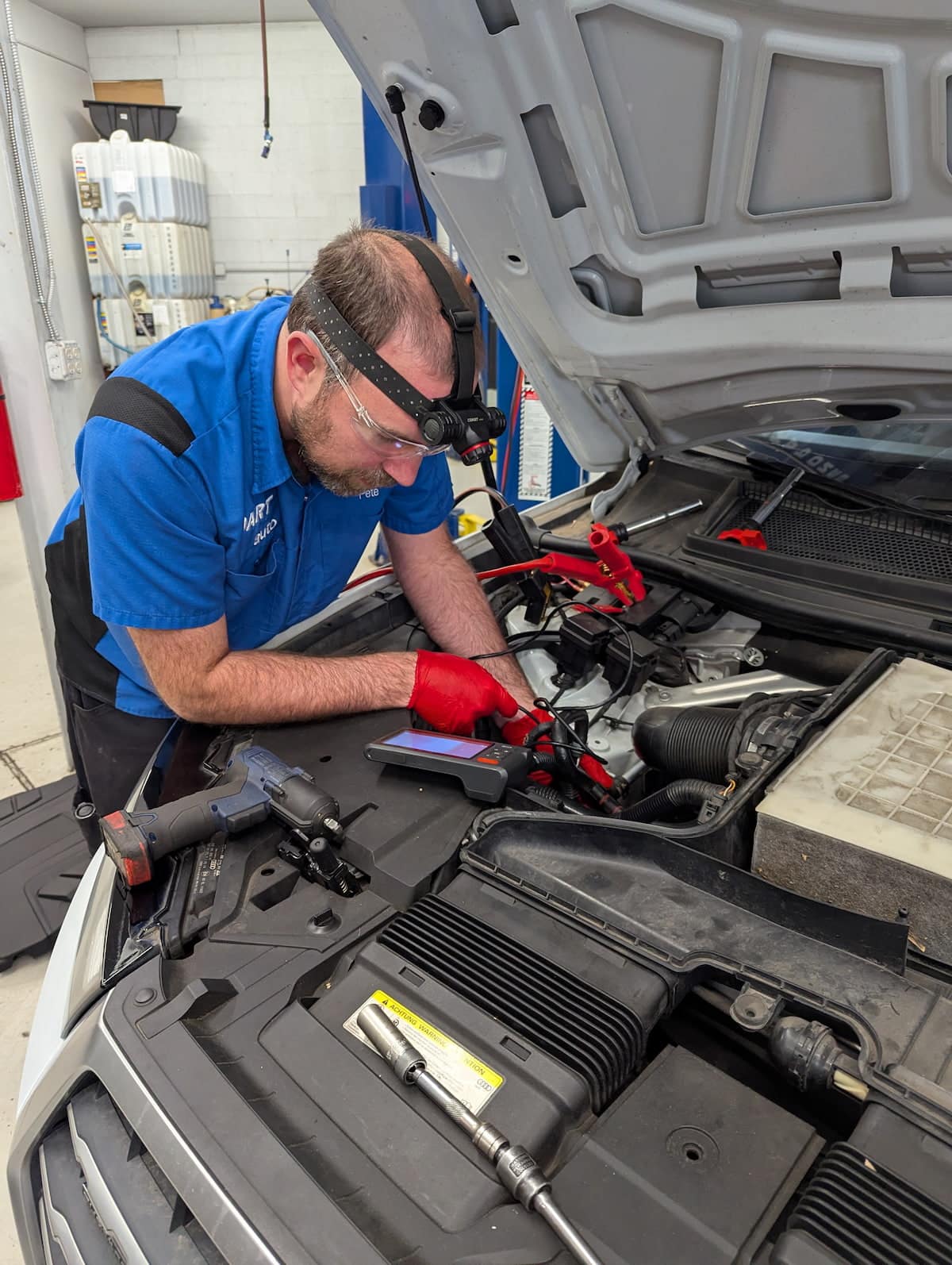
MINI Tune Up at DART Auto
Skipping or cutting corners on a MINI tune up doesn't just cost you performance – it can trigger misfires that damage catalytic converters, carbon buildup that chokes intake valves on direct-injection engines, and sensor faults that cascade into expensive diagnostic nightmares. MINI's turbocharged four-cylinder engines (B38/B46/B48 platforms from 2014-onward) demand precise spark timing and clean combustion to avoid knock and pre-ignition under boost. A generic shop swapping plugs without checking coil resistance, inspecting PCV valve function, or scanning for adaptation values will leave you with the same rough idle you started with – or worse.
At DART Auto, we approach MINI tune ups the way the factory intended. We use OEM spark plug specifications (not generic cross-references that run too hot or cold), torque plugs to BMW Group specs to prevent thread damage in aluminum heads, and scan live data with factory-level diagnostic tools to verify ignition timing, fuel trims, and misfire counters before and after service. On early R-series models (2002-2015 Cooper/Cooper S with N12/N14/N16/N18 engines), we inspect for common coil-pack failures and oil leaks into plug wells that cause repeat misfires. On newer F-series and third-generation cars, we address carbon fouling on intake valves that no amount of new plugs will fix alone.
When you bring your MINI to DART Auto for a tune up, expect:
- Complete ignition system inspection – plugs, coils, boots, and wiring harness integrity
- Pre- and post-service misfire counter scans to verify the repair solved the problem
- PCV system and intake tract inspection to catch carbon buildup before it causes valve damage
- Honest assessment if additional work (walnut-blasting, coil replacement, fuel system service) is needed now or can wait
Common Tune Up Issues on MINI Vehicles
Skipping scheduled maintenance on a MINI doesn't just cost you performance – it sets off a chain reaction of failures that can strand you mid-commute and turn a straightforward service into a multi-thousand-dollar repair. MINI engines are highly engineered and demand precision; when ignition components, fuel delivery, or emissions controls drift out of spec, the ECU compensates until it can't, and you're left with misfires, limp mode, or worse.
- Carbon buildup on N14 and N18 engines (2007–2016 Cooper S, Clubman S, Countryman S): Direct injection sprays fuel directly into the cylinder, bypassing the intake valves. Without fuel washing over the valves, carbon accumulates and restricts airflow. By 40,000–60,000 miles, you'll notice rough idle, hesitation, and eventually misfires. This is not a spark-plug-only tune up – it requires walnut-blasting the intake valves, a procedure dealerships charge premium rates for.
- Ignition coil failure on Prince engines (N12, N14, N16, N18): These coils sit directly atop the spark plugs and endure extreme heat cycling. They fail progressively – one cylinder misfires, then another. Replacing just the failed coil leaves you stranded again in weeks. The correct approach replaces all four coils and plugs together, using OEM or premium aftermarket units that match MINI's heat-range and dwell-time specs.
- Fuel injector clogging on turbocharged models: High-pressure direct injectors on the N14 and N18 are sensitive to fuel quality. Denver's seasonal fuel blends and ethanol content accelerate varnish formation. Symptoms start as cold-start stumble and progress to lean misfires under boost. Cleaning or replacement requires BMW diagnostic software to re-code injector flow rates.
- PCV valve and diaphragm failure (all turbocharged MINIs): The positive crankcase ventilation system on MINI turbo engines uses an integrated valve cover with internal diaphragms. When these fail, you get excessive oil consumption, rough idle, and check-engine lights for lean/rich faults. This isn't a $20 PCV valve – it's a $400–$600 valve cover assembly that requires careful torque sequencing and new gaskets.
- Throttle body carbon deposits on N12/N14/N16 engines: The electronic throttle body accumulates oil vapor and carbon on the butterfly valve, causing erratic idle and throttle response. MINI's drive-by-wire system requires a relearn procedure after cleaning, which demands factory-level scan tools.
Why Choose DART Auto for MINI Tune Up
MINI engines pack impressive performance into a compact footprint, but that density creates unique challenges. A misdiagnosed misfire on an N14 or N18 can lead to catalytic converter damage costing thousands more than the original tune-up would have run. The cost of getting this wrong – rushed diagnostics, generic parts, skipped software calibrations – compounds fast when you're dealing with turbocharged direct-injection engines that demand precision.
DART Auto has invested in the factory-level diagnostic equipment and training that MINI work requires. Our technicians are salaried, not flat-rate, so they take the time to verify ignition coil health on early R56 platforms where coil failures cluster, check for carbon buildup patterns on N18 engines, and confirm that software updates addressing drivability concerns have been applied. We use OEM or premium aftermarket components sourced from suppliers who understand the thermal and electrical demands of these engines. Every tune-up includes a post-repair road test and scan-tool verification to confirm that misfires have cleared, fuel trims are stable, and no secondary faults have surfaced.
We back our work with a 3-year/36,000-mile warranty on parts and labor. That level of confidence comes from doing the work right the first time – complete diagnostics before recommending service, factory repair procedures followed to the letter, and specialty tooling for European platforms that generic shops simply don't stock.
Symptoms – How to Know You Need This Service
Your MINI will tell you when it needs a tune up – the question is whether you catch the signs early or wait until a misfire damages the catalytic converter. Watch for these driver-facing symptoms:
- Rough idle or engine vibration at stoplights – especially when cold, indicating one or more cylinders misfiring intermittently
- Check Engine light with a flashing or steady glow – flashing means active misfire; stop driving immediately to avoid cat damage
- Hesitation or stumble during acceleration – the engine bogs or stutters when you press the throttle, particularly under boost on Cooper S/JCW models
- Reduced fuel economy – you're filling up more often because incomplete combustion wastes fuel
- Hard starting or extended cranking – worn plugs with excessive gap require more voltage to fire, stressing the ignition coils
- Loss of power or flat spots in the power band – the turbo spools but the engine doesn't pull cleanly through the rev range
- Smell of unburned fuel from the exhaust – raw gas passing through due to misfires
- Coil-on-plug failure codes – P0300-series misfire codes pointing to specific cylinders
If your Check Engine light is flashing, pull over safely and call for a tow. Continued driving with active misfires will overheat and destroy the catalytic converter, turning a tune up into a multi-thousand-dollar repair.
Which MINI Models We See for Tune Up
We perform tune ups on all generations of MINI sold in North America, with deep familiarity across turbocharged and naturally aspirated platforms. The work and interval vary by engine family:
- R50/R52/R53 (2002-2008 first-generation Cooper, Convertible, supercharged Cooper S) – W10/W11 engines with coil packs prone to heat-related failure
- R55/R56/R57/R58/R59 (2007-2015 second-generation Clubman, Hardtop, Convertible, Coupe, Roadster) – N12/N14/N16/N18 turbo engines; N14 notorious for carbon buildup and timing chain issues
- R60/R61 (2011-2016 Countryman, Paceman) – same N14/N16/N18 family; ALL4 variants have no tune up differences
- F54/F55/F56/F57 (2014-present third-generation Clubman, 5-door, Hardtop, Convertible) – B38 three-cylinder and B46/B48 four-cylinder turbo engines with direct injection requiring carbon service alongside plug replacement
- F60 (2017-present second-generation Countryman) – B38/B46/B48 engines; plug-in hybrid models require additional high-voltage safety protocols
- Cooper S, JCW (John Cooper Works), and GP variants across all generations – higher boost levels and performance tunes make precise spark plug heat range and gap critical
We service manual and automatic transmissions equally; the tune up procedure is identical. If you own a pre-2002 classic Mini or a heavily modified track car, call us to discuss – we'll be straight about whether we're the right shop for your build.
Causes & Risks – What Happens if Ignored
MINI tune up issues stem from a combination of aggressive performance tuning, direct-injection design, and Denver's altitude and temperature swings. The thin air at 5,280 feet means your turbo works harder, fuel trims run leaner, and ignition systems fire under greater stress. Add in short-trip city driving – where the engine never fully reaches operating temperature – and you accelerate carbon buildup, incomplete combustion, and moisture contamination in the oil.
When you ignore the early symptoms, here's the progression:
- Misfires damage catalytic converters: Unburned fuel enters the exhaust and ignites inside the cat, melting the substrate. A $150 coil-and-plug service becomes a $1,800 catalytic converter replacement, plus the original tune up work.
- Carbon buildup causes valve damage: Severe carbon deposits prevent valves from seating properly, leading to compression loss and burnt valves. What started as a $400 carbon-cleaning service escalates into a $3,000+ cylinder head rebuild.
- Failed PCV systems blow turbo seals: Excessive crankcase pressure forces oil past turbo seals and into the intake tract. You'll burn oil, foul plugs repeatedly, and eventually need a turbocharger replacement alongside the valve cover repair.
- Lean misfires cause piston damage: When injectors clog or fuel delivery falters under boost, the engine runs lean and hot. Detonation cracks piston ring lands. A $600 injector service becomes a $6,000 engine rebuild.
- Ignoring check-engine lights invites compounding faults: The ECU enters limp mode to protect the engine, but continued driving on misfiring cylinders washes cylinder walls with raw fuel, dilutes oil, and accelerates bearing wear.
Safety Impact – Why Tune Up Matters
A neglected tune up on a MINI doesn't just cost money – it creates real hazards. When ignition or fuel delivery fails, you lose power unpredictably. Merging onto I-25 or climbing mountain passes, a sudden misfire or limp-mode event cuts throttle response by half. Turbo lag becomes turbo failure, and you're left coasting in traffic with no warning.
- Stop driving immediately if: You experience sudden power loss, the engine shakes violently at idle, you smell raw fuel in the cabin, or the check-engine light flashes (indicating catalyst-damaging misfires).
- Schedule within the week if: You notice hesitation during acceleration, rough cold starts that smooth out after warm-up, or a steady check-engine light with no driveability symptoms yet.
- Plan proactively if: You're approaching 40,000 miles on original ignition components, you've never had the intake valves cleaned on a direct-injection MINI, or you're experiencing gradual MPG loss and sluggish throttle response.
Insurance and liability come into play when a known defect – documented by a check-engine light or prior diagnostic – is ignored and contributes to an accident. If your MINI stalls in an intersection because you deferred a misfire repair, you're not just facing a tow bill; you're facing questions about negligence.
How MINI Tune Up Actually Works
A proper MINI tune up goes far beyond swapping spark plugs. Modern MINIs use sophisticated engine management: direct fuel injection with piezo injectors, individual coil-on-plug ignition, variable valve timing (Valvetronic on some models), and closed-loop feedback from wideband oxygen sensors. The ECU constantly adjusts fuel trims, ignition timing, and boost pressure based on real-time data. When any input – airflow, fuel pressure, spark energy – drifts out of range, the entire system compensates until it can't.
MINI-specific design choices that affect tune up work:
- Direct injection without port injection: No fuel washes the intake valves, so carbon removal becomes a separate, labor-intensive procedure requiring walnut-shell media blasting.
- Integrated PCV in the valve cover: You can't replace just a valve – the entire cover assembly must be replaced, torqued in sequence, and leak-tested.
- Electronic throttle body relearn: After cleaning or replacement, the ECU must relearn idle position and throttle mapping using BMW ISTA diagnostic software. Generic scan tools can't perform this adaptation.
- Injector coding: Each direct injector has a unique flow-rate code. When replaced, the new code must be programmed into the ECU, or you'll have persistent fuel-trim faults and rough running.
- Coil dwell-time calibration: MINI coils are tuned for specific dwell times and primary resistance. Aftermarket coils that don't match OEM specs cause misfires under load, even if they work fine at idle.
This is why a MINI tune up at a generic shop often leads to comebacks: they swap parts without the diagnostic depth, OEM tooling, or software access to verify that the engine management system has adapted correctly. At DART Auto, our technicians use the same ISTA software and diagnostic procedures as the dealer, but without the inflated labor rates and parts markups. We verify fuel trims, inspect for carbon buildup, test coil primary resistance, and perform throttle relearns as part of every tune up – because on a MINI, the difference between a part swap and a real repair is whether the car runs right six months from now.
How We Diagnose Tune Up Issues on MINI
Getting a tune up wrong on a MINI can cost you dearly. The N14 and N18 engines are notorious for carbon buildup on intake valves, and the Prince engines (2007–2015) suffer from timing chain stretch that can destroy the engine if ignored. A proper diagnosis separates a preventive tune up from an urgent repair, and it starts with the right tools and the right questions.
Here's our step-by-step diagnostic process for MINI tune up concerns:
- Scan with MINI/BMW factory-level tooling. We use diagnostic software that reads every module – engine, transmission, ABS, body control – to pull stored and pending fault codes. This reveals misfires, fuel trim deviations, cam position sensor errors, and oxygen sensor aging that generic scanners miss.
- Live data capture under load. We monitor ignition timing, fuel pressure, MAF readings, and long-term fuel trims during a road test. On turbocharged MINIs (Cooper S, JCW), we watch boost control and wastegate duty cycle to catch vacuum leaks or coil pack failures masquerading as simple tune up needs.
- Visual and mechanical inspection. We pull spark plugs to check electrode wear, fouling, and gap. We inspect coil packs for cracks and oil intrusion. On direct-injection engines, we scope the intake valves with a borescope to assess carbon deposits – a common culprit for rough idle and hesitation.
- Compression and leak-down testing when warranted. If misfires persist or the engine has high mileage, we perform cylinder compression tests to rule out valve or piston ring issues that no tune up will fix.
- Document findings and build a clear repair plan. We photograph problem areas, explain what we found, and provide a detailed quote that separates immediate needs from future maintenance. You'll know exactly what's required and why.
This process ensures we're not guessing. You get a diagnosis that identifies the root cause, a transparent estimate, and confidence that the repair will restore smooth, reliable performance.
Tune Up on MINI: Repair vs. Replacement
Not every tune up issue requires throwing parts at the car. The decision to repair, replace a component, or replace an entire assembly depends on the condition of the parts, the cost of labor, and how failure-prone the surrounding components are on MINI platforms.
When Repair Makes Sense
- Carbon cleaning on direct-injection engines. If intake valves are caked with carbon but the valves themselves aren't damaged, walnut blasting cleans them without removal. This is common on N14, N18, and B38/B48 engines and restores power and idle quality without replacing valves.
- Coil pack connector repair. If a coil pack fails due to a corroded connector rather than internal failure, cleaning the connection and applying dielectric grease can restore function temporarily – though we typically recommend replacing the coil for long-term reliability.
- Throttle body cleaning. A dirty throttle body can cause rough idle and stalling. Cleaning and relearning the throttle position often solves the problem without replacement.
When Partial or Full Replacement Is the Right Call
- Spark plugs and coil packs. These are wear items. On high-mileage MINIs, replacing all spark plugs and coils together prevents repeat comebacks and mismatched performance. Coil packs on turbocharged models fail frequently due to heat stress.
- Ignition components on Prince engines. If one coil has failed, the others are often close behind. Replacing the set avoids multiple diagnostic sessions and tow bills.
- Fuel injectors. If one injector is clogged or leaking, the others have seen the same fuel quality and heat cycles. Replacing the set ensures balanced fuel delivery and smooth running.
We walk you through the trade-offs. If a repair buys you years of service, we'll recommend it. If cascading failures are likely or labor cost makes replacement the smarter long-term choice, we'll explain why. You make the call with full information.
How to Make Your MINI Tune Up Last Longer
A quality tune up should give you tens of thousands of miles of reliable service – but only if you support it with the right driving and maintenance habits. MINIs are high-strung, turbocharged engines that reward attentive care and punish neglect.
Driving Habits That Extend Component Life
- Warm up before hard acceleration. Direct-injection engines build carbon faster when run hard while cold. Let the engine reach operating temperature before full throttle pulls, especially in winter.
- Avoid short trips and frequent cold starts. Short trips never fully warm the engine or evaporate moisture from the oil, accelerating carbon buildup and coil pack degradation. Combine errands or take the occasional highway drive.
- Use top-tier gasoline. Fuels with detergent additives (Shell V-Power, Chevron with Techron, BP Invigorate) reduce intake valve deposits on direct-injection engines. It's cheap insurance.
- Let turbocharged engines cool down. After spirited driving, idle for 30 seconds before shutting off. This prevents oil coking in the turbo bearings and prolongs turbo life.
Maintenance Habits You Can Do Yourself
- Check the engine bay monthly. Look for oil leaks around the valve cover (common on N14/N18), loose connectors, and cracked vacuum lines. Catching a small leak early prevents a big repair.
- Monitor the check engine light. If it flashes, stop driving immediately – that's an active misfire that can damage the catalytic converter. A steady light means stored codes that need diagnosis soon.
- Keep an ear out for changes. New ticking, rough idle, or hesitation on acceleration are early warnings. Address them before they become misfires or no-starts.
What to Leave to the Professionals
Carbon cleaning, coil pack replacement, and fuel injector service require specialized tools and knowledge of MINI-specific torque specs and software relearns. Attempting these without proper equipment risks damaging sensors, cross-threading spark plugs in the aluminum head, or triggering fault codes that require dealer-level tools to clear. Stick to visual checks and fluid monitoring – leave the hands-on work to experienced technicians who do this every day.
What to Expect When You Bring Your MINI In
We've designed our process to keep you informed and minimize disruption to your schedule. Here's how a typical visit unfolds:
- Drop-off and intake: During your appointment, we'll document your concerns – rough idle, check-engine light, loss of power – and note any recent history. If you need transportation, ask about loaner availability or our shuttle service to nearby areas.
- Initial inspection and diagnostics: Our technicians pull stored fault codes, review freeze-frame data, and perform a visual inspection of ignition components, intake plumbing, and vacuum lines. On turbocharged models, we check for boost leaks and PCV system integrity that can mimic tune-up symptoms.
- Written estimate and approval: You'll receive a detailed estimate explaining what we found, which components need replacement, and why. We'll walk you through the recommended repairs and the consequences of delaying them – no pressure, just clear information so you can make the right call.
- Repair execution: Once approved, we replace spark plugs, ignition coils, filters, and any other worn components using OEM or premium parts. We follow factory torque specs, apply dielectric grease where specified, and update software if TSBs apply to your model year.
- Post-repair verification: Before you pick up, we road-test the car to confirm smooth acceleration and stable idle, then re-scan for faults. If anything feels off after you drive it, call us – we'll get you back in and address it promptly.
Personal items are safe in your vehicle during service, but remove valuables if you prefer. After-hours pickup can often be arranged – just ask when you schedule.
Our MINI Services
- Air Conditioning AC Repair
- Battery Repair Replacement
- Brake Repair & Brake Fluid Change
- Check Engine Light Diagnostics
- Clutch Repair & Replacement
- Coolant Leak Repair
- Cooling System Repair
- Drive Shaft Repair
- Engine Repair
- Exhaust & Catalytic Converter Repair
- Head Gasket Repair & Replacement
- Oil Change
- Oil Leak Repair
- Scheduled Service Maintenance
- Steering Repair
- Suspension Repair
- Cambelt Timing Belt Replacement
- Transmission Repair
- Wheel Alignment