
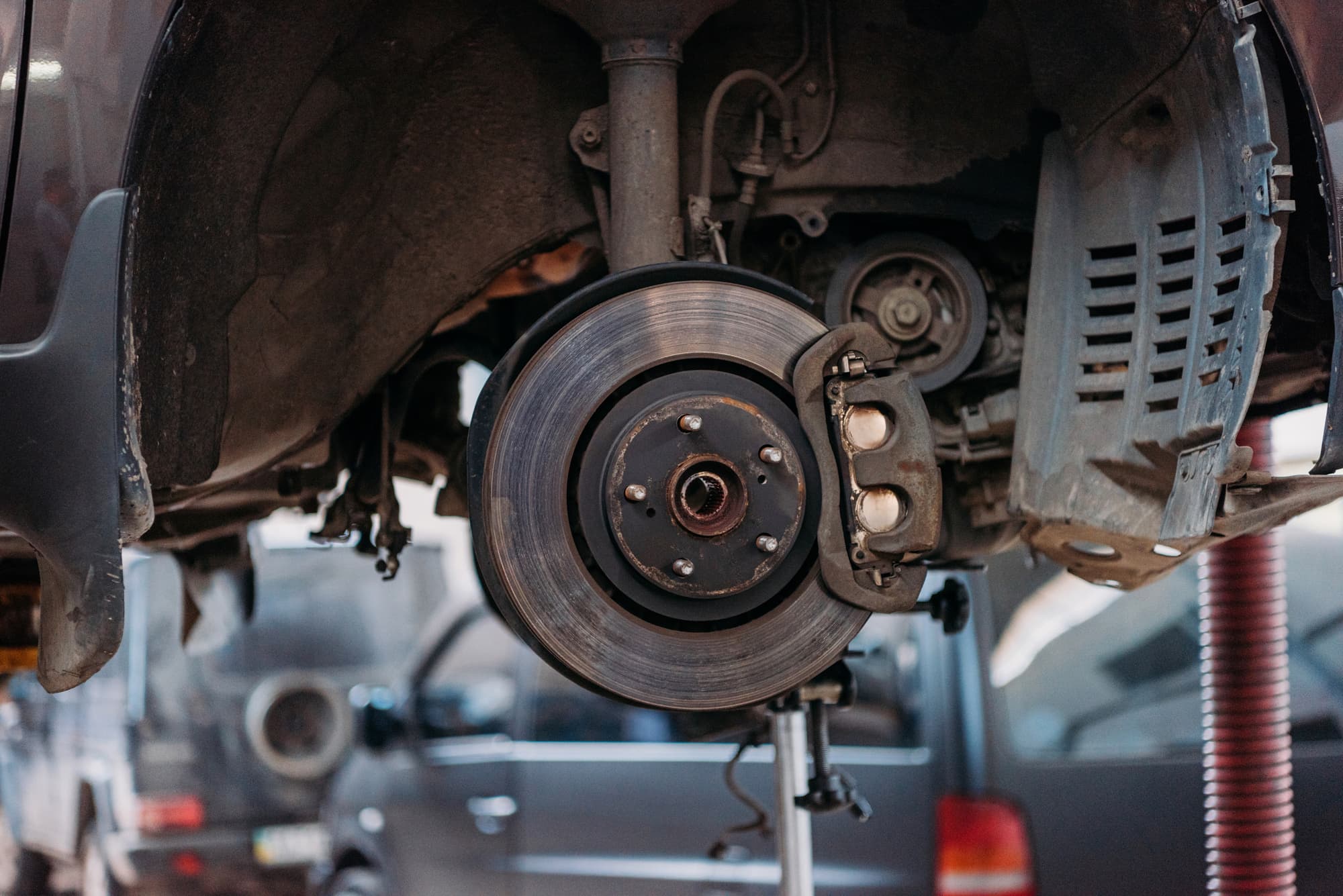
MINI Brake Repair & Brake Fluid Change at DART Auto
MINI brakes face a unique challenge: aggressive driving dynamics paired with compact, tightly packaged components that leave little room for error. A botched brake job on a Cooper S or Countryman doesn't just compromise stopping power – it can trigger stability control faults, ABS module errors, and premature wear that costs far more than the original repair. MINI's electronic parking brake systems (EPB) and integrated brake-by-wire setups on newer models demand proper scan tool access to retract calipers and bleed the system correctly. Generic shops lacking factory diagnostic capability often damage EPB actuators or leave air trapped in the ABS modulator, creating a spongy pedal and compromised safety.
DART Auto approaches MINI brake work with the same tooling and procedures the dealer uses – without the dealer markup. We retract electronic parking brakes through the OBD-II port, follow MINI's specific bleeding sequences for DSC-equipped models, and torque caliper brackets and guide pins to exact factory specifications. Our technicians recognize that R-series and later F-series platforms use different pad wear sensor connectors and that DOT 4 low-viscosity fluid is non-negotiable for proper ABS function. Because our techs are salaried rather than flat-rate, there's zero incentive to skip steps or recommend unnecessary rotor replacement when resurfacing will do.
What you can expect from DART's MINI brake service:
- Electronic parking brake retraction and calibration using factory-level scan tools
- Complete brake fluid exchange following MINI's ABS-specific bleeding procedure to eliminate trapped air
- Rotor measurement and assessment – we resurface when safe rather than default to replacement
- Transparent recommendation on whether your pads, rotors, and fluid truly need replacement or if you have miles left
Common Brake Repair & Brake Fluid Change Issues on MINI Vehicles
Getting brake work wrong on a MINI can cascade into ABS module failures, parking brake faults, and costly electronic replacements that dwarf the original repair bill. These vehicles integrate braking deeply with stability control and driver-assist systems, so shortcuts show up fast.
- Electronic parking brake (EPB) motor and caliper seizure on 2007–2013 R56 Cooper S and Clubman models. The EPB actuators corrode internally, especially in wet climates, leading to "EPB malfunction" warnings and rear calipers that won't release. Requires caliper replacement and proper ISTA coding to reset the motor positions.
- Premature front brake pad wear on 2014–2019 F56 Cooper S due to aggressive pad compounds and spirited driving patterns. MINI spec'd performance-oriented friction materials that wear faster than economy-car pads. Owners who delay replacement risk scoring rotors deeply enough to mandate rotor replacement alongside pads.
- Brake fluid moisture contamination on all second-generation and newer MINIs (R56, F56, F60) after 24–30 months. DOT 4 low-viscosity fluid absorbs water quickly in humid regions. Contaminated fluid drops the boiling point below safe thresholds and corrodes ABS valve bodies, leading to spongy pedal feel and eventual module replacement.
- Rear drum-in-hat parking brake shoe wear on 2002–2006 R50/R53 first-generation Cooper and Cooper S. The internal drum shoes wear unevenly, causing handbrake ineffectiveness and parking-on-hills anxiety. Shops unfamiliar with the drum-in-disc design often overlook shoe inspection during pad changes.
- Runout and thickness variation on front rotors after repeated pad-only replacements on all generations. MINI rotors are relatively thin; resurfacing twice exhausts usable thickness. Vibration under braking and ABS pulse feedback become constant companions when rotors fall below minimum spec.
- DSC (Dynamic Stability Control) pump and valve-block corrosion on 2007–2015 models subjected to deferred fluid changes. Moisture-laden fluid corrodes the hydraulic unit internals, triggering permanent fault codes and requiring complete DSC module replacement at significant expense.
Why Choose DART Auto for MINI Brake Repair & Brake Fluid Change
MINI brake systems – particularly on the R-series (2007–2015) and F-series (2014+) platforms – demand more than generic pad slaps. Ignoring the electronic parking brake integration on F56 models or the DSC/ABS module calibration on R56 Cooper S can turn a straightforward brake job into a recurring headache. Getting it wrong means premature wear, pulling under braking, or a dash full of fault codes.
DART Auto owns the entire brake service chain for your MINI. Our master technicians use factory diagnostic software to read module-specific fault memory, bleed the ABS hydraulic unit properly, and recalibrate electronic parking brakes without triggering limp mode. We stock DOT 4 Low Viscosity fluid for F-series cars that require it, source OEM or Akebono/Zimmermann brake components from trusted European suppliers, and torque everything to MINI's published specs – not generic shop manuals. Every brake job includes a post-repair road test and scan-tool verification to confirm the DSC system relearns pad position and the brake pedal feels firm under threshold stops.
Because our technicians are salaried – not flat-rate – they have zero incentive to skip the electronic handbrake service mode or rush the bleed sequence. You get the repair done right the first time, backed by our 3-year/36,000-mile parts-and-labor warranty.
Symptoms – How to Know You Need This Service
MINI drivers often notice brake issues through steering feedback and pedal feel before any dashboard warning appears. Pay attention to these signals:
- Pulsing or vibration through the brake pedal or steering wheel during braking – typically indicates warped rotors or uneven pad deposits, common on Cooper S models driven hard
- Spongy or soft pedal feel that requires more travel to stop – suggests moisture-contaminated brake fluid or air in the ABS modulator; schedule service soon
- Grinding, squealing, or metal-on-metal noise – means pads are worn to backing plates and rotors are being damaged; stop driving and arrange towing if grinding is severe
- Pulling to one side during braking – points to a seized caliper slide pin or uneven pad wear; have it inspected within days
- Dashboard warning: "BRAKE" or stability control light – can indicate low fluid, worn pads triggering the sensor, or an EPB fault; safe to drive carefully to the shop but don't delay
- Burning smell after braking or wheels hot to the touch – suggests a dragging caliper or electronic parking brake not fully releasing; stop driving immediately to avoid brake fire or rotor damage
- Pedal sinks slowly to the floor when held at a stoplight – indicates a master cylinder leak or internal seal failure; stop driving and arrange towing
- Dark or cloudy brake fluid visible in the reservoir – moisture contamination reduces boiling point and invites corrosion; schedule fluid service within weeks
Which MINI Models We See for Brake Repair & Brake Fluid Change
DART Auto services brake systems across the full MINI lineup, from first-generation R-series cars through current F-series and UKL platform models. Each generation brings specific brake system architecture – R56 Coopers with hydraulic parking brakes versus F55/F56 models with fully electronic EPB, for example – and we maintain the tooling and training to handle both.
MINI platforms we commonly service for brake work:
- R50/R52/R53 Cooper & Cooper S (2002–2008) – first-generation cars with conventional hydraulic parking brake; prone to rear caliper slide pin seizing
- R55/R56/R57/R58/R59 Clubman, Cooper, Convertible, Coupe, Roadster (2007–2015) – second-generation models; many equipped with DSC requiring specific ABS bleeding procedure
- R60/R61 Countryman & Paceman (2010–2016) – larger platform with ALL4 variants; heavier weight accelerates front pad wear
- F54/F55/F56/F57 Clubman, Cooper, Convertible (2014–present) – third-generation UKL platform with electronic parking brake standard; requires scan tool for caliper retraction
- F60 Countryman (2017–present) – current Countryman with EPB and optional ALL4; uses larger front rotors on Cooper S and JCW variants
- Cooper SE (electric) – regenerative braking reduces pad wear but fluid still requires periodic exchange; EPB service identical to gas models
- John Cooper Works variants (all generations) – upgraded Brembo or larger OEM brakes on JCW models; we stock performance pads and have torque specs for four-piston calipers
We occasionally see earlier classic Minis and limit service on pre-2002 models due to parts availability. If your MINI falls outside these ranges, call us – we'll let you know honestly whether we're the right shop for your car.
Causes & Risks – What Happens if Ignored
Brake issues on MINIs stem from a mix of enthusiastic driving, stop-and-go urban use, and the brand's performance-oriented brake tuning. Moisture intrusion accelerates because DOT 4 fluid is hygroscopic, and Denver's temperature swings push that moisture through boiling and condensation cycles. Electronic parking brake motors corrode when exposed to road salt and standing water. Rotors wear thin because MINI prioritizes low unsprung weight over rotor mass.
Delaying brake work doesn't just wear pads to the backing plate. It sets off a predictable chain:
- Pad wear beyond the friction material scores rotors, turning a pad-only job into pads-plus-rotors and doubling the parts cost.
- Contaminated brake fluid corrodes ABS valve bodies and DSC pump internals within 36–48 months, escalating a fluid flush into a module replacement that costs ten times more.
- Seized EPB motors force caliper replacement instead of simple actuator service, and without proper ISTA coding the new caliper won't function.
- Ignored spongy pedal feel signals air in the lines or internal seal failure; continued driving risks complete pedal-to-floor loss during emergency braking.
- Warped rotors from overheating cause vibration that fatigues wheel bearings and suspension bushings, spreading repair costs beyond the brake system.
The safety window closes faster than owners expect. Once the pedal feels soft or the dashboard lights the brake warning, the margin for safe stopping has already shrunk.
Safety Impact – Why Brake Repair & Brake Fluid Change Matters
Brake failures on a MINI compromise the integrated safety net that includes ABS, DSC, cornering brake control, and hill-start assist. When brake fluid boils or a caliper seizes, the system can't modulate pressure correctly, and stability interventions fail. A spongy pedal means longer stopping distances and unpredictable bite point, especially dangerous in traffic or on mountain descents. Contaminated fluid reduces boiling point below the threshold where hard braking generates enough heat to vaporize the fluid, leading to complete pedal loss.
Symptoms that mean stop driving immediately:
- Brake pedal sinks to the floor with steady pressure
- Grinding, metal-on-metal noise during light braking
- Brake warning light plus ABS light illuminated together
- Pulling sharply to one side under braking, indicating caliper seizure
Schedule service soon:
- Spongy or soft pedal feel
- Pulsation or vibration through the pedal during normal stops
- Squealing or chirping from the wheels
- EPB malfunction message on the instrument cluster
Insurance and liability become factors if a known brake defect contributes to a collision. Documented warnings ignored create exposure that no policy will cover comfortably.
How MINI Brake Repair & Brake Fluid Change Actually Works
MINI brake systems use a conventional hydraulic layout – master cylinder, vacuum or electric boost, four-wheel disc brakes – but integrate electronic parking brakes on most 2007-and-newer models and tie braking tightly into DSC and ABS modules. The EPB replaces the traditional handbrake cable with electric motors mounted on the rear calipers. Releasing and retracting those motors for pad replacement requires entering service mode through ISTA or equivalent factory-level software; attempting to force the pistons manually damages the actuator gears.
Brake fluid service on a MINI isn't just a gravity bleed. The DSC pump holds residual pressure, and proper bleeding sequences activate the pump and cycle the ABS valves to purge trapped air and old fluid from the valve block. Skipping this step leaves contaminated fluid in the system and guarantees a spongy pedal. MINI specifies DOT 4 low-viscosity fluid and strict moisture limits; using DOT 3 or generic fluid risks seal swell and boiling-point compromise.
MINI-specific design points that affect service:
- Electronic parking brake actuators require ISTA coding and calibration after caliper or pad replacement
- DSC-integrated ABS demands scan-tool-activated bleeding sequences to clear valve-block air
- Thin front rotors wear to minimum thickness quickly; most need replacement rather than resurfacing
- Rear drum-in-hat parking shoes on first-generation models require separate inspection and adjustment
- Torque specs for caliper brackets and wheel bolts are platform-specific and critical for safe operation
How We Diagnose Brake Repair & Brake Fluid Change Issues on MINI
A MINI with compromised brakes isn't just inconvenient – on platforms like the R56 Cooper S or F56 JCW where aggressive driving is part of the appeal, brake failure can mean totaled cars and serious injury. We approach every brake concern as if your next mountain drive depends on it, because it does.
Our diagnostic sequence combines factory-level scan tools with hands-on inspection to build a complete picture:
- Pre-inspection interview and road test. We ask when you first noticed the symptom – pulsing pedal, soft feel, dashboard warning – and replicate the concern under controlled conditions. Many MINI brake issues only appear under hard stops or after heat cycling.
- ISTA scan and live data review. We connect factory BMW/MINI diagnostic software to read ABS module faults, brake pad wear sensor status, and DSC intervention logs. On F-series MINIs (2014+), the system logs brake fluid quality flags and can reveal intermittent sensor faults invisible during static checks.
- Visual and mechanical inspection. Wheels off, we measure rotor thickness with micrometers against MINI's minimum spec (often 22mm front, 9mm rear on R-series), check caliper piston travel and slide pin condition, inspect flex hoses for cracking (common on pre-2010 models), and assess pad material remaining. We test brake fluid moisture content with a refractometer – DOT 4 fluid above three percent water content loses boiling point and invites corrosion in the ABS pump.
- System bleed and pressure test. If the pedal is soft or travel excessive, we pressure-bleed the system to confirm whether air, a failing master cylinder, or an internal ABS valve is the root cause. This step separates a simple flush from a four-figure hydraulic rebuild.
Once the diagnosis is complete, you receive a detailed quote that separates what's safety-critical now from what can wait, along with photos and measurements so you see exactly what we see.
Brake Repair & Brake Fluid Change on MINI: Repair vs. Replacement
Not every brake concern means new calipers and rotors. We evaluate each component against OEM service limits and real-world longevity before recommending a path forward.
When Repair Is the Right Answer
- Brake fluid flush alone. If rotors measure above minimum thickness, pads have adequate material, and calipers move freely, a complete DOT 4 fluid exchange restores pedal feel and protects the expensive ABS pump from internal corrosion. We see this frequently on well-maintained MINIs under 60,000 miles.
- Caliper service. Sticking slide pins or surface corrosion on piston boots can often be cleaned, re-lubricated with silicone brake grease, and returned to service – especially on rear calipers where heat and wear are lower.
- Pad replacement with rotor machining. When rotors are thick enough and surfaces are true, we can resurface them and install new pads. This works well on lightly driven Countrymans and Clubmans that see mostly city use.
When Replacement Makes Sense
- Rotors below minimum thickness or heavily scored. R56 Cooper S front rotors wear quickly under spirited driving; once below 22mm they must be replaced. Machining them thinner invites cracking and fade.
- Seized caliper pistons. If a piston won't retract or shows pitting, the caliper needs replacement. Rebuilding is rarely cost-effective given the labor involved and the risk of a comeback.
- Contaminated brake fluid with ABS faults. When moisture has corroded internal ABS valves (common on 2007–2013 models with neglected fluid), the entire hydraulic control unit may need replacement alongside a full system flush.
We walk you through the trade-offs – repair cost, expected service life, and safety margin – so you make an informed decision rather than feeling pressured into the most expensive option.
How to Make Your MINI Brake Repair & Brake Fluid Change Last Longer
MINI brakes are engineered for performance, but that engineering assumes you'll meet it halfway with proper use and maintenance. Small changes in how you drive and maintain the system can double service intervals.
Driving Habits That Preserve Brake Life
- Engine braking on descents. Use manual mode or sport mode to downshift before long downhills. Letting the engine slow the car reduces brake heat and pad wear – especially important on JCW models with larger, more expensive Brembo calipers.
- Progressive braking instead of panic stops. Anticipate stops and apply gradual pressure. Hard, late braking generates extreme heat that accelerates rotor warping and pad glazing.
- Cool-down after spirited driving. After a canyon run or track day, drive gently for the last few miles to let rotors and calipers shed heat gradually. Parking immediately after hard use can warp rotors as they cool unevenly.
Maintenance You Can Monitor
- Visual checks every oil change. Look through the wheel spokes for pad thickness (you should see at least 3mm of friction material) and rotor condition. Listen for new squeaks or grinding – MINI pad wear sensors trigger a dashboard light, but audible warnings come first.
- Flush brake fluid every two years. DOT 4 fluid is hygroscopic – it absorbs moisture from the air, which lowers boiling point and corrodes aluminum components. This interval is in your owner's manual but often ignored.
- Use OEM or equivalent DOT 4 fluid only. MINI ABS systems are sensitive to fluid viscosity. Cheap or wrong-spec fluid can trigger false ABS activation and damage the hydraulic unit.
Brake fluid replacement is safe to leave to the professionals – the system requires a pressure bleeder and specific bleed sequences to purge air from the ABS module. Attempting it without the right tools often leaves air in the system and a spongy pedal. Visual inspections and listening for changes, however, are simple and catch problems early when repairs are still inexpensive.
What to Expect When You Bring Your MINI In
We walk you through every step so there are no surprises. Here's how a typical brake service visit unfolds:
- Drop-off and intake: You'll speak directly with a service advisor who documents your concerns – pulling to one side, pulsation, soft pedal, warning lights. If you need a loaner or shuttle, let us know when you book; we'll arrange it. Remove personal items from the cabin and glove box before drop-off.
- Pre-repair inspection: We pull the wheels, measure rotor thickness and runout, inspect caliper slide pins and flex hoses, and scan the ABS/DSC module for stored faults. If your MINI has an electronic parking brake, we check actuator motor function and cable tension.
- Written estimate and approval: You receive a detailed estimate listing each component (pads, rotors, fluid, hardware), labor, and any additional findings – corroded caliper brackets, seized slide pins, fluid contamination. We explain what happens if you defer work and wait for your go-ahead before turning a wrench.
- Repair execution: We complete the brake service using OEM procedures – proper bleed sequence, electronic parking brake service mode if applicable, torque specs for caliper bolts and wheel lugs. Salaried techs take the time to clean and lubricate slide pins, inspect brake hose condition, and top off fluid with the correct DOT spec.
- Post-repair verification and pickup: Every car gets a road test to confirm pedal feel, straight-line stops, and no ABS faults. At pickup, we walk you through the work performed and show you old parts if requested. If anything feels off in the first few days, call us – we'll recheck it at no charge.
You leave with confidence that your MINI's brakes are restored to factory performance, not just patched until the next failure.
Our MINI Services
- Air Conditioning AC Repair
- Battery Repair Replacement
- Check Engine Light Diagnostics
- Clutch Repair & Replacement
- Coolant Leak Repair
- Cooling System Repair
- Drive Shaft Repair
- Engine Repair
- Exhaust & Catalytic Converter Repair
- Head Gasket Repair & Replacement
- Oil Change
- Oil Leak Repair
- Scheduled Service Maintenance
- Steering Repair
- Suspension Repair
- Cambelt Timing Belt Replacement
- Transmission Repair
- Tune Up
- Wheel Alignment