
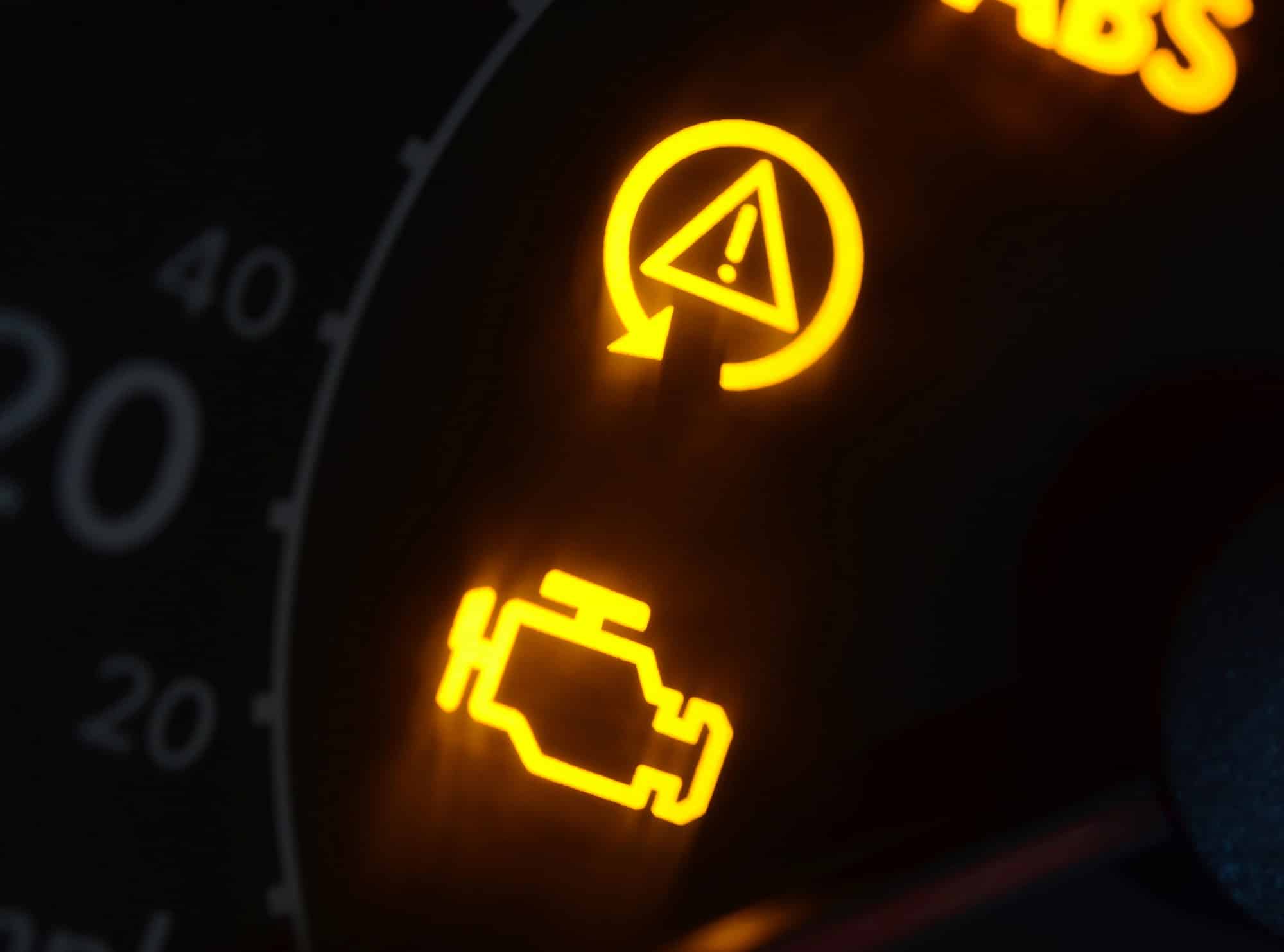
MINI Check Engine Light Diagnostics at DART Auto
When your MINI's check engine light illuminates, you need more than a parts-store code reader. Modern MINI vehicles – built on BMW platforms since 2001 – demand factory-level diagnostics to separate genuine faults from false triggers. At DART Auto, we address check engine lights the way the factory intended: with BMW ISTA diagnostic software, complete system interrogation, and technicians trained on the nuances of Prince, Peugeot-PSA, and B-series turbocharged engines that power Cooper, Countryman, and Clubman models.
MINI check engine light diagnostics differ from generic scan work because these vehicles store multiple fault codes across networked modules – engine, transmission, DME, and body control – that often point to a single root cause. A P0300 random misfire on a 2011–2016 R56 Cooper S with the N18 engine, for example, frequently traces back to carbon buildup on intake valves rather than ignition components, while the same code on a 2014–2019 F56 with the B38 engine may indicate a failing ignition coil or vacuum leak in the turbocharger recirculation system. We correlate live data, freeze-frame parameters, and stored readiness monitors to confirm the actual failure before recommending parts.
When you bring your MINI to DART Auto for check engine light diagnostics, expect:
- Complete module scan using BMW ISTA and factory-equivalent tooling to retrieve all stored, pending, and permanent codes
- Live data analysis during road test to confirm fault conditions under load, boost, and temperature cycling
- Component-level testing – fuel trims, ignition advance, turbo wastegate duty cycle, oxygen sensor response – to isolate the root cause
- Clear explanation of what failed, why it failed, and what happens if you delay the repair
Common Check Engine Light Diagnostics Issues on MINI Vehicles
MINI vehicles are engineered for spirited driving and tight handling, but their compact BMW-derived platforms carry some well-documented fault patterns that trigger the check engine light. When that amber warning appears on your dash, it's rarely a generic problem – MINI's tightly integrated engine management and emissions systems mean the root cause often points to a specific component failure or software calibration issue. Here's what we see most often:
- Valvetronic motor and eccentric shaft sensor failures (2007–2013 R56 Cooper S, N14 engine): The Valvetronic variable valve lift system is BMW's answer to throttle-free load control, but the motor and position sensors on early N14 engines are prone to wear and electrical faults. When they fail, you'll see reduced power, rough idle, and multiple fault codes related to camshaft position and air mass correlation. The eccentric shaft sensor alone can throw a dozen codes if its signal drops out.
- High-pressure fuel pump (HPFP) failure (2007–2010 turbocharged models, N14/N18 engines): The cam-driven HPFP on early turbo MINIs has a documented failure mode where the pump piston wears prematurely, starving the direct-injection system of pressure. You'll notice long cranks, hesitation under load, and fault codes for fuel rail pressure deviation. This issue was addressed with revised pump internals on later N18 engines, but earlier cars remain vulnerable.
- Thermostat housing coolant leaks and overheating faults (2007–2016, N14/N18/N20 engines): MINI uses a plastic thermostat housing integrated with electronic control, and it's a known weak point. Coolant seeps from the housing gasket or cracks in the plastic, triggering low-coolant warnings and eventually overheating codes. Left unchecked, it leads to head gasket damage or worse.
- Oxygen sensor and catalytic converter efficiency codes (2002–2013, all models): The close-coupled catalytic converters on R50, R52, R53, and early R56 platforms run extremely hot due to their proximity to the turbo or supercharger. Over time, the downstream O2 sensors fail from heat exposure, and the catalyst substrate itself can break down, throwing P0420/P0430 efficiency codes. This is especially common on high-mileage city-driven cars.
- Turbocharger wastegate rattle and boost control faults (2007–2015, N14/N18 engines): The wastegate actuator arm on these engines develops play over time, causing an audible rattle on cold start and erratic boost control. The DME detects the deviation and logs underboost or overboost codes, often accompanied by limp mode. The fix requires wastegate replacement or, in some cases, a complete turbo.
- Carbon buildup on intake valves causing misfire and fuel trim codes (all direct-injection models, 2007–present): Because MINI's turbocharged engines use direct injection without port fuel to wash the valves, carbon accumulates on the intake valve stems. This restricts airflow, causes misfires on cold start, and forces the fuel trims into adaptive limits that eventually trigger a check engine light. Walnut-blasting the intake manifold is the only real solution.
Why Choose DART Auto for MINI Check Engine Light Diagnostics
When your MINI's check engine light comes on, you need someone who knows the difference between a routine evaporative leak and the turbo wastegate rattle common in R56 Cooper S models from 2007–2013. DART Auto's technicians use factory-level ISTA/D software and BMW-specific scan tools to read MINI-specific fault codes that generic code readers miss entirely. We've diagnosed hundreds of N14 and N18 timing chain issues, carbon buildup on direct-injection engines, and the notorious R53 supercharger clutch failures that throw misfire codes.
Our approach goes beyond reading codes. We perform complete system testing – fuel trims, ignition timing, boost pressure logs – to confirm root causes before recommending repairs. Because our technicians are salaried rather than flat-rate, they have no incentive to sell you parts you don't need. We follow MINI TSBs and software updates religiously, so if your check engine light stems from an outdated DME calibration or a known valve cover PCV issue, we'll address it using the factory-approved procedure. Every diagnosis includes written documentation of fault codes, freeze-frame data, and our findings, so you understand exactly what's wrong and why we're recommending each repair.
- Factory diagnostic capability: ISTA/D and BMW-specific tooling for complete module interrogation
- Platform expertise: Deep familiarity with R50/R53/R56/F56 common failure modes and TSB history
- Salaried technicians: No pressure to oversell – we diagnose what's actually broken
- 3-year/36,000-mile warranty: Parts and labor coverage on all repairs we perform
Symptoms – How to Know You Need This Service
You may notice several warning signs that your MINI needs check engine light diagnostics:
- Illuminated check engine light – steady or flashing – on the instrument cluster, sometimes accompanied by reduced power or limp mode
- Rough idle or engine stumble at cold start or when stopped at traffic lights, often smoothing out once the engine warms
- Hesitation or flat spots during acceleration, particularly noticeable when merging or climbing grades under boost
- Poor fuel economy – 15 to 25 percent worse than normal – without changes in driving habits or route
- Engine misfires felt as vibration through the steering wheel or seats, sometimes with a smell of raw fuel from the exhaust
- Turbo underboost or overboost messages on models equipped with turbocharged engines, often triggering limp mode
- Failed emissions test with readiness monitors showing "not ready" status for catalyst, evaporative system, or oxygen sensors
If your check engine light is flashing, stop driving immediately – this indicates active misfires that can damage the catalytic converter within minutes. A steady light means schedule diagnostics soon, ideally within the week, to prevent secondary damage or compounding faults.
Which MINI Models We See for Check Engine Light Diagnostics
We perform check engine light diagnostics on the full range of BMW-era MINI vehicles, spanning three platform generations with distinct engine families and control systems:
- 2002–2006 R50/R52/R53 Cooper and Cooper S (first-generation) – Tritec and supercharged W11 engines with Siemens MS45 engine management
- 2007–2015 R55/R56/R57/R58/R59 Cooper, Cooper S, JCW (second-generation) – Prince N12, N14, N16, N18 turbocharged engines prone to timing chain stretch, carbon buildup, and high-pressure fuel pump failure
- 2011–2016 R60/R61 Countryman and Paceman – N14, N16, N18 engines and ALL4 all-wheel-drive variants with Haldex clutch integration
- 2014–present F54/F55/F56/F57 Cooper, Cooper S, JCW (third-generation) – BMW B-series modular engines (B38, B46, B48) with Bosch MG1 and Continental MEVD17 control units
- 2017–present F60 Countryman – B38, B46, B48 engines with xDrive and plug-in hybrid variants requiring hybrid-specific diagnostics
- 2020–present F54 Clubman – latest B-series engines with GPF (gasoline particulate filter) on newer model years
We regularly service manual, automatic, and dual-clutch transmissions across all platforms. For classic pre-2001 Minis with Rover A-series engines, we recommend a specialist in vintage British cars, as our tooling and training focus on BMW-platform vehicles.
Causes & Risks – What Happens if Ignored
Most check engine light triggers on a MINI trace back to heat, vibration, and the demands of turbocharged direct-injection combustion in a compact engine bay. Short trips in stop-and-go Denver traffic don't give the engine enough time to reach full operating temperature, which accelerates carbon buildup and prevents the evaporative emissions system from completing its self-tests. Colorado's altitude and temperature swings stress the cooling system and expose marginal gaskets. And because MINI shares BMW's philosophy of tight tolerances and high specific output, components like the Valvetronic motor and high-pressure fuel pump operate near their design limits from day one.
Ignoring a check engine light on a MINI rarely ends well. Here's the typical escalation path:
- Misfires turn into catalyst damage: A single misfiring cylinder dumps unburned fuel into the exhaust, where it ignites inside the catalytic converter. Within a few hundred miles of driving with an active misfire, the catalyst substrate melts or fractures, turning a $200 coil-pack repair into a $1,500 converter replacement.
- Coolant leaks lead to head gasket failure: A slow seep from the thermostat housing drops coolant level gradually. If you don't top it off, the engine eventually overheats under load, warping the aluminum head and blowing the head gasket. What started as a $400 housing replacement becomes a $3,000 head job.
- Fuel pump faults strand you: A failing high-pressure fuel pump might let the car start and idle fine when cold, but once fuel demand rises on the highway, the pump can't maintain rail pressure. The engine cuts power or stalls entirely, leaving you on the shoulder with a no-start condition.
- Boost control issues damage the turbo: If the wastegate sticks or the diverter valve leaks, the turbo can overboost and overspin, cooking the turbine bearings. Ignoring the initial fault code for a few months can turn a wastegate actuator repair into a full turbo replacement.
- Oxygen sensor faults mask bigger problems: When you dismiss an O2 sensor code as "just a sensor," you might miss that the sensor failed because the engine is burning oil or the catalyst is disintegrating. The real issue progresses while you ignore the warning.
Safety Impact – Why Check Engine Light Diagnostics Matters
A check engine light on a MINI can indicate faults that directly compromise your ability to control the car safely. Because MINI integrates engine management with traction control, stability systems, and even electric power steering on some models, a fault in one domain can ripple into others. For example, a misfire that triggers limp mode will also disable dynamic stability control (DSC) and limit throttle response, leaving you with unpredictable power delivery in traffic or on mountain roads. Turbo boost faults can cause sudden power loss during overtaking or merging, creating dangerous situations when you need acceleration most.
Here's when to treat the check engine light as urgent:
- Flashing check engine light: This means an active misfire is occurring right now. Pull over safely and shut the engine off to prevent catalyst damage. Do not drive the car.
- Loss of power or limp mode: If the light is solid but you notice significantly reduced throttle response or a "drivetrain malfunction" message, the DME has cut power to protect the engine. Safe to drive home slowly, but schedule diagnostics immediately.
- Overheating warning combined with check engine light: Stop driving. Continued operation with low coolant or a stuck thermostat can warp the head in minutes.
- Rough idle, stalling, or no-start after the light appears: These symptoms suggest a fuel, ignition, or sensor fault that could leave you stranded. Don't assume it will resolve itself.
From a liability standpoint, if your MINI has a documented check engine light related to a safety system (brakes, steering, stability control) and you continue driving without diagnosis, your insurance may question coverage in the event of an incident. More importantly, you're risking your safety and that of others on the road.
How MINI Check Engine Light Diagnostics Actually Works
MINI's onboard diagnostics system is built on BMW's Digital Motor Electronics (DME) platform, which continuously monitors dozens of sensors and actuators to ensure the engine runs within emissions and performance targets. When a sensor reading falls outside its expected range or a component fails to respond correctly, the DME logs a fault code and illuminates the check engine light. Unlike older OBD-II systems that simply report generic trouble codes, MINI's DME stores freeze-frame data, readiness monitors, and adaptation values that tell a trained technician exactly what the engine was doing when the fault occurred.
What makes MINI diagnostics different from a generic scan tool approach:
- Factory-level access required: MINI uses proprietary fault codes and live data parameters that only appear when you connect with BMW ISTA or an equivalent factory diagnostic platform. A basic code reader will pull the P-code, but it won't show you Valvetronic motor position, fuel rail pressure deviation, or turbo wastegate duty cycle – the data you need to pinpoint the root
How We Diagnose Check Engine Light Diagnostics Issues on MINI
When your MINI's check engine light appears, we treat it as a conversation starter, not a verdict. That amber glow tells us the engine management system detected something outside normal parameters – now we find out exactly what triggered it and what needs attention.
- Factory-level scan with MINI-specific software. We connect diagnostic equipment that reads the same OBD-II and manufacturer-specific codes the dealer uses. For R-series (2002–2015) and F-series (2014+) MINI models, this means accessing BMW's ISTA diagnostic platform or equivalent aftermarket tools that read live data streams, freeze-frame conditions, and pending codes the engine computer has logged.
- Code interpretation in context. A P0171 lean condition code might point to a vacuum leak on an N14 engine (2007–2010 Cooper S), a failing high-pressure fuel pump on an N18 (2011–2015), or carbon buildup choking the intake valves on direct-injection engines. We cross-reference the code with known failure patterns for your specific chassis and engine generation.
- Physical inspection and measurement. Scan data tells us where to look; hands-on inspection confirms it. We check vacuum lines for cracks, measure fuel trims, inspect intake boots for splits, and examine ignition coils for oil intrusion – a common issue on turbocharged N14 and N18 engines where valve cover leaks allow oil to pool in spark plug wells.
- Road test with live monitoring. Many faults only surface under load. We drive your MINI while monitoring real-time sensor data to see how the engine responds during acceleration, cruise, and deceleration. This reveals intermittent misfires, boost leaks, or throttle position anomalies that don't show up at idle.
- Clear repair plan and transparent estimate. Once we've pinpointed the root cause, we explain what failed, why it failed, and what's required to fix it properly. You receive a detailed quote with OEM or premium aftermarket part options, labor breakdown, and our 3-year/36,000-mile warranty backing the work.
Check Engine Light Diagnostics on MINI: Repair vs. Replacement
Not every check engine light demands a new part. The right approach depends on what failed, how extensively, and whether a targeted repair restores full function or just delays the inevitable.
When Repair Makes Sense
- Carbon cleaning on direct-injection engines. R56 Cooper S models (2007–2013) with the N14 or N18 engine accumulate carbon on intake valves because fuel never washes over them. Walnut-blasting the valves restores airflow and often clears P0300-series misfire codes without replacing anything.
- Vacuum leak sealing. Cracked intake boots, split PCV hoses, or leaking valve cover gaskets cause lean codes (P0171/P0174). Replacing the failed hose or gasket – often under $200 in parts – solves the problem completely.
- Software updates and adaptations. Some check engine lights stem from outdated ECU calibrations. BMW issued multiple software revisions for N14 timing chain rattle and N18 fuel pump control. Flashing the latest software and resetting adaptations can eliminate nuisance codes.
When Replacement Is the Right Call
- Failed ignition coils or spark plugs. Misfires on high-mileage MINI engines rarely respond to cleaning. Coils crack internally, plugs foul from oil intrusion or carbon – replacement is the only permanent fix.
- High-pressure fuel pump failure. The Bosch HPFP on N14 engines (2007–2010) fails outright, starving the engine of fuel under load. There's no repair; the pump assembly must be replaced, and we upgrade to the revised BMW part number to prevent recurrence.
- Oxygen sensors and catalytic converters. O2 sensors degrade over time, losing sensitivity and triggering P0420 catalyst efficiency codes. If the cat itself is failing – common on high-mileage R50/R53 Cooper models – replacement with an OEM-grade unit restores emissions compliance and performance.
We walk you through the cost-benefit of each option. If a repair buys you 20,000 miles for a quarter of replacement cost, we'll recommend it. If it's a band-aid that delays a $1,200 job by six months, we'll tell you that too.
How to Make Your MINI Check Engine Light Diagnostics Last Longer
Once we've cleared the check engine light and addressed the underlying fault, you can extend the repair's lifespan – and prevent new codes – with a few deliberate habits.
Driving Habits That Protect Your MINI
- Warm up before hard acceleration. Turbocharged N14, N18, and B-series engines need oil circulation before boost. Let the engine run for 60–90 seconds before aggressive throttle, especially in cold weather.
- Use top-tier fuel. Direct-injection engines are sensitive to fuel quality. Brands with enhanced detergent packages (Shell V-Power, Chevron with Techron) reduce carbon buildup on intake valves and keep injectors clean.
- Avoid short trips when possible. Frequent cold starts and low-load operation prevent the engine from reaching full operating temperature, accelerating carbon deposits and oil contamination. Combine errands into longer drives when you can.
Maintenance You Can Monitor
- Check oil level every other fill-up. MINI turbocharged engines consume oil by design. Low oil accelerates timing chain wear and turbo failure. Top off with BMW LL-01 approved 5W-30 between changes.
- Watch for new symptoms. Rough idle, hesitation, or unusual exhaust smells often precede a check engine light. Catching these early means simpler, cheaper fixes.
- Keep software current. When you bring your MINI in for service, ask if any ECU updates apply to your chassis. BMW releases calibration updates that address known issues before they trigger codes.
What to Leave to the Professionals
Visual checks and fluid top-offs are safe DIY territory. Diagnosing check engine lights, clearing codes, or replacing emissions components requires factory-level scan tools and knowledge of MINI-specific failure modes. Guessing wastes money on parts that weren't the problem; our technicians have the training and equipment to get it right the first time, backed by a 3-year/36,000-mile warranty on the work.
What to Expect When You Bring Your MINI In
From the moment you schedule your appointment, we'll ask about symptoms beyond the check engine light – rough idle, loss of power, unusual noises – so our technicians can prepare. When you arrive, we'll collect your keys and note any personal items you'd like removed from the vehicle. We offer loaner vehicles and local shuttle service if you need to get to work while we're diagnosing your MINI.
- Initial scan and inspection: We connect factory-level diagnostic tools, pull all stored and pending codes, and review live data streams. We also perform a visual inspection of common MINI trouble spots – vacuum lines, PCV valves, ignition coils, turbo hoses.
- Root-cause testing: Based on fault codes and freeze-frame data, we test the specific systems involved. For misfires, that means compression checks, fuel pressure logs, and ignition scope analysis. For boost-related codes, we inspect wastegate actuators and diverter valves.
- Written estimate and consultation: You'll receive a detailed estimate explaining what failed, why it failed, and what happens if you delay the repair. We'll walk through options – OEM versus premium aftermarket parts, repair versus replacement – so you can make an informed decision.
- Repair and verification: Once approved, we complete the work using OEM procedures and torque specs. After repairs, we clear codes, road-test the vehicle under the conditions that triggered the light, and re-scan to confirm no pending faults remain.
- Pickup walkthrough: At pickup, we'll show you the old parts, explain what we found, and review the post-repair scan data. If anything feels off in the days after pickup, call us – we'll re-check it at no charge.
Our MINI Services
- Air Conditioning AC Repair
- Battery Repair Replacement
- Brake Repair & Brake Fluid Change
- Clutch Repair & Replacement
- Coolant Leak Repair
- Cooling System Repair
- Drive Shaft Repair
- Engine Repair
- Exhaust & Catalytic Converter Repair
- Head Gasket Repair & Replacement
- Oil Change
- Oil Leak Repair
- Scheduled Service Maintenance
- Steering Repair
- Suspension Repair
- Cambelt Timing Belt Replacement
- Transmission Repair
- Tune Up
- Wheel Alignment